
Sealey Spokeshaves

Loading...
End of content
Error - No more pages to load
Sealey Spokeshaves at Tooled-Up.com
Sealey has established itself as a trusted name in hand tools across the UK, and their spokeshaves exemplify the brand's commitment to precision engineering and practical design. Whether you're a professional furniture maker, restoration specialist, or dedicated woodworking enthusiast, Sealey spokeshaves deliver the control and accuracy needed for shaping curved surfaces, smoothing wooden edges, and achieving fine finishing work that power tools simply cannot match.
The Sealey approach to spokeshave design focuses on balance, blade retention, and comfortable handling during extended use. Each tool is manufactured to exacting standards, ensuring that the blade sits at the optimal angle for efficient material removal whilst maintaining the user control essential for working with awkward grain patterns or delicate mouldings. Tooled-Up.com stocks the Sealey spokeshave range to meet the diverse requirements of professional tradespeople and serious DIY woodworkers who demand reliable, well-engineered hand tools.
From flat-soled models ideal for convex surfaces to round-bottomed versions designed for concave work, Sealey spokeshaves represent excellent value without compromising on the build quality that professional users expect. The robust cast construction and precision-ground blades ensure consistent performance across both hardwoods and softwoods, making these tools versatile additions to any workshop toolkit.
Why Choose Sealey Spokeshaves?
Sealey's reputation in the UK tool market spans decades, built on delivering professional-grade equipment at competitive prices. Their spokeshaves benefit from this heritage, incorporating features typically found on premium hand tools whilst remaining accessible to tradespeople working to budget constraints. The blade adjustment mechanisms are engineered for stability, preventing the frustrating blade creep that can plague inferior spokeshaves during demanding tasks.
Manufacturing consistency is a hallmark of Sealey products, and their spokeshaves are no exception. Each tool undergoes quality control processes that ensure the sole is flat and true, the blade seats correctly, and the adjustment mechanisms function smoothly from the first use. This attention to detail means less time fettling and more time working, which professional users particularly appreciate when deadlines loom.
The ergonomic design of Sealey spokeshaves reduces hand fatigue during prolonged shaping work, with comfortable grips that provide secure purchase even when working with difficult grain or dense hardwoods. This practical approach to tool design reflects Sealey's understanding of real-world workshop conditions and the physical demands placed on those who earn their living with hand tools.
Who Uses Sealey Spokeshaves?
- Furniture makers creating curved components and organic shapes for bespoke commissions
- Restoration specialists matching original profiles on period furniture and architectural joinery
- Boat builders shaping spars, tillers, and curved wooden components for traditional craft
- Luthiers and instrument makers achieving precise curves on musical instrument bodies and necks
- Carpenters and joiners smoothing curved handrails, rounded edges, and decorative mouldings
- Wood turners refining spindle work and achieving smooth transitions between elements
- Pattern makers creating foundry patterns requiring precise curved surfaces
- Wheelwrights and traditional craftspeople maintaining heritage skills and techniques
- Woodworking enthusiasts pursuing high-quality finishing work on personal projects
Key Features of Sealey Spokeshaves
Sealey spokeshaves incorporate cast metal bodies that provide the mass and rigidity necessary for controlled cutting action. This substantial construction dampens vibration and allows the user to apply consistent pressure throughout the stroke, resulting in cleaner surfaces with fewer tearout issues. The casting quality ensures dimensional accuracy, with sole flatness meeting the tolerances required for professional finishing work.
Blade adjustment mechanisms on Sealey spokeshaves feature positive locking that maintains settings throughout the working day. The thumbscrews or adjustment nuts are sized appropriately for gloved hands, acknowledging that workshop conditions aren't always conducive to bare-handed tool adjustment. Blade protrusion can be set precisely, allowing for everything from aggressive stock removal to whisper-thin finishing cuts.
The blade steel selected by Sealey represents a practical balance between edge retention and ease of sharpening. Professional users appreciate blades that hold their edge through a day's work but don't require diamond stones and extended honing sessions to restore cutting performance. The blade width and thickness are proportioned to resist flexing under normal working loads whilst remaining straightforward to sharpen and maintain.
Handle design reflects ergonomic principles, with contours that suit various grip styles and hand sizes. The handle positioning relative to the blade allows users to see their work clearly whilst maintaining control over cutting depth and direction. This visibility is crucial when working to scribed lines or matching existing profiles on restoration projects.
Popular Sealey Spokeshaves
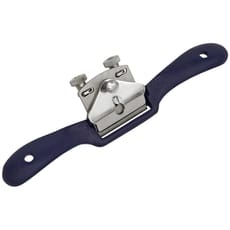
The flat-soled spokeshave remains the most versatile option in the Sealey range, suitable for convex curves, slight hollows, and general smoothing work. This configuration excels at chamfering edges, rounding over square stock, and refining surfaces left by other tools. Professional furniture makers often keep several flat-soled spokeshaves set up with different blade projections for various stages of work.
Round-bottomed or curved-sole spokeshaves from Sealey address the specific challenges of working concave surfaces and tight radii. These tools shine when smoothing the inside curves of Windsor chair seats, hollow mouldings, or any situation where a flat sole would bridge the hollow rather than following the curve. Available at Tooled-Up, these specialist spokeshaves prove invaluable for restoration work matching original profiles.
Sealey also offers compact spokeshave designs that provide enhanced control in confined spaces or when working small components. These reduced-size versions maintain the quality and adjustment capabilities of full-size models whilst offering improved manoeuvrability for detailed work on turnings, carvings, or miniature projects.
Safety and Compliance
Whilst spokeshaves are relatively safe hand tools compared to powered equipment, proper technique prevents accidents and ensures quality results. Always work with sharp blades; dull edges require excessive force, increasing the risk of slips and loss of control. Secure workpieces firmly before spokeshaving, as the tool's cutting action can cause movement in inadequately clamped stock.
Cut with the grain direction whenever possible, adjusting blade depth to suit wood density and grain patterns. When working figured or interlocked grain, shallow cuts reduce tearout and maintain control. Keep hands behind the cutting edge at all times, and use push blocks or other holding devices when working small components that might place fingers near the blade path.
Store spokeshaves with blade guards or with the blade retracted to protect both the edge and anyone reaching into toolboxes or drawers. Regular maintenance including cleaning, light oiling of metal parts, and blade sharpening ensures tools remain safe and effective. Follow HSE guidance regarding hand tool use in commercial workshop environments, particularly when training apprentices or less experienced workers.
Frequently Asked Questions
How do I sharpen Sealey spokeshave blades effectively?
Sealey spokeshave blades sharpen using the same techniques as bench plane irons. Remove the blade from the tool and establish a 25-30 degree primary bevel on a coarse sharpening stone or grinder. Refine this with progressively finer stones, then create a micro-bevel of approximately 30-35 degrees on your finest stone. Flatten the back of the blade on a flat reference surface with abrasive paper or a lapping plate. The blade should achieve a polished edge that reflects light uniformly with no dark spots indicating dull areas.
What's the difference between flat and round-bottomed Sealey spokeshaves?
Flat-soled Sealey spokeshaves work convex curves and flat surfaces, with the flat sole providing stability and reference for consistent cuts. Round-bottomed versions feature a curved sole that allows the tool to follow concave surfaces without the sole edges digging in. For general workshop use, a flat-soled spokeshave handles approximately 80% of typical tasks, but restoration work and certain furniture styles require the curved-sole variant for hollow mouldings and concave surfaces.
Can Sealey spokeshaves handle both hardwoods and softwoods?
Yes, Sealey spokeshaves work effectively across the full spectrum of common woodworking timbers. The key is adjusting blade depth to suit material density—hardwoods generally require shallower cuts whilst softwoods tolerate more aggressive blade projection. Very resinous softwoods may require more frequent blade cleaning, and highly figured hardwoods benefit from skewed cutting angles to minimise tearout. The robust construction of Sealey spokeshaves provides the stability needed for demanding hardwoods without being overly cumbersome for softwood applications.
How do I prevent blade chatter when using Sealey spokeshaves?
Blade chatter typically results from excessive blade projection, insufficient blade securing pressure, or attempting to cut against the grain. Reduce blade depth until the tool cuts smoothly without juddering, ensuring the blade locking mechanism is fully tightened. Work with the grain direction when possible, and maintain consistent forward pressure throughout each stroke. On difficult grain, wax the sole lightly to reduce friction. If chatter persists, check that the blade seats properly in its bed with no debris preventing full contact.
Are Sealey spokeshaves suitable for professional daily use?
Absolutely. Sealey spokeshaves are engineered for the demands of professional workshops, with robust construction that withstands daily use across multiple projects. Many UK furniture makers, joiners, and restoration specialists rely on Sealey hand tools as working equipment rather than occasional-use items. The combination of proper materials, sound design, and quality control ensures these tools deliver consistent performance throughout their working life. Regular maintenance—primarily blade sharpening and occasional cleaning—keeps Sealey spokeshaves functioning reliably for years of professional service.