
Sealey Thermal Detectors

Loading...
End of content
Error - No more pages to load
Sealey Thermal Detectors at Tooled-Up.com
Sealey has established itself as a trusted name in diagnostic and testing equipment, and their thermal detection technology represents some of the finest instruments available to UK tradespeople and professionals. The Sealey thermal detector range combines precision engineering with practical functionality, delivering reliable temperature measurement solutions for applications spanning electrical diagnostics, building surveys, mechanical maintenance, and HVAC installations. These instruments enable professionals to identify thermal anomalies, detect heat loss, locate electrical faults, and diagnose mechanical issues quickly and accurately.
Tooled-Up.com stocks an extensive selection of Sealey thermal imaging cameras and infrared thermometers designed to meet the demanding requirements of modern tradespeople. From handheld infrared thermometers ideal for quick spot-checks to advanced thermal imaging cameras capable of capturing detailed heat maps, the Sealey range delivers professional-grade performance at competitive price points. Each thermal detector is engineered to withstand the rigours of site work whilst maintaining measurement accuracy that professionals can depend upon.
Whether conducting electrical safety inspections, identifying insulation deficiencies, or diagnosing mechanical equipment problems, Sealey thermal detectors provide the visual and numerical data needed to make informed decisions. The combination of intuitive controls, robust construction, and accurate sensing technology makes these instruments indispensable tools for anyone requiring reliable temperature measurement and thermal analysis capabilities.
Why Choose Sealey Thermal Detectors?
Sealey's reputation for producing durable, reliable tools extends throughout their thermal detection range. These instruments are specifically designed with the working tradesperson in mind, offering professional-grade accuracy without the complexity often associated with thermal imaging technology. The straightforward interfaces and clear display screens ensure that even users new to thermal detection can quickly interpret readings and identify thermal patterns.
Value for money stands as a hallmark of Sealey's approach to thermal detectors. Whilst delivering measurement precision comparable to far more expensive alternatives, Sealey maintains accessible pricing that makes thermal detection technology viable for individual tradespeople and small businesses. The robust construction ensures these instruments can withstand the knocks and environmental challenges typical of construction sites, workshops, and field service work.
Sealey backs their thermal detection equipment with comprehensive support and UK-based customer service. This commitment to after-sales care, combined with readily available technical documentation and calibration services, provides peace of mind for professionals who depend on accurate temperature measurement for their livelihoods. The wide distribution network across the UK ensures that replacement parts and accessories remain accessible when needed.
Who Uses Sealey Thermal Detectors?
Sealey thermal detectors serve a diverse range of professional users across multiple industries:
- Electricians and Electrical Engineers: Identifying overheating components, loose connections, and circuit overloads in distribution boards and electrical installations
- Building Surveyors and Energy Assessors: Detecting heat loss, moisture ingress, and insulation deficiencies in residential and commercial properties
- HVAC Engineers: Diagnosing heating system performance, identifying blockages, and verifying temperature distribution in climate control installations
- Maintenance Engineers: Monitoring bearing temperatures, detecting friction points, and identifying overheating in mechanical equipment before failures occur
- Plumbers and Heating Engineers: Locating underfloor heating pipes, identifying blockages in radiators, and diagnosing boiler performance issues
- Fire and Security Professionals: Conducting thermal surveys for fire risk assessments and detecting overheating in electrical systems
- Automotive Technicians: Diagnosing cooling system problems, identifying brake issues, and monitoring engine temperatures
- DIY Enthusiasts: Home energy audits, identifying draughts, and monitoring heating system performance
Key Features of Sealey Thermal Detectors
Sealey thermal detectors incorporate numerous features that enhance their practicality and measurement capabilities. High-resolution infrared sensors deliver accurate temperature readings across wide measurement ranges, typically from sub-zero temperatures to several hundred degrees Celsius. Adjustable emissivity settings enable users to compensate for different surface materials, ensuring measurement accuracy across various applications from polished metals to matt painted surfaces.
Colour LCD screens present thermal data in easily interpretable formats, with many models offering multiple colour palettes to highlight temperature differentials. Integrated laser pointers assist with target identification, whilst built-in LED illumination facilitates work in poorly lit environments. Many Sealey thermal imaging cameras include image capture functionality, allowing professionals to document findings for reports, insurance claims, or maintenance records.
Ergonomic designs ensure comfortable single-handed operation during extended inspection sessions. Durable housings provide protection against dust and moisture ingress, with many models rated to IP54 or higher for enhanced environmental resistance. Battery operation delivers portability for field work, whilst intelligent power management extends operational time between charges. Temperature alarm functions alert users when measurements exceed preset thresholds, enhancing safety during electrical diagnostics.
Popular Sealey Thermal Detectors
The Sealey thermal detector range at Tooled-Up encompasses several distinct product categories. Infrared thermometers provide quick, non-contact temperature measurement ideal for spot-checks and general diagnostics. These compact instruments deliver instant readings, making them perfect for electricians checking circuit breaker temperatures or HVAC engineers verifying radiator outputs.
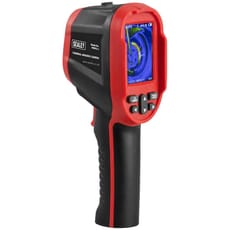
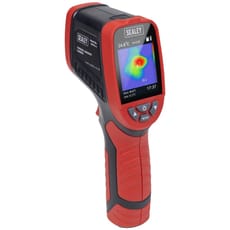
Thermal imaging cameras represent the premium end of Sealey's detection range, offering comprehensive heat mapping capabilities. These sophisticated instruments capture thermal images that reveal temperature patterns invisible to the naked eye, enabling professionals to identify problems before they escalate into costly failures. Advanced models feature high thermal resolution, wide temperature ranges, and extensive image storage capacity.
Combination detectors integrate multiple measurement functions within single units, providing thermal imaging alongside visible light photography. This dual capability enables users to overlay thermal data onto conventional images, creating easily understood reports that clearly communicate findings to clients and colleagues.
Safety and Compliance
Sealey thermal detectors are manufactured to comply with relevant UK and European safety standards, including electromagnetic compatibility directives and electrical safety requirements. When using thermal detection equipment for electrical diagnostics, operators should always follow HSE guidelines and appropriate isolation procedures. Thermal imaging should complement, not replace, established safe working practices.
Users should familiarise themselves with the operating instructions specific to their thermal detector model, paying particular attention to measurement range limitations and accuracy specifications. Regular calibration verification ensures continued measurement reliability, particularly for instruments used in professional certification work or safety-critical applications. Laser-equipped models comply with relevant laser safety classifications, typically Class 2, which are considered safe under normal operating conditions.
Frequently Asked Questions
What temperature range do Sealey thermal detectors typically cover?
Sealey thermal detectors vary by model, with infrared thermometers typically measuring from -50°C to +550°C or higher, whilst thermal imaging cameras often cover ranges from -20°C to +350°C or beyond. Specific ranges depend on the model and intended application, with specialist variants available for extreme temperature environments.
Can Sealey thermal imaging cameras detect moisture problems?
Whilst thermal imaging cameras detect temperature variations rather than moisture directly, they excel at identifying the thermal signatures associated with damp conditions. Cold spots on walls often indicate moisture presence, whilst thermal bridging and insulation deficiencies become clearly visible. This makes Sealey thermal cameras valuable tools for building surveys and property diagnostics.
How accurate are Sealey thermal detectors?
Sealey thermal detectors typically offer accuracy specifications of ±2°C or ±2% of reading, comparable to professional instruments. Accuracy depends on proper emissivity settings, measurement distance, and environmental conditions. For critical applications requiring certified accuracy, periodic calibration verification is recommended.
Do Sealey thermal detectors require special training to use?
Basic operation of Sealey thermal detectors is straightforward, with intuitive controls and clear displays. However, proper interpretation of thermal images, particularly for building surveys or electrical diagnostics, benefits from training in thermography principles. Understanding emissivity, reflectivity, and environmental factors ensures accurate measurement and correct diagnosis.
Are Sealey thermal detectors suitable for electrical work?
Absolutely. Sealey thermal detectors are widely used by electricians for identifying overheating connections, overloaded circuits, and faulty components in electrical installations. The non-contact measurement capability allows safe temperature assessment of live equipment from appropriate distances, though proper electrical safety procedures must always be followed.