
Stanley Sanding Belts


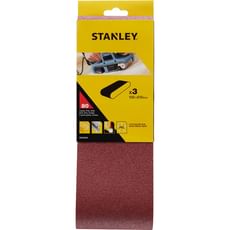
Loading...
End of content
Error - No more pages to load
Stanley Sanding Belts at Tooled-Up.com
Stanley has been a trusted name in hand tools and accessories for over 175 years, and their sanding belts continue this legacy of quality and reliability. The Stanley sanding belt range available at Tooled-Up.com represents decades of manufacturing expertise, delivering consistent performance across a variety of materials and applications. Whether you're smoothing rough timber, removing old finishes, or preparing metal surfaces for painting, Stanley sanding belts provide the durability and cutting efficiency that professional tradespeople and serious DIY enthusiasts demand.
Engineered to work seamlessly with both handheld belt sanders and stationary machines, Stanley sanding belts are manufactured to precise specifications that ensure optimal tracking and minimal slippage during operation. The range encompasses various grit grades and belt dimensions, making it straightforward to find the right abrasive solution for everything from aggressive material removal to fine finishing work. Stanley's commitment to quality control means each belt maintains consistent grit distribution and backing strength throughout its working life.
From workshop refurbishment projects to on-site carpentry tasks, Stanley sanding belts deliver the performance characteristics that have made the Stanley brand synonymous with dependable tooling solutions across the UK and beyond.
Why Choose Stanley Sanding Belts?
Stanley's reputation for manufacturing robust, long-lasting abrasives stems from their rigorous quality standards and use of premium materials. The sanding belts feature durable cloth backing that resists tearing even under aggressive use, whilst the resin bonding system ensures abrasive grains remain securely attached throughout the belt's lifespan. This construction methodology reduces premature wear and maintains cutting efficiency, ultimately providing better value through extended service life.
Unlike cheaper alternatives that can fail mid-task or produce inconsistent results, Stanley sanding belts are engineered for reliability. The brand's understanding of how tradespeople work – often under time pressure and in challenging conditions – influences every aspect of their abrasive products. Belt joints are reinforced to prevent splitting, and the backing material is treated to resist loading and clogging, particularly when working with resinous softwoods or painted surfaces.
Stanley's global manufacturing scale allows them to maintain competitive pricing without compromising on quality, making their sanding belts an economical choice for both professional workshops and home toolkits. The brand's widespread availability and consistent product specifications also mean you can rely on obtaining identical replacements whenever needed.
Who Uses Stanley Sanding Belts?
Stanley sanding belts are specified by a diverse range of users who value dependable performance:
- Carpenters and joiners who require consistent material removal on timber components
- Cabinet makers and furniture restorers needing precision sanding for fine woodworking
- Metalworkers and fabricators preparing steel and aluminium surfaces
- Decorators and renovation specialists removing old paint and varnish finishes
- Maintenance engineers performing general workshop repair and refurbishment tasks
- DIY enthusiasts tackling home improvement and restoration projects
- Educational workshops and training facilities requiring reliable consumables for student use
- Boat builders and marine trades working with diverse materials including GRP and marine ply
Key Features of Stanley Sanding Belts
Stanley sanding belts incorporate several important features that enhance their performance and versatility. The abrasive grain selection is matched to specific applications, with aluminium oxide formulations providing excellent cutting action on wood and ferrous metals, whilst maintaining sharp edges throughout prolonged use. The backing cloth weight is optimised to provide flexibility without sacrificing strength, allowing the belt to conform to slightly contoured surfaces whilst resisting punctures and tears.
The resin bonding system used in Stanley sanding belts is formulated to withstand the heat generated during sustained sanding operations, preventing premature grain detachment that would reduce cutting efficiency. Belt joints are precision-made to minimise any perceptible bump during rotation, ensuring smooth operation and reducing vibration that could affect finish quality or user comfort.
Stanley's dimensional accuracy ensures proper fit on standard belt sander specifications, with consistent width and length measurements that prevent tracking issues. The belts are also designed with anti-static properties where appropriate, reducing dust adhesion and improving extraction efficiency when used with vacuum-equipped sanders.
Popular Stanley Sanding Belts
Browse the Stanley selection at Tooled-Up to find sanding belts suited to your specific requirements. Common belt sizes include 75mm x 533mm dimensions that fit popular portable belt sanders, along with larger formats for stationary machines. The range typically spans coarse grits around 40-60 for rapid stock removal and paint stripping, through to fine grits of 120-180 for finish sanding and surface preparation before coating.
Medium grit options around 80-100 are particularly popular for general-purpose woodworking, providing a good balance between material removal rate and surface smoothness. Stanley also produces specialised belts for specific applications, including those optimised for metal finishing and variants with enhanced durability for abrasive materials.
Multi-pack offerings provide economy for regular users, ensuring you have replacement belts readily available and reducing per-unit costs. These packs often include an assortment of grits, allowing progression from initial shaping through to final finishing with matched abrasives.
Safety and Compliance
When using Stanley sanding belts, adherence to proper safety protocols is essential. Always wear appropriate respiratory protection as specified by COSHH regulations, particularly when sanding materials that may produce hazardous dust such as MDF, treated timber, or lead-based paints. Safety goggles or a full face shield should be worn to protect against flying particles, and hearing protection is advisable during extended sanding operations.
Ensure your belt sander is disconnected from its 240V power supply before changing belts, and verify that new belts are correctly tensioned and tracking properly before commencing work. Never exceed the maximum operating speed marked on the belt, and always use appropriate dust extraction equipment to maintain a safe working environment and comply with HSE workplace exposure limits.
Stanley sanding belts should be stored in a cool, dry environment away from excessive heat or moisture, which could affect the backing material or bonding resin. Inspect belts before use for any signs of damage, and discard any that show tears, fraying, or detached abrasive grains.
Frequently Asked Questions
What grit Stanley sanding belt should I use for removing old paint?
For paint removal, start with a coarse 40-60 grit Stanley sanding belt to quickly strip the coating. Follow up with 80-100 grit to smooth the surface and remove any remaining finish residue. Always use dust extraction and appropriate respiratory protection when sanding painted surfaces, particularly on older woodwork that may contain lead-based paints.
How long do Stanley sanding belts typically last?
Belt lifespan depends on the material being sanded, pressure applied, and grit size. Coarser grits generally last longer as they have larger, more robust abrasive grains. Stanley belts are designed for durability, but you should replace them when you notice reduced cutting efficiency, excessive loading, or visible wear to the backing material. Professional users often keep multiple belts in rotation to maintain consistent productivity.
Can Stanley sanding belts be used on both wood and metal?
Yes, Stanley sanding belts with aluminium oxide abrasive are suitable for both timber and most metals. However, for optimal results, consider using belts specifically designated for metalworking when tackling harder materials like steel, as these may feature different grain structures or bonding systems. Always check the belt specification to ensure compatibility with your intended material.
Why does my sanding belt keep slipping or tracking off-centre?
Tracking issues are usually caused by incorrect belt tension, misaligned rollers, or worn sander components rather than belt defects. Consult your sander's manual for tracking adjustment procedures. Stanley sanding belts are manufactured to precise dimensions, so persistent tracking problems typically indicate a machine setup issue. Ensure the belt is correctly oriented (most have directional arrows) and that rollers are clean and free from resin build-up.
Are Stanley sanding belts available in sizes for all belt sanders?
Stanley manufactures sanding belts in many common sizes to suit popular portable and stationary sanders. The range available from Tooled-Up covers the most frequently used dimensions for both professional and DIY applications. If you require an unusual size, check the product specifications or contact the Tooled-Up team who can advise on availability and suitable alternatives.