

Garden Hand Saws Explained
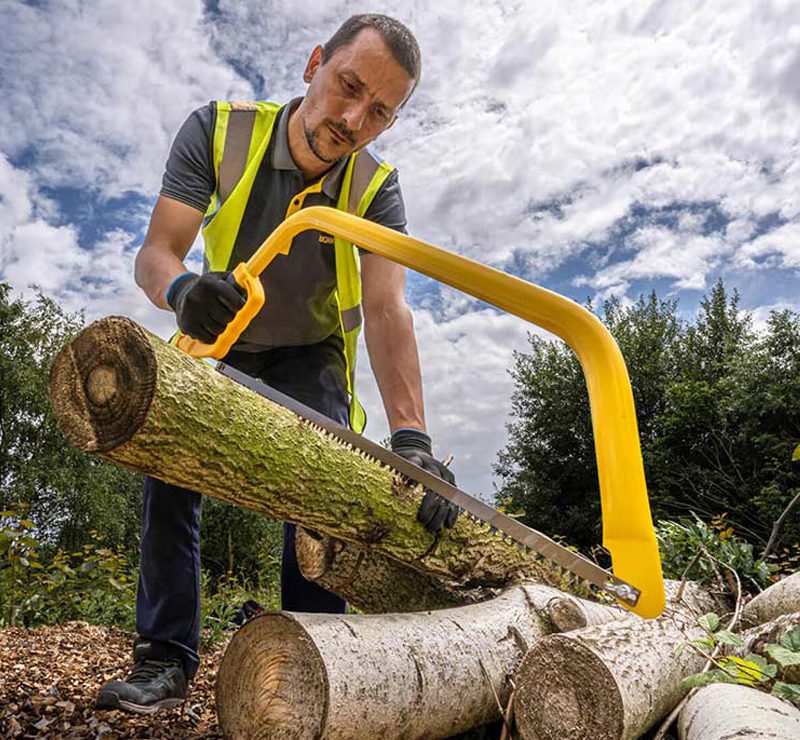
Secateurs, snips and loppers are all quick and convenient ways of keeping offshoots of garden growth in check, but they reach their limits as soon as you need to cut some especially thick or tough woody material. Garden hand saws in comparison can tackle much larger diameters, making them ideal for well established branches, small tree trunks or thick roots.
Can I use Any Type of Hand Saw in the Garden?
Hand saws come in a wide variety of specialized designs, but probably the one that people are familiar with more than any other is the type used for construction timbers, and its a fair bet that most people will have one of these lying around in a shed, garage or tool box. You might reason that a 2×4 is not that far removed from the trees in your garden and that therefore its going to do a decent enough job – but it probably won’t be ideal, for a few reasons.
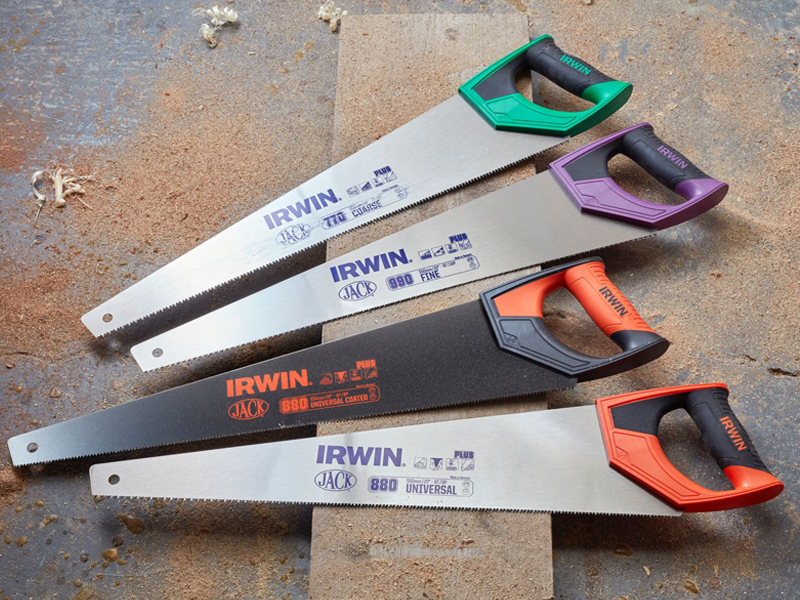
For one thing, a length of preprepared timber is ready made for sawing – the wood (which in most cases will be a softwood like pine) has been cut, flattened and dried out to the point where it can be easily processed by the end user. Additionally, it can be conveniently clamped in position when required. This means that most hand saws are designed to be used in a comfortable working position with the work area neatly laid out in front of you.
In comparison, a tree branch presents a few more challenges. Not only are they often difficult to get to, and need to be cut at a variety of awkward angles with other branches and leaves in the way, but they can bend and spring around as you try to get the cut started. On top of this, the wood itself can be tougher to cut, with layers of bark or fibrous wet material clogging up the saw teeth and slowing down progress.
Another key factor is that saws designed for construction applications are generally designed to leave a fairly neat finish, for obvious reasons. To get a cleaner edge from your saw cuts requires a tooth profile with a larger number of smaller teeth – the tradeoff is that these blades cut more slowly as they take more strokes to get through the material.
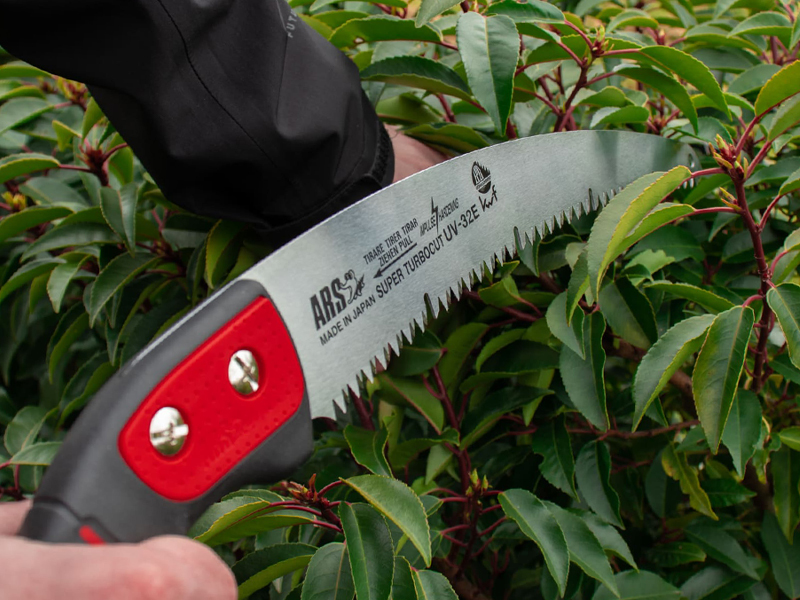
Conversely, for applications like tree pruning – and especially when tackling awkward overhead cuts at arms length – a fast cutting saw is going to be prized above all others. When you don’t need to work with any regard for accuracy or finesse, you’ll find that a coarser tooth configuration makes the job go a lot faster and thereby reduces the strain on your body.
Garden Saw Design
So garden saws are generally developed with a few key considerations in mind.
- Tooth Configuration: coarser teeth enable faster cutting with less physical effort
- Size: narrower designs offer greater manoeuverability in tight spaces
- Grip: ideally suited to comfortable use at a variety of different angles
- Reach: longer tools can access higher branches
- Portability: important for mobile users as well as when working at height
As with most things however, there is no single design which ticks every box and there are a few main subcategories which have strengths in some areas over others. Next we’ll look at these options in a bit more detail.
Pruning Saws
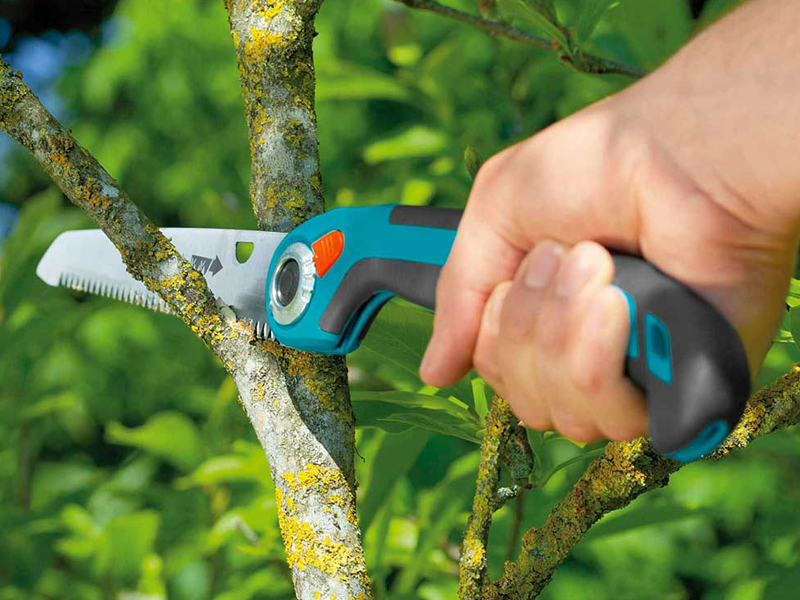
Pruning saws are widely used, and probably the most common type of garden saw you’ll come across. Most are designed with portability in mind and will feature a folding or retractable blade which not only makes them safer to handle in between uses but also means they can fit easily into a backpack or toolbox. These saws typically have a slender and lightweight design which allows for access in tight spaces and for comfortable overhead use; additionally they are normally fitted with handles which can be used in a wide variety of sawing positions with minimal discomfort – allowing all types of horizontal and vertical cuts to be made with ease.
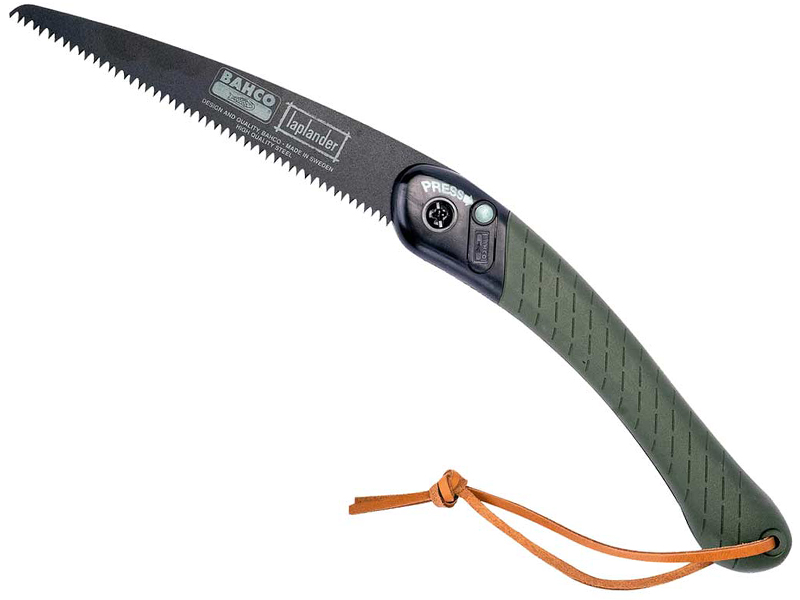
Many pruning saws have a curved or hooked blade, and these have a few advantages in pruning applications. Firstly, the curvature suits the round diameter of a branch and means that more material is in contact with the cutting edge while sawing, helping to speed up the process. Secondly, it can help keep the blade locked onto the branch, preventing the saw from slipping out of position. This is especially useful when you’re cutting at a distance and you can’t hold on to the branch to keep it steady, or if you can’t get a good view of where the blade is doing the work – in these kinds of scenarios it can be especially frustrating if the saw is constantly jumping out of the cut since its not easy to get it re-established in exactly the same place. Lastly, having a hooked end provides a convenient way of retrieving offcuts which have got tangled up on the way down or landed somewhere out of reach.
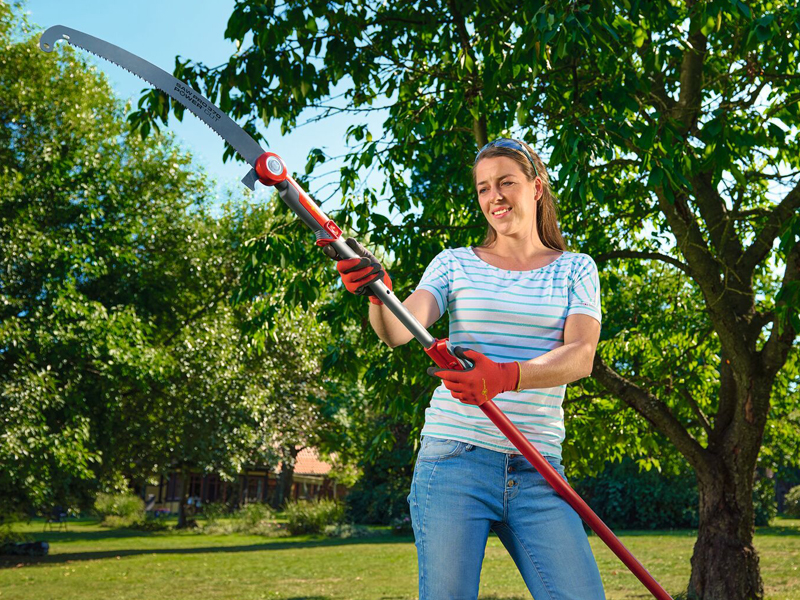
For extended access, it is possible to get pruning saws which can be attached to a long handle when needed. The Wolf Garten Multi Change and Gardena Combisystem ranges both feature handheld pruning saws which are also compatible with their interchangeable handles, making them versatile solutions for higher branches as well as those closer to the ground.
Bow Saws
The bow saw has a rigid frame which makes it extremely stable in use and allows for fast and efficient cutting. This frame tends to make them less portable than the smalling pruning saws but there are folding designs which can be easily packed away if needed. Much like a hacksaw for cutting metal, the blade is held under tension via an adjustable screw mechanism on the frame and can be easily replaced when it become dull.
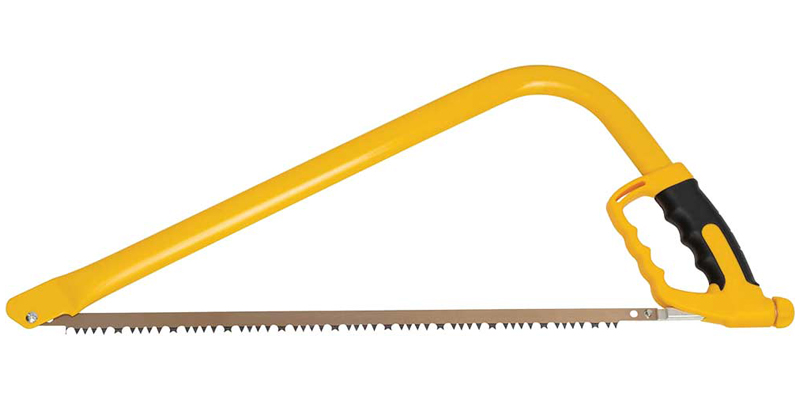
A further advantage of the interchangeable blade system is that you can fit different blades for different tasks, making the bow saw quite a versatile tool. These blades are typically designed for cutting either younger growth (which may described as Green or Wet) or for older branches which are drier and woodier. Fitting the appropriate blade for the task in hand can make your work a lot easier, and a complete kit of frame and blades can be easily stored or transported in place of two or more dedicated saws.
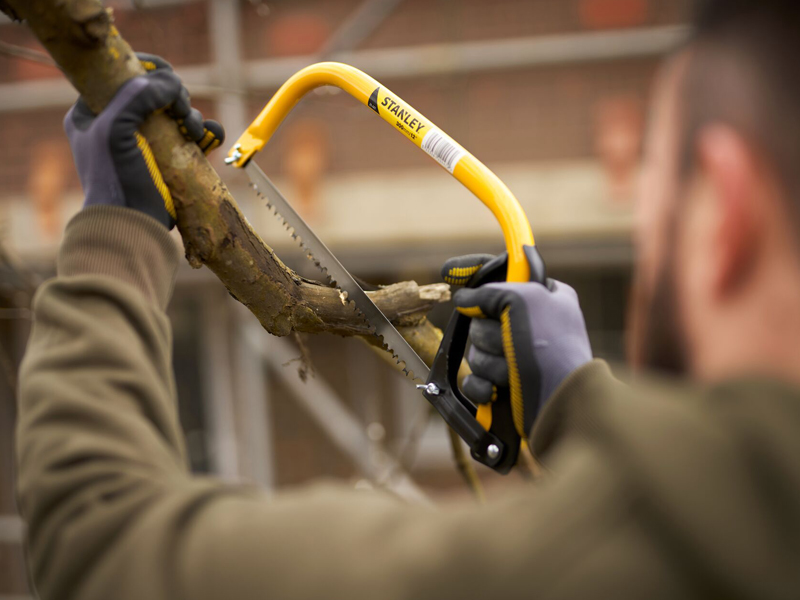
Bow saws are bulkier than pruning saws and they tend to be better for sawing larger diameter branches rather than being used for precise pruning jobs. However many are available with tapered noses which allow for better access in tight spaces.
Long Reach Tree Pruners
Long reach pruning saws usually come with a telescopic handle, meaning they can be shortened or lengthened as needed. This also allows them to be packed down in between uses although bear in mind that most of these saws require a fair amount of storage space even at minimum length.
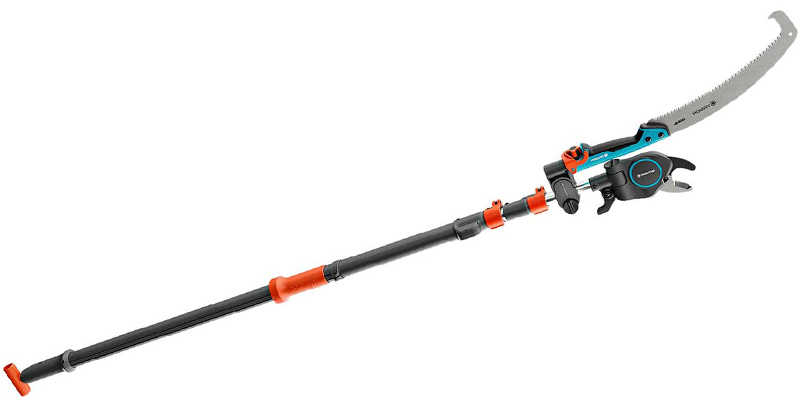
Commonly you will find that a lot of long reach tree pruners also have a pair of lopper jaws which are actuated by a cord which runs down the length of the handle. This means that smaller diameter branches can be snipped off quickly and easily, while flipping the tool over to the sawing function allows bigger material to be cut through as well.
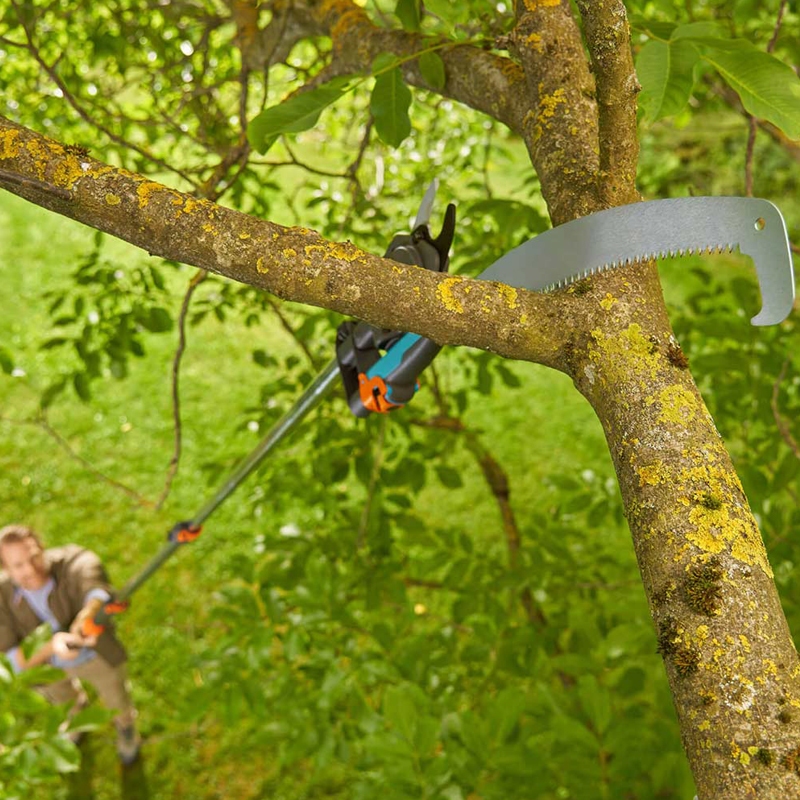
A pole saw is obviously going to be a lot more unwieldy when it comes to pruning jobs which are closer to the ground, but in many cases they use a detachable pruning saw which comes complete with its own handle – so it can be removed from the pole and used as a standalone tool for branches which are within arms reach.
Garden Hand Saws: Available at Tooled-Up
At Tooled-Up we stock a wide range of garden hand saws at a variety of price points so whether you’re a green fingered novice or a seasoned professional, there’s plenty of options to choose from. You can browse our main website here or follow the category links below to take a look at individual ranges in more detail.
Categories mentioned in this article: