

Access Panels
Pay in 3 interest-free payments on purchases from £30-2000 with  . Learn more.
 Loading...
End of content
Error - No more pages to load
About Access Panels
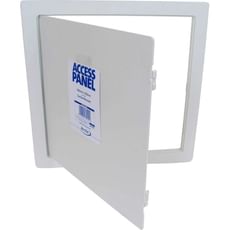
Access panels are indispensable building components that provide convenient, protected entry points to concealed services, utilities, and void spaces within walls, ceilings, and floors throughout residential, commercial, and industrial properties. These practical panels allow tradespeople and property owners to reach pipework, electrical wiring, valves, meters, inspection chambers, and other hidden installations without causing damage to surrounding structures. Manufactured from durable materials including UV-stable ABS plastic and galvanised steel, access panels create discreet yet functional solutions for maintaining and servicing building systems whilst preserving the finished appearance of interior spaces.
Modern access panels available from Tooled-Up.com are engineered to blend seamlessly with their surroundings whilst providing robust, secure access when required. They typically feature hinged or removable doors with snap friction catches or secure locking mechanisms, ensuring that utility access points remain protected yet readily accessible to authorised personnel. Many models incorporate integrated sealing systems to maintain fire ratings, acoustic performance, and moisture resistance, making them suitable for installation in diverse environments from domestic bathrooms to commercial plant rooms. The panels can be installed in plasterboard walls, masonry, tiled surfaces, and suspended ceilings, providing versatile solutions for both new construction projects and renovation work.
Quality access panels deliver significant time and cost savings by eliminating the need to cut into finished walls or ceilings for routine maintenance, inspections, or emergency repairs. They prove particularly valuable in properties where building services are concealed behind decorated surfaces, providing immediate access to stop cocks, isolation valves, junction boxes, consumer units, and inspection points whilst maintaining the aesthetic integrity and structural continuity of the space. For facilities managers, landlords, and maintenance contractors, properly installed access panels represent essential infrastructure that simplifies ongoing property management and ensures compliance with building regulations.
Jargon Buster
- Beaded Frame: A type of access panel frame with a raised edge or lip that sits proud of the surrounding surface, providing a defined border and easier installation in plasterboard applications where the frame overlays the cut opening.
- Fire-Rated Panel: An access panel constructed from fire-resistant materials and designed to maintain a specified fire integrity rating (typically FD30, FD60, or FD90 minutes) to comply with Building Regulations Part B and preserve compartmentation barriers.
- Moisture-Resistant Panel: Access panels manufactured with sealed edges and water-resistant materials, specifically engineered for installation in bathrooms, kitchens, external locations, or areas where humidity and dampness are operational concerns.
- Picture Frame Style: A flush-fitting access panel design where the frame sits level with the surrounding surface, allowing for plastering, tiling, or decorating directly over the frame to create a virtually invisible access point that disappears into the wall.
- Push-Latch Mechanism: A spring-loaded closure system that allows the panel to be opened by pressing and released, eliminating the need for visible handles or locks whilst maintaining secure closure through friction retention.
- UV-Stable ABS: Acrylonitrile Butadiene Styrene plastic formulated with ultraviolet light stabilisers, preventing yellowing, brittleness, and degradation when exposed to sunlight, particularly important for panels in naturally lit areas or external applications.
Who Uses Access Panels?
Access panels are essential components for a wide range of trades and professionals working across the construction, property maintenance, and facilities management sectors:
- Plumbers - for accessing concealed pipework, stop cocks, isolation valves, service manifolds, and inspection points behind finished surfaces
- Electricians and Sparkies - for reaching junction boxes, consumer units, cable runs, and concealed 240v wiring systems during installation, testing, and maintenance
- Heating Engineers - for servicing boilers, accessing zone valves, maintaining underfloor heating manifolds, and inspecting central heating components
- Property Developers and Builders - for installing maintenance access points during new construction projects, conversions, and major renovation works
- Facilities Managers - for maintaining commercial and industrial building services efficiently and ensuring regulatory compliance with minimal disruption
- Landlords and Letting Agents - for ensuring rental properties have accessible service points for safety inspections, routine maintenance, and emergency repairs
- DIY Enthusiasts and Homeowners - for home improvements and ensuring convenient access to household utilities and building services
- Building Surveyors and Inspectors - for accessing concealed areas during property surveys, compliance inspections, and condition assessments
- Shopfitters and Refurbishment Contractors - for providing service access in retail, hospitality, and commercial fit-out projects
How to Choose the Right Access Panels
Size and Location: Measure the opening required to access the services behind the panel, allowing sufficient space to reach and work on pipes, valves, electrical connections, or meters. Consider the depth of the recess and ensure the panel frame will accommodate your wall or ceiling thickness. Standard sizes available at Tooled-Up range from compact 150mm x 150mm panels for tight utility spaces to larger 600mm x 600mm units for substantial access requirements or where multiple services converge.
Installation Surface: Different panels suit different substrates and construction methods. Plasterboard panels typically feature lightweight injection-moulded plastic frames with simple screw fixings, whilst masonry panels require more robust metal frames with appropriate wall plugs and fixings. For tiled areas in bathrooms and kitchens, choose picture frame style panels that allow tiles to be applied directly to the door face for a concealed, waterproof finish. When installing in suspended ceilings, select panels designed to sit within standard ceiling grid systems.
Fire Rating Requirements: In locations where Building Regulations Part B requires fire compartmentation, select panels with appropriate fire integrity ratings. Fire-rated access panels must maintain the fire resistance of the wall or ceiling they penetrate, with common classifications including FD30 (30 minutes) and FD60 (60 minutes). Always specify fire-rated panels for protected stairways, separating walls between dwellings, garage separations, and other compartmentation barriers defined in Building Regulations.
Environmental Conditions: For bathrooms, wetrooms, kitchens, or external locations, specify moisture-resistant or waterproof panels manufactured from UV-stable materials with sealed edges and corrosion-resistant fixings. In commercial kitchens, plant rooms, or industrial settings, consider panels with easy-clean surfaces and robust construction to withstand frequent use, temperature variations, and exposure to cleaning chemicals.
Security and Access Control: Where access panels protect utility shut-offs, house valuable equipment, or secure sensitive installations, choose models with lockable mechanisms or tamper-proof fixings. For public areas, key-operated locks prevent unauthorised access whilst maintaining emergency accessibility for facilities staff. In domestic properties, friction catches or push-latch mechanisms typically provide adequate security whilst allowing household members convenient access.
Aesthetic Requirements: Consider how the panel will integrate with surrounding décor. White plastic panels can be over-painted to match interior colour schemes, whilst picture frame designs virtually disappear when plastered or tiled flush with surrounding surfaces. Beaded frame designs sit proud of the wall and create a more defined border, suitable where a discreet but visible access point is acceptable or preferred for quick identification.
Popular Accessories
- Plasterboard Saws and Pad Saws - for cutting precise, clean openings in walls and ceilings during panel installation
- Spirit Levels and Laser Levels - ensuring panels are installed perfectly square, straight and level for proper operation and appearance
- Drill Bits and Fixings - appropriate screws, wall plugs, and fasteners for securing frames securely into various substrates
- Silicone Sealant and Acoustic Sealant - for sealing gaps around frames and maintaining fire ratings, acoustic performance, or moisture barriers
- Intumescent Mastic and Fire Sealant - essential for maintaining fire integrity around fire-rated panels and preserving compartmentation
- Inspection Torches and Head Torches - illuminating dark void spaces, service runs, and concealed installations accessed through panels
- Plaster and Jointing Compound - for finishing flush-mounted panels seamlessly with surrounding plasterboard surfaces
- Tile Adhesive and Grout - when installing tiled access panels in bathrooms, wetrooms, and kitchen splash-back areas
- Service Labels and Safety Signs - clearly marking panel contents for emergency access, maintenance identification, and health and safety compliance
- Cable and Pipe Detectors - for safely locating concealed services before cutting openings to avoid damaging existing installations
Safety Information
Fire Safety Compliance: Never compromise fire compartmentation by installing non-rated panels in fire-resistant walls, ceilings, or compartmentation barriers. Always select panels with appropriate fire ratings that match or exceed the surrounding structure's classification. Ensure any gaps around the frame are sealed with intumescent mastic or fire-resistant sealant to maintain fire integrity and comply with Building Regulations Part B. Regular inspection of intumescent seals ensures they remain effective and haven't been damaged, painted over, or degraded.
Electrical Safety: When installing access panels near electrical installations, follow IET Wiring Regulations (BS 7671) and maintain safe clearances from live conductors and equipment. Always isolate electrical supplies at the consumer unit before working on installations accessed through panels. If providing access to consumer units, distribution boards, or 240v electrical equipment, ensure only qualified electricians carry out work in accordance with Part P of the Building Regulations, and that panels provide adequate working space for safe maintenance.
Structural Integrity: Avoid cutting through structural members, load-bearing elements, timber joists, RSJs, or concealed services when creating openings for access panels. Always use a cable and pipe detector before cutting into walls, ceilings, or floors to prevent accidentally severing electrical cables, water pipes, or gas supplies. Consult structural engineers when installing large panels in load-bearing walls, party walls, or when uncertain about structural implications, particularly in older properties.
Working at Height: When installing ceiling-mounted access panels or high wall panels, use appropriate access equipment such as stepladders, hop-ups, work platforms, or scaffold towers. Follow HSE guidance on working at height, ensuring all equipment is properly maintained, positioned on stable level surfaces, and secured appropriately. Never overreach from ladders when cutting or fitting panels; reposition equipment to maintain safe working posture.
Installation in Wet Areas: When installing panels in bathrooms, wetrooms, or other moisture-prone areas, ensure appropriate sealing to prevent water ingress into wall cavities that could cause damp, mould growth, or structural deterioration. Use moisture-resistant panels with sealed edges and apply silicone sealant around frames to create watertight installations, particularly in tiled enclosures or splash zones.
Frequently Asked Questions
Can I install an access panel myself, or do I need a tradesperson?
Installing access panels in non-structural locations is a straightforward DIY task requiring basic tools including a plasterboard saw, drill, spirit level, and screwdriver. However, if you need to cut into walls containing electrical wiring or plumbing, or if fire-rated panels are required for Building Regulations compliance in compartmentation walls, it's advisable to employ qualified tradespeople. Always use a cable and pipe detector before cutting any opening, and consult building control for guidance on fire-rated installations. For simple installations in stud walls with clear cavity spaces, competent DIYers can achieve professional results following manufacturer instructions.
What size access panel do I need for accessing a concealed stop cock or isolation valve?
A minimum panel size of 150mm x 150mm typically provides sufficient access for operating an isolation valve or stop cock without requiring tools. However, if you need working space to fit spanners around compression fittings, replace valves, or work on associated pipework, consider a 300mm x 300mm panel for more comfortable access and better visibility. Remember to account for the valve's position within the void space, ensuring it will be centrally located and easily reachable through the opening. For multiple services or larger manifolds, 450mm x 450mm panels provide generous working access.
Do access panels need to be fire-rated in all locations throughout my property?
Fire-rated panels are only legally required where they penetrate fire-resistant walls, ceilings, or compartmentation barriers specifically designed to contain fire spread and protect means of escape. Building Regulations Part B specifies where fire compartmentation is necessary, typically between separate dwellings, around protected escape routes and stairways, and between different occupancy types. In single-family homes, fire-rated panels are generally only required in walls or ceilings forming part of the fire protection strategy, such as garage separating walls or enclosures to protected stairways. Standard non-rated panels are perfectly acceptable for general utility access in non-fire-rated locations.
Can access panels be painted or tiled to match surrounding décor and make them less visible?
Yes, most access panels are designed to accept decoration matching surrounding finishes. Standard white UV-stable ABS panels readily accept emulsion paint after light sanding with fine abrasive paper to provide a key for adhesion. Picture frame style panels are specifically designed to be plastered over or tiled flush with surrounding surfaces, creating virtually invisible access points that disappear into walls or tiled areas. When painting or decorating, avoid building up excessive material thickness that might prevent proper door closure or compromise seal integrity on fire-rated or moisture-resistant panels.
How do I maintain seals on fire-rated access panels to ensure continued compliance?
Fire-rated panels rely on intumescent seals around the door perimeter that expand dramatically when exposed to heat, maintaining fire integrity by sealing gaps and preventing flame and smoke passage. Regularly inspect these seals for physical damage, ensuring they're not painted over, compressed, contaminated with debris, or degraded through age. Keep the panel door and frame clean and free from plaster, paint, or other materials that might prevent proper closure and seal contact. If seals become damaged or deteriorated, contact the panel manufacturer for genuine replacement parts, as substituting non-approved components will invalidate the fire rating and potentially breach Building Regulations, creating serious safety and insurance implications.