

Air Line SpeedFit Systems
Pay in 3 interest-free payments on purchases from £30-2000 with  . Learn more.





 Loading...
End of content
Error - No more pages to load
About Air Line SpeedFit Systems
Air Line SpeedFit Systems provide a fast, reliable method for installing and maintaining compressed air distribution networks in workshops, garages, and industrial settings. These ingenious push-fit systems eliminate the hassle of traditional threaded connections, soldering, or specialist installation tools, enabling tradespeople to create or modify air line configurations in a fraction of the time required by conventional methods. The technology relies on precision-engineered collets and O-ring seals that create secure, leak-free connections simply by pushing pipe into the fitting until it clicks into place.
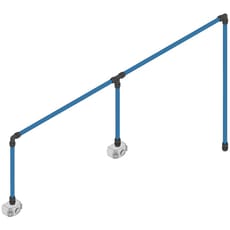
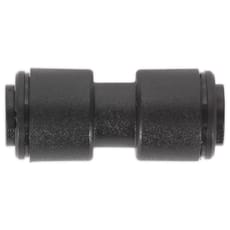
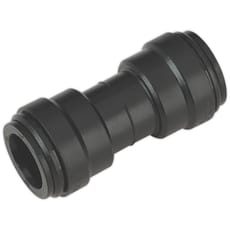
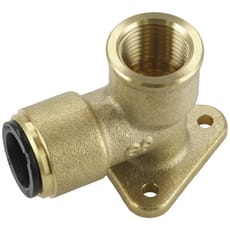
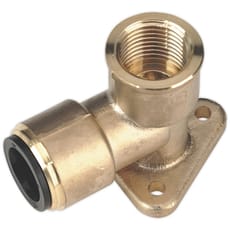
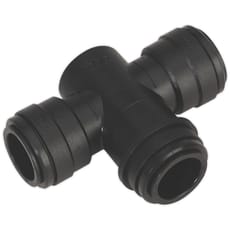
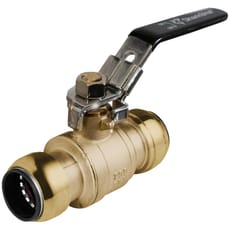
The SpeedFit range at Tooled-Up.com encompasses an extensive selection of components including brass wingback elbows, stem adaptors, straight adaptors, tees, reducers, ball valves, and anodised aluminium piping designed to work with popular systems including John Guest, SharkBite, and CAS Fast Fit. These systems accommodate the BSP thread standards and pipe sizes commonly found throughout UK workshops, making it straightforward to connect compressors, air receivers, and pneumatic tools into an efficient distribution network. Whether you're establishing a new workshop air supply from scratch, extending an existing system to additional workstations, or simply replacing worn fittings, these push-fit components offer exceptional versatility without requiring expensive tools or specialist skills.
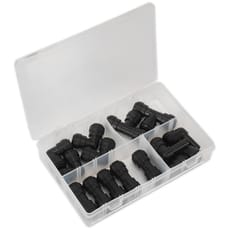
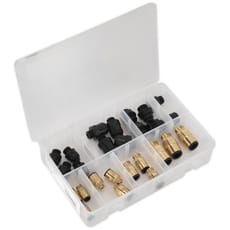
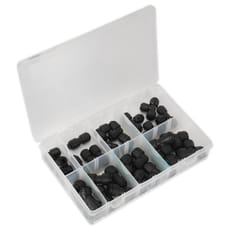
The primary advantage of SpeedFit technology lies in its combination of speed and reliability. Professional-grade connections that would traditionally require threading, sealing, and careful alignment can now be made in seconds with components that can be disconnected and reconfigured without cutting pipe or wasting materials. This makes SpeedFit systems particularly valuable in dynamic workshop environments where air supply requirements change as new equipment is added or workstations are reorganised. Sealey's comprehensive range includes multi-piece assortments containing up to 32 essential fittings, ensuring that busy workshops always have the components needed for quick repairs or system modifications without waiting for special orders.
Jargon Buster
- BSP (British Standard Pipe): The UK threading standard for pipe fittings, measured in inches such as 1/4", 3/8", 1/2", or 3/4". Parallel BSP threads (BSPP) are the standard for compressed air systems and require a sealing washer or PTFE tape for leak-free connections to compressors and pneumatic tools.
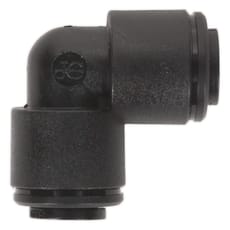
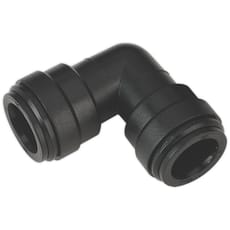
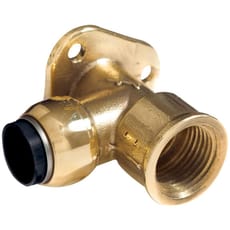
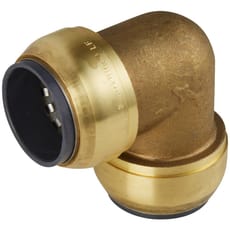
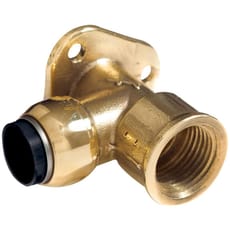
- Wingback Elbow: A push-fit elbow fitting featuring protruding "wings" or tabs that allow easy hand-tightening and removal without tools. Brass wingback elbows provide durable, corrosion-resistant 90-degree connections for changing direction in air line systems whilst maintaining easy serviceability.
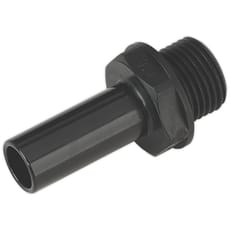
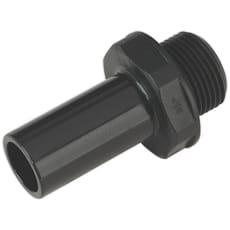
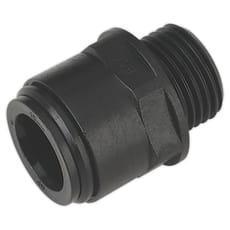
- Stem Adaptor: A crucial transition fitting that converts between SpeedFit push-fit connections on one end and traditional BSP threaded connections on the other, allowing seamless integration with existing air compressors, receivers, and pneumatic equipment that use conventional threaded ports.
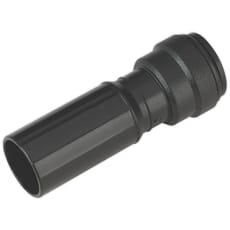
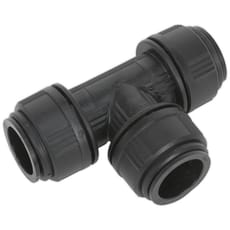
- Reducer/Reducing Tee: A fitting that connects pipes of different diameters, such as stepping down from 22mm main distribution pipe to 15mm branch lines. This allows you to run smaller diameter lines to individual workstations without compromising flow rates in the primary distribution network.
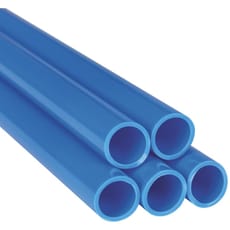
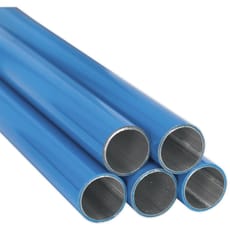
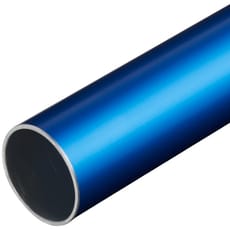
- Anodised Aluminium Pipe: Lightweight, corrosion-resistant piping treated with a protective anodised coating that significantly extends service life in workshop environments. Aluminium pipe weighs substantially less than steel alternatives, making installation easier and reducing wall bracket requirements whilst maintaining excellent strength and durability.
- Collet: The outer collar on a SpeedFit fitting containing a grab ring that locks onto the pipe when inserted. To disconnect, you push the collet towards the fitting body whilst gently withdrawing the pipe, releasing the grip without damaging the connection.
Who Uses Air Line SpeedFit Systems?
- Vehicle Mechanics and MOT Centres: Distributing compressed air to impact wrenches, ratchets, tyre inflators, and spray guns throughout multi-bay workshops with minimal installation time
- Fabricators and Welders: Creating flexible air supply networks for plasma cutters, pneumatic grinders, air-powered tools, and cooling equipment in metalworking environments
- Joiners and Cabinet Makers: Connecting air-powered nailers, staplers, sanders, and spray finishing equipment in woodworking workshops where system layouts frequently change
- Garage and Workshop Owners: Installing or upgrading compressed air distribution systems for professional facilities without the expense of hiring specialist pipefitters
- Plant and Facilities Maintenance Teams: Maintaining and expanding air line networks in industrial and manufacturing settings where minimising downtime is critical
- Agricultural Engineers: Setting up robust air systems in farm workshops for maintaining machinery and equipment in demanding rural environments
- Mobile Service Engineers: Carrying SpeedFit assortments in service vans for on-site repairs and modifications to customer air systems without needing threading equipment
- Bodyshops and Refinishers: Supplying compressed air to spray guns, DA sanders, and preparation tools across painting bays and preparation areas
- Serious DIY Enthusiasts: Creating professional-standard air tool systems in home workshops and garages with confidence in reliable, leak-free connections
How to Choose the Right Air Line SpeedFit Systems
Identify Your System Compatibility: Determine which SpeedFit system you're working with—John Guest, SharkBite, or CAS Fast Fit. Whilst these systems share similar push-fit principles, components are specifically engineered for each brand's pipe specifications. Check existing fittings for manufacturer markings to ensure compatibility, or consider standardising on one system throughout your entire workshop to avoid confusion and stocking multiple component types.
Assess Required Pipe Sizes: Most UK workshop air systems use either 15mm or 22mm pipe as their backbone. The 15mm diameter suits shorter pipe runs under 10 metres and lighter-duty applications where only one or two tools operate simultaneously, whilst 22mm provides superior flow rates for longer distances, multiple simultaneous users, or high-demand pneumatic equipment. Consider using 22mm for main distribution runs with reducers branching to 15mm lines at individual workstations, maintaining pressure where it matters most.
Plan Your Thread Connections: Identify the BSP thread sizes on your air compressor outlet, air receiver ports, and pneumatic tools. Common UK standards include 1/4" BSP for smaller tools and regulators, 3/8" BSP for mid-range equipment, and 1/2" or 3/4" BSP for compressor outlets and main distribution lines. Select appropriate stem adaptors and wingback elbows to transition between SpeedFit piping and these threaded components, ensuring you have the correct male or female thread orientation.
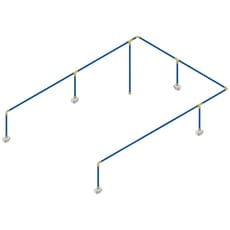
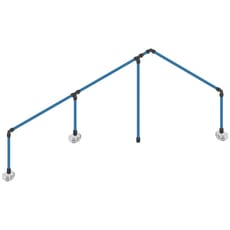
Calculate Configuration Requirements: Sketch your intended air line layout, noting where you need straight pipe runs, direction changes (elbows), branches (tees), and tool connection points. Count how many of each fitting type you'll require, adding 10-15% contingency for modifications during installation. The 30-piece or 32-piece assortments available from Tooled-Up provide excellent value if you're establishing a new system or maintaining multiple workshop locations, ensuring commonly needed fittings are always to hand.
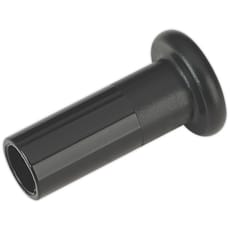
Consider Future Expansion: One of SpeedFit's greatest advantages is modification flexibility. Install ball valves at strategic positions to isolate sections for maintenance or add new branches without depressurising the entire system. Use end plugs to cap potential future connection points during initial installation—these can be quickly removed later when expansion is needed. Plan your main distribution loop with capacity for additional workstations or equipment you might acquire.
Material Selection: Brass fittings offer superior durability, corrosion resistance, and pressure rating compared to plastic alternatives, making them the professional choice for permanent installations. Anodised aluminium piping provides an excellent balance of strength, weight, and longevity for fixed pipework, whilst remaining significantly easier to handle and install than traditional steel pipe.
Popular Accessories
- Air Line Hose and Reels: Flexible rubber or hybrid hose for connecting fixed pipework to tools, with retractable spring or automatic reels for tidy storage and extended hose life
- Quick Release Couplings: PCL, Draper, and Sealey quick-connect fittings enabling rapid tool changes without air loss or threading connections
- Air Line Filters and Regulators: Essential components for removing moisture and particulates whilst controlling pressure to protect tools and improve performance
- Air Line Lubricators: Automatic oilers that meter precise oil quantities into the air stream, maintaining pneumatic tool performance and extending service life
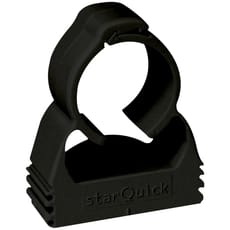
- Compressed Air Line Clips and Brackets: Galvanised or plastic clips for securing pipework neatly to walls and ceilings at appropriate intervals
- PTFE Tape and Thread Sealant: Essential for ensuring leak-free BSP threaded connections at compressor outlets and equipment inputs
- Pressure Gauges: Dial or digital gauges for monitoring air pressure at various points in your distribution system
- Air Compressors: The foundation of any pneumatic system—available at Tooled-Up.com from leading manufacturers including Sealey, DeWalt, Makita, and Milwaukee
- Condensate Drains: Manual or automatic drain valves for removing accumulated moisture from low points in the system
Safety Information
Compressed air systems require proper installation and maintenance to ensure safe operation in accordance with HSE guidelines. Always fully depressurise air lines before disconnecting or modifying SpeedFit fittings—residual pressure can cause fittings to blow off violently, causing serious injury. Ensure all connections are fully inserted until you feel and hear the collet engage before pressurising the system. Partially connected fittings can separate under pressure with potentially dangerous consequences.
Never exceed the maximum working pressure specified for your components, typically 10-15 bar for workshop SpeedFit systems. Over-pressurisation can cause seal failure, pipe separation, or fitting rupture. Regularly inspect all fittings, paying particular attention to O-ring seals, for wear, damage, or deterioration from oil contamination or age. Replace any components showing signs of degradation before they fail during operation.
When working with compressed air, always wear appropriate PPE including safety glasses or face shield, as debris and particles can be propelled at extremely high velocity. Never direct compressed air towards yourself or others—serious injury including air embolism can result from air injection under the skin or into body cavities. Avoid using compressed air to clean clothing whilst wearing it, and ensure proper ventilation when operating air-powered spray equipment.
Install adequate pressure relief valves on air receivers to prevent dangerous over-pressurisation. Fit moisture separators and filters to prevent water accumulation, which causes internal corrosion and compromises system integrity over time. Design your system with a slight fall towards drain points and install manual or automatic drain valves to remove condensation regularly, particularly important in unheated UK workshops during winter months.
Frequently Asked Questions
Can I mix different SpeedFit brands in the same compressed air system?
Whilst the push-fit principle is similar across brands, John Guest, SharkBite, and CAS Fast Fit systems use slightly different pipe outside diameters and collet specifications. It's strongly recommended to use components designed for your specific system to ensure proper sealing, grip, and long-term reliability. If you absolutely need to connect different systems, use appropriate BSP threaded transition adaptors rather than attempting to force incompatible push-fit components together.
What's the maximum pressure rating for SpeedFit air line systems?
Most SpeedFit components are rated for 10-15 bar working pressure, which comfortably accommodates typical workshop compressor outputs of 8-10 bar with an appropriate safety margin. Always check individual component specifications before installation and never exceed stated maximum pressures. Remember that pressure ratings may decrease at elevated temperatures or when using aged components with worn seals, so replace fittings showing any signs of deterioration.
How do I properly disconnect SpeedFit fittings without damaging them?
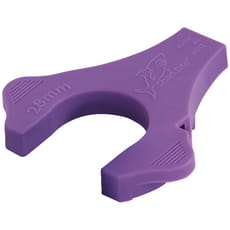
First, always fully depressurise the system at the compressor and open downstream connections to release any residual pressure. Push the collet (the outer collar) firmly towards the fitting body whilst simultaneously pulling the pipe gently outward. If fittings are stubborn after extended service, specialist SpeedFit release tools are available. Never use excessive force or sharp implements like screwdrivers that might damage the O-ring seals or internal grab ring, rendering the fitting unreliable for future use.
Do I need to use any sealant compound with SpeedFit push-fit connections?
No—the push-fit connections rely on precision-engineered internal O-rings for sealing and don't require PTFE tape, jointing compound, or thread sealant on the pipe itself. However, when connecting stem adaptors or wingback elbows to BSP threaded components like air compressors, receivers, or pneumatic tools, you should wrap PTFE tape clockwise on the male threads (typically 3-4 wraps) to ensure leak-free threaded connections.
Can SpeedFit systems be installed outdoors or in unheated UK workshops?
Yes, brass fittings and anodised aluminium piping are corrosion-resistant and suitable for outdoor or unheated installations. However, protect systems from freezing conditions, as trapped moisture can freeze and crack fittings or split pipes. Install pipework with a slight fall (approximately 1:100 gradient) towards drain points and fit manual or automatic drain valves to remove condensation regularly. In unheated environments, consider insulating exposed pipework or installing the system inside where temperatures remain above freezing during winter.