

Air Riveters

Pay in 3 interest-free payments on purchases from £20-£3000 with  . Learn more.
 Loading...
End of content
Error - No more pages to load
About Air Riveters
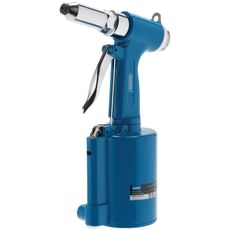
Air riveters, also known as pneumatic riveters or pop rivet guns, are indispensable power tools for tradespeople who need to join metal sheets, panels and components quickly and reliably. Unlike manual riveting tools that require significant hand strength and repeated squeezing, air riveters harness compressed air to deliver powerful, consistent force that sets rivets in seconds. This category features professional-grade air riveting tools from trusted brands including Sealey and Draper, designed to handle everything from light fabrication work to heavy-duty industrial applications.
Modern air riveters are engineered to work with various rivet sizes, typically ranging from 2.4mm to 6.4mm (or 3/32" to 1/4"), making them versatile tools for sheet metal fabrication, vehicle body repair, HVAC installation, and general construction work. Many models feature vacuum collection systems that capture spent rivet mandrels, keeping your workspace clean and reducing the time spent on site tidying. Whether you're working in an automotive workshop, on construction sites, or in a fabrication shop, an air riveter dramatically increases productivity compared to manual alternatives.
The air riveters available at Tooled-Up.com include standard models for everyday riveting tasks as well as heavy-duty air/hydraulic variants that combine pneumatic power with hydraulic force multiplication. These advanced tools are ideal for setting larger rivets or working with harder materials like stainless steel, where maximum pulling force is essential. With models suited to both occasional DIY use and demanding professional environments, you'll find the right air riveter to match your specific requirements and budget.
Jargon Buster
- Pulling Force
- The maximum force (measured in Newtons or kilograms) that an air riveter can exert to pull the rivet mandrel through the rivet body. Higher pulling force allows you to set larger rivets and work with harder materials.
- Rivet Mandrel
- The central pin or stem that passes through the rivet body. When pulled by the air riveter, it deforms the rivet to create the joint, then snaps off at a predetermined breaking point. Also called the rivet stem or pin.
- Vacuum Collection System
- A built-in feature on some air riveters that uses suction to capture spent mandrels after they break off, depositing them in a collection bottle. This keeps your workspace clean and prevents mandrels from becoming slip hazards.
- Air/Hydraulic Riveter
- A more powerful type of air riveter that uses compressed air to drive a hydraulic piston, multiplying the available force. These tools can set larger rivets and work with tougher materials than standard pneumatic riveters.
- Nose Piece
- The interchangeable tip of the air riveter that holds the rivet in place during installation. Different nose pieces accommodate different rivet sizes, and most air riveters come with a set covering common sizes.
- CFM (Cubic Feet per Minute)
- The measure of air consumption for pneumatic tools. Understanding your air riveter's CFM requirement ensures your compressor can deliver adequate air flow for consistent performance.
Who Uses Air Riveters?
Air riveters are relied upon by a wide range of trades and industries where permanent metal joining is required:
- Vehicle Body Repair Technicians – for repairing car panels, wheelarches, and structural components
- Fabricators and Metal Workers – assembling metal frameworks, enclosures, and custom fabrications
- HVAC Engineers – installing ductwork, ventilation panels, and air conditioning units
- Roofing Contractors – fixing metal roofing sheets, flashing, and guttering systems
- Shopfitters and Joiners – installing metal fixtures, shelving systems, and display units
- Aircraft and Marine Engineers – working on aluminium structures where riveting is the preferred joining method
- Agricultural Engineers – repairing farm machinery, trailers, and metal livestock equipment
- General Maintenance Teams – for repairs and installations across industrial and commercial premises
- DIY Enthusiasts – undertaking vehicle restoration projects or metal fabrication hobbies
How to Choose the Right Air Riveters
Selecting the appropriate air riveter depends on several key factors that match the tool to your specific requirements:
Rivet Size Capacity: Consider the range of rivet diameters you'll be working with most frequently. Standard air riveters typically handle rivets from 2.4mm to 4.8mm, whilst heavy-duty models accommodate up to 6.4mm. If you regularly work with larger structural rivets, an air/hydraulic model like the Sealey SA316 or SA317 will provide the necessary pulling force.
Pulling Force: The tool's maximum pulling force determines which materials and rivet types you can work with. For aluminium and softer materials, a standard model with moderate pulling force suffices. For stainless steel rivets or structural applications, choose a heavy-duty air riveter with higher force capacity.
Vacuum Collection: If you're working in customer-facing environments, clean workshops, or any location where spent mandrels could cause issues, opt for a model with an integrated vacuum system. This feature significantly reduces clean-up time and improves site safety.
Air Consumption and Compressor Compatibility: Check the tool's CFM rating and operating pressure (typically 90 PSI or 6.3 bar) against your air compressor's specifications. Ensure your compressor can deliver adequate air volume for continuous operation without constant cycling.
Build Quality and Durability: Professional-grade tools from manufacturers like Sealey and Draper feature robust aluminium or steel construction that withstands daily workshop use. Consider the environment where you'll use the tool – if it's exposed to harsh conditions, prioritise corrosion-resistant materials.
Accessory Kit Inclusion: Some models, such as the Draper DAT-ARK, come complete with nose pieces for various rivet sizes, a carry case, and sometimes additional accessories. These kits offer better value if you're setting up a new workshop or need a comprehensive solution.
Popular Accessories
To get the most from your air riveter, you'll need various accessories and consumables:
- Assorted Rivets – stock of aluminium, steel, and stainless steel pop rivets in common sizes (2.4mm, 3.2mm, 4.0mm, 4.8mm)
- Air Hose and Fittings – quality reinforced air hose with quick-release couplers for efficient connection to your compressor
- Air Line Filter/Regulator/Lubricator Unit – protects your tool from moisture and contaminants whilst ensuring optimal lubrication
- Replacement Nose Pieces – spare nose pieces for different rivet sizes, as these components eventually wear
- Thread Repair Kit – for maintaining the nose piece threads on your air riveter
- Air Tool Oil – pneumatic tool lubricant to maintain seals and internal components
- Safety Glasses – essential eye protection when riveting, as mandrels can occasionally eject with force
- Work Gloves – protective gloves from brands like Portwest or Scruffs for handling sharp metal edges
- Drill Bits and Hole Cutters – for preparing accurate pilot holes before riveting
Safety Information
Working safely with air riveters protects both you and your colleagues from potential hazards:
Personal Protective Equipment: Always wear safety glasses or a face shield when operating an air riveter, as spent mandrels can eject unexpectedly and metal shavings may fly off during rivet installation. Hearing protection is advisable in environments where multiple pneumatic tools operate simultaneously, as compressed air tools can contribute to noise levels exceeding HSE recommended limits.
Air Line Safety: Ensure all air hoses are in good condition without cracks or damage, and that all connections are secure before pressurising the system. Never exceed the manufacturer's recommended operating pressure, and always disconnect the air supply before changing nose pieces or performing maintenance.
Tool Maintenance: Regularly lubricate your air riveter according to the manufacturer's guidelines to prevent premature wear and potential malfunction. Check that spent mandrels are being properly ejected or collected – a blocked mandrel collection system can cause the tool to jam.
Work Area Considerations: If not using a vacuum collection system, be aware that spent mandrels can create slip hazards on workshop floors. Regularly clear these from your work area, particularly where colleagues may be walking.
Proper Technique: Hold the air riveter square to the workpiece to ensure even rivet setting. Angled installation can cause rivets to set improperly, potentially compromising joint strength. Never point an air riveter at yourself or others, even when disconnected from the air supply.
Frequently Asked Questions
What size air compressor do I need to run an air riveter?
Most air riveters require a compressor capable of delivering 90 PSI (6.3 bar) with an air consumption of around 4-6 CFM. A 24-litre compressor with at least a 2HP motor is typically adequate for intermittent use, whilst professional applications benefit from a 50-litre or larger compressor to maintain consistent pressure during extended riveting sessions.
What's the difference between a standard air riveter and an air/hydraulic model?
Standard air riveters use compressed air directly to pull the rivet mandrel, whilst air/hydraulic models use compressed air to power a hydraulic cylinder that multiplies the pulling force. Air/hydraulic riveters can set larger rivets (up to 6.4mm) and work with harder materials like stainless steel, making them essential for heavy-duty structural work.
Can I use an air riveter for all types of rivets?
Air riveters are designed specifically for blind rivets (pop rivets), which consist of a tubular body and mandrel. They cannot be used for solid rivets, which require different installation methods involving bucking bars or rivet sets. Within the blind rivet category, ensure your air riveter has sufficient pulling force for the material – stainless steel rivets require more force than aluminium.
Why does my air riveter keep jamming?
Common causes include insufficient air pressure, lack of lubrication, worn nose pieces, or using rivets that exceed the tool's capacity. Ensure your compressor maintains adequate pressure, regularly oil the tool's air inlet, and check that nose pieces are clean and properly fitted. If using a vacuum collection system, empty the collection bottle regularly to prevent blockages.
Do I need different nose pieces for different rivet sizes?
Yes, air riveters require the correct nose piece for each rivet diameter to hold the rivet securely during installation. Most air riveters stocked at Tooled-Up include a set of interchangeable nose pieces covering common sizes (2.4mm, 3.2mm, 4.0mm, 4.8mm). Using the wrong size can result in poor rivet setting or damage to the tool.