

Air Screwdrivers

Pay in 3 interest-free payments on purchases from £20-£3000 with  . Learn more.
 Loading...
End of content
Error - No more pages to load
About Air Screwdrivers
Air screwdrivers are pneumatic power tools designed to drive and remove screws quickly and efficiently using compressed air as their power source. These professional-grade tools are essential equipment in manufacturing, assembly lines, automotive workshops, and engineering facilities where high-volume fastening work demands speed, consistency, and reliability. Unlike electric screwdrivers, air screwdrivers deliver continuous power without the risk of motor burnout, making them ideal for repetitive production work and intensive assembly tasks where maintaining consistent torque is critical for product quality.
The range at Tooled-Up.com includes both pistol grip and inline configurations from trusted manufacturers like Sealey, engineered to provide precise torque control and rapid operation. These tools are particularly valued in professional environments for their lightweight design, reduced maintenance requirements compared to electric alternatives, and the ability to work safely in damp conditions where electrical tools might pose hazards. The compressed air power system delivers instant torque without the weight of batteries or electric motors, significantly reducing operator fatigue during prolonged use on production lines or assembly benches.
With adjustable torque settings and quick-change bit holders, modern air screwdrivers offer the versatility needed for everything from delicate electronics assembly requiring precise 2-3 Nm torque to robust automotive component fitting demanding 10-15 Nm or more. Their ability to maintain consistent performance throughout extended shifts makes them an indispensable addition to any workshop equipped with a compressed air system, delivering productivity benefits that quickly offset the initial investment in pneumatic infrastructure.
Jargon Buster
- CFM (Cubic Feet per Minute) - The volume of air consumed by the tool during operation. Understanding the CFM requirement ensures your air compressor can adequately supply the tool without pressure drops affecting performance. Most air screwdrivers require between 3-6 CFM at operating pressure.
- Torque Range - The rotational force the screwdriver can apply, typically measured in Newton-metres (Nm) or pound-inches (lb.in). Adjustable torque settings prevent over-tightening and damage to delicate components or materials, essential for consistent assembly work.
- Free Speed (RPM) - The maximum rotational speed of the tool when operating without load, measured in revolutions per minute. Higher RPM generally means faster driving speeds for increased productivity, with typical ranges between 800-2000 RPM.
- Operating Pressure - The air pressure required for optimal performance, typically measured in PSI (pounds per square inch) or bar. Most air screwdrivers operate efficiently at 90 PSI or 6.2 bar, though some heavy-duty models may require higher pressures.
- Quick-Change Chuck - A mechanism allowing rapid bit changes without tools, typically accepting quarter-inch hex drive bits. This feature improves efficiency when switching between different screw sizes or types during assembly work.
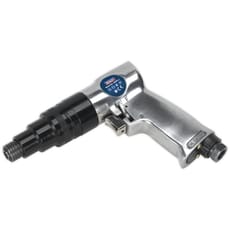
- Inline vs Pistol Grip - Two common air screwdriver configurations. Inline designs offer better access in confined spaces and overhead work, whilst pistol grip models like the Sealey SA58 provide more comfortable handling for extended use and better leverage for downward pressure.
Who Uses Air Screwdrivers?
Air screwdrivers are essential tools for numerous trades and industries requiring reliable, high-volume fastening capabilities:
- Automotive Technicians and Mechanics - for interior trim installation, dashboard assembly, and component fitment where consistent torque prevents stripped threads
- Manufacturing and Production Line Workers - assembling products, electronics, appliances, and consumer goods with repetitive fastening operations
- Cabinet Makers and Furniture Manufacturers - for high-speed fastening in flat-pack furniture production and bespoke joinery assembly
- Electronics Assembly Technicians - working with delicate components requiring precise torque control to prevent damage to circuit boards
- Agricultural and Plant Machinery Engineers - maintaining and assembling large equipment and vehicle components in workshop environments
- Shopfitters and Retail Installation Teams - fitting display units, shelving systems, and retail furniture where speed and consistency matter
- Maintenance Engineers - in factories, warehouses, and industrial facilities requiring regular equipment servicing and repairs
- Aerospace and Aviation Technicians - for precision assembly work requiring consistent torque application and documented fastening procedures
How to Choose the Right Air Screwdrivers
Torque Requirements: Consider the range of fastening tasks you'll perform. Light-duty assembly work may only need 2-5 Nm, whilst automotive and engineering applications might require 10-15 Nm or more. Models with adjustable torque settings like the Sealey SA623 Super Duty offer the greatest versatility across different materials and screw sizes, preventing damage to delicate components whilst providing sufficient power for demanding applications.
Grip Configuration: Pistol grip designs provide excellent ergonomics for repetitive use and better control when applying downward pressure during assembly work. Inline models offer superior access in tight spaces and confined areas where a pistol grip won't fit comfortably, making them ideal for automotive interior work or tight production line layouts.
Air Consumption and Compressor Compatibility: Check the tool's CFM requirements against your compressor's output capacity. An undersized compressor will struggle to maintain consistent pressure, affecting performance and productivity. Factor in other pneumatic tools that may run simultaneously on the same air line, and ensure your compressor tank size can handle intermittent high-demand periods without constant motor cycling.
Speed and Productivity: Higher RPM ratings generally translate to faster driving speeds, crucial for production environments where cycle times directly impact profitability. However, slower speeds with better torque control may be preferable for precision assembly work requiring consistent results without risk of cam-out or fastener damage.
Build Quality and Durability: Professional-grade models available from Tooled-Up feature durable construction, efficient air motors, and better sealing against dust and moisture. Super duty variants are engineered for intensive daily use in demanding industrial environments, with reinforced housings and superior bearing quality that justifies their investment for high-volume operations.
Bit Compatibility: Verify the chuck size and bit-holding mechanism. Quarter-inch hex drives are industry standard and offer the widest accessory compatibility, whilst quick-change systems improve efficiency during multi-task operations by eliminating the need for tools during bit changes.
Popular Accessories
Maximise the performance and longevity of your air screwdriver with these essential accessories and complementary products:
- Air Hoses and Fittings - quality reinforced rubber or hybrid hoses with quick-release couplers for reliable air supply and reduced pressure drop
- Screwdriver Bit Sets - comprehensive assortments including Phillips, Pozi, slotted, Torx, and hex bits in various lengths for different applications
- Pneumatic Tool Oil - essential for maintaining air motor efficiency and preventing premature wear, extending tool lifespan significantly
- Inline Air Regulators - for precise pressure control and consistent torque output, particularly when working with materials of varying hardness
- Filter-Regulator-Lubricator (FRL) Units - removes moisture and contaminants from compressed air whilst automatically lubricating the tool during operation
- Magnetic Bit Holders - improve screw retention and prevent dropped fasteners during overhead work or awkward access situations
- Air Compressors - adequate capacity workshop compressors to power your pneumatic tools reliably without performance degradation
- Tool Balancers - suspended support systems reducing operator fatigue during extended production runs or assembly line work
- Protective Storage Cases - keeping your air screwdriver and accessories organised, protected, and ready for site work or mobile service applications
Safety Information
Personal Protective Equipment: Always wear appropriate safety glasses or goggles to protect against flying debris, loose screws, or material fragments. Consider hearing protection in production environments where multiple air tools operate simultaneously, as compressed air exhaust can contribute to workplace noise levels approaching 85 decibels.
Air Supply Safety: Never exceed the manufacturer's recommended operating pressure, as this can cause tool damage, premature wear, or dangerous malfunctions including bit ejection. Install pressure regulators to maintain consistent, safe operating pressures. Always disconnect the air supply before changing bits or performing maintenance to prevent accidental activation.
Proper Handling: Maintain a firm grip and ensure the bit is properly seated in the screw head before activating the trigger to prevent cam-out and bit damage. Never point the tool at yourself or others, even when disconnected. Be aware that air screwdrivers can cause the bit to continue spinning briefly after releasing the trigger due to residual air pressure in the motor.
Maintenance Requirements: Regular lubrication with pneumatic tool oil is essential for safe operation and longevity. Check hoses regularly for wear, cracks, or damage that could cause sudden disconnection or air leaks. HSE guidelines recommend regular inspection of pneumatic tools in commercial environments to ensure continued safe operation and compliance with workplace safety regulations.
Work Area Considerations: Ensure adequate workspace lighting and maintain an organised work area free from trip hazards. Coiled air hoses should be properly managed using hose reels or hooks to prevent entanglement or workspace obstruction. Ensure adequate ventilation when using air tools extensively, as exhaust air can displace oxygen in confined spaces.
Frequently Asked Questions
Do I need an air compressor to use an air screwdriver?
Yes, air screwdrivers require a compressed air supply to operate. You'll need a suitable air compressor with adequate CFM output and tank capacity to maintain consistent pressure during use. Most air screwdrivers operate efficiently at 90 PSI (approximately 6.2 bar), so ensure your compressor can reliably deliver this pressure whilst running other tools if needed. A typical 50-litre compressor with 8-10 CFM output should handle most air screwdrivers comfortably for intermittent use.
What are the advantages of air screwdrivers over electric cordless models?
Air screwdrivers offer several benefits including lighter weight (no heavy battery or motor), continuous operation without recharging downtime, consistent power output throughout the work period, and superior durability for high-volume production work. They're also safer in damp environments and generate less heat during extended use, reducing operator fatigue. For production line work or intensive assembly operations, pneumatic models typically deliver better value over their operational lifetime.
How do I maintain my air screwdriver?
Regular maintenance involves adding 2-3 drops of pneumatic tool oil into the air inlet before each use or at the start of each working day. This lubricates the internal air motor and prevents premature wear. Installing an inline FRL unit provides automatic lubrication and removes moisture from the air supply, particularly important in UK workshops where humidity can introduce condensation into compressed air systems. Periodically check and clean the air inlet filter, and inspect the tool for any loose components or damage.
Can air screwdrivers be used for drilling operations?
No, air screwdrivers are specifically designed for driving and removing screws with controlled torque. They lack the power, chuck capacity, and structural design needed for drilling operations. The clutch mechanisms and lower torque outputs that make them ideal for fastening work make them unsuitable for the higher loads and lateral forces involved in drilling. For drilling tasks, you'll need a dedicated air drill which is engineered to handle these different operational demands.
What size air compressor do I need for an air screwdriver?
This depends on your specific tool's CFM requirements and intended use. For occasional use with a single air screwdriver, a 25-50 litre tank compressor delivering 5-8 CFM should suffice for most applications. For continuous production work or running multiple tools simultaneously, consider a larger industrial compressor with a 100+ litre tank and higher CFM output to maintain consistent pressure without the motor constantly cycling, which reduces compressor lifespan and increases energy costs.