

Anti-Corrosion Aerosol Paint
Pay in 3 interest-free payments on purchases from £30-2000 with  . Learn more.
 Loading...
End of content
Error - No more pages to load
About Anti-Corrosion Aerosol Paint
Anti-corrosion aerosol paint provides essential protective coatings for metal surfaces exposed to moisture, salt, chemicals, and other corrosive elements. These specialist spray formulations combine rust inhibitors with durable finishes in convenient aerosol formats, offering tradespeople and DIY enthusiasts quick, effective protection for metalwork across restoration, maintenance, and preventative applications. Unlike standard decorative spray paints, anti-corrosion products create active protective barriers that resist environmental factors causing metal degradation, with many formulations designed to be applied directly over existing rust after minimal preparation.
The aerosol delivery system offers significant advantages for anti-corrosion applications, including even coverage on irregular surfaces, excellent penetration into awkward areas, and faster application times compared to brush-applied treatments. Modern formulations available from Tooled-Up.com are engineered to withstand UK weather conditions, from damp coastal environments where salt-laden air accelerates corrosion to inland areas experiencing temperature fluctuations throughout the year. These products suit both interior and exterior applications, protecting everything from automotive components and agricultural equipment to garden furniture, railings, gates, and industrial machinery.
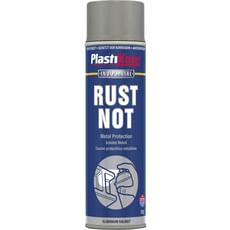
The category includes professional-grade products from trusted brands like Plastikote, whose Rust Not aerosol spray paint exemplifies the convenience and performance expected by professionals. These formulations penetrate metal surfaces to form permanent bonds that resist impact, peeling, flaking, and fading, with rapid drying times allowing touch-dry results in 10-20 minutes and thorough drying within 30-40 minutes. Coverage rates typically reach approximately 2.6m² per can, making them economical choices for both small touch-up jobs and larger protective coating projects.
Jargon Buster
- Rust Converter: A chemical treatment that transforms existing iron oxide (rust) into a stable, paintable surface, allowing direct application over rusted areas without complete removal, saving preparation time on corroded metalwork.
- Flash-Off Time: The initial drying period between coats when solvents evaporate from the surface, typically 10-30 minutes for aerosol paints, crucial for achieving proper adhesion between layers without lifting or wrinkling.
- Salt Spray Rating: A standardised test measurement indicating how many hours a coating can withstand continuous salt spray exposure before showing corrosion signs, providing reliable indicators of protective performance in coastal and road-salt environments.
- Touch-Dry Time: The period after application when paint surfaces become dry to touch, usually 30 minutes to 2 hours for anti-corrosion aerosols, though full curing requiring maximum durability may take 24-48 hours.
- Coverage Rate: The surface area a single aerosol can will coat effectively, typically 1-3m² depending on application technique, surface texture, and number of coats applied, essential for calculating material requirements.
- Recoat Window: The optimal time period during which subsequent coats can be applied for best adhesion, usually specified as both minimum and maximum times to ensure proper bonding between layers.
Who Uses Anti-Corrosion Aerosol Paint?
Anti-corrosion aerosol paints serve numerous trades and applications:
- Automotive Technicians and Mechanics: Protecting vehicle chassis, brake components, exhaust systems, and bodywork from road salt and moisture damage
- Agricultural Workers and Farmers: Maintaining farm machinery, gates, trailers, and equipment exposed to harsh outdoor conditions, fertilisers, and chemicals
- Marine Engineers and Boat Owners: Protecting metal components in saltwater environments where corrosion rates are significantly accelerated
- Building Maintenance Teams: Treating structural steelwork, fire escapes, railings, and metalwork on commercial and residential properties
- Metal Fabricators and Welders: Providing protective finishes on newly fabricated items and weld seams particularly vulnerable to rust
- Landscape Gardeners: Restoring and protecting garden furniture, ornamental metalwork, fencing, and outdoor structures
- Property Developers and Renovators: Treating architectural metalwork during restoration projects and heritage building maintenance
- DIY Enthusiasts and Homeowners: Maintaining garden tools, bicycles, outdoor furniture, gates, and household metalwork
How to Choose the Right Anti-Corrosion Aerosol Paint
Surface Condition: Assess whether you're treating clean metal, lightly rusted surfaces, or heavily corroded areas. Products like Plastikote Rust Not can be applied directly to rusted surfaces after wire brushing, whilst others require complete rust removal. Formulations with rust converter properties offer the most versatile solutions for varied conditions, saving preparation time on site.
Application Environment: Consider whether treated items will be used indoors, outdoors, or in particularly harsh conditions such as coastal areas or industrial environments. Exterior-grade formulations offer enhanced UV resistance and weatherproofing, whilst specialist marine-grade options provide superior salt resistance essential for seaside locations.
Coverage and Finish: Check coverage rates per can, typically 1-3m² depending on application method and surface texture. Decide whether you need primer only, combined primer-finish systems, or separate topcoat options. Finishes range from matt to gloss, with hammered or textured effects also available for decorative applications.
Drying Time Requirements: For time-sensitive projects, consider products with rapid drying times. Professional tradespeople often prefer formulations like Plastikote Rust Not that allow touch-dry results within 10-20 minutes and recoating at any time, essential for completing jobs efficiently on site without extended waiting periods.
Temperature Tolerance: Verify application and service temperature ranges, particularly important for items like engine components, exhaust systems, or metalwork in unheated outdoor structures subject to UK winter conditions and summer heat.
Compatibility Considerations: If planning to apply decorative paint over anti-corrosion treatment, ensure compatibility with standard topcoat systems. Some products work as standalone finishes, whilst others function best as primers beneath conventional paint.
Popular Accessories
Maximise effectiveness and application quality with these complementary products available at Tooled-Up.com:
- Wire Brushes and Abrasive Pads: Essential for surface preparation, removing loose rust, mill scale, and contaminants before application
- Spray Can Trigger Handles: Ergonomic attachments reducing finger fatigue during extended spraying sessions and improving control for precise application
- Masking Tape and Film: Protecting adjacent surfaces and creating clean edges on restoration projects and partial treatments
- Degreasing Agents and Surface Cleaners: Removing oil, grease, and dirt to ensure proper adhesion of anti-corrosion coatings
- Respiratory Protection: Appropriate dust masks and organic vapour respirators when working with aerosol paints, especially in confined spaces
- Disposable Gloves: Nitrile or latex gloves protecting hands from paint and chemicals during application and cleanup
- Drop Sheets and Protective Coverings: Preventing overspray damage to surrounding areas, vehicles, and equipment
- Sandpaper and Abrasive Sheets: Various grits for surface preparation and keying existing finishes for better adhesion
Safety Information
Ventilation Requirements: Always work in well-ventilated areas when using aerosol paints. Outdoor application is ideal, but if working indoors, ensure adequate air circulation to prevent solvent vapour accumulation. This is particularly important under COSHH regulations governing workplace exposure to hazardous substances in the UK.
Respiratory Protection: Wear appropriate respiratory protection, particularly when spraying overhead or in confined spaces. HSE guidance recommends organic vapour respirators for prolonged exposure to aerosol paints. Simple dust masks are insufficient for solvent protection and do not comply with professional safety standards.
Fire Safety: Aerosol paints are highly flammable. Keep away from naked flames, sparks, and hot surfaces. Ensure no ignition sources are present in working areas, and never spray near welding operations or electrical equipment that could produce sparks. Store in cool, dry locations away from heat sources and direct sunlight.
Skin and Eye Protection: Wear safety glasses or goggles to prevent paint mist reaching eyes, and use disposable gloves to avoid skin contact. Some anti-corrosion formulations contain phosphoric acid or other irritants that can cause skin sensitisation with repeated exposure.
Disposal: Empty aerosol cans should be disposed of responsibly according to local authority guidelines. Never puncture or incinerate aerosol containers, even when apparently empty, as they remain pressurised and present explosion hazards.
Frequently Asked Questions
Can I apply anti-corrosion aerosol paint directly over rust?
Many modern anti-corrosion aerosols, including rust converter formulations, can be applied directly to rusted surfaces after wire brushing to remove loose, flaking rust. Products like Plastikote Rust Not are specifically designed for this purpose, penetrating metal surfaces to form permanent bonds. However, for best results and maximum longevity, remove as much rust as practical before application. Heavy, pitted corrosion should be treated more aggressively with grinding or chemical rust removers before painting. Always follow manufacturer's specific surface preparation guidance on product labels.
How long does anti-corrosion aerosol paint last once applied?
Lifespan depends on environmental exposure and surface preparation quality. In sheltered outdoor conditions with proper application, expect 3-5 years of protection before maintenance is required. Harsh coastal environments or areas with road salt exposure may require recoating every 2-3 years. Indoor applications or items with minimal exposure can last considerably longer. Regular inspection and touch-up of any damaged areas significantly extends overall protection, particularly on items subject to mechanical wear or impact.
What temperature should I apply anti-corrosion aerosol paint?
Most anti-corrosion aerosols perform best when applied between 10°C and 25°C in dry conditions. Avoid application in direct sunlight, high humidity, or when rain is forecast within 24 hours. Cold temperatures slow drying times and can affect finish quality, whilst excessive heat causes rapid solvent evaporation leading to dry, rough finishes. Bring aerosol cans to room temperature before use if stored in cold conditions, as this ensures proper spray patterns and coverage.
How many coats of anti-corrosion paint do I need?
Typically, two to three light coats provide better protection than one heavy coat, which risks runs and longer drying times. Apply the first coat thinly to establish adhesion, wait for the flash-off period (usually 10-30 minutes depending on conditions), then apply subsequent coats. For heavily rusted or pitted surfaces, three coats ensure complete coverage of irregular surfaces. Products like Plastikote Rust Not offer coverage of approximately 2.6m² per can, helping calculate material requirements for specific projects.
Do I need primer before anti-corrosion aerosol paint?
Most anti-corrosion aerosol paints are formulated as primer-finish systems and don't require separate primers when applied to properly prepared metal. However, if planning to topcoat with different colours or finishes, check compatibility. For bare galvanised steel or aluminium, specialised etch primers may improve adhesion. Product specifications will indicate whether standalone systems or whether additional primers or topcoats are recommended for specific applications.