

Antifreeze Testers

Pay in 3 interest-free payments on purchases from £20-£3000 with  . Learn more.
 Loading...
End of content
Error - No more pages to load
About Antifreeze Testers
Antifreeze testers are essential diagnostic tools designed to measure the concentration and effectiveness of coolant in vehicle and machinery cooling systems. These precision instruments enable mechanics, technicians, and vehicle owners to determine whether their coolant mixture provides adequate protection against freezing in cold temperatures and overheating during warmer conditions. By testing the specific gravity or refractive index of coolant solutions, these testers indicate the freezing point and boiling point of the mixture, ensuring optimal engine protection throughout the year.
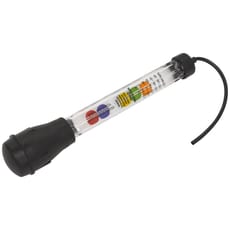
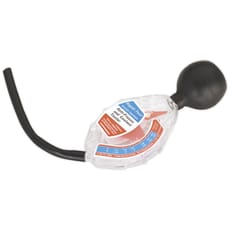
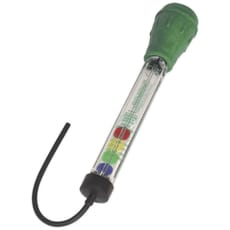
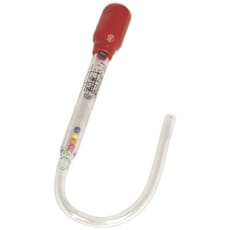
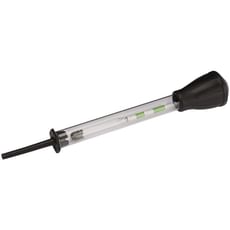
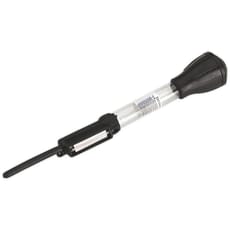
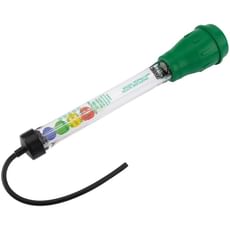
Available in several different formats, antifreeze testers include disc-type models, ball-type testers, tube-style designs, and twin rotor varieties. Each type offers specific advantages depending on the user's requirements and working environment. Disc-type testers feature floating indicators that provide quick visual readings on temperature scales, whilst tube-type models use coloured balls or discs that float at different coolant concentrations. Ball-type pocket testers deliver portability and convenience for mobile mechanics, and twin rotor designs offer enhanced accuracy for professional applications requiring precise measurements.
Modern antifreeze testers are calibrated to work with different coolant formulations, including both ethylene glycol and propylene glycol-based antifreezes, which are the two primary types used in automotive and commercial vehicle applications across the UK. Tooled-Up.com stocks professional-grade antifreeze testers from trusted brands including Sealey and Draper, providing reliable instruments that deliver accurate readings quickly and efficiently. Whether you're running a busy workshop or maintaining your own fleet, having a quality antifreeze tester in your toolbox is invaluable for diagnosing cooling system issues, preventing costly engine damage, and ensuring vehicles are properly prepared for British winter conditions.
Jargon Buster
- Ethylene Glycol: The most common type of automotive antifreeze, a toxic chemical compound that provides excellent freeze and boil protection when mixed with water. Requires careful handling and disposal in accordance with UK environmental regulations.
- Propylene Glycol: A less toxic alternative to ethylene glycol antifreeze, often used in applications where environmental safety is a priority. Requires specific testers calibrated for this formulation.
- Specific Gravity: The density of the antifreeze solution compared to water, which changes with coolant concentration. Ball-type and disc-type testers measure this property to determine freeze protection levels.
- Freezing Point: The temperature at which the coolant mixture will begin to freeze. Proper antifreeze concentration typically protects down to -35°C or lower, essential for UK winter conditions.
- Disc Type/Dial Type: Testers featuring a floating disc or dial indicator that rises and falls based on coolant density, providing an easy-to-read temperature scale calibrated in Celsius.
- Twin Rotor Design: Advanced antifreeze testers featuring dual measuring chambers for enhanced accuracy and reliability in professional workshop environments.
Who Uses Antifreeze Testers?
- Motor Mechanics and Automotive Technicians: Professional workshops testing coolant systems during routine servicing and diagnostics
- Mobile Mechanics: Tradespeople requiring portable diagnostic equipment for on-site vehicle maintenance
- Fleet Maintenance Managers: Professionals responsible for maintaining commercial vehicle fleets, lorries, and vans
- Plant and Agricultural Mechanics: Specialists servicing tractors, harvesters, and heavy machinery with cooling systems
- HGV and Commercial Vehicle Technicians: Tradespeople working on large vehicles requiring robust cooling system maintenance
- DIY Enthusiasts and Home Mechanics: Vehicle owners performing their own maintenance and seasonal preparation
- MOT Testing Stations: Garages conducting comprehensive vehicle safety checks
- Car Dealerships and Service Centres: Franchise and independent dealers maintaining customer vehicles
How to Choose the Right Antifreeze Testers
Selecting the appropriate antifreeze tester depends on several practical considerations. First, identify which type of coolant you'll be testing most frequently. Ethylene glycol testers are suitable for most conventional automotive applications, whilst propylene glycol testers are necessary for vehicles using this alternative formulation. Professional workshops benefit from having both types available to accommodate different customer vehicles.
Consider the tester design that best suits your working style. Disc-type and dial-type testers offer quick, visual readings with floating indicators that display temperature ranges directly. Tube-type testers use coloured balls or discs that float at different coolant concentrations, providing clear visual confirmation. Ball-type pocket testers offer portability and convenience for mobile mechanics, whilst twin rotor designs provide enhanced accuracy for professional applications requiring precise measurements.
Durability is crucial for workshop environments. Look for testers constructed from robust materials with chemical-resistant components that withstand repeated exposure to coolant solutions. The Tooled-Up range includes instruments from quality brands like Sealey and Draper, manufactured for professional use and offering reliable performance over extended periods. Consider whether the tester includes clear temperature scales marked in Celsius, essential for UK use, and whether the scale range covers typical British winter temperatures down to -35°C or lower.
Ease of use matters, particularly in busy workshop environments. Choose testers with clear, easy-to-read scales and simple operation that allows quick testing without complicated procedures. Some models feature enlarged scales or colour-coded zones that speed up interpretation. For commercial workshops, having multiple testers ensures continued operation if one requires cleaning or maintenance.
Popular Accessories
- Coolant Recovery and Drainage Equipment: Essential for safely removing old coolant before testing or replacement
- Funnels and Filling Equipment: Specialised funnels for mess-free coolant testing and system refilling
- Coolant System Pressure Testers: Complementary diagnostic tools for identifying leaks and pressure issues
- Protective Gloves: Chemical-resistant gloves for safe handling of antifreeze solutions
- Waste Coolant Containers: Appropriate storage for used antifreeze awaiting proper disposal
- Workshop Cleaning Solutions: Degreasers and cleaners for maintaining testing equipment
- Coolant and Antifreeze Products: Various formulations for topping up or replacing coolant systems
Safety Information
Antifreeze solutions, particularly ethylene glycol-based products, are toxic substances requiring careful handling. Always wear appropriate personal protective equipment including chemical-resistant gloves and safety glasses when testing coolant. Work in well-ventilated areas to avoid inhaling vapours, and never siphon coolant by mouth—always use the tester's built-in sampling mechanism.
Be aware that ethylene glycol has a sweet taste but is extremely poisonous if ingested. Store testing equipment and coolant containers securely away from children and animals. Clean testers thoroughly after use to prevent crystallisation and maintain accuracy. Dispose of used antifreeze responsibly according to UK environmental regulations—never pour it down drains or onto the ground. Contact your local waste disposal facility for proper hazardous waste collection services.
When testing hot cooling systems, allow the engine to cool completely before removing the radiator cap to avoid scalding from pressurised steam or hot coolant. Always follow vehicle manufacturer guidelines and HSE recommendations when working with cooling systems and chemical products in workshop environments.
Frequently Asked Questions
How often should I test my vehicle's antifreeze?
Test your coolant at least twice yearly—before winter to ensure adequate freeze protection, and before summer to confirm proper boil-over protection. Additionally, test whenever coolant appears discoloured, during routine servicing, or if you notice cooling system issues such as overheating or leaks.
Can I use the same tester for ethylene glycol and propylene glycol antifreeze?
No, these two coolant types have different specific gravity properties and require dedicated testers calibrated for each formulation. Using the wrong tester will produce inaccurate readings. Check your vehicle's handbook to identify which coolant type is specified, then select the appropriate tester from Tooled-Up.com for accurate diagnostics.
What antifreeze concentration is recommended for UK conditions?
A 50/50 mixture of antifreeze and water typically provides protection down to approximately -35°C, which is suitable for most UK winter conditions. This concentration also offers optimal corrosion protection and heat transfer properties. Avoid exceeding 70% antifreeze concentration, as this actually reduces freeze protection and cooling efficiency.
Why do disc-type testers sometimes give inconsistent readings?
Inconsistent readings often result from trapped air bubbles, insufficient coolant sample, or contamination on the disc or internal surfaces. Ensure you draw a full sample, tap the tester gently to release air bubbles, and clean the instrument regularly. Temperature can also affect readings—allow the coolant sample to stabilise at room temperature for most accurate results.
How do I maintain my antifreeze tester for accurate long-term use?
Rinse the tester thoroughly with clean water after each use to prevent coolant crystallisation and internal deposits. Store in a clean, dry location away from extreme temperatures. Periodically check calibration using a known coolant mixture or fresh antifreeze at the recommended concentration. Replace testers if components become damaged, scales fade, or readings become consistently unreliable.