
Band Clamps

Pay in 3 interest-free payments on purchases from £20-£3000 with  . Learn more.
Loading...
End of content
Error - No more pages to load
About Band Clamps
Band clamps are ingenious clamping tools that apply uniform pressure around the entire perimeter of a workpiece, making them indispensable for assembling frames, cabinets, and irregularly shaped objects. Unlike traditional clamps that exert force from just two points, band clamps use a flexible webbing strap combined with a ratcheting mechanism to distribute clamping pressure evenly around circular, oval, rectangular, or polygonal assemblies. This even distribution prevents distortion and ensures multiple joints receive simultaneous pressure—essential for achieving professional results in frame construction, furniture making, and repair work.
The range at Tooled-Up.com includes professional-grade band clamps from industry-leading manufacturers BESSEY and DeWalt. From compact handheld models like the BESSEY BAN 700 suited to picture frames and smaller assemblies, through to heavy-duty floor-mounted clamps such as the BESSEY SVH 7600 capable of handling workpieces up to 7.6 metres in perimeter, these tools are engineered to meet the demanding requirements of professional workshops and trade environments. Key features include robust ratchet systems that maintain consistent tension, durable nylon webbing resistant to fraying, and adjustable corner pieces that accommodate various angles whilst protecting workpiece edges from damage.
Whether you're a professional joiner assembling bespoke cabinetry, a picture framer requiring perfectly square mitred corners, or a furniture restorer working on antique pieces with complex geometries, band clamps provide the controlled, circumferential pressure that ensures joints remain perfectly aligned during glue curing. The self-locking ratchet mechanisms prevent slippage, whilst the flexible webbing adapts to irregular shapes that would be impossible to clamp using conventional methods.
Jargon Buster
- Ratchet Mechanism: The incremental tightening system that allows controlled adjustment of strap tension whilst automatically preventing loosening. Professional-grade ratchets provide fine adjustment and smooth operation, essential for achieving consistent clamping pressure without over-tightening.
- Webbing Band: The flexible nylon or polyester strap that wraps around the workpiece perimeter. Available in various widths (typically 25-50mm) and lengths to suit different applications, with wider bands distributing pressure more evenly and reducing the risk of marking softer materials.
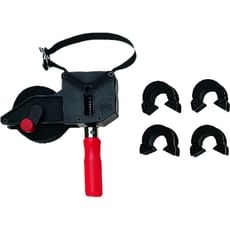
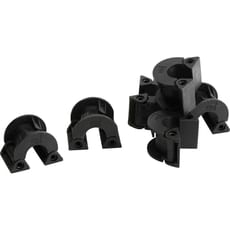
- Corner Pieces (Vario Angles): Protective plastic or metal inserts positioned at corners of rectangular or polygonal assemblies. These prevent the band from slipping, protect edges from damage, and help maintain precise right angles during assembly. BESSEY's Vario system allows quick repositioning without removing the entire band.
- Clamping Force: The amount of pressure applied by the clamp, typically measured in newtons (N) or kilogrammes. Higher clamping force is necessary for larger assemblies, hardwood joinery, or when working with dense materials that require significant pressure for proper joint adhesion.
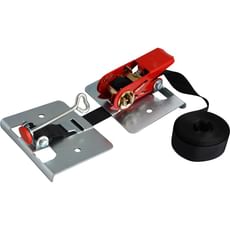
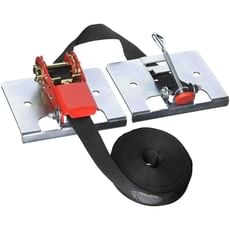
- Floor Clamp: A heavy-duty band clamp mounted on a stable base designed to sit on the workshop floor. Floor clamps like the BESSEY SVH series are ideal for clamping large assemblies such as doors, tabletops, or cabinet carcasses without occupying valuable bench space.
- Self-Locking: The automatic engagement feature of quality ratchet mechanisms that prevents the band from loosening once tension is applied, ensuring consistent pressure is maintained throughout the glue curing process without requiring continuous manual adjustment.
Who Uses Band Clamps?
- Joiners and Cabinet Makers: For assembling cabinet carcasses, door frames, and bespoke furniture where multiple joints require simultaneous pressure
- Picture Framers: Essential for creating perfectly square frames with tight mitred corners and even pressure distribution
- Furniture Restorers: Ideal for repairing chairs, tables, and antique pieces with complex shapes that traditional clamps cannot accommodate
- Woodworkers and Carpenters: For general assembly work, particularly with circular, oval, or irregularly shaped projects
- Shop Fitters: When installing display units, shelving systems, and retail fixtures requiring precise alignment and multiple joint assembly
- Musical Instrument Makers: For assembling drums, stringed instruments, and other cylindrical or curved components
- Model Makers and Craftspeople: For delicate assemblies requiring even pressure distribution without risk of distortion
- Set Builders and Theatre Technicians: For constructing scenic flats, frames, and temporary structures on tight deadlines
- DIY Enthusiasts: Home renovators tackling furniture repairs, frame making, and general woodworking projects
How to Choose the Right Band Clamps
Maximum Clamping Capacity: Measure the perimeter of your largest typical workpiece and select a clamp with adequate capacity. Standard handheld band clamps accommodate frames up to 4-5 metres in perimeter, whilst specialist floor clamps extend to 7.6 metres. Always allow extra capacity for future projects and occasional larger assemblies.
Band Width and Material: Wider webbing bands (35-50mm) distribute pressure more evenly across the workpiece and are less likely to mark or crush softwoods and veneered surfaces. Professional-grade nylon webbing offered by BESSEY provides superior durability, abrasion resistance, and longevity compared to budget polyester alternatives that fray with regular use.
Ratchet Quality and Precision: The ratchet mechanism is the heart of any band clamp. Premium models feature smooth, precise ratcheting with fine adjustment capabilities that allow controlled tensioning without sudden over-tightening. Look for systems with easy-release mechanisms that allow repositioning without complete loosening—particularly valuable when fine-tuning frame squareness.
Corner Piece System: For frame and cabinet work, adjustable corner pieces are invaluable. The BESSEY Vario system offers replaceable angles that can be quickly repositioned and replaced when worn. Consider how many corner pieces are included as standard—rectangular assemblies require four corners, whilst more complex polygonal work may need additional angles available separately.
Floor-Mounted vs Handheld: For large assemblies or regular production work, floor clamps provide stability and free up valuable bench space. Models like the BESSEY SVH series offer hands-free operation ideal for solo working. Handheld models such as the DeWalt Band Clamp offer portability for site work, varied applications, and smaller workshop environments.
Clamping Force Requirements: Match the clamp's force capacity to your typical materials and joint types. Hardwood joinery and large assemblies require higher clamping pressure than softwood picture frames. Tooled-Up stocks professional BESSEY models engineered to deliver superior clamping force and maintain consistent tension throughout the curing process.
Popular Accessories
- Replacement Webbing Bands: Spare straps in various lengths to accommodate different workpiece sizes or replace worn bands that have lost tension or become frayed
- Additional Vario Corner Pieces: Extra angles for complex assemblies requiring more than four corners, or replacements for worn or damaged corner pieces
- Protective Corner Pads: Soft rubber or felt inserts that prevent marking on delicate, finished, or veneered surfaces whilst maintaining secure grip
- Wood Glue and Adhesives: PVA wood glue, polyurethane adhesives, and specialist joinery glues designed for the timber joints being clamped
- Combination Squares: Essential for checking frame squareness and verifying 90-degree corners before final tightening
- Mitre Saws: For cutting accurate frame components with precise angles that require band clamp assembly
- Sash Clamps and Bar Clamps: Complementary clamping tools from brands like BESSEY for applying linear pressure alongside circumferential band clamp pressure
- Assembly Tables and Workbenches: Flat work surfaces with integrated clamping points for professional frame and cabinet assembly
- Digital Angle Finders: For verifying precise corner angles on complex polygonal assemblies
Frequently Asked Questions
What's the difference between a band clamp and a strap clamp?
These terms are essentially interchangeable in UK workshops and both refer to clamps using flexible webbing to apply circumferential pressure. Some tradespeople use "band clamp" for heavier-duty professional models and "strap clamp" for lighter picture-framing tools, but functionally they operate on identical principles using ratcheting mechanisms and flexible bands.
Can I use band clamps on circular and oval workpieces?
Absolutely. Band clamps excel at clamping round, oval, and irregular shapes where traditional clamps simply cannot reach or apply effective pressure. Simply remove the corner pieces and wrap the webbing band directly around the workpiece. This makes them ideal for drum making, barrel repair, cylindrical assemblies, and any curved work requiring uniform pressure distribution.
How tight should I tension a band clamp?
Tighten the ratchet until you observe a small amount of glue squeeze-out from the joints—this indicates proper contact and adequate pressure. Avoid over-tightening, which can distort frames, crush softwood fibres, cause joint misalignment, or even break delicate mitred corners. The incremental ratchet mechanism allows fine control; aim for firm, consistent pressure rather than maximum force.
How do I ensure frames stay square when using band clamps?
Position the corner pieces accurately at each corner, then measure the diagonal distances corner-to-corner before final tightening—equal diagonals confirm a perfectly square frame. Use a combination square to verify each corner is 90 degrees, making slight adjustments before the adhesive begins to set. Work on a flat surface to prevent twisting.
Are BESSEY band clamps worth the premium over budget alternatives?
For professional tradespeople and serious woodworkers, definitely. BESSEY clamps feature superior German-engineered ratchet mechanisms that maintain consistent tension without slipping, more durable webbing that resists fraying and stretching, and precision-manufactured corner pieces that hold position accurately. For occasional DIY use, mid-range options may suffice, but professionals benefit from the reliability, longevity, and consistent results that premium tools deliver day after day.