

Battery Starter Chargers
Pay in 3 interest-free payments on purchases from £30-2000 with  . Learn more.
 Loading...
End of content
Error - No more pages to load
About Battery Starter Chargers
Battery starter chargers represent essential workshop equipment that combines two critical functions in a single robust unit: the ability to charge depleted batteries and the power to jump-start vehicles with completely dead batteries. These versatile machines prove indispensable for garages, workshops, breakdown recovery services, and home mechanics who require reliable starting power without depending on another vehicle. Unlike basic trickle chargers or simple jump leads, battery starter chargers deliver substantial amperage outputs—typically ranging from 300 to 800 amps—capable of cranking over even stubborn diesel engines in harsh winter conditions.
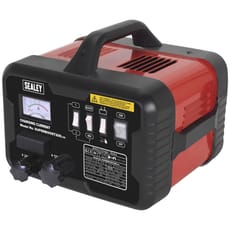
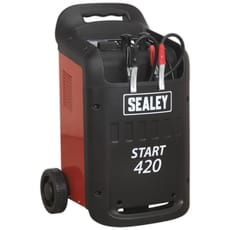
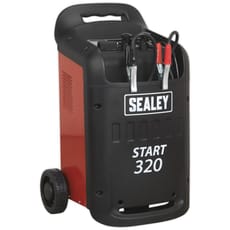
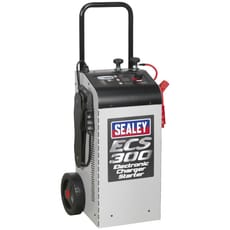
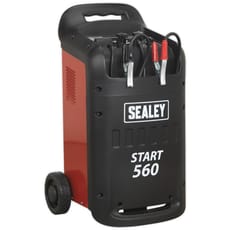
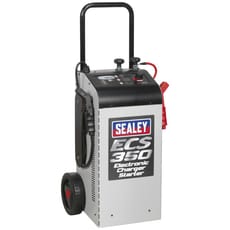
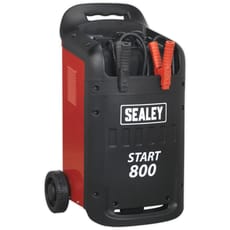
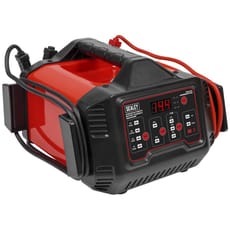
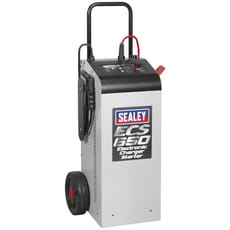
Modern battery starter chargers available at Tooled-Up.com have evolved considerably from the transformer-based units of previous generations. Contemporary models feature sophisticated electronic control systems that automatically adjust charging rates, prevent overcharging, and protect against reverse polarity connection errors. Professional manufacturers like Sealey and Draper offer both fully electronic smart chargers with microprocessor control and traditional heavy-duty starter/charger combinations built to withstand demanding workshop environments. Models such as the Sealey ECS series provide intelligent multi-stage charging for various battery types, whilst the Sealey START range delivers straightforward, robust performance for high-volume workshop use.
Whether operating a busy vehicle repair centre, running a mobile mechanics service, or maintaining a fleet of commercial vehicles, a quality battery starter charger eliminates the inconvenience and potential hazards associated with jump-starting from another vehicle. These units connect directly to standard 240v UK mains supply and provide controlled, safe power delivery that protects sensitive vehicle electronics whilst delivering the cranking current needed to get engines running reliably.
Jargon Buster
- Peak Amps / Start Amps: The maximum current the unit can deliver during engine cranking, typically sustained for several seconds. Higher figures indicate the ability to start larger engines or tackle severely discharged batteries. Professional units range from 300 to 800+ amps, with diesel vehicles and commercial machinery requiring higher capacities than petrol cars.
- Charge Rate: The sustained current (measured in amps) that the unit delivers during the charging cycle. Higher charge rates restore battery capacity more quickly, though intelligent chargers automatically reduce output as the battery approaches full charge to prevent damage and optimise longevity.
- Boost Mode: A rapid charging function that delivers maximum safe current to quickly bring a flat battery to a level sufficient for engine cranking. Particularly valuable in busy workshops where time is critical and vehicles need moving immediately rather than waiting for a full charge cycle.
- Float/Maintenance Mode: An intelligent charging feature that maintains a fully charged battery at optimal voltage without overcharging, perfect for seasonal vehicles, demonstration stock, or equipment in storage. This function significantly extends battery life by preventing sulphation and capacity loss.
- Reverse Polarity Protection: A crucial safety feature that prevents damage if the positive and negative clamps are accidentally connected to incorrect battery terminals, protecting both the charger unit and sensitive vehicle electronics from potentially catastrophic damage.
- Thermal Protection: Built-in sensors that monitor operating temperature and prevent the unit from overheating during extended use, automatically reducing output or shutting down if temperatures exceed safe limits.
Who Uses Battery Starter Chargers?
- Motor mechanics and automotive technicians in independent garages and franchised dealerships requiring reliable equipment for daily workshop operations
- Mobile mechanics and breakdown recovery services needing portable solutions for roadside assistance and on-site vehicle repairs across varied locations
- Fleet maintenance engineers responsible for keeping commercial vehicles, delivery vans, and company cars operational with minimal downtime
- Agricultural and plant machinery operators who maintain tractors, combine harvesters, and construction equipment that may remain idle between seasons
- MOT testing stations and vehicle preparation centres dealing with multiple vehicles daily that may arrive with depleted batteries
- Classic car enthusiasts and restoration specialists who need to maintain vintage vehicles that aren't driven regularly
- Caravan and motorhome owners looking to maintain leisure batteries and vehicle starting systems during winter storage periods
- Motorcycle workshops and dealerships servicing bikes that are particularly prone to battery discharge during periods of inactivity
- Local authority and council depot workshops maintaining diverse vehicle fleets from refuse trucks to grounds maintenance equipment
- Agricultural contractors and farm workshops dealing with seasonal machinery that requires reliable starting after storage
How to Choose the Right Battery Starter Chargers
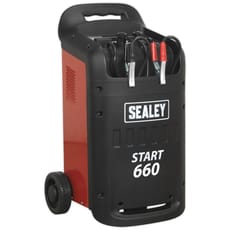
Determine Your Power Requirements: Consider the largest engine you'll need to start. Petrol cars typically require 300-400 amps, whilst diesel vehicles, commercial vans, and light trucks benefit from 500-650 amp units such as the Sealey ECS650 or START660. Heavy commercial vehicles, agricultural machinery, and plant equipment demand 800-amp professional models like the Sealey START800. Remember that cold weather significantly increases cranking demands, so allow additional capacity margin for winter conditions.
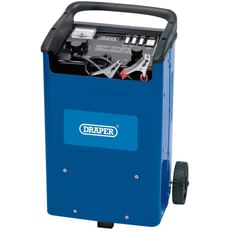
Decide Between Electronic and Traditional Models: Fully electronic battery starter chargers like the Sealey ECS range offer sophisticated microprocessor control with multiple charging programmes, automatic voltage detection (6V/12V/24V), and built-in diagnostics that identify battery faults. Traditional heavy-duty starter/chargers such as the Sealey START series and Draper BCSD models provide robust, straightforward operation with manual control switches—ideal for harsh workshop environments where simplicity and durability take priority over advanced features.
Consider Portability Versus Power: Compact units around 300-400 amps prove more manoeuvrable around crowded workshops and easier to transport for mobile work. Larger professional models deliver superior performance but require wheeled chassis for workshop mobility. The selection at Tooled-Up includes both compact models and trolley-mounted units with transport handles for different working environments.
Evaluate Cable Length and Quality: Heavy-duty, well-insulated jump leads with substantial copper clamps are essential for safe, effective connection. Longer cables provide better reach around larger vehicles but must maintain adequate conductor size to deliver full amperage without voltage drop. Professional units typically feature 3-4 metre cables as standard, ensuring comfortable reach without compromising electrical performance.
Look for Essential Safety Features: Reverse polarity protection is non-negotiable, preventing damage from incorrect connection. Thermal protection prevents overheating during extended use. Spark-proof technology and short-circuit protection add further safety margins, particularly important in professional environments where multiple staff members use the equipment throughout the working day.
Check for Maintenance Charging Capability: Units with automatic float or maintenance modes prove invaluable for keeping seasonal vehicles, demonstration stock, or stored equipment in peak condition without risk of overcharging. This functionality extends battery life considerably and ensures vehicles remain ready for immediate use when required.
Popular Accessories
- Replacement Jump Lead Sets: Heavy-duty cables with professional-grade copper clamps for when original leads become damaged, worn, or require upgrading for specific applications
- Battery Terminal Cleaning Brushes: Essential maintenance tools for removing corrosion and ensuring good electrical contact, preventing voltage drop at battery terminals
- Battery Load Testers: Diagnostic equipment to assess battery condition accurately and determine whether charging, conditioning, or replacement is the appropriate course of action
- Extension Leads and Cable Reels: Industrial-rated 240v power extensions for reaching vehicles in larger workshops, outdoor locations, or awkward parking positions
- Battery Disconnects and Isolator Switches: For vehicles in long-term storage to prevent parasitic drain whilst maintaining electronic memory settings
- Trickle Chargers and Conditioners: Supplementary compact chargers for maintaining batteries on classic cars, motorcycles, and seasonal equipment between uses
- Workshop Trolleys and Tool Carts: Dedicated storage solutions for housing battery starter chargers alongside related automotive equipment and accessories
- Personal Protective Equipment: Safety glasses and insulated gloves for battery handling, electrical work, and protection from acid spills
Safety Information
Battery starter chargers must be operated with appropriate caution as they work with both 240v mains electricity and potentially explosive battery gases. Always ensure the unit is switched off before connecting or disconnecting battery clamps, and verify correct polarity before energising—positive to positive, negative to negative or a suitable earthing point away from the battery. Work in well-ventilated areas as batteries release hydrogen gas during charging, which is highly flammable and can be ignited by sparks or hot surfaces.
Inspect cables and connections regularly for damage, fraying, or corrosion that could compromise safety or performance. Never attempt to charge or jump-start a visibly damaged, leaking, or frozen battery, as this presents serious risk of explosion or acid burns. Wear appropriate PPE including safety glasses and insulated gloves when working with batteries, and keep a suitable fire extinguisher nearby. Follow HSE guidance for working with electrical equipment and battery handling in professional environments.
Ensure your battery starter charger is appropriate for UK mains supply (240v) and plugged into a properly earthed socket with adequate circuit protection. Follow the manufacturer's duty cycle recommendations—professional units can typically operate continuously, but some lighter models require rest periods between heavy starting attempts to prevent overheating. Keep the unit away from water, damp conditions, and flammable materials, and never cover the charger during operation as this prevents essential heat dissipation.
Frequently Asked Questions
What's the difference between a battery charger and a battery starter charger?
A standard battery charger slowly replenishes a depleted battery over several hours but lacks the high-amperage output needed to crank an engine. A battery starter charger combines both functions: it can charge batteries when time permits, but crucially, it can also deliver a substantial surge of current (300-800+ amps) to jump-start a vehicle with a completely flat battery. This makes starter chargers far more versatile for workshops and professional use where vehicles need moving immediately rather than waiting hours for a full charge cycle.
Can I use a battery starter charger on different vehicle types?
Most modern battery starter chargers from Sealey and Draper offer selectable voltage settings for 6V, 12V, and often 24V systems, making them suitable for everything from vintage cars and motorcycles through to commercial lorries and agricultural machinery. However, ensure your chosen unit has sufficient amperage capacity for your largest vehicle—diesel engines and commercial vehicles require significantly higher cranking current than petrol cars, particularly in cold weather conditions when oil viscosity increases and battery performance decreases.
How long does it take to charge a car battery with a starter charger?
Charging time depends on the battery's capacity, its state of discharge, and the charger's output rate. A typical 60Ah car battery that's completely flat might take 6-10 hours on a standard charge setting, or 1-2 hours using boost mode to reach sufficient charge for engine starting. Electronic smart chargers like the Sealey ECS range automatically adjust their output and indicate when charging is complete, whilst also offering maintenance modes for optimal long-term battery health without risk of overcharging damage.
Are battery starter chargers safe to use on modern vehicles with sensitive electronics?
Quality battery starter chargers, particularly fully electronic models, are specifically engineered to protect modern vehicle electronics. They feature controlled voltage output, spark suppression, and surge protection that make them considerably safer than traditional jump leads connected to another running vehicle. Always ensure the unit is set to the correct voltage before connection, and follow the manufacturer's connection sequence—typically connecting positive first, then negative to an earthing point—to minimise any risk to vehicle systems and electronic control units.
Do I need a professional-grade battery starter charger for occasional home use?
For occasional domestic use on standard petrol cars, a mid-range 300-400 amp unit like the Draper BCSD300T or Sealey ECS350 provides excellent value and capability. However, if you maintain multiple vehicles, have a diesel car or van, or live in an area with harsh winters, investing in a more powerful 500-650 amp model ensures you'll never be caught out. Professional units from Tooled-Up also offer superior build quality, longer service life, and better thermal management, making them worthwhile investments even for serious home mechanics and enthusiasts who demand reliable performance.