

Battery Testers
Pay in 3 interest-free payments on purchases from £30-2000 with  . Learn more.
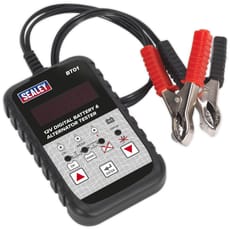
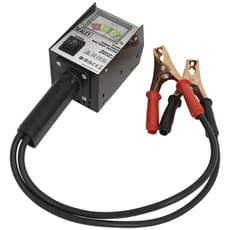
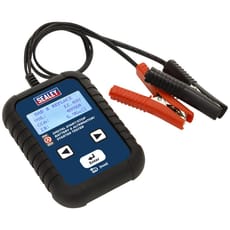
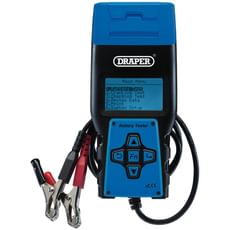

 Loading...
End of content
Error - No more pages to load
About Battery Testers
Battery testers are indispensable diagnostic tools for anyone working with automotive, industrial, or marine batteries. These precision instruments quickly determine whether a battery is healthy, needs charging, or requires replacement, saving time and preventing unnecessary parts swapping. Modern digital battery testers evaluate not just the battery's charge level but also its internal condition, cold cranking amps (CCA), state of health percentage, and overall performance characteristics. Advanced models can additionally test alternator output and starter motor performance, providing comprehensive electrical system diagnostics in a single handheld device.
Professional battery testers range from simple drop testers that provide basic pass/fail indications through to sophisticated digital analysers with integrated thermal printers for generating detailed diagnostic reports. The most capable units can accurately test various battery chemistries including conventional flooded lead-acid, AGM (Absorbed Glass Mat), gel cell, and the enhanced flooded batteries (EFB) found in modern start/stop vehicles. Many feature large LCD displays showing voltage readings, CCA values, internal resistance measurements, and battery state of health percentages, making diagnostics straightforward even for less experienced technicians.
Tooled-Up.com stocks an extensive selection of battery testing equipment from trusted manufacturers including Sealey and Draper, covering everything from handheld testers for quick workshop checks to professional-grade analysers with printer functionality. Whether you're running a busy garage, working as a mobile mechanic, maintaining a fleet of commercial vehicles, or servicing agricultural machinery, investing in a quality battery tester eliminates guesswork and provides the diagnostic confidence needed for efficient repair work.
Jargon Buster
- Cold Cranking Amps (CCA) - The measurement of how many amps a battery can deliver at 0°F (-18°C) for 30 seconds whilst maintaining at least 7.2 volts. This rating indicates the battery's ability to start an engine in cold conditions, which is particularly relevant in the UK's winter climate.
- State of Health (SOH) - A percentage value indicating the overall condition of a battery compared to its original specification when new. Readings below 70% typically suggest the battery is nearing the end of its serviceable life and should be considered for replacement.
- Conductance Testing - A modern testing method that measures a battery's internal resistance without applying heavy loads. This non-invasive technique provides accurate results quickly and safely, making it ideal for testing batteries whilst still connected in vehicles.
- Start/Stop Battery Technology - Enhanced flooded batteries (EFB) or AGM batteries specifically designed for vehicles with automatic engine start/stop systems. These require different testing parameters than conventional batteries and need compatible testing equipment to provide accurate diagnostics.
- Internal Resistance - The opposition to current flow within a battery, measured in milliohms. As batteries age and degrade, internal resistance increases, reducing their ability to deliver power effectively and impacting starting performance.
- Alternator Ripple - The fluctuation in voltage output from an alternator, which should remain within specific tolerances. Excessive ripple can indicate failing diodes within the alternator and may cause premature battery failure if left unaddressed.
Who Uses Battery Testers?
- Motor mechanics and automotive technicians for daily workshop diagnostics and servicing
- Mobile mechanics requiring portable diagnostic equipment for roadside breakdown services
- MOT testing stations checking battery condition as part of comprehensive vehicle inspections
- Fleet maintenance managers implementing preventative testing to avoid unexpected vehicle downtime
- Agricultural engineers testing batteries on farm machinery, tractors, and equipment
- Plant and machinery fitters maintaining industrial vehicles and construction equipment
- Commercial vehicle workshops testing heavy-duty batteries on lorries, buses, and HGVs
- Car dealerships and preparation centres conducting pre-sale inspections
- Marine engineers testing batteries in boats, yachts, and marine equipment
- Serious DIY enthusiasts maintaining their own vehicles and classic cars at home
- Caravan and motorhome specialists servicing leisure battery systems
How to Choose the Right Battery Testers
Selecting the appropriate battery tester depends primarily on your typical workload and the types of batteries you regularly service. For basic workshop requirements, a handheld digital tester that measures voltage, CCA, and provides state of health readings will suffice for most routine diagnostics. However, professional garages handling modern vehicles should seriously consider investing in advanced testers capable of analysing start/stop battery technology, as these systems are increasingly common in vehicles manufactured after 2015 and require specific testing algorithms.
Consider whether you need printer functionality for generating customer reports. Models with integrated thermal printers provide professional documentation that helps justify battery replacement recommendations to customers and creates valuable service records. This feature proves particularly beneficial for MOT stations, fleet operators, and businesses where audit trails and documentation are important for compliance and customer relations. The range available from Tooled-Up includes both handheld testers and printer-equipped models from manufacturers like Sealey and Draper.
Voltage range compatibility is crucial when selecting your tester. Most automotive testers work with 12V systems, but some also accommodate 6V, 24V, or even higher voltages found in commercial vehicles, agricultural machinery, and industrial equipment. Check the CCA testing range too—heavy-duty commercial vehicle batteries may have CCA ratings exceeding 1000 amps, so ensure your tester can measure within the required parameters for your typical applications.
Build quality and durability matter significantly in professional environments where tools receive daily use. Look for testers with robust casings, protected displays, and heavy-duty test leads with secure clamp connections. Units meeting relevant safety standards should have reverse polarity protection to prevent damage from incorrect connections. Consider whether you need a compact handheld unit for mobile work or a larger workshop-based system with extended cable reach for easier access to batteries in tight engine bays or commercial vehicles.
Popular Accessories
- Replacement printer paper rolls for battery testers with integrated thermal printers
- Extended test lead sets with longer cables for accessing batteries in commercial vehicles and plant machinery
- Battery terminal cleaning brushes ensuring good electrical contact for accurate test results
- Battery chargers and maintainers for addressing diagnosed charging issues
- Battery load testers providing additional diagnostic capabilities for comprehensive testing
- Protective carry cases keeping testers safe during transport and storage between jobs
- Battery hydrometers for checking electrolyte specific gravity in conventional flooded batteries
- Jump starter packs and booster packs for practical workshop use alongside diagnostic testing
- Memory saver devices maintaining vehicle settings when disconnecting batteries for testing
Safety Information
Always follow manufacturer instructions when testing batteries and observe proper safety procedures. Batteries contain sulphuric acid and can generate explosive hydrogen gas, particularly during charging or when in poor condition. Ensure adequate ventilation in the testing area and never smoke or use naked flames near batteries. Wear appropriate PPE including safety glasses and chemical-resistant gloves, especially when testing older batteries where terminals may be corroded or leaking electrolyte.
Before connecting test leads, verify the battery voltage matches your tester's specifications to prevent equipment damage. Always connect the positive (red) lead first, followed by the negative (black) lead, and reverse the sequence when disconnecting. Check test leads regularly for damage, fraying, or loose connections that could cause inaccurate readings or dangerous short circuits. Modern testers include reverse polarity protection, but it remains good practice to double-check connections before powering up the unit.
When testing batteries on vehicles, ensure the ignition is off and all electrical loads are switched off unless the testing procedure specifically requires otherwise. Be particularly careful with start/stop vehicles and those with complex electronic systems—disconnecting batteries on some modern vehicles can cause ECU issues or require reprogramming of systems. If in doubt, consult the vehicle manufacturer's guidelines or use a memory saver device to maintain system settings during testing procedures.
Frequently Asked Questions
How often should vehicle batteries be tested?
Best practice suggests testing batteries at every service interval, typically annually or every 10,000-12,000 miles. More frequent testing is advisable for vehicles over five years old, those used primarily for short journeys, or vehicles that stand idle for extended periods. Fleet operators should implement regular testing schedules to prevent unexpected breakdowns and minimise downtime.
Can battery testers diagnose alternator and starter motor problems?
Yes, most modern digital battery testers include alternator testing functionality that measures charging voltage, ripple, and output current to determine if the alternator is functioning correctly. These tests should be performed with the engine running at various RPM levels. Some advanced models also test starter motor draw, providing comprehensive electrical system diagnostics beyond just the battery itself.
Will standard battery testers work on start/stop vehicle batteries?
Not all battery testers are compatible with start/stop technology batteries such as EFB and AGM types. These batteries require different testing algorithms due to their unique construction and charging profiles. Check your tester's specifications to ensure it explicitly supports start/stop battery testing—many older or basic models do not and will provide inaccurate results on these modern battery types.
What's the difference between a drop tester and a digital tester?
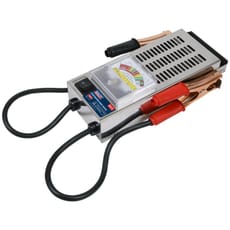
Drop testers are simple mechanical devices that apply a fixed load whilst measuring voltage drop, providing a basic pass/fail indication through colour-coded displays. Digital testers use conductance testing technology to measure internal resistance without applying heavy loads, providing detailed numerical data about battery condition, CCA, and state of health. Digital testers are more accurate, safer, and better suited for modern battery chemistries.
Do I need a printer-equipped battery tester for professional work?
Printer functionality isn't essential but offers significant advantages for professional workshops. Printed reports provide tangible evidence for customers, help justify replacement recommendations, create permanent service records, and add a professional touch to your diagnostics. For mobile mechanics, fleet operations, and MOT stations, printed documentation can be particularly valuable for record-keeping, warranty claims, and demonstrating due diligence.