

Beam Clamps

Pay in 3 interest-free payments on purchases from £20-£3000 with  . Learn more.
 Loading...
End of content
Error - No more pages to load
About Beam Clamps
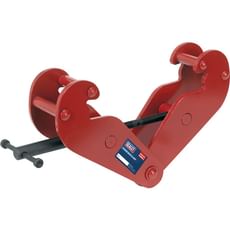
Beam clamps are essential lifting and rigging accessories designed to attach securely to steel beams, RSJ (Rolled Steel Joist) structures, and I-beams commonly found in commercial, industrial, and construction environments. These robust devices provide a safe and efficient anchor point for hoisting equipment, chain blocks, winches, and lifting tackle, eliminating the need for permanent fixings or welding. Whether you're working in warehousing, construction, maintenance, or industrial settings, beam clamps offer a versatile solution for temporary or permanent rigging applications.
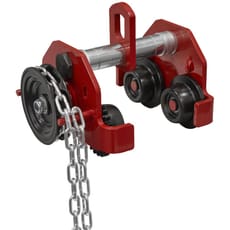
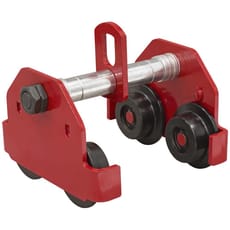
The range available from Tooled-Up.com includes traditional beam clamps that simply attach to beam flanges, as well as beam trolleys that incorporate wheels or rollers to allow smooth horizontal movement along the beam length. Standard beam trolleys feature manual push operation, whilst geared beam trolleys provide mechanical advantage through a chain drive mechanism, making it easier to move heavy loads with minimal effort. All beam clamps are manufactured to rigorous safety standards and are supplied with clearly marked Safe Working Load (SWL) ratings to ensure compliance with HSE lifting regulations.
Professional-grade beam clamps from trusted manufacturers like Sealey are engineered to withstand the demanding conditions of British construction sites and industrial facilities. These precision-engineered lifting accessories are built from high-tensile steel with corrosion-resistant finishes, ensuring long-term reliability and safety when working with overhead loads. From simple fixed lifting points to sophisticated geared trolley systems, beam clamps provide critical infrastructure for safe material handling operations across countless industries.
Jargon Buster
- RSJ (Rolled Steel Joist): A standard steel I-beam or H-beam section commonly used in UK construction for structural support. Beam clamps are designed to fit the specific dimensions of RSJ flanges.
- SWL (Safe Working Load): The maximum weight that can be safely lifted by the beam clamp under normal working conditions. This figure includes a built-in safety factor and must never be exceeded.
- Beam Trolley: A beam clamp fitted with wheels or rollers that allows the lifting point to travel horizontally along the beam length, providing greater flexibility for positioning loads.
- Geared Beam Trolley: A beam trolley incorporating a chain-operated gearing mechanism that provides mechanical advantage, making it significantly easier to move heavy loads along the beam with reduced manual effort.
- Flange Width: The horizontal width of the beam's top section where the clamp attaches. Different beam clamps accommodate different flange width ranges, so matching this measurement is crucial for safe installation.
- WLL (Working Load Limit): Another term for Safe Working Load, commonly used in HSE documentation and LOLER (Lifting Operations and Lifting Equipment Regulations) compliance.
Who Uses Beam Clamps?
Beam clamps are utilised across a wide range of trades and industries where overhead lifting and rigging is required:
- Riggers and Lifting Specialists: Professional lifting operatives who regularly install and operate temporary rigging systems
- Maintenance Engineers: For positioning heavy machinery, motors, and equipment during servicing and repairs
- Steel Erectors: During construction phases requiring temporary lifting points on structural steelwork
- Warehouse and Logistics Managers: For establishing flexible lifting points in distribution centres and storage facilities
- Plant Fitters: When installing or relocating heavy industrial equipment and machinery
- Construction Site Managers: For general lifting operations where overhead gantry cranes aren't available
- Facilities Maintenance Teams: In commercial buildings, factories, and industrial units requiring occasional overhead lifting capability
- Theatrical and Events Riggers: For safely suspending lighting, sound equipment, and staging in venues with exposed beam structures
How to Choose the Right Beam Clamps
Selecting the appropriate beam clamp requires careful consideration of several critical factors to ensure both safety and functionality:
Load Capacity: Always choose a beam clamp with a Safe Working Load that exceeds your maximum anticipated load, including a safety margin. Remember that the combined weight of the load plus any lifting tackle must not exceed the SWL.
Beam Dimensions: Measure the flange width of your RSJ or I-beam accurately. Beam clamps are designed to fit specific flange width ranges, and using an incompatible clamp creates a serious safety hazard. Check the manufacturer's specifications carefully.
Mobility Requirements: Decide whether you need a fixed beam clamp for a stationary lifting point, or a beam trolley if you need to move loads horizontally along the beam. For heavier loads or frequent repositioning, consider a geared beam trolley which significantly reduces manual effort.
Beam Profile: Ensure the clamp design is compatible with your beam type. Most beam clamps suit standard RSJ profiles, but some specialist beams may require specific clamp designs.
Frequency of Use: For regular commercial use, invest in professional-grade beam clamps with robust construction and corrosion-resistant finishes. Industrial environments with exposure to moisture or chemicals may require specialised coatings.
Compliance and Certification: Verify that beam clamps meet relevant British and European standards, and that they're supplied with certification documents required for LOLER compliance and workplace inspections.
Popular Accessories
- Chain Blocks and Lever Hoists: Manual lifting tackle that attaches directly to beam clamps for raising and lowering loads
- Lifting Chains and Slings: Essential rigging equipment for connecting loads to your beam clamp system
- Shackles: Secure connection points between beam clamps and lifting tackle
- Load Testing Equipment: For periodic inspection and certification of lifting equipment as required by LOLER regulations
- Beam Clamp Protectors: Protective covers that prevent damage to beam paintwork and reduce noise during trolley operation
- Safety Tags and Inspection Records: Documentation systems for maintaining compliance with HSE lifting regulations
Safety Information
Working with beam clamps and overhead lifting equipment carries inherent risks that must be properly managed. Always ensure beam clamps are installed by competent persons who understand structural loading and rigging principles. The supporting beam itself must be structurally adequate to handle the applied loads – consult a structural engineer if there's any doubt about beam capacity.
Before each use, conduct a thorough visual inspection of the beam clamp for cracks, deformation, excessive wear, or corrosion. Never exceed the manufacturer's stated Safe Working Load, and remember this rating may be reduced depending on the angle of lift and other factors. All lifting operations should be planned according to HSE guidance, with appropriate supervision and exclusion zones established beneath suspended loads.
Beam clamps and associated lifting equipment must be inspected and tested in accordance with LOLER regulations, typically requiring thorough examination at least every 6 or 12 months by a competent person. Maintain accurate records of all inspections and remove damaged or suspect equipment from service immediately. Always use appropriate personal protective equipment including safety helmets, gloves, and steel-toe-cap boots when working with lifting equipment.
Frequently Asked Questions
What's the difference between a beam clamp and a beam trolley?
A standard beam clamp attaches to a beam flange to provide a fixed lifting point that doesn't move. A beam trolley incorporates wheels or rollers, allowing it to travel horizontally along the beam length, giving you the flexibility to position loads anywhere along the beam without repositioning the clamp itself. Geared beam trolleys add a chain-drive mechanism for easier movement of heavy loads.
How do I know what flange width my RSJ beam is?
You'll need to physically measure the width of the beam's horizontal flange (the top section where the clamp attaches) using a tape measure or calliper. This measurement is critical for safety – beam clamps are designed for specific flange width ranges and using an incompatible clamp can result in slippage or failure. If you have access to structural drawings, the beam size may be specified there.
Do beam clamps need to be LOLER tested?
Yes, beam clamps used for lifting operations in the workplace fall under the Lifting Operations and Lifting Equipment Regulations 1998 (LOLER) and must undergo thorough examination by a competent person. The frequency depends on usage, but typically this is every 6-12 months. You must maintain records of all examinations and ensure equipment is clearly marked with its Safe Working Load.
Can I use a beam clamp on any type of steel beam?
Beam clamps are designed primarily for standard RSJ (I-beam) profiles commonly used in UK construction. Before use, verify that the clamp design is compatible with your specific beam profile and that the flange width falls within the clamp's specified range. The beam itself must also be structurally sound and capable of supporting the applied loads – consult a structural engineer if uncertain.
What capacity beam clamp do I need?
Choose a beam clamp with a Safe Working Load that exceeds the total weight you'll be lifting, including the weight of all lifting tackle (chains, slings, hooks, etc.). As a general rule, never work at the absolute maximum capacity – leave a comfortable safety margin. If you're regularly lifting loads approaching the SWL, consider specifying the next capacity up for additional safety and longevity.