

Bench Grinders
Pay in 3 interest-free payments on purchases from £30-2000 with  . Learn more.
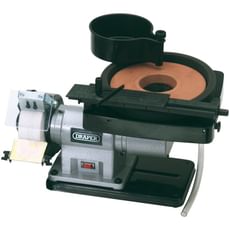
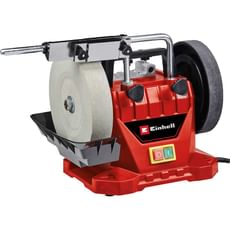
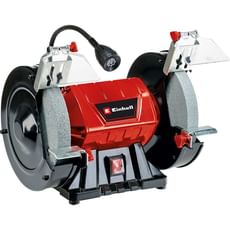
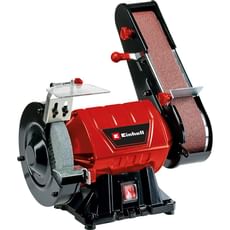
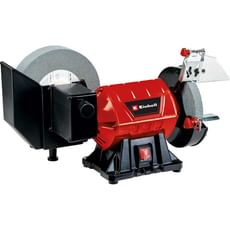
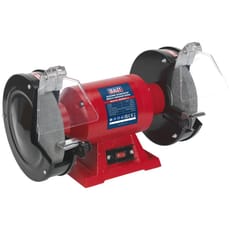
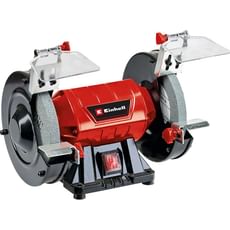
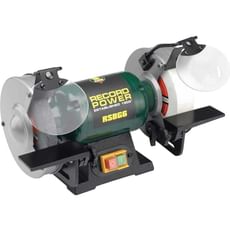
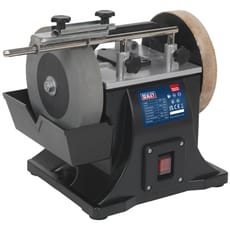
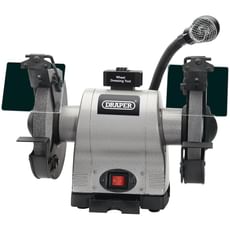
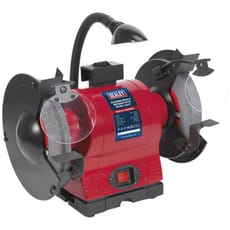
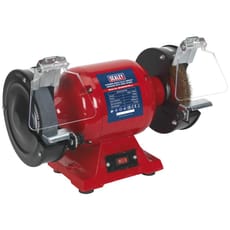

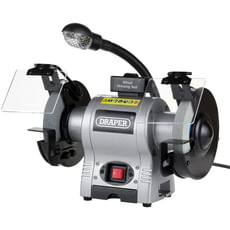
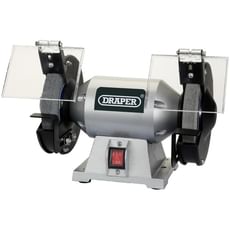
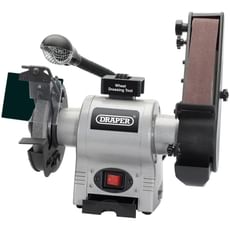
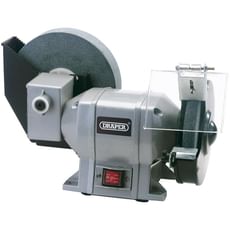
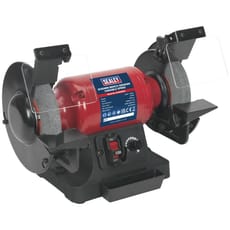
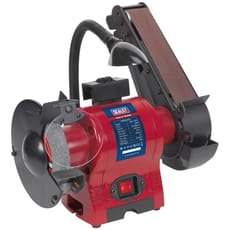
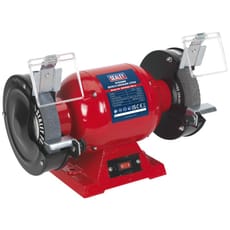
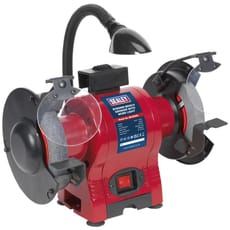
 Loading...
End of content
Error - No more pages to load
About Bench Grinders
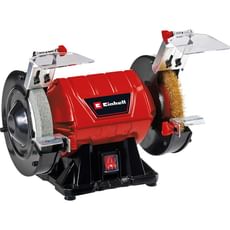
Bench grinders are essential stationary workshop machines designed to be permanently mounted to a workbench or stand, providing reliable grinding, sharpening, and finishing capabilities for a wide range of metalworking and tool maintenance tasks. Unlike portable angle grinders, these fixed machines offer superior stability and precision, making them ideal for repetitive sharpening work and detailed applications where accuracy matters. Most bench grinders feature twin grinding wheels mounted on either side of a central motor, allowing users to fit different wheel grades or attachments to suit various tasks – from aggressive material removal to fine tool sharpening and polishing operations.
The versatility of bench grinders makes them indispensable in professional workshops, agricultural settings, and home garages throughout the UK. Whether you're sharpening chisels and drill bits, removing rust and paint from metal components, grinding down welds, deburring fabrications, or buffing and polishing surfaces, a quality bench grinder delivers consistent results. Available in various sizes from compact 150mm (6-inch) models suitable for light-duty work to heavy-duty 200mm (8-inch) variants for demanding industrial applications, there's a bench grinder to match every workshop requirement and budget.
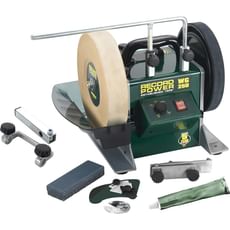
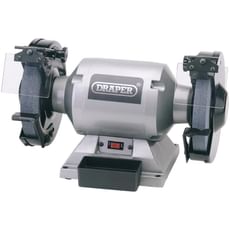
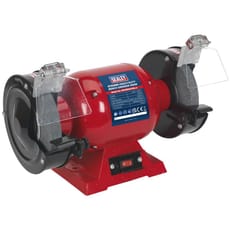
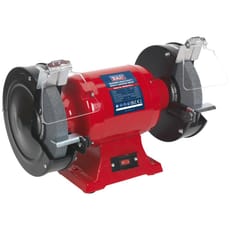
Tooled-Up.com stocks an extensive range of bench grinders from trusted manufacturers including Sealey, Draper, Einhell, and Record Power. The selection includes standard twin-wheel grinders, wet and dry sharpening systems for precision tool maintenance, combination units featuring grinding wheels alongside wire brushes or sanding belts, and specialised whetstone sharpening systems that provide maximum flexibility for workshop tasks. All models operate on standard 240v mains supply with 13A plugs, ensuring compatibility with UK workshop electrical installations.
Jargon Buster
- Grinding Wheel Grit: The coarseness of the abrasive wheel, measured in grit number. Lower numbers (36-60 grit) are coarse for rapid material removal, whilst higher numbers (80-120 grit) provide finer finishes for sharpening and polishing work.
- Wheel Diameter: The size of the grinding wheel, typically 150mm (6 inches) or 200mm (8 inches) in domestic and light commercial applications. Larger wheels offer greater surface area and longer service life between replacements.
- No-Load Speed (RPM): The rotational speed of the grinding wheel when the machine is running without load, typically between 2,800-3,600 RPM. This specification is crucial for ensuring compatible accessories are rated for safe use at the grinder's operating speed.
- Wet Stone Grinder: A specialised bench grinder featuring a water-cooled grinding wheel that runs at slower speeds (typically 90-120 RPM) to prevent overheating and maintain the temper of cutting edges during sharpening.
- Tool Rest: The adjustable support platform positioned in front of each grinding wheel where workpieces are held during grinding. Should be set no more than 3mm from the wheel face for safe operation.
- Eye Shields: Transparent protective guards that flip down during operation to protect the user's eyes from sparks and debris whilst maintaining clear visibility of the work area.
Who Uses Bench Grinders?
Bench grinders serve a diverse range of trades and applications across professional and DIY sectors:
- Engineering Workshops: For grinding, deburring, and finishing metal components and fabrications
- Woodworkers and Carpenters: Sharpening chisels, plane blades, turning tools, and drill bits to maintain cutting performance
- Agricultural and Farm Maintenance: Repairing and sharpening agricultural implements, blades, and machinery components
- Garden and Landscape Professionals: Maintaining lawnmower blades, shears, secateurs, and garden tools
- Metalworkers and Fabricators: Grinding welds, removing mill scale, and preparing surfaces for finishing
- Motor Vehicle Technicians: Cleaning components, removing rust, and general workshop maintenance tasks
- DIY Enthusiasts: Home workshop tool maintenance and general grinding applications
- Educational Workshops: Teaching metalwork and engineering skills in schools, colleges, and training centres
How to Choose the Right Bench Grinders
Selecting the appropriate bench grinder depends on several key factors relating to your intended applications and workspace:
Wheel Size and Power: For general home workshop use, a 150mm (6-inch) bench grinder with a 250-370W motor provides adequate performance for sharpening and light grinding tasks. Professional users and those tackling heavier metalworking should consider 200mm (8-inch) models with 370-750W motors for increased capacity and faster material removal. Larger wheels also maintain their diameter longer as they wear, extending service life.
Motor Speed: Standard bench grinders operate at 2,800-3,600 RPM, suitable for general grinding and sharpening with aluminium oxide wheels. For precision tool sharpening where maintaining the temper of cutting edges is critical, consider a wet stone grinder operating at much slower speeds (90-120 RPM) with water cooling to eliminate the risk of overheating.
Configuration Options: Decide whether a standard twin-wheel setup meets your needs, or if a combination unit would be more versatile. Wet and dry grinders pair a traditional grinding wheel with a water-cooled stone for comprehensive sharpening capabilities. Some models combine a grinding wheel with a wire brush for cleaning and derusting, whilst others incorporate sanding belts for flexible finishing work.
Build Quality and Features: Heavy-duty cast iron construction provides superior vibration damping and stability compared to pressed steel housings. Look for adjustable tool rests that lock securely in position, robust eye shields, and easily accessible on/off switches. Professional-grade models from brands like Sealey, Draper, and Record Power often include additional features such as work lights, flexible drive shaft attachments, and precision angle setting jigs.
Popular Accessories
Enhance your bench grinder's versatility and maintain optimal performance with these essential accessories available from Tooled-Up:
- Replacement Grinding Wheels: Various grit grades and specifications for different materials and applications, including aluminium oxide for general purpose and silicon carbide for non-ferrous metals
- Wire Wheels and Cup Brushes: For cleaning, derusting, and surface preparation work
- Dressing Tools: Diamond-tipped wheel dressers to maintain wheel flatness and restore cutting performance
- Sharpening Jigs: Precision guides for maintaining consistent angles when sharpening drill bits, chisels, and plane blades
- Buffing and Polishing Wheels: Cotton and sisal mops for finishing and polishing operations with appropriate compounds
- Face Shields and Safety Goggles: Essential PPE for eye and face protection during grinding operations
- Work Lights: Flexible LED lamps to illuminate the work area for precision tasks
- Grinding Wheel Guards: Replacement guards to maintain safety standards
- Bench Grinder Stands: Dedicated pedestal stands for installations where bench mounting isn't practical
Safety Information
Bench grinders are powerful machines that require proper safety precautions for safe operation. The Health and Safety Executive (HSE) provides guidance on abrasive wheel machinery that all users should familiarise themselves with.
Critical Safety Rules: Always ensure grinding wheels are rated for speeds at or above your grinder's operating RPM. Never use damaged, cracked, or chipped wheels as they can disintegrate catastrophically during operation. Wheel guards must remain in place at all times – never operate a bench grinder with guards removed. The tool rest should be adjusted to within 3mm of the wheel face to prevent workpieces being dragged between the rest and wheel.
Personal Protective Equipment: Eye protection is mandatory when operating bench grinders – safety goggles or a full face shield provide essential protection from flying sparks, debris, and wheel fragments. Avoid wearing loose clothing, jewellery, or gloves that could become entangled in rotating components. Secure long hair and remove ties before operation. Hearing protection is advisable during extended grinding sessions.
Operational Safety: Allow the grinder to reach full speed before applying workpieces to the wheel. Apply moderate pressure and avoid forcing material against the wheel. Never grind on the side of a wheel unless it's specifically designed for side grinding. Stand slightly to one side of the grinder during startup to avoid the plane of rotation. Regularly inspect wheels for damage and replace according to manufacturer recommendations.
Installation Requirements: Secure the bench grinder firmly to a stable workbench or stand using appropriate fixings. Ensure adequate workspace around the machine and good lighting. The grinding area should be well-ventilated to disperse dust and fumes, with extraction equipment where required by COSHH assessments for specific materials.
Frequently Asked Questions
What's the difference between a standard bench grinder and a wet stone grinder?
Standard bench grinders operate at high speeds (2,800-3,600 RPM) and are ideal for general grinding, shaping, and rapid sharpening tasks. Wet stone grinders run much slower (90-120 RPM) with water cooling, preventing heat build-up that can damage the temper of tool edges. They're preferred for precision sharpening of chisels, plane blades, and quality cutting tools where maintaining the hardness of the steel is critical.
How often should I replace or dress my grinding wheels?
Grinding wheels should be dressed (resurfaced) whenever they become glazed, loaded with material, or develop grooves and uneven wear. This might be every few hours of use for intensive applications or monthly for lighter use. Replace wheels when they've worn down significantly in diameter, if they become damaged or cracked, or when vibration indicates wheel imbalance. Always follow the manufacturer's minimum diameter specifications.
Can I use a bench grinder to sharpen saw blades and router bits?
Whilst bench grinders can sharpen some saw blades, they're not ideal for carbide-tipped blades or precision router bits, which require specialised diamond sharpening equipment. Standard HSS (high-speed steel) drill bits, straight-edge chisels, and plane blades are well-suited to bench grinder sharpening, especially when using appropriate jigs to maintain correct angles.
What size bench grinder do I need for a home workshop?
For general DIY and home workshop use, a 150mm (6-inch) bench grinder with 250-370W motor power provides adequate performance for tool sharpening, light grinding, and maintenance tasks. If you regularly work with larger tools or undertake more demanding metalworking, a 200mm (8-inch) model with 500W or greater offers increased capacity and efficiency.
Do I need any special qualifications to use a bench grinder?
For domestic DIY use, no formal qualifications are required, though understanding safe operating procedures is essential. In professional environments, employers must ensure operators receive adequate training and, where appropriate, certification for abrasive wheels under HSE regulations. Many tool suppliers and training organisations offer bench grinder and abrasive wheels awareness courses that cover safety, wheel mounting, and proper operating techniques.