

Biscuits

Pay in 3 interest-free payments on purchases from £20-£3000 with  . Learn more.
 Loading...
End of content
Error - No more pages to load
About Biscuits
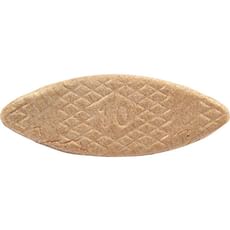
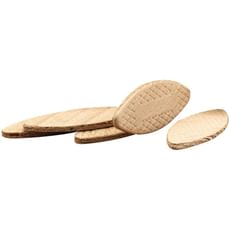
Wood jointing biscuits are small, oval-shaped pieces of compressed beech wood that provide a fast, reliable method for creating strong, accurate joints in woodworking projects. These specialised joinery components fit into matching crescent-shaped slots cut by a biscuit joiner (also known as a plate joiner), offering excellent alignment and reinforcement for edge-to-edge joints, corner joints, and mitred connections. When wood adhesive is applied, the compressed beech biscuits expand slightly to create an incredibly strong mechanical bond that's ideal for cabinet making, furniture construction, worktop installation, and general joinery work.
Available in standardised sizes to match industry-standard biscuit joiner settings, these jointing biscuits offer tradespeople and serious DIY enthusiasts a practical alternative to traditional joinery methods like dowels, mortise and tenon, or spline joints. The compressed beech construction ensures consistent quality and dimensional accuracy, whilst the oval shape provides multiple gluing surfaces and prevents rotation once installed. Tooled-Up.com stocks wood jointing biscuits from leading manufacturers including Trend, Faithfull, and Draper, all producing biscuits that meet the exacting standards required by professional joiners, cabinet makers, and furniture manufacturers.
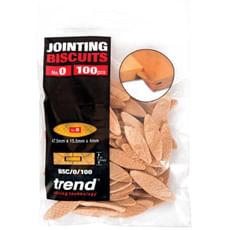
Wood jointing biscuits are typically sold in multipacks containing hundreds of pieces, offering excellent value for both trade users working on multiple installations and home woodworkers building furniture or fitting kitchens. The standardised sizing system means biscuits from different manufacturers are generally interchangeable, giving flexibility when sourcing materials for joinery projects. Proper storage in dry conditions is essential to prevent premature expansion and maintain effectiveness.
Jargon Buster
- Biscuit Joiner / Plate Joiner: A specialised power tool that cuts precise crescent-shaped slots into wood to accept jointing biscuits, ensuring perfect alignment between two pieces being joined.
- Size 0, 10, 20: The standard sizing system for jointing biscuits. Size 0 measures approximately 47mm x 15mm, Size 10 is 53mm x 19mm, and Size 20 is 56mm x 23mm, with larger sizes providing stronger joints for thicker materials.
- Compressed Beech: The material most commonly used for jointing biscuits. The compression process allows the biscuit to expand when moisture from wood glue is applied, creating a tight, secure fit.
- Edge-to-Edge Joint: A joint where two boards are joined along their long edges, commonly used in creating wider panels from narrow boards, such as table tops or worktops.
- Registration Marks: Pencil marks made on workpieces to indicate the exact centre point where biscuit slots should be cut, ensuring perfect alignment during assembly.
- Kerf: The width of the slot cut by the biscuit joiner blade, typically 4mm, which allows the biscuit to fit with adequate glue space around it.
Who Uses Biscuits?
- Joiners and Carpenters: For cabinet construction, fitted furniture, and architectural joinery work on site and in workshops
- Cabinet Makers: Creating face frames, carcase construction, and drawer assembly in bespoke and production furniture
- Kitchen Fitters: Joining worktops, creating breakfast bars, and assembling custom cabinetry during installations
- Furniture Makers: Building tables, chairs, bookcases, and other wooden furniture requiring strong, invisible joints
- Shop Fitters: Constructing retail displays, counters, and fitted units for commercial premises
- Set Builders: Theatre and film production workshops requiring quick, strong joints for temporary and permanent structures
- Serious DIY Enthusiasts: Home woodworkers tackling furniture projects, home improvements, and fitted storage solutions
How to Choose the Right Biscuits
Size Selection: Match biscuit size to your material thickness and joint requirements. Size 0 suits thin stock from 12-18mm, Size 10 works for materials 18-30mm thick, and Size 20 is ideal for stock over 30mm. Always choose the largest biscuit that won't show through your workpiece for maximum joint strength.
Material Quality: Look for biscuits manufactured from quality compressed beech wood with consistent thickness and accurate sizing. The range available from Tooled-Up includes reputable brands like Trend, Faithfull, and Draper, ensuring dimensional accuracy that's critical for professional results. Poor quality biscuits may not expand properly or could break during insertion.
Quantity Requirements: Consider how many biscuits you'll need for your project. Professional tradespeople typically buy in bulk packs of 500 or 1000 pieces for better value, whilst occasional users might opt for smaller quantities. Factor in spacing – most joints require biscuits every 150-200mm for adequate strength.
Compatibility: Ensure the biscuits match your biscuit joiner's settings. Whilst sizing is standardised across the industry, always verify compatibility with your specific tool, particularly if using older or less common machines.
Storage Conditions: Biscuits must be stored in dry conditions to prevent premature expansion. Consider purchasing quantities you'll use within a reasonable timeframe, or ensure you have proper sealed storage containers to maintain their effectiveness.
Popular Accessories
- Biscuit Joiners: Essential power tools from Makita, DeWalt, or Trend for cutting the slots that accept jointing biscuits
- Wood Adhesive: PVA or polyurethane glues specifically formulated for wood joinery applications
- Sash Clamps: Long bar clamps for applying even pressure across joints whilst glue sets
- Marking and Measuring Tools: Combination squares, marking gauges, and pencils for accurate registration mark placement
- Biscuit Joiner Blades: Replacement carbide-tipped cutting blades for maintaining precision cuts
- Dust Extraction Equipment: Vacuum systems or dust bags to keep work areas clean during slot cutting
- Storage Containers: Airtight boxes or cases for keeping unused biscuits dry and protected
- Glue Spreaders: Applicators for distributing adhesive evenly inside biscuit slots
Safety Information
Whilst wood jointing biscuits themselves present minimal safety risks, always observe proper safety practices when using biscuit joiners and associated woodworking equipment. Wear appropriate eye protection when cutting slots, as the high-speed blade can eject wood chips and dust. Ensure adequate dust extraction or wear respiratory protection, as fine wood dust can pose health risks with prolonged exposure – HSE guidelines recommend controlling wood dust in accordance with COSHH regulations.
Store biscuits in a dry location away from moisture sources to prevent premature expansion, which could render them unusable. When working with wood adhesives, ensure adequate ventilation and follow manufacturer's safety guidelines. Always allow glued joints to cure fully according to adhesive instructions before applying stress or removing clamps – premature load can compromise joint strength.
Frequently Asked Questions
What's the difference between Size 0, 10, and 20 biscuits?
The numbers refer to the physical dimensions of the biscuits. Size 0 is the smallest (approximately 47mm x 15mm), suitable for thin stock and delicate work. Size 10 (53mm x 19mm) is the most commonly used for general cabinet and furniture work. Size 20 (56mm x 23mm) is the largest, providing maximum strength for thick materials and heavy-duty applications. Always use the largest size that your material thickness will accommodate without the biscuit showing through.
Can I use biscuits from different manufacturers together?
Yes, jointing biscuits follow standardised sizing across manufacturers, so Trend, Faithfull, and Draper biscuits are interchangeable. The critical factor is the size number (0, 10, or 20) rather than the brand. However, quality can vary between manufacturers, so consistent brands often give more predictable results, particularly in professional applications where dimensional accuracy is crucial.
How many biscuits do I need for a typical joint?
For most applications, space biscuits approximately 150-200mm apart along the joint. For a standard kitchen worktop joint (600mm depth), you'd typically use 3-4 biscuits. Edge-to-edge joints for table tops might use biscuits every 150mm along the length. Increase density for high-stress applications or decrease for lightweight decorative pieces. Corner joints usually require 2-3 biscuits depending on the size of the components.
My biscuits won't stay dry – what should I do?
Store unused biscuits in an airtight container with silica gel packets to absorb moisture. Once exposed to humidity, biscuits can swell slightly and become difficult to insert into slots. Professional workshops often keep biscuits in sealed plastic tubs or the original packaging with resealed openings. If biscuits have absorbed moisture and expanded, they're unfortunately no longer usable and should be replaced.
Are biscuit joints as strong as traditional mortise and tenon joints?
When properly executed with quality biscuits and appropriate wood adhesive, biscuit joints provide excellent strength for most furniture and cabinetry applications. They excel at preventing joint misalignment during assembly and offer good resistance to shear forces. However, for heavy structural applications or joints subject to significant stress, traditional mortise and tenon or dowel joints may be preferable. Biscuit joints offer the advantage of much faster execution, making them ideal for production work and site installations.