

Bottle Jacks

Pay in 3 interest-free payments on purchases from £20-£3000 with  . Learn more.

 Loading...
End of content
Error - No more pages to load
About Bottle Jacks
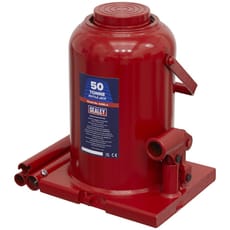
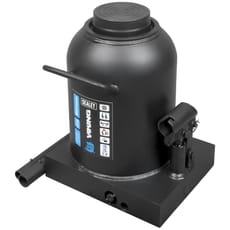
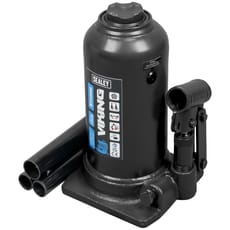
Bottle jacks are powerful hydraulic lifting devices designed to raise heavy loads safely and efficiently, making them essential equipment for automotive repair, industrial maintenance, and construction applications. Named for their distinctive vertical, bottle-like profile, these compact yet robust jacks use hydraulic pressure to lift vehicles, machinery, and equipment that would be impossible to move manually. Unlike trolley jacks that sit horizontally, bottle jacks stand upright and are particularly valued for their remarkable lifting capacity relative to their compact footprint, with models available ranging from 2 tonnes for light vehicles through to over 20 tonnes for commercial equipment.
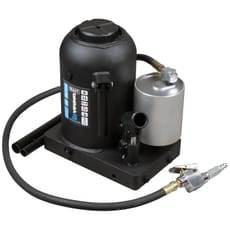
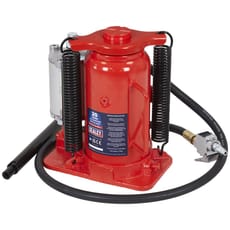
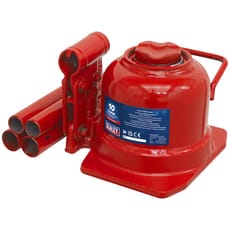
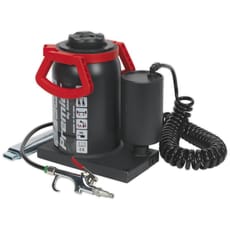
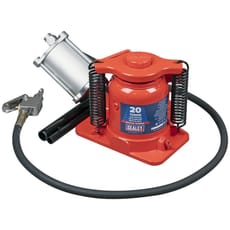
The selection at Tooled-Up.com includes standard hydraulic models, low profile designs for vehicles with minimal ground clearance, telescopic versions offering extended reach, and air-hydraulic variants that combine pneumatic power with hydraulic lifting for faster operation in busy workshops. Leading manufacturers such as Sealey, Draper, and Bahco feature prominently, each offering professional-grade construction with robust steel bodies, precision-machined pistons, and safety features including overload protection valves tested to EN1494 standards.
The versatility of bottle jacks extends well beyond automotive applications – they're equally suited to construction site work, agricultural machinery maintenance, and industrial equipment positioning. Their vertical design allows them to fit into confined spaces where traditional jacks cannot reach, whilst their stable wide bases provide secure support under heavy loads. Modern bottle jacks incorporate advanced features such as dual-stage hydraulic systems for faster lifting, integrated safety valves to prevent over-extension, cross-sectioned saddles for improved grip, and adjustable height ram saddles to accommodate different load contact points.
Jargon Buster
- Tonnage Rating: The maximum safe working load a bottle jack can lift, typically ranging from 2 to 20+ tonnes. Always select a jack with capacity exceeding your heaviest anticipated load to maintain a safety margin in line with HSE guidance.
- Minimum Height: The lowest position of the saddle when the jack is fully retracted. Low profile jacks have reduced minimum heights (typically 140-180mm) for vehicles with limited ground clearance, whilst standard models start around 190-215mm.
- Maximum Lift Height: The highest point the saddle can reach when fully extended. Telescopic bottle jacks offer significantly greater lifting range, sometimes exceeding 500mm, compared to standard models typically achieving 190-280mm of travel.
- Hydraulic Saddle: The circular or square top platform that makes contact with the load. Quality jacks feature swivelling, removable saddles with cross-sectioned designs to prevent slippage and protect vehicle jacking points.
- Air-Hydraulic Operation: A dual-powered system where compressed air drives the initial rapid lift phase, with manual hydraulic pumping providing precise final positioning and maximum lifting force. Ideal for busy workshops requiring faster cycle times.
- Safety Overload Valve: A pressure-release mechanism built into the hydraulic system that prevents over-pressurisation and potential jack failure when loads exceed the rated capacity, ensuring compliance with EN1494 safety standards.
Who Uses Bottle Jacks?
- Motor Mechanics and Auto Technicians: For lifting vehicles during brake repairs, suspension work, gearbox removal, and general maintenance in workshops and MOT centres
- Mobile Mechanics: Appreciating the compact, portable design for roadside assistance and on-site vehicle repairs where trolley jacks are impractical
- HGV and Commercial Vehicle Technicians: Using high-tonnage models (10-20+ tonnes) for lifting trucks, buses, agricultural machinery, and construction equipment
- Construction Workers: For positioning structural steel, raising formwork, and supporting heavy building components during installation on site
- Agricultural Workers and Farm Maintenance Teams: Lifting tractors, combines, and heavy farming equipment for repair and servicing in remote locations
- DIY Enthusiasts and Home Mechanics: Performing routine vehicle maintenance, brake changes, and tyre rotations in home garages with limited space
- Plant Operators and Industrial Maintenance Engineers: Supporting machinery during installation, alignment, and maintenance procedures in factories and industrial facilities
- Body Shop Technicians: Positioning vehicles at optimal working heights for panel repairs, underbody work, and paintwork preparation
How to Choose the Right Bottle Jacks
Load Capacity: Always select a bottle jack with a tonnage rating that comfortably exceeds your heaviest application. For typical family cars, a 2-3 tonne jack suffices, whilst SUVs and light commercial vehicles require 4-6 tonnes. Commercial vehicle work demands 10-20+ tonne capacity. HSE guidance recommends selecting equipment with capacity exceeding your maximum anticipated load by at least 50%.
Height Range: Consider both minimum and maximum heights carefully. Measure the ground clearance of vehicles you'll be lifting – sports cars and lowered vehicles require low profile jacks (140-180mm minimum height). If you need significant lifting distance, telescopic models from Sealey and Draper provide extended reach, often doubling the lift range of standard jacks for accessing suspension components and raised working positions.
Operating Mechanism: Standard manual hydraulic jacks offer reliable, cost-effective operation requiring only pumping the handle. Air-hydraulic models dramatically reduce pumping effort and speed up lifting, making them ideal for busy commercial workshops with compressed air supplies. Premium models like the Sealey Viking range offer three-way operation (manual, air, or hydraulic) for maximum versatility across different working environments.
Build Quality and Safety Features: Professional-grade jacks available from Tooled-Up feature forged steel construction, precision-machined cylinders, and built-in safety overload valves tested to EN1494 standards. Check for stable wide base dimensions for improved stability, swivelling saddles with cross-sectioned grips, and quality seals that prevent hydraulic fluid leaks during extended use.
Portability Requirements: Bottle jacks are inherently more portable than trolley jacks, but weight still varies considerably between 2-tonne compact models and heavy-duty 20-tonne units. Mobile mechanics and those requiring frequent transportation should consider compact models with carry handles, whilst workshop-based users can opt for heavier-duty fixed-location units prioritising capacity over portability.
Popular Accessories
- Axle Stands (Jack Stands): Essential safety equipment – never work under a vehicle supported only by a jack. Always use properly rated axle stands as secondary support in accordance with HSE lifting regulations
- Wooden Cribbing and Load-Spreading Blocks: Distribute weight on soft surfaces and protect vehicle jacking points from damage during lifting operations
- Rubber Saddle Pads: Protect vehicle chassis rails, sills, and jacking points from scratches and damage during lifting, particularly important for prestige vehicles
- Jack Adapter Extensions: Increase saddle height for reaching recessed jacking points and awkward contact surfaces on modern vehicle designs
- Hydraulic Jack Oil: Regular fluid replacement maintains optimal performance and extends jack lifespan – use manufacturer-recommended grades only
- Wheel Chocks: Prevent vehicle movement during lifting operations, particularly important on sloped surfaces and when working on site
- Air Line Hoses and Fittings: Required for air-hydraulic bottle jacks, ensuring reliable compressed air supply from workshop compressors
- Protective Carry Cases: Keep jacks clean and protected during transport and storage, particularly important for mobile mechanics
Safety Information
Critical Safety Requirements: Always consult HSE guidance on safe lifting operations before using bottle jacks. Never work beneath a vehicle supported solely by a hydraulic jack – always use correctly rated axle stands as primary support, with the jack serving only to raise and lower the load. Ensure the jack sits on firm, level ground; soft or sloped surfaces create dangerous instability that can result in jack failure and serious injury.
Load Positioning: Centre the jack saddle precisely beneath designated manufacturer jacking points. Incorrect positioning can damage vehicle structures or cause loads to slip catastrophically. Always check the vehicle handbook for approved lifting locations. Use the jack only for lifting – never as a load-securing device during work. Ensure all personnel are clear of the lifting area before raising loads.
Inspection and Maintenance: Regularly inspect your bottle jack for hydraulic fluid leaks, damaged seals, piston scoring, and base plate cracks. Check that safety overload valves function correctly. Maintain proper hydraulic fluid levels using manufacturer-recommended oil. Never exceed the rated capacity – overloading can cause catastrophic failure. All bottle jacks should be tested annually in commercial environments.
Operational Precautions: Pump the jack handle smoothly and steadily – jerky operation can destabilise loads. Never extend the jack beyond its maximum rated height or use it horizontally for pushing operations. Always lower loads slowly using the release valve and maintain control throughout descent. Wear appropriate PPE including safety boots and gloves when operating lifting equipment on site or in workshops.
Frequently Asked Questions
What's the difference between a bottle jack and a trolley jack?
Bottle jacks stand vertically and excel at lifting heavy loads in confined spaces, offering higher weight capacities (up to 20+ tonnes) in compact designs ideal for mobile mechanics and constrained working areas. Trolley jacks sit horizontally on wheels, providing easier positioning under vehicles and greater stability during lifting, making them preferable for general workshop use. Bottle jacks typically cost less and store more easily, whilst trolley jacks offer superior convenience for frequent automotive work where space allows.
How often should I service my hydraulic bottle jack?
Inspect your bottle jack before each use for visible damage, leaks, and proper operation. Perform comprehensive maintenance every 12 months or after 200 uses (whichever comes first) including checking hydraulic fluid levels, replacing worn seals, and testing safety valves function correctly. Commercial workshop jacks under daily use benefit from more frequent professional servicing every 6 months in accordance with workplace equipment regulations. Always follow manufacturer maintenance schedules and use recommended hydraulic fluids to maintain EN1494 compliance.
Can I use a bottle jack horizontally for pushing or pressing operations?
Never use standard bottle jacks in any orientation other than vertical – they're specifically engineered for vertical lifting only. Horizontal use causes hydraulic fluid starvation, air ingress into the system, and seal failure, potentially resulting in dangerous jack collapse and serious injury. For horizontal pushing applications, purpose-built hydraulic rams or porta-power systems are required. Always use equipment only for its intended design purpose as specified by the manufacturer.
What tonnage bottle jack do I need for my vehicle?
Select a jack rated for at least 1.5 times your vehicle's axle weight (not total vehicle weight). Typical small cars require 2-3 tonnes, family cars and small SUVs need 3-4 tonnes, whilst large SUVs and light commercial vehicles demand 4-6 tonnes. When lifting commercial vehicles, agricultural machinery, or using jacks for industrial applications, 10-20+ tonne capacity becomes necessary. Consult your vehicle handbook for specific weights, and remember that HSE guidance recommends adequate safety margins above maximum loads.
Why won't my bottle jack lift to its maximum height anymore?
Reduced lift height typically indicates low hydraulic fluid levels, air trapped in the system, or worn internal seals. First, check and top up hydraulic fluid to the correct level using manufacturer-specified oil with the jack fully retracted. If this doesn't resolve the issue, bleed air from the system by operating the jack without load several times with the release valve open slightly. Persistent problems suggest worn seals requiring professional repair or replacement – continued use with reduced performance compromises safety and should be avoided.