

Blue Spot Pin Spanners
 Loading...
End of content
Error - No more pages to load
Blue Spot Pin Spanners at Tooled-Up.com
Blue Spot has established itself as a trusted name in the hand tools market, offering reliable and affordable solutions for both professional tradespeople and dedicated DIY enthusiasts. Their range of pin spanners represents excellent value engineering, designed to tackle the specific challenge of adjusting components with pin holes, such as grinder lock nuts, angle grinder collars, and various machinery adjustment rings commonly found in workshops and on construction sites across the UK.
Pin spanners, also known as pin wrenches or C-spanners, are essential specialist tools that provide the leverage and precision needed to tighten or loosen threaded collars and lock rings fitted with holes rather than traditional hex or spanner flats. The Blue Spot selection available from Tooled-Up.com delivers dependable performance for tasks ranging from power tool maintenance to machinery adjustment, ensuring tradespeople have the right tool for those awkward fastening jobs that standard spanners simply cannot address.
Manufactured to rigorous quality standards, Blue Spot pin spanners feature hardened steel construction with precisely machined pins that locate securely in component holes, minimising the risk of slippage and component damage during adjustment work. Whether you're maintaining angle grinders on site, servicing machinery in a workshop environment, or tackling precision engineering tasks, these tools provide the reliable functionality that professionals demand without the premium price tag of some specialist brands.
Why Choose Blue Spot Pin Spanners?
Blue Spot has built its reputation on delivering honest, no-nonsense tools that perform reliably day after day. Their pin spanners embody this philosophy, offering robust construction at competitive price points that make them accessible to both established professionals building comprehensive tool collections and newcomers investing in their first specialist toolkit. The brand focuses on practical design features that enhance usability rather than unnecessary complications, ensuring these tools perform their intended function efficiently.
The value proposition of Blue Spot pin spanners lies in their balance between affordability and durability. Constructed from hardened and tempered steel, these tools resist the wear and deformation that can occur with repeated use, particularly when dealing with seized or overtightened components. The pins themselves are precision-ground to ensure accurate fitment in standard pin hole configurations, reducing the frustration of poor engagement that can plague inferior quality alternatives.
Blue Spot's commitment to accessible pricing makes their pin spanners particularly attractive for tradespeople who need reliable tools across multiple disciplines without investing premium sums in every specialist item. This democratic approach to tool provision has earned the brand loyalty among value-conscious professionals who appreciate dependable performance without unnecessary expense.
Who Uses Blue Spot Pin Spanners?
- General Engineers: For machinery maintenance and adjustment work requiring access to lock rings and threaded collars
- Construction Tradespeople: Maintaining angle grinders, cut-off saws, and other power tools with pin-type lock nuts
- Motor Mechanics: Adjusting bearing lock nuts and precision-fit components in automotive applications
- Maintenance Engineers: Servicing industrial equipment with pin-type adjustment mechanisms
- Workshop Technicians: General maintenance tasks across various machinery and equipment types
- DIY Enthusiasts: Home workshop applications including power tool maintenance and machinery adjustment
- Plant Fitters: Installing and maintaining industrial machinery with specialist fastening requirements
- Agricultural Engineers: Servicing farm machinery and equipment with pin-adjustable components
Key Features of Blue Spot Pin Spanners
Blue Spot pin spanners incorporate several design features that enhance their practical utility in workshop and site environments. The hardened steel construction provides the strength necessary to apply significant torque without tool deflection or pin damage, essential when dealing with components that may be affected by corrosion or over-tightening during previous installations.
The precision-machined pins ensure accurate engagement with component holes, distributing load evenly and minimising the risk of hole damage or pin shearing during use. This attention to manufacturing tolerances means these tools perform reliably across the various pin spacings and diameters encountered in standard applications, from compact angle grinder nuts to larger industrial adjustment rings.
Many Blue Spot pin spanners feature ergonomic handle designs that facilitate comfortable grip during operation, reducing hand fatigue during extended use and improving control when precise adjustment is required. The C-spanner configuration common to pin spanners allows the tool to wrap around the component being adjusted, providing clearance for spindles or shafts whilst maintaining full engagement with the adjustment points.
Chrome or satin finishes on Blue Spot pin spanners provide corrosion resistance appropriate for general workshop use, protecting the tool from surface rust that could affect dimensional accuracy and operational smoothness. This protective finishing extends tool life and maintains professional appearance throughout the working life of the implement.
Popular Blue Spot Pin Spanners
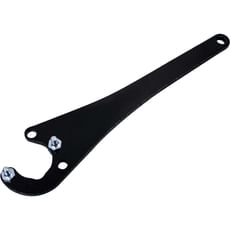
Tooled-Up stocks Blue Spot pin spanners in the most commonly required configurations for UK trades and workshop applications. Adjustable pin spanners offer versatility across multiple component sizes, featuring sliding jaw mechanisms that accommodate various pin spacings within their adjustment range, making them ideal for tradespeople working with diverse equipment.
Fixed pin spanners in standard sizes provide dedicated tools for specific applications, offering the rigidity and precision that some tasks demand. These are particularly popular with professionals who regularly service identical equipment types and prefer the certainty of purpose-matched tooling.
Hook and pin spanner combinations extend functionality beyond simple pin engagement, incorporating hook features that allow adjustment of components with notches or slots as well as pin holes. This dual-purpose design reduces the number of specialist tools required in general maintenance toolkits.
Safety and Compliance
When using Blue Spot pin spanners, ensure the pins fully engage with component holes before applying force to prevent slippage that could cause injury or component damage. Always select the correct size spanner for the application, as forcing incorrect tools onto components risks both personal injury and equipment damage.
Wear appropriate personal protective equipment including safety glasses when working with pin spanners, particularly when dealing with seized components where sudden release could cause tool movement. Ensure components are properly supported and stable before applying adjustment force to prevent unexpected rotation or displacement.
Inspect pin spanners regularly for signs of wear, deformation, or damage to pins that could compromise safe operation. Replace tools showing significant wear or damage rather than risking failure during use. Store pin spanners in dry conditions to prevent corrosion that might affect dimensional accuracy and safe operation.
Follow equipment manufacturer guidelines regarding torque specifications for pin-adjusted components, avoiding over-tightening that could damage threads or create seizure problems during future maintenance. Consult machinery documentation to ensure correct tool selection and adjustment procedures for specific applications.
Frequently Asked Questions
What sizes of Blue Spot pin spanners are available?
Blue Spot manufactures pin spanners in the most commonly required sizes for UK workshop and site applications, including both fixed-size models for specific tasks and adjustable versions that accommodate multiple component dimensions. The Tooled-Up range includes options suitable for standard angle grinder maintenance through to larger industrial adjustment applications.
Can Blue Spot pin spanners be used with impact tools?
Blue Spot pin spanners are designed for manual operation and should not be used with impact wrenches or powered tools. The shock loading from impact mechanisms can damage the tool pins and potentially shear them, creating safety hazards. For seized components, apply penetrating lubricant and allow time for it to work rather than using excessive force or powered assistance.
How do I know which pin spanner size I need for my angle grinder?
Angle grinder manufacturers typically specify the required spanner type in the tool's documentation. Common sizes for popular grinder models follow industry standards, with 115mm and 125mm grinders often using similar pin spacings. If documentation is unavailable, measure the distance between pin holes on the lock nut or bring the grinder to your local tool supplier for correct matching.
Are Blue Spot pin spanners suitable for professional daily use?
Blue Spot pin spanners are designed to provide reliable performance for regular workshop and site use, offering durability appropriate for professional applications at accessible price points. Whilst premium specialist brands may offer enhanced features for intensive industrial use, Blue Spot tools deliver dependable functionality for general trade requirements and represent excellent value for tradespeople managing tool budgets across multiple disciplines.
What's the difference between a pin spanner and a hook spanner?
Pin spanners feature cylindrical pins that engage with holes in the component being adjusted, whilst hook spanners have flat tangs that fit into notches or slots. Some components use pin holes, others use notches, and some may accept either type. Blue Spot offers combination hook and pin spanners that provide versatility for workshops dealing with varied equipment types, reducing the number of specialist tools required in general maintenance kits.