

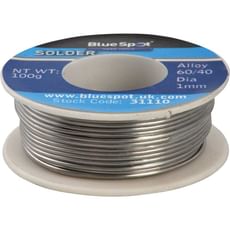
Blue Spot Soldering Wire
 Loading...
End of content
Error - No more pages to load
Blue Spot Soldering Wire at Tooled-Up.com
Blue Spot has established itself as a trusted name in the soldering supplies market, offering professional-grade soldering wire that delivers consistent results for both tradespeople and serious DIY enthusiasts. The Blue Spot soldering wire range combines quality materials with competitive pricing, making it an excellent choice for electricians, electronics engineers, and anyone requiring reliable solder for electrical and electronics work.
Whether you're working on delicate printed circuit board repairs, automotive electrical systems, or general electrical maintenance, Blue Spot soldering wire provides the clean, strong joints essential for professional results. The range available from Tooled-Up includes various compositions and gauges to suit different applications, from fine electronics work to heavier duty electrical connections.
Blue Spot's commitment to manufacturing consistent, high-quality soldering wire means you can rely on predictable melting characteristics and excellent flow properties, reducing the frustration of cold joints and ensuring your work meets professional standards every time.
Why Choose Blue Spot Soldering Wire?
Blue Spot soldering wire stands out in a competitive market through its combination of quality and value. The brand has built a solid reputation for producing soldering consumables that perform reliably without the premium price tag associated with some specialist brands. Each spool of Blue Spot solder is manufactured to consistent specifications, ensuring you get the same performance from batch to batch.
The flux core in Blue Spot soldering wire is formulated to provide excellent cleaning action and promote proper wetting, which is crucial for creating strong, conductive joints. This attention to the flux formulation means less frustration during soldering, with the solder flowing smoothly and adhering properly to clean metals without excessive oxidation.
For professionals who get through significant quantities of solder, Blue Spot offers excellent economy without compromising on the quality needed for trade work. The brand's straightforward approach focuses on what matters most: reliable performance, consistent quality, and fair pricing that makes sense for both occasional users and busy tradespeople.
Who Uses Blue Spot Soldering Wire?
- Electricians carrying out electrical repairs, appliance servicing, and wiring modifications
- Electronics Engineers working on circuit board assembly, component replacement, and prototype development
- Automotive Electricians repairing vehicle electrical systems and sensor connections
- Maintenance Engineers in commercial and industrial settings requiring reliable electrical repairs
- TV and Audio Technicians servicing and repairing entertainment equipment
- Hobbyists and DIY Enthusiasts working on electronics projects, radio control models, and home repairs
- Heating Engineers making electrical connections on boilers and control systems
- Appliance Repair Technicians fixing white goods and domestic appliances
Key Features of Blue Spot Soldering Wire
Blue Spot soldering wire incorporates several features that make it suitable for professional applications. The flux core runs consistently through the centre of the wire, providing even distribution of cleaning and fluxing action throughout the soldering process. This eliminates the need for separate flux application in most situations, speeding up work and reducing the materials you need to carry.
The solder composition is formulated for reliable melting characteristics, with predictable flow properties that make it easier to create neat, professional joints. The wire diameter options available at Tooled-Up allow you to select the most appropriate gauge for your specific application, whether you're working on fine SMD components or heavier gauge electrical connections.
Blue Spot soldering wire is supplied on convenient spools that dispense smoothly without tangling or kinking, a small but important detail that improves workflow efficiency. The lead-free options meet current environmental and safety regulations whilst still providing good working properties, though traditional tin-lead compositions remain available for applications where they're still appropriate.
Popular Blue Spot Soldering Wire
The Blue Spot range includes various solder wire options to cover the most common soldering applications. Standard 60/40 tin-lead solder remains popular for general electrical work, offering easy melting and excellent flow characteristics that make it forgiving for less experienced users whilst still meeting professional standards.
Lead-free solder wire options cater to applications where RoHS compliance is required or where environmental considerations are paramount. These modern formulations provide reliable performance whilst eliminating lead from the soldering process. Different wire gauges are available within the Tooled-Up selection, allowing you to choose finer wire for precision electronics work or heavier gauges for electrical connections and larger components.
The flux-cored variants eliminate the need for separate flux application, streamlining the soldering process and reducing the number of consumables needed on your workbench or in your toolkit.
Safety and Compliance
When using Blue Spot soldering wire, proper safety precautions are essential. Always work in well-ventilated areas, as soldering produces fumes that should not be inhaled. Consider using fume extraction equipment for extended soldering sessions or when working in confined spaces, in accordance with COSHH regulations.
Lead-containing solders require appropriate handling procedures, including washing hands after use and avoiding eating or drinking in work areas. Lead-free alternatives reduce these health concerns whilst still providing effective soldering performance. Always wear appropriate eye protection when soldering, as flux can splatter and molten solder poses a burn risk.
Store soldering wire in a dry environment to prevent oxidation and contamination that could affect soldering performance. Blue Spot soldering wire meets relevant UK and EU standards for composition and performance, ensuring consistency and reliability in professional applications.
Frequently Asked Questions
What diameter Blue Spot soldering wire should I choose?
For general electronics work and PCB repairs, 0.7mm to 1mm diameter wire provides good control and manageable solder flow. Heavier electrical work benefits from 1.2mm to 2mm diameter wire, which delivers more solder quickly for larger joints. Fine SMD work may require 0.5mm or finer wire for precision.
Is Blue Spot soldering wire suitable for plumbing applications?
No, Blue Spot soldering wire is designed for electrical and electronics applications. Plumbing requires different solder compositions and flux types specifically formulated for copper pipe joints. Always use the appropriate solder type for your specific application.
What's the difference between lead-free and tin-lead Blue Spot solder?
Traditional tin-lead solder (typically 60/40 composition) melts at a lower temperature and flows more easily, making it easier to work with. Lead-free alternatives meet environmental regulations and eliminate health concerns associated with lead, but require slightly higher temperatures and have different flow characteristics that take some adjustment.
How should I store Blue Spot soldering wire?
Store solder wire in a cool, dry location away from moisture and contaminants. Keep spools in sealed bags or containers when not in use to prevent oxidation of the solder surface, which can affect performance. Properly stored solder wire has an indefinite shelf life.
Can Blue Spot soldering wire be used for stained glass work?
Whilst Blue Spot electrical solder can physically be used for stained glass, specialist stained glass solder with different composition and flux is recommended for best results and appropriate working characteristics in decorative applications. Electrical solder is optimised for electrical conductivity rather than appearance and structural properties needed in stained glass work.