

Bondloc Retaining
 Loading...
End of content
Error - No more pages to load
Bondloc Retaining at Tooled-Up.com
Bondloc retaining compounds represent a trusted solution for mechanical assemblies requiring secure, permanent fits between cylindrical metal components. These anaerobic adhesives cure in the absence of air when confined between close-fitting metal surfaces, creating a strong bond that locks components in place and eliminates the need for traditional mechanical fasteners. The Bondloc range available from Tooled-Up.com offers professional-grade formulations designed to prevent loosening caused by vibration and shock loads whilst filling gaps between mating surfaces to distribute stress evenly across the joint.
Developed specifically for industrial and engineering applications, Bondloc retaining compounds provide an effective alternative to traditional methods such as press fits, pins, keys, and welding. These thread-locking and retaining formulations excel in applications including bearing assemblies, cylindrical parts fitting, bushing installations, and gear mounting. Whether securing bearings onto shafts, retaining sleeves in housings, or locking pulley assemblies, these compounds deliver consistent, reliable performance in demanding workshop and manufacturing environments.
The Tooled-Up selection of Bondloc retaining products caters to various application requirements, with different viscosities and strengths available to match specific clearances and joint configurations. From low-viscosity formulations that penetrate tight-fitting parts to high-strength compounds for maximum load-bearing capacity, these adhesives provide engineers and maintenance professionals with versatile bonding solutions for critical mechanical assemblies.
Why Choose Bondloc Retaining?
Bondloc has established a reputation for delivering cost-effective, high-performance adhesive solutions that meet the demanding requirements of British industry. Their retaining compounds offer several advantages over traditional mechanical fixing methods, including the elimination of machining costs associated with keyways, the prevention of fretting corrosion between mating surfaces, and the ability to bond dissimilar metals without galvanic corrosion concerns. The anaerobic curing technology ensures that unused product remains stable in the bottle, reducing waste and extending shelf life.
The brand's commitment to consistent quality means that tradespeople and engineers can rely on predictable curing times and bond strengths across different batches. Bondloc retaining compounds are formulated to withstand exposure to oils, hydraulic fluids, and common industrial chemicals, making them suitable for harsh working environments. Their ability to fill gaps up to 0.25mm whilst maintaining full strength provides valuable insurance against manufacturing tolerances, reducing the need for precision machining in many applications.
Unlike mechanical interference fits that can cause stress concentrations and potential component failure, Bondloc retaining compounds distribute loads evenly across the entire bond area. This characteristic makes them particularly valuable for applications involving aluminium, which can be damaged by excessive press-fit forces. The compounds also seal the joint against moisture and contaminants, providing additional corrosion protection for critical assemblies.
Who Uses Bondloc Retaining?
- Mechanical engineers requiring reliable cylindrical assembly bonding
- Maintenance fitters performing bearing replacements and machinery repairs
- Agricultural mechanics working on farming equipment and machinery
- Automotive technicians securing transmission and engine components
- Manufacturing assembly operatives in production environments
- Plant maintenance teams conducting preventative maintenance programmes
- General engineers across various industrial sectors
- Pump and motor repair specialists rebuilding rotating equipment
- Machine tool operators requiring secure tooling and fixture mounting
Key Features of Bondloc Retaining
The anaerobic curing mechanism at the heart of Bondloc retaining compounds ensures that the adhesive remains liquid until confined between metal surfaces, where the absence of oxygen triggers polymerisation. This unique characteristic allows for easy application and adjustment of components before final positioning, after which the compound cures to full strength without the need for heat or additional catalysts. Curing typically occurs at room temperature, though elevated temperatures can accelerate the process when faster production cycles are required.
Different viscosity grades accommodate varying gap sizes, with low-viscosity formulations designed for tight clearances of 0.05mm or less, whilst higher-viscosity compounds suit looser fits up to 0.25mm. This range ensures that engineers can select the appropriate product for their specific application, whether retaining a precision ground bearing or securing a more generous slip-fit assembly. The compounds provide excellent shear and tensile strength once fully cured, typically reaching handling strength within 10-30 minutes and full cure within 24 hours.
Temperature resistance is a critical consideration for retaining compounds, and Bondloc formulations typically perform reliably from -55°C to +150°C, with some specialised variants offering even higher temperature capability. This thermal stability ensures that assemblies remain secure through the heating and cooling cycles experienced in many industrial applications. The compounds also exhibit excellent chemical resistance to hydraulic oils, cutting fluids, and industrial solvents commonly encountered in workshop environments.
Popular Bondloc Retaining
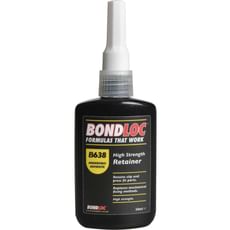
Within the retaining compound category, several formulation types address different application needs. High-strength retaining compounds are specified for heavy-duty applications involving maximum load transfer, such as securing large bearings, gears, or couplings where structural integrity is paramount. These formulations provide the highest shear strength and are typically used for permanent assemblies not requiring future disassembly.
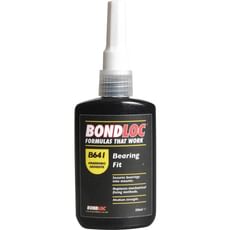
Medium-strength variants offer a balance between secure retention and the possibility of disassembly using standard workshop tools and localised heating. These compounds suit applications where future maintenance access may be required, such as replaceable bearing assemblies or components subject to periodic inspection. Low-strength retaining compounds facilitate easier disassembly whilst still providing secure location and sealing, making them ideal for adjustable assemblies or components requiring regular servicing.
Wicking-grade retaining compounds feature very low viscosity, allowing them to penetrate pre-assembled parts through capillary action. This characteristic proves invaluable for securing components already in place or for production environments where applying adhesive before assembly would be impractical. These formulations can secure loose-fitting parts retrospectively, eliminating the need for component disassembly.
Safety and Compliance
Bondloc retaining compounds should be used in accordance with COSHH regulations and the manufacturer's safety data sheets. Adequate ventilation is essential during application, and users should avoid prolonged skin contact by wearing appropriate protective gloves. Eye protection is recommended to prevent accidental splashes during dispensing. The compounds are classified as skin sensitisers, so personnel with known sensitivities to acrylate chemistry should take additional precautions.
Bonded assemblies should be allowed to reach full cure before being placed under operational loads. Following HSE guidance for adhesive use in structural applications, components should be clean, dry, and free from oil or grease for optimal bond strength. Proper surface preparation ensures consistent results and maximises the performance of the retaining compound. Storage should be in cool, dry conditions away from direct sunlight, with containers kept tightly sealed to maintain product integrity.
Frequently Asked Questions
What gap size can Bondloc retaining compounds fill?
Bondloc retaining compounds are formulated for different gap tolerances. Low-viscosity grades suit tight clearances up to 0.05mm, whilst standard formulations work effectively in gaps up to 0.15mm, and high-viscosity variants can fill clearances up to 0.25mm whilst maintaining full strength. Selecting the correct viscosity for your specific clearance is essential for optimal performance.
Can retaining compounds be used on passive metals like stainless steel?
Yes, though passive metals such as stainless steel, chrome plate, or zinc may require a primer or activator to initiate proper curing. Active metals like mild steel, brass, and copper typically promote curing without additional treatment. When working with passive substrates, consult the product data sheet for specific preparation recommendations.
How long does Bondloc retaining compound take to cure?
Handling strength is typically achieved within 10-30 minutes at room temperature, allowing light loads to be applied. Full functional cure develops over 24 hours, after which the assembly can withstand its rated operational loads. Elevated temperatures accelerate curing, whilst low temperatures may extend cure times. For critical applications, allow full cure before placing the assembly into service.
Are bonded assemblies with retaining compound permanent?
This depends on the strength grade selected. High-strength retaining compounds create essentially permanent bonds requiring significant heat (typically 250°C) and mechanical force for disassembly. Medium-strength variants allow disassembly using standard workshop tools and localised heating to around 150°C, whilst low-strength formulations facilitate easier removal for maintenance access.
Do I need to clean parts before applying retaining compound?
Yes, proper surface preparation is critical for reliable bonding. Parts should be clean, dry, and free from oil, grease, cutting fluids, and corrosion. Solvent cleaning or vapour degreasing provides the best results. Any surface contamination can prevent proper curing or reduce bond strength significantly, so thorough preparation is essential for achieving the compound's full performance potential.