

Fisher Squares & Bevels
 Loading...
End of content
Error - No more pages to load
Fisher Squares & Bevels at Tooled-Up.com
Fisher has established itself as a trusted name in precision measuring and marking tools, with their squares and bevels range representing decades of engineering excellence and practical innovation. Known throughout the UK trade sector for producing reliable, accurate instruments that withstand the rigours of daily site work, Fisher squares and bevels are designed to meet the exacting standards demanded by professional tradespeople. The brand's commitment to precision engineering ensures that every square maintains true 90-degree angles and every bevel offers smooth, accurate adjustments that remain stable under working conditions.
The Fisher range available from Tooled-Up encompasses various square and bevel configurations, from traditional try squares and combination squares to adjustable sliding bevels and engineer's squares. Each tool is manufactured with careful attention to material selection and finishing processes, ensuring durability and long-term accuracy. Fisher's squares typically feature hardened steel blades with clearly etched graduations that resist wear, whilst their bevels incorporate robust locking mechanisms that maintain set angles reliably throughout demanding applications.
Whether you're a joiner requiring precision marking for complex timber joints, a metalworker setting up machinery, or a general builder checking wall alignments, Fisher's squares and bevels provide the accuracy and dependability that professional work demands. The brand's focus on practical functionality means these tools deliver consistent performance across carpentry, metalworking, engineering, and general construction applications.
Why Choose Fisher Squares & Bevels?
Fisher has built its reputation on manufacturing measuring tools that remain accurate throughout extended professional use. Unlike cheaper alternatives that can lose their precision after repeated site work exposure, Fisher squares and bevels are engineered with dimensional stability in mind. The brand employs quality materials—typically hardened and tempered steel for blades and stocks made from either seasoned hardwood or impact-resistant composite materials—that resist warping, bending, and the general wear that comes from daily toolbox life.
The accuracy standards maintained by Fisher are particularly valued by tradespeople whose work requires genuine precision. Each square is manufactured to tight tolerances, ensuring that right angles remain true and measurements stay consistent. This reliability translates directly into better work quality, reduced material waste from measurement errors, and increased confidence when setting out complex projects. Fisher bevels feature precision-machined pivot points and effective locking mechanisms that hold angles securely, even when bumped or knocked during active use.
Value represents another compelling reason to choose Fisher. Positioned in the mid-to-upper market segment, Fisher squares and bevels offer professional-grade performance without the premium pricing of some specialist brands. This combination of quality construction, lasting accuracy, and reasonable cost makes Fisher an intelligent choice for tradespeople who understand that reliable measuring tools are fundamental investments rather than disposable commodities.
Who Uses Fisher Squares & Bevels?
Fisher squares and bevels are favoured by a diverse range of professionals and skilled enthusiasts, including:
- Carpenters and Joiners: For marking timber joints, checking frame squareness, and setting bevel angles for complex joinery work
- Metalworkers and Fabricators: For precision layout work on steel and aluminium, checking welded assemblies, and setting machinery
- Engineers and Machinists: For workshop setup, quality control inspection, and precision engineering applications
- Builders and General Contractors: For checking wall corners, verifying formwork, and general construction layout tasks
- Shop Fitters and Installers: For ensuring cabinets, counters, and fixtures are installed square and level
- Picture Framers and Fine Woodworkers: For precision mitring and detailed marking work requiring exact angles
- Maintenance Engineers: For checking machinery alignment and conducting equipment inspections
- DIY Enthusiasts: Serious home improvers who appreciate quality tools that deliver professional results
Key Features of Fisher Squares & Bevels
Fisher squares and bevels incorporate several distinctive features that enhance their functionality and longevity. The blades typically feature deeply etched or laser-engraved graduations in both metric and imperial measurements, ensuring markings remain legible even after years of use. These markings are strategically positioned for easy reading during practical application, reducing the likelihood of measurement errors.
Construction quality stands as a hallmark of Fisher products. Blade edges are ground flat and straight to exacting tolerances, ensuring accurate marking lines and reliable surface contact when checking squareness. The stocks—whether wooden or composite—are carefully shaped to provide comfortable handling whilst maintaining the structural rigidity necessary for accurate measurements. Many Fisher squares feature brass or stainless steel wear strips protecting high-contact areas, significantly extending tool life.
Fisher bevels demonstrate thoughtful engineering in their adjustment and locking mechanisms. Smooth pivot action allows precise angle setting, whilst effective locking systems—often featuring knurled brass or steel nuts—secure the blade firmly without requiring excessive force. This balance between easy adjustment and secure locking makes Fisher bevels particularly practical for tradespeople who need to transfer and replicate angles repeatedly throughout a project.
The corrosion resistance of Fisher squares and bevels is enhanced through protective finishes on steel components, helping these tools withstand the moisture and temperature variations encountered in typical workshop and site environments. This attention to protective finishing extends tool life and maintains accuracy by preventing rust-related dimensional changes.
Popular Fisher Squares & Bevels
Tooled-Up stocks several Fisher square and bevel configurations that address different trade requirements. Fisher try squares remain fundamental tools for woodworking and general construction, offering reliable 90-degree reference in various blade lengths to suit different project scales. These traditional designs combine wooden stocks with steel blades, providing the balance and feel that experienced tradespeople appreciate.
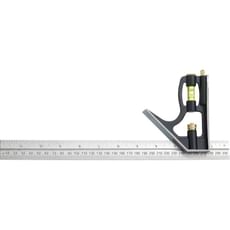
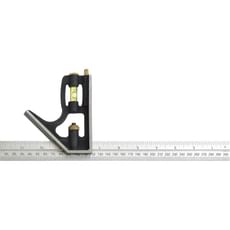
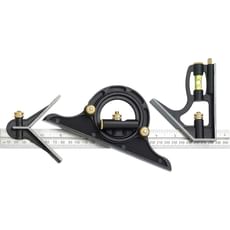
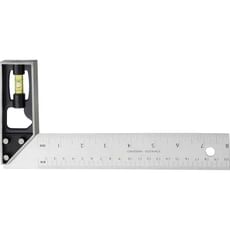
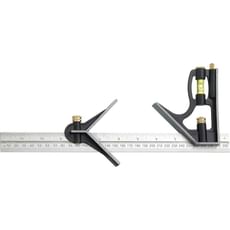
Fisher combination squares represent versatile tools that function as try squares, mitring squares, depth gauges, and marking gauges within a single instrument. The sliding blade design allows measurements along the blade length, whilst the multi-function head typically incorporates both 90-degree and 45-degree reference surfaces, making these tools particularly valuable for carpenters and joiners working on varied projects.
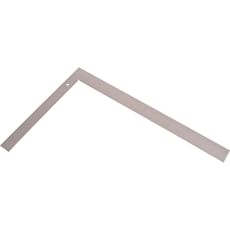
Fisher engineer's squares cater to metalworking and precision engineering applications, featuring all-steel construction with wide, stable bases that provide reliable reference surfaces for layout work and inspection tasks. These squares are manufactured to higher accuracy standards than general-purpose carpentry squares, making them appropriate for workshop environments where dimensional precision is critical.
Fisher sliding bevels offer infinite angle adjustment between their stock and blade, allowing tradespeople to capture existing angles directly from structures or templates and transfer these precisely to workpieces. This capability is invaluable for matching existing roof pitches, replicating complex joinery angles, or setting machinery to specific operating angles.
Safety and Compliance
Whilst squares and bevels don't present the immediate hazards associated with powered equipment, proper handling practices ensure both personal safety and tool longevity. Fisher squares feature edges that, whilst precision-ground for accuracy, should be handled with appropriate care to avoid cuts, particularly when cleaning or inspecting blades. The substantial weight of larger engineer's squares means they should be stored securely to prevent falling, which could cause injury or damage the tool's accuracy.
Maintaining the accuracy of measuring tools is essential for safe, quality work outcomes. Regular verification of Fisher squares against known reference surfaces helps identify any accuracy degradation before it affects work quality. When used in professional environments, these tools should form part of calibration and inspection protocols, particularly in engineering and manufacturing settings where dimensional accuracy relates directly to product safety and compliance.
Storage practices significantly affect tool longevity and accuracy. Fisher squares and bevels should be kept in dry conditions, protected from impact with other tools, and stored flat or hanging to prevent warping. Regular cleaning and light oiling of metal components prevents corrosion that could affect both accuracy and functionality. Following these practices ensures these precision instruments deliver reliable service throughout their working life.
Frequently Asked Questions
How do I verify that my Fisher square is still accurate?
Check a Fisher try square by drawing a line along its blade against a straight edge, then flipping the square over and drawing another line from the same starting point. If both lines are identical, the square is accurate. For combination squares, compare readings against a known accurate reference square or have it checked professionally if used for precision work.
What's the difference between a try square and an engineer's square?
Try squares typically feature wooden or composite stocks and are designed for general carpentry and joinery work with moderate accuracy requirements. Fisher engineer's squares are all-steel construction, manufactured to tighter tolerances, and intended for metalworking, engineering, and applications requiring higher precision. Engineer's squares generally offer greater durability in workshop environments.
How should I maintain my Fisher sliding bevel?
Keep the pivot point clean and occasionally apply a drop of light machine oil to ensure smooth adjustment. Ensure the locking mechanism is tightened only as much as necessary to secure the angle—over-tightening can damage threads or distort components. Store the bevel in a dry location and periodically check that the blade remains firmly attached to the stock. Wipe metal components with an oily cloth to prevent corrosion.
Can Fisher squares be used for metalworking and woodworking?
Fisher combination squares and try squares work effectively across both disciplines for general layout and checking tasks. However, for precision metalworking, engineering applications, or quality control inspection, Fisher engineer's squares manufactured to higher accuracy standards provide more reliable results. Choose the square type based on the accuracy requirements of your specific application.
What blade length should I choose for a Fisher square?
Blade length selection depends on your typical project scale. For general carpentry and joinery, 300mm (12-inch) squares offer versatility for most tasks. Smaller 150mm or 200mm squares suit detailed work, picture framing, or confined spaces, whilst larger 450mm or 600mm squares are appropriate for setting out larger assemblies, checking formwork, or sheet goods layout. Many tradespeople maintain multiple sizes to address different situations efficiently.