

Handy Transporters
 Loading...
End of content
Error - No more pages to load
Handy Transporters at Tooled-Up.com
Handy has established itself as a trusted name in garden and site equipment, and their range of transporters exemplifies the brand's commitment to practical, hardworking solutions for demanding environments. Whether moving heavy loads around construction sites, landscaping projects, or large gardens, Handy transporters are engineered to make manual handling tasks significantly easier and safer. These robust machines combine sturdy construction with user-friendly design, making them an ideal choice for both professional tradespeople and dedicated DIY enthusiasts who demand reliability from their equipment.
The Handy transporter range available from Tooled-Up.com is designed to tackle the challenging work of moving materials, equipment, and waste across varied terrain. From compact models suitable for residential gardens to heavy-duty options built for commercial applications, Handy offers transporters that deliver impressive load capacities without compromising on manoeuvrability. Each machine is built with the understanding that time spent moving materials is time away from the actual task at hand, which is why Handy focuses on efficiency, durability, and ease of operation in every transporter they produce.
What sets Handy transporters apart is their attention to the real-world conditions faced by users. These aren't delicate machines that struggle on uneven ground or fail after a season of hard use. Instead, they're built with reinforced chassis, puncture-resistant tyres, and powerful engines that keep working in mud, on slopes, and across rough terrain where wheelbarrows and manual carts simply cannot cope effectively.
Why Choose Handy Transporters?
Handy has built its reputation on delivering exceptional value without sacrificing quality, and this philosophy is evident throughout their transporter range. The brand understands that professional users cannot afford equipment failures mid-project, which is why their transporters undergo rigorous testing to ensure they can withstand the demands of daily commercial use. The robust steel construction, combined with thoughtful engineering, means these machines continue performing reliably season after season.
One of the key advantages of choosing Handy transporters is their impressive load-carrying capacity relative to their compact footprint. Many models can transport several hundred kilograms of material, yet remain manoeuvrable enough to navigate through standard garden gates and confined spaces. This combination of power and practicality makes them particularly valuable for landscapers, groundskeepers, and builders who need to move substantial loads in restricted areas.
The controls on Handy transporters are designed with user fatigue in mind. Ergonomic handles, intuitive speed controls, and well-balanced weight distribution mean operators can work for extended periods without excessive strain. This thoughtful design approach reduces workplace injuries and increases productivity, making Handy transporters a smart investment for any business where manual handling is a regular requirement.
Who Uses Handy Transporters?
Handy transporters serve a diverse range of professionals and enthusiasts who need reliable materials handling solutions:
- Landscape gardeners and groundskeepers moving soil, compost, paving materials, and plant stock across sites
- Builders and general contractors transporting bricks, blocks, sand, cement, and construction waste
- Estate managers and facilities teams maintaining large properties, parks, and commercial grounds
- Agricultural workers and smallholders moving feed, produce, and equipment around farms and stables
- Tree surgeons and arborists clearing brush, logs, and wood chip from work sites
- Garden centres and nurseries moving plants, compost bags, and landscaping materials
- DIY enthusiasts and homeowners undertaking substantial garden projects and renovations
- Fencing contractors transporting posts, panels, and concrete across varied terrain
Key Features of Handy Transporters
Handy transporters incorporate several distinctive features that enhance their performance and longevity. The heavy-duty steel chassis provides the structural integrity needed to carry substantial loads safely, whilst the low centre of gravity ensures stability even on sloping ground. Many models feature hydraulic or gravity-assisted tipping mechanisms, allowing operators to unload materials quickly and with minimal physical effort.
The engines fitted to Handy transporters are selected for their reliability and fuel efficiency, with most models featuring petrol engines that deliver strong torque for climbing gradients whilst remaining economical during extended use. The drive systems are designed to provide excellent traction on soft or uneven surfaces, with large pneumatic tyres that distribute weight effectively and minimise ground damage.
Practical considerations haven't been overlooked either. Features like fold-down loading ramps, removable side panels, and adjustable handles make Handy transporters versatile tools that adapt to different tasks. The powder-coated finishes resist corrosion, whilst serviceable components ensure that routine maintenance can be performed quickly, minimising downtime and extending the machine's operational life.
Popular Handy Transporters
The Handy transporter lineup includes models suitable for various applications and load requirements. Compact power barrow models are ideal for navigating restricted spaces whilst still offering impressive carrying capacity, making them perfect for residential landscaping and smaller construction projects. These machines typically feature single-wheel front configurations for enhanced manoeuvrability in tight areas.
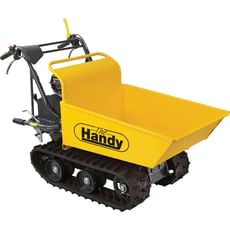
For heavier-duty applications, Handy offers larger tracked and wheeled transporters capable of carrying several hundred kilograms across challenging terrain. These professional-grade machines are built for commercial landscaping, construction, and agricultural work where reliability and capacity are paramount. The tracked versions excel on soft ground and steep slopes, providing superior traction where wheeled models might struggle.
Mid-range models strike an excellent balance between capacity and portability, offering sufficient power for most professional applications whilst remaining compact enough for easy transport between sites. These versatile machines represent the sweet spot for many tradespeople who need one reliable transporter that can handle the majority of their materials handling requirements.
Safety and Compliance
Handy designs their transporters in accordance with relevant UK and European safety standards, ensuring that machines meet the rigorous requirements for both professional and domestic use. Operators should familiarise themselves with the manufacturer's guidelines regarding maximum load capacities, safe operating angles, and appropriate terrain conditions to ensure safe operation.
When using powered transporters, appropriate personal protective equipment should be worn, including steel-toe boots, gloves, and eye protection where materials being transported could present hazards. The HSE recommends proper training for commercial operators using powered materials handling equipment, and employers should conduct risk assessments for site-specific conditions.
Regular maintenance is essential for safe operation. The Tooled-Up range of Handy transporters comes with comprehensive user manuals detailing service schedules, which should be followed diligently. Checking tyre pressures, engine oil levels, and brake function before each use helps prevent accidents and ensures optimal performance throughout the machine's lifespan.
Frequently Asked Questions
What load capacity should I look for in a Handy transporter?
The appropriate capacity depends on your typical applications. For general garden and light construction work, models with 250-350kg capacity are usually sufficient. Professional landscapers and builders working with heavier materials like paving slabs or wet concrete should consider models offering 400kg or greater capacity. Remember that weight distribution and terrain conditions affect practical carrying capacity.
Are Handy transporters suitable for sloping gardens?
Yes, Handy transporters are designed to handle gradients, with many models capable of climbing slopes of 20-30 degrees when properly loaded. The key is to keep the load low in the bed, drive straight up and down slopes rather than across them, and never exceed the manufacturer's recommended gradient limits. Tracked models generally offer superior grip on slopes compared to wheeled versions.
How much maintenance do Handy transporters require?
Handy transporters are designed for straightforward maintenance. Regular tasks include checking and topping up engine oil, cleaning the air filter, maintaining correct tyre pressures, and lubricating moving parts. Engine servicing (oil changes, spark plug replacement) is typically required annually or after a specified number of operating hours. Following the maintenance schedule in the user manual significantly extends the machine's operational life.
Can Handy transporters be used in wet conditions?
Handy transporters are built to withstand typical UK weather conditions and can operate in light rain. However, care should be taken on wet slopes where traction may be reduced, and loads should be adjusted accordingly. After use in wet or muddy conditions, the machine should be cleaned to prevent corrosion and ensure mechanical components remain free from debris.
What's the difference between tracked and wheeled Handy transporters?
Tracked transporters distribute weight over a larger surface area, providing superior traction on soft, muddy, or sloping ground, making them ideal for landscaping and agricultural applications. Wheeled models typically offer faster travel speeds on firm surfaces and easier manoeuvrability in confined spaces, making them better suited for construction sites and paved areas. Your choice should reflect the terrain conditions you encounter most frequently.