

Kew Gardens Transplanting Trowels
 Loading...
End of content
Error - No more pages to load
Kew Gardens Transplanting Trowels at Tooled-Up.com
The Royal Botanic Gardens, Kew, represents centuries of horticultural excellence, and this heritage is beautifully reflected in their range of transplanting trowels. Designed for gardeners who demand precision and durability, Kew Gardens transplanting trowels combine traditional craftsmanship with modern materials to deliver tools that excel in the delicate work of moving and establishing plants. Each trowel in the collection is purpose-built for the specific challenges of transplanting, featuring narrow blades and ergonomic handles that provide the control needed when working with root systems and delicate specimens.
Available from Tooled-Up.com, the Kew Gardens transplanting trowel range caters to both professional horticulturists and dedicated gardening enthusiasts who understand that successful transplanting requires the right tools. These trowels are particularly valued for their ability to minimise root disturbance whilst providing sufficient depth for proper plant establishment. Whether you're working in a professional nursery environment, maintaining heritage gardens, or cultivating your own prized specimens, Kew Gardens transplanting trowels offer the reliability and precision that serious gardening work demands.
The brand's commitment to quality reflects the exacting standards of the Royal Botanic Gardens themselves, where every tool must perform consistently in professional botanical work. This attention to detail has made Kew Gardens a trusted name among those who understand that successful transplanting is as much about technique as it is about having properly designed equipment.
Why Choose Kew Gardens Transplanting Trowels?
Kew Gardens transplanting trowels are distinguished by their heritage-inspired design combined with contemporary engineering. The brand benefits from direct input and insights from the horticultural experts at the Royal Botanic Gardens, Kew, ensuring that every tool reflects real-world professional gardening requirements. This unique connection to one of the world's leading botanical institutions sets Kew Gardens apart from generic garden tool manufacturers.
The quality of materials used in Kew Gardens transplanting trowels ensures longevity and consistent performance. Blades are typically manufactured from stainless steel or carbon steel with protective coatings, providing excellent resistance to soil corrosion whilst maintaining the sharp edges needed for clean cuts through compacted soil and root masses. Handles are ergonomically designed to reduce hand fatigue during extended transplanting sessions, with comfortable grips that remain secure even when wet or muddy.
Furthermore, Kew Gardens tools carry the prestige of their association with Britain's most celebrated botanical institution. This heritage gives gardeners confidence that they're using equipment developed with the same rigorous standards applied in professional horticultural research and conservation work. The aesthetic appeal of these tools, often featuring the distinctive Kew Gardens branding, also makes them particularly attractive to gardening enthusiasts who appreciate both form and function.
Who Uses Kew Gardens Transplanting Trowels?
- Professional horticulturists working in botanical gardens, nurseries, and heritage properties
- Landscape gardeners specialising in plant establishment and garden renovation
- Nursery staff handling delicate seedlings and young plants requiring careful transplanting
- Allotment holders and vegetable gardeners moving seedlings and establishing crops
- Garden centre employees repotting and preparing plants for sale
- Conservation volunteers working on native plant propagation and habitat restoration
- Dedicated home gardeners who invest in quality tools for serious gardening projects
- Botanical students and trainees learning proper transplanting techniques
Key Features of Kew Gardens Transplanting Trowels
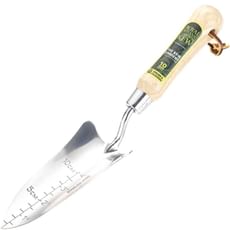
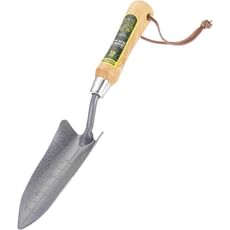
Kew Gardens transplanting trowels feature narrow, elongated blades specifically designed for the precise work of plant moving. This slim profile allows gardeners to dig close to plant stems without damaging roots or foliage, whilst providing sufficient depth to extract plants with adequate rootball intact. The blade geometry is optimised for penetrating various soil types whilst minimising compaction around the excavation site.
Handle design receives particular attention in the Kew Gardens range, with ergonomic profiles that distribute pressure evenly across the palm and fingers. Many models incorporate soft-touch materials or textured finishes that enhance grip security, crucial when working with damp soil conditions. The balance point of these trowels is carefully considered to reduce wrist strain during repetitive transplanting tasks.
Durability is engineered into every Kew Gardens transplanting trowel through the selection of corrosion-resistant materials and robust construction methods. Blade-to-handle joints are reinforced to withstand the leverage forces encountered when working in heavy clay soils or root-bound situations. The protective finishes applied to metal components ensure these tools maintain their appearance and functionality through years of regular use in demanding outdoor environments.
Popular Kew Gardens Transplanting Trowels
The Kew Gardens transplanting trowel collection at Tooled-Up typically includes several specialised variants tailored to different transplanting scenarios. Standard models feature blades measuring approximately 200-250mm in length with widths of 40-50mm, ideal for general transplanting work with perennials, shrubs, and containerised plants. These versatile tools handle the majority of garden transplanting tasks effectively.
Precision models with extra-narrow blades are particularly popular among those working with delicate alpines, bulbs, and seedlings where minimal soil disturbance is critical. These specialist transplanting trowels often feature slightly shorter blade lengths for enhanced control in confined spaces such as rockeries or densely planted borders.
Heavy-duty variants cater to professional users dealing with more challenging soil conditions or larger specimens. These robust transplanting trowels incorporate reinforced blade construction and more substantial handle assemblies to withstand the increased forces involved in tough transplanting situations.
Safety and Compliance
When using Kew Gardens transplanting trowels, proper hand protection with gardening gloves is recommended to prevent blisters during extended use and to protect against soil contaminants. Users should inspect tools before each use, checking for blade sharpness, handle integrity, and secure blade-to-handle connections. Any damaged or loose components should be addressed before commencing work to prevent injury.
Proper tool maintenance enhances both safety and longevity. Clean transplanting trowels thoroughly after each use to remove soil and plant residues that could harbour pathogens or cause corrosion. Store tools in dry conditions, and periodically inspect metal components for rust or degradation. When working with contaminated soils or diseased plants, disinfect tools between uses to prevent pathogen spread.
Ergonomic working practices help prevent repetitive strain injuries during transplanting sessions. Take regular breaks during extended work, vary your posture, and avoid awkward wrist angles when applying force. The ergonomic design of Kew Gardens transplanting trowels supports proper technique, but users should remain mindful of their body mechanics throughout transplanting tasks.
Frequently Asked Questions
What makes a Kew Gardens transplanting trowel different from a standard garden trowel?
Kew Gardens transplanting trowels feature narrower, more elongated blades specifically designed for the precision work of moving established plants. This slim profile allows you to dig close to plant stems without damaging roots, whilst the extra length provides sufficient depth to extract plants with intact rootballs. Standard trowels have wider blades suited to general digging and planting but lack the precision needed for delicate transplanting work.
Are Kew Gardens transplanting trowels suitable for heavy clay soils?
Yes, Kew Gardens transplanting trowels are constructed from robust materials capable of handling various soil types including heavy clay. However, for extensive work in very compacted clay soils, you may wish to consider the heavy-duty variants within the range, which feature reinforced blade construction and stronger handle assemblies. Proper technique, such as working when soil moisture levels are optimal, also helps when transplanting in challenging soil conditions.
How should I maintain my Kew Gardens transplanting trowel?
Clean your transplanting trowel thoroughly after each use, removing all soil and plant debris. Dry the tool completely before storage to prevent corrosion. Periodically inspect the blade edge and sharpen if necessary using a file or sharpening stone. Check the handle-to-blade connection for tightness, and apply a light coating of oil to metal components if storing for extended periods. With proper maintenance, your Kew Gardens transplanting trowel will provide many years of reliable service.
Can these transplanting trowels be used for container gardening?
Absolutely. Kew Gardens transplanting trowels excel in container gardening applications where precision is essential. The narrow blade design allows you to work in confined pot spaces without damaging neighbouring plants or container edges. They're particularly useful when repotting plants into slightly larger containers, as the slim profile makes it easy to position plants accurately and backfill around rootballs with minimal disturbance.
What size transplanting trowel should I choose for general garden use?
For versatile garden use, a standard Kew Gardens transplanting trowel with a blade length of approximately 200-250mm and width of 40-50mm provides excellent all-round capability. This size handles most common transplanting tasks including perennials, small shrubs, and containerised plants effectively. If you work extensively with tiny seedlings or alpines, you might also consider adding a precision narrow-blade model to your toolkit for those more delicate operations.