

Lessmann Rotary Wheels
 Loading...
End of content
Error - No more pages to load
Lessmann Rotary Wheels at Tooled-Up.com
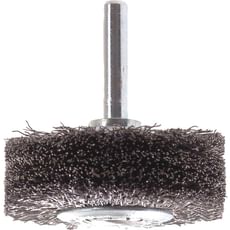
Lessmann has established itself as a leading manufacturer of industrial brushware, with their rotary wheels representing over a century of German engineering excellence and innovation. The Lessmann Rotary Wheels collection available from Tooled-Up.com encompasses a comprehensive range of wire brushes designed for use with handheld power tools, bench grinders, and drill presses. These precision-engineered accessories are manufactured to exacting standards, combining traditional craftsmanship with modern production techniques to deliver consistent, professional results across demanding metalworking and surface preparation applications.
Whether tackling heavy-duty deburring, rust removal, paint stripping, or surface finishing tasks, Lessmann rotary wheels are designed to withstand the rigours of daily professional use. The range includes twisted wire wheels, crimped wire wheels, cup brushes, and end brushes, each constructed with carefully selected wire materials and configurations to suit specific applications. Tooled-Up stocks Lessmann rotary wheels in various diameters, wire thicknesses, and arbor sizes, ensuring compatibility with a wide array of power tools commonly used on site and in workshop environments.
The German manufacturer's commitment to quality control ensures that every Lessmann rotary wheel meets stringent performance standards, with precise wire tensioning, secure fixing, and balanced construction that minimises vibration during operation. This attention to detail translates directly into longer tool life, improved work quality, and enhanced operator safety across metalworking, fabrication, and maintenance applications.
Why Choose Lessmann Rotary Wheels?
Lessmann's reputation within the industrial brushware sector is built upon generations of specialist manufacturing expertise. Unlike mass-produced alternatives, Lessmann rotary wheels undergo rigorous quality assurance processes that verify wire specification, attachment integrity, and rotational balance. This manufacturing precision delivers superior performance consistency, reducing the likelihood of premature wire loss or uneven wear patterns that compromise work quality and pose safety risks.
The company's extensive range caters to virtually every wire wheel application, with specialist products designed for specific materials and surface conditions. Lessmann engineers select appropriate wire materials—including high-tensile steel, stainless steel, and brass-coated options—to optimise performance against different base metals and contamination types. This material science expertise ensures that professional tradespeople can match the correct wheel specification to their exact requirements, maximising efficiency and extending consumable life.
Lessmann rotary wheels are manufactured in accordance with European safety standards, providing peace of mind when operating at high rotational speeds. The brand's commitment to operator safety extends beyond regulatory compliance, incorporating design features that reduce kickback potential, minimise wire breakage, and maintain structural integrity throughout the wheel's working life.
Who Uses Lessmann Rotary Wheels?
- Welders and Fabricators: Removing weld spatter, scale, and oxidation from metal joints and surrounding surfaces
- Engineers and Maintenance Technicians: Cleaning and preparing machinery components, deburring machined parts, and removing corrosion
- Automotive Professionals: Surface preparation for bodywork repairs, rust removal, and cleaning engine components
- Metalworkers and Blacksmiths: Finishing forged items, removing scale, and creating desired surface textures
- Plumbers and Pipefitters: Cleaning pipe threads, removing old jointing compound, and preparing copper surfaces
- Construction Professionals: Removing concrete splatter, mortar residue, and preparing structural steelwork
- Restorers and Conservators: Carefully removing corrosion and old finishes from metal artefacts and architectural elements
- Manufacturing Operatives: Deburring castings, cleaning machined surfaces, and preparing components for coating or assembly
Key Features of Lessmann Rotary Wheels
Lessmann rotary wheels incorporate several distinctive features that differentiate them from economy alternatives. The wire selection process considers factors including tensile strength, flexibility, and resistance to work hardening, ensuring optimal performance across extended operating periods. Crimped wire configurations provide aggressive cutting action for heavy-duty applications, whilst twisted wire designs offer controlled flexibility for contour work and confined spaces.
The mounting systems employed across the Lessmann range prioritise secure wire retention and balanced rotation. Arbor holes are precision-machined to tight tolerances, eliminating wobble and vibration that accelerate wear and compromise surface finish quality. Safety bushings and reduction rings enable compatibility with various spindle sizes, whilst maintaining the structural integrity necessary for safe high-speed operation.
Lessmann's product engineering extends to wire density and trim length specifications, parameters that significantly influence cutting aggression, surface finish, and operational lifespan. Higher wire densities suit heavy stock removal and deburring applications, whilst lighter configurations excel at final finishing and cleaning tasks. This thoughtful specification variety enables professionals to select precisely matched tools for each distinct operation, optimising both productivity and consumable economy.
Popular Lessmann Rotary Wheels
Within the Lessmann rotary wheels collection at Tooled-Up, certain product types consistently prove popular amongst professional tradespeople. Twisted wire wheel brushes remain a workshop staple, offering versatility across general-purpose cleaning, deburring, and rust removal applications. Available in diameters ranging from compact 50mm options for drill-mounted use through to substantial 200mm wheels for bench grinder applications, these tools deliver reliable performance across diverse metalworking scenarios.
Crimped wire cup brushes represent another frequently specified category, particularly valued by welders and fabricators for their aggressive material removal characteristics. The crimped wire configuration maintains stiffness during operation, making these wheels ideal for removing heavy scale, weld spatter, and stubborn coatings. Lessmann manufactures these in both standard steel and stainless steel wire variants, the latter proving essential when working with stainless steel components where contamination from standard wire would promote corrosion.
End brushes and pencil brushes from Lessmann cater to more specialised applications, providing access to recesses, holes, and internal surfaces that larger wheel formats cannot reach. These compact tools are particularly valued in maintenance and engineering environments, where component cleaning and preparation often involves awkwardly positioned surfaces and restricted access points.
Safety and Compliance
Operating rotary wheels demands strict adherence to safety protocols, as these accessories rotate at considerable speeds and involve potentially hazardous flying debris. Lessmann rotary wheels are manufactured in accordance with EN 1083 standards governing hand-held non-power driven brushes, ensuring fundamental safety requirements regarding construction quality and operational parameters are satisfied.
Users must always verify that the maximum safe operating speed marked on the wheel exceeds the spindle speed of their power tool, as exceeding rated speeds can result in catastrophic wheel failure. Appropriate personal protective equipment—including safety spectacles or face shields, hearing protection, and dust masks—should be worn throughout operation. The Health and Safety Executive (HSE) guidance on abrasive wheels and rotary brushes provides comprehensive information regarding risk assessment and safe working practices.
Regular inspection of rotary wheels before use helps identify damage such as loose wires, deformed mounting holes, or unbalanced rotation that could compromise safety. Damaged or worn wheels should be replaced immediately rather than attempting repairs. Ensuring workpieces are securely clamped and maintaining firm two-handed control of handheld power tools reduces kickback risk and improves operator control throughout the working cycle.
Frequently Asked Questions
What's the difference between crimped and twisted wire Lessmann rotary wheels?
Crimped wire wheels feature individual wires with wave-like bends, creating a stiffer, more aggressive cutting action ideal for heavy-duty deburring and coating removal. Twisted wire wheels have wires wound together in cable-like strands, offering greater flexibility that better conforms to contoured surfaces and provides more controlled material removal. Crimped configurations suit flat surface work, whilst twisted designs excel at complex geometries and confined spaces.
Can I use Lessmann stainless steel wire wheels on mild steel?
Whilst physically possible, using stainless steel wire wheels on mild steel represents unnecessary expense, as standard steel wire performs excellently for mild steel applications. Stainless steel wire wheels are specifically manufactured to prevent cross-contamination when working stainless steel components, where residual standard steel particles would promote corrosion. For general mild steel work, standard steel wire Lessmann wheels deliver superior value without compromising performance.
How do I determine the correct maximum RPM for Lessmann rotary wheels?
The maximum safe operating speed is marked on the wheel centre or packaging, typically expressed in revolutions per minute (RPM). This rating must exceed the spindle speed of your power tool. Never exceed the stated maximum RPM, as centrifugal forces at excessive speeds can cause wheel disintegration. When using variable speed tools, ensure the maximum achievable speed remains below the wheel's rating, providing a safety margin for operational variations.
Why do wires break off during use, and is this normal?
Some wire loss during operation is normal and expected, as individual wires fracture through work hardening and fatigue when repeatedly flexed against workpiece surfaces. However, excessive or sudden wire loss may indicate operation above rated speed, application of excessive pressure, or use of an inappropriately specified wheel for the task. Allowing the wheel to work at its own pace with moderate pressure optimises performance whilst minimising premature wire loss.
Are Lessmann rotary wheels suitable for use with cordless drills?
Smaller diameter Lessmann rotary wheels with appropriate arbor sizes can be used with cordless drills, provided the drill's chuck capacity accommodates the arbor and the wheel's maximum RPM rating exceeds the drill's maximum speed. However, cordless drills typically lack the sustained power and rigid mounting of bench grinders or die grinders, making them better suited to light-duty cleaning tasks rather than aggressive material removal. Always ensure secure arbor tightening and maintain firm tool control throughout operation.