

Lessmann Wire Cup Brushes
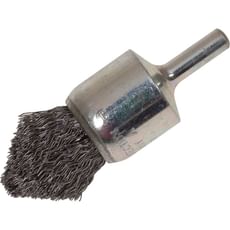
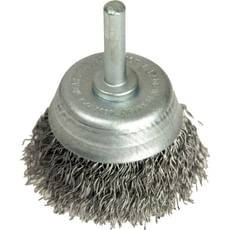
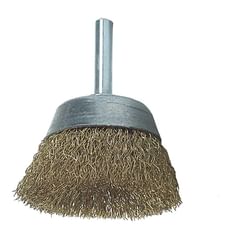
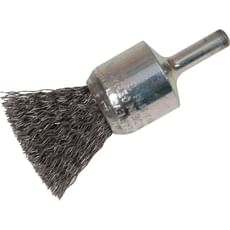
 Loading...
End of content
Error - No more pages to load
Lessmann Wire Cup Brushes at Tooled-Up.com
Lessmann has been a trusted name in industrial brushware since 1948, and their wire cup brushes represent some of the finest abrasive tools available to UK tradespeople and professionals. Engineered in Germany with precision and durability at their core, Lessmann wire cup brushes are designed to tackle demanding surface preparation, cleaning, and finishing tasks across metalworking, welding, construction, and maintenance applications. The range available from Tooled-Up.com encompasses various wire specifications, cup diameters, and arbor configurations to suit angle grinders and bench grinders operating at different speeds.
What distinguishes Lessmann wire cup brushes from generic alternatives is the company's commitment to manufacturing excellence and material quality. Each brush is constructed using carefully selected wire grades—from standard carbon steel to stainless steel and brass—ensuring optimal performance across different materials and applications. The crimped wire design provides excellent flexibility and surface conformity, whilst knotted wire variants deliver more aggressive material removal for heavy-duty descaling and weld cleaning operations. Tooled-Up stocks Lessmann cup brushes in sizes ranging from compact 65mm models for detailed work through to robust 100mm and 125mm variants for larger surface areas.
Whether you're removing rust, paint, mill scale, or weld spatter, or preparing metal surfaces for coating applications, Lessmann wire cup brushes deliver consistent results with extended working life. The precision-wound construction minimises wire breakage and ensures even wear patterns, translating to better value and fewer brush changes during intensive projects. These brushes are compatible with standard 240v angle grinders and bench-mounted grinding equipment, making them versatile additions to any workshop or site toolkit.
Why Choose Lessmann Wire Cup Brushes?
Lessmann's reputation for quality stems from decades of specialised brush manufacturing expertise and rigorous quality control processes. Unlike cheaper imported alternatives that may shed wires prematurely or lose their shape under load, Lessmann cup brushes maintain their structural integrity throughout their service life. The company uses high-tensile wire that's precisely tempered to achieve the ideal balance between aggression and flexibility, reducing the risk of wire fatigue and breakage that can compromise both results and operator safety.
Professional tradespeople consistently choose Lessmann for their reliability and performance consistency. The brand's wire cup brushes feature secure arbor assemblies with reinforced cup bodies that prevent distortion even under demanding grinding conditions. This engineering attention ensures maximum safety compliance whilst delivering the aggressive cutting action needed for productivity. The crimped wire variants excel at surface finishing and light cleaning, whilst the twist-knotted designs provide the muscle required for heavy corrosion removal and concrete splash cleaning on structural steel.
Value for money is another compelling reason to specify Lessmann. Whilst the initial investment may be slightly higher than budget alternatives, the extended operational life and superior performance translate to lower cost-per-use. Professionals appreciate fewer interruptions for brush changes, reduced wire contamination of work surfaces, and the confidence that comes from using a brand trusted across European industrial sectors.
Who Uses Lessmann Wire Cup Brushes?
- Welders and fabricators – removing weld spatter, slag, and oxidation from welds and preparing joints for subsequent passes
- Metal fabrication workshops – surface preparation, deburring, and finishing on steel, aluminium, and stainless steel components
- Automotive body repair technicians – paint stripping, rust removal, and panel preparation before refinishing
- Maintenance engineers – cleaning machinery components, removing corrosion, and preparing surfaces for repair or reassembly
- Construction workers – cleaning structural steel, removing concrete splash, and preparing metalwork on site
- Shipyards and marine maintenance – aggressive descaling and corrosion removal in challenging environments
- Industrial painters and coaters – achieving the correct surface profile before applying protective coatings
- Agricultural equipment repair – cleaning heavily corroded or contaminated farm machinery components
Key Features of Lessmann Wire Cup Brushes
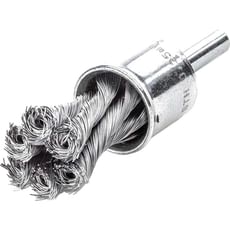
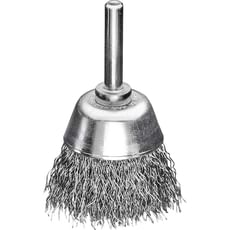
Lessmann wire cup brushes incorporate several distinctive features that enhance both performance and safety. The crimped wire construction uses a special wave pattern that provides flexibility and excellent surface conformity, making these brushes ideal for cleaning irregular profiles and contoured surfaces without excessive gouging. For applications requiring more aggressive material removal, the twist-knotted design features bundles of wire twisted together to create a robust, long-lasting brush that maintains its cutting action throughout its operational life.
The cup body construction features precision-engineered steel housings with secure wire retention systems that prevent premature wire loss. Thread sizes and arbor configurations comply with British and European standards, ensuring compatibility with widely-used 240v angle grinders from major power tool manufacturers. Maximum safe operating speeds are clearly marked on each brush, with Lessmann offering variants optimised for different grinder RPM ranges to ensure safe, productive operation.
Material selection is another key differentiator. Carbon steel wire variants provide economical, effective performance for general-purpose applications on mild steel and cast iron. Stainless steel wire brushes prevent ferrous contamination when working with stainless steel and aluminium components—critical in food processing, pharmaceutical, and marine applications. Brass wire options deliver effective cleaning without sparking, making them suitable for potentially explosive environments and for cleaning softer metals without surface damage.
Popular Lessmann Wire Cup Brushes
The Lessmann range at Tooled-Up includes several popular configurations tailored to different applications. The crimped wire cup brushes in 75mm and 100mm diameters represent versatile all-rounders suitable for general surface preparation, paint removal, and light to medium cleaning tasks. These brushes excel at achieving consistent finishes without excessive material removal, making them favourites among automotive refinishers and maintenance professionals.
For heavy-duty applications, the twist-knotted cup brushes deliver aggressive cutting action ideal for weld cleaning, heavy rust removal, and descaling operations. Available in robust 100mm and 125mm sizes with M14 threaded arbors, these brushes are engineered to withstand the demands of fabrication shops, construction sites, and industrial maintenance environments. The knotted wire design maintains its effectiveness far longer than standard crimped variants when tackling stubborn coatings and heavy corrosion.
Stainless steel wire cup brushes have become increasingly popular across industries where contamination control is paramount. These brushes enable effective cleaning and surface preparation on stainless steel components without introducing ferrous particles that could lead to corrosion. Tooled-Up stocks Lessmann stainless variants in multiple sizes to suit precision engineering, food processing equipment maintenance, and marine applications where material purity is non-negotiable.
Safety and Compliance
Wire cup brushes present specific hazards that require proper safety protocols. Lessmann designs their brushes to comply with relevant British and European safety standards, including EN 12919 which governs safety requirements for manually guided and pendant-mounted cup brushes. However, compliance begins with proper selection—always ensure the brush's maximum rated RPM exceeds the no-load speed of the grinder it will be mounted on, and never use damaged or worn brushes that may have compromised structural integrity.
Personal protective equipment is essential when using wire cup brushes. The Health and Safety Executive (HSE) recommends safety glasses or face shields to protect against flying wire fragments and dislodged surface material. Gloves should be worn to protect hands from wire contact and sharp edges, whilst hearing protection is advisable during extended grinding operations. Ensure adequate ventilation or use respiratory protection when removing coatings that may contain hazardous substances—COSHH assessments may be required for certain applications involving lead-based paints or other regulated materials.
Proper mounting and operation are critical safety considerations. Always disconnect power tools from 240v mains supplies before fitting or removing brushes, and ensure arbor threads are fully engaged with at least three full turns. Check that brushes run true without wobble, and allow new brushes to run at operating speed for at least one minute in a safe direction before bringing them into contact with workpieces. Never use side pressure on cup brushes—they're designed for end-on contact only. Regular inspection for wire loss, cup distortion, or arbor damage helps prevent accidents and ensures consistent performance.
Frequently Asked Questions
What's the difference between crimped and knotted Lessmann wire cup brushes?
Crimped wire cup brushes feature individual wires with a wave pattern, providing flexible, conformable action ideal for surface finishing, light cleaning, and paint removal without aggressive material removal. Knotted wire brushes use twisted wire bundles that deliver much more aggressive cutting action, making them suitable for heavy rust removal, weld cleaning, and descaling operations. Crimped variants generally last longer on lighter applications, whilst knotted designs excel at demanding tasks requiring maximum material removal.
Can I use Lessmann carbon steel wire brushes on stainless steel?
It's strongly discouraged to use carbon steel wire brushes on stainless steel components, as carbon particles can become embedded in the stainless surface and cause corrosion spots. Always use stainless steel wire cup brushes when working with stainless steel, aluminium, or other non-ferrous metals where contamination could compromise corrosion resistance or material properties. Lessmann manufactures specific stainless steel wire variants for these applications.
How do I know which thread size I need for my angle grinder?
Most modern angle grinders sold in the UK use M14 threaded spindles, which is the standard fitting for Lessmann cup brushes in the 100mm to 125mm size range. Smaller grinders may use M10 or M12 threads. Check your grinder's specifications or examine the existing backing flange to determine the correct thread size. Lessmann cup brushes are available in various arbor configurations to suit different grinder models and applications.
What RPM rating should I choose for my 240v angle grinder?
Always select a wire cup brush with a maximum RPM rating that exceeds your grinder's no-load speed—this information appears on the grinder's rating plate. Standard 115mm angle grinders typically run at 10,000-12,000 RPM, whilst 125mm models often operate at 8,000-10,000 RPM. Using a brush rated below your grinder's speed can result in catastrophic failure. Lessmann clearly marks maximum safe operating speeds on all their cup brushes to ensure proper selection.
How can I extend the life of my Lessmann wire cup brushes?
Several practices maximise brush longevity: avoid excessive pressure—let the wire tips do the work rather than forcing the brush into the material; use appropriate speeds for the application; ensure the brush runs true without wobble by properly securing the arbor; avoid prolonged operation in one spot which can cause premature wire fatigue; and store brushes in dry conditions to prevent wire corrosion. Regular inspection and cleaning of the arbor threads also helps maintain performance and safety.