

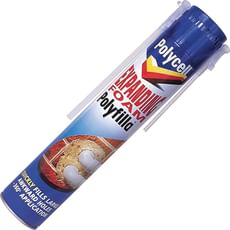
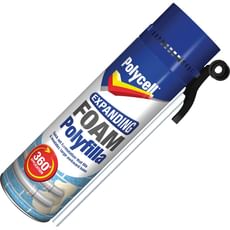
Polycell Expanding Foam

 Loading...
End of content
Error - No more pages to load
Polycell Expanding Foam at Tooled-Up.com
Polycell has established itself as one of the most trusted names in home repair and building products across the UK, and their expanding foam range exemplifies the brand's commitment to quality and ease of use. Designed specifically for both professional tradespeople and DIY enthusiasts, Polycell Expanding Foam delivers reliable gap-filling and insulation solutions that have become a staple on job sites and in homes throughout the country. The range offers versatile foam formulations that expand to fill cavities, seal gaps, and provide effective thermal and acoustic insulation in a variety of applications.
What sets Polycell apart in the expanding foam market is their focus on user-friendly formulations that deliver professional results without requiring specialist equipment or extensive experience. Tooled-Up.com stocks Polycell's expanding foam products to meet the demands of customers who need dependable solutions for sealing around pipes, filling cavities in walls, insulating loft spaces, and securing door and window frames. The foam cures to a firm yet workable finish that can be easily trimmed, sanded, and painted over, making it ideal for projects where a neat, finished appearance is essential.
Whether you're working on renovation projects, new builds, or maintenance work, the Polycell expanding foam selection available from Tooled-Up offers solutions for gaps ranging from small cracks to substantial voids. The foam's expanding properties ensure complete coverage and effective sealing, whilst its polyurethane composition provides excellent adhesion to most common building materials including brick, concrete, wood, metal, and plaster.
Why Choose Polycell Expanding Foam?
Polycell's reputation for producing reliable, accessible building products extends throughout their expanding foam range. The brand understands that not every user has professional training or specialist tools, which is why their foam products are engineered for straightforward application with minimal waste. The controlled expansion characteristics prevent over-foaming and mess, whilst still delivering comprehensive gap-filling performance that rivals professional-grade alternatives.
Quality control is central to Polycell's manufacturing process, with each product undergoing rigorous testing to ensure consistent performance across different temperatures and humidity levels. This reliability matters particularly in the unpredictable British climate, where materials must perform effectively whether applied during cold winter months or warm summer conditions. The foam's moisture-resistant properties also make it suitable for both interior and exterior applications, providing long-lasting protection against draughts, water ingress, and heat loss.
Another distinguishing feature is Polycell's commitment to practical product design. Their expanding foam typically comes in convenient aerosol cans with precision applicator tubes, allowing for accurate placement in awkward spaces and reducing material waste. The quick-curing formulation means trades can complete jobs efficiently without extended waiting times, whilst the cured foam remains sufficiently flexible to accommodate minor structural movement without cracking or detaching.
Who Uses Polycell Expanding Foam?
- General Builders: For sealing gaps during construction and renovation projects, particularly around door and window installations
- Plumbers: Sealing pipe penetrations through walls, floors, and ceilings to prevent draughts and vermin ingress
- Electricians: Filling cavities around cable runs and electrical boxes to improve fire resistance and reduce air leakage
- Insulation Specialists: Supplementing main insulation systems by sealing thermal bridges and air gaps
- Window Fitters: Securing and insulating around replacement window and door frames
- Maintenance Contractors: Addressing draughts and gaps in existing buildings as part of energy efficiency improvements
- DIY Enthusiasts: Tackling home improvement projects including loft conversions, garage conversions, and draught-proofing
- Property Developers: Ensuring new builds and refurbishments meet thermal efficiency standards
- Carpenters and Joiners: Filling gaps in timber frame construction and around fitted joinery
Key Features of Polycell Expanding Foam
Polycell Expanding Foam incorporates several features that make it particularly effective for gap-filling and insulation applications. The controlled expansion ratio ensures the foam fills available space thoroughly without excessive pressure that could distort surrounding materials—particularly important when working around window and door frames where over-expansion could cause warping or misalignment.
The polyurethane formulation provides excellent adhesive properties, bonding securely to most common building materials without requiring primers or additional adhesives. Once cured, the foam achieves a semi-rigid consistency that provides structural support whilst remaining workable enough to cut, trim, and shape with standard tools. This makes it ideal for applications where the foam needs to be finished flush with surrounding surfaces or shaped to specific profiles.
Thermal insulation performance is another key attribute, with the cured foam providing effective resistance to heat transfer. This helps reduce energy costs by minimising heat loss through gaps and cavities, contributing to improved building energy ratings. The closed-cell structure of the cured foam also provides resistance to moisture penetration, preventing water ingress and the associated risks of dampness and mould growth.
The foam cures to accept paint, plaster, and other decorative finishes, allowing for seamless integration with surrounding surfaces. This paintability is particularly valuable in visible locations where aesthetic appearance matters. The cured foam also resists degradation from UV exposure better than many competing products, maintaining its structural integrity and sealing properties over extended periods.
Popular Polycell Expanding Foam
The Polycell expanding foam range typically includes formulations optimised for different application requirements. Standard gap-filling foam suits general-purpose applications where moderate expansion is required, making it ideal for sealing around pipes, filling cavities in walls, and closing gaps up to approximately 50mm. This versatile formulation works well for the majority of household and light commercial applications.
For larger voids and cavities, high-expansion variants provide greater fill volume from each application, reducing the number of cans required for substantial gaps. These formulations are particularly useful for insulating larger openings, filling wall cavities, and sealing around structural penetrations in loft spaces and basements.
Fire-rated expanding foam options are also available within the Polycell range, designed specifically for applications where fire resistance is required. These products meet relevant British and European fire safety standards, making them suitable for sealing around fire doors, service penetrations in fire-rated walls, and other locations where maintaining fire compartmentation is essential.
Safety and Compliance
When using Polycell Expanding Foam, appropriate safety precautions should be observed to ensure safe handling and application. The product should be used in well-ventilated areas, as the curing process releases vapours that can cause respiratory irritation in confined spaces. Protective gloves are recommended to prevent skin contact, as uncured foam is difficult to remove and may cause irritation.
Eye protection should be worn during application, particularly when working overhead or in awkward positions where foam could inadvertently contact the face. The aerosol cans are pressurised and should be stored away from heat sources and direct sunlight, with temperatures kept below 50°C to prevent over-pressurisation.
Polycell expanding foam products comply with relevant UK and EU safety standards, including REACH regulations governing chemical composition and safety data. When used for fire-stopping applications, ensure the specific product selected carries appropriate certification for the required fire resistance rating. Always dispose of empty cans responsibly according to local authority guidelines for pressurised aerosol waste.
In line with COSHH regulations, safety data sheets are available for all Polycell expanding foam products, providing detailed information on composition, hazards, handling procedures, and emergency measures. Professional users should conduct appropriate risk assessments before commencing work, particularly when using foam in occupied buildings or confined spaces.
Frequently Asked Questions
How long does Polycell Expanding Foam take to cure?
Polycell Expanding Foam typically becomes tack-free within 20-30 minutes and can be trimmed after approximately one hour. Full curing takes around 24 hours, depending on gap size, ambient temperature, and humidity levels. Larger foam applications may require additional curing time before the centre achieves full hardness.
Can I paint over Polycell Expanding Foam?
Yes, once fully cured and trimmed, Polycell Expanding Foam readily accepts most paint types including emulsion, gloss, and masonry paint. For best results, allow the foam to cure completely, trim flush with the surrounding surface, and apply paint as you would to any other substrate. No special primers are typically required.
Is Polycell Expanding Foam suitable for exterior use?
Polycell Expanding Foam can be used for exterior applications, though it should be protected from direct UV exposure and weathering for optimal longevity. Once applied externally, trim the cured foam and cover with paint, render, or sealant to protect against degradation. This approach ensures long-lasting performance in exposed locations.
How do I remove uncured Polycell Expanding Foam from surfaces?
Uncured foam should be removed immediately using Polycell Expanding Foam Remover or a proprietary foam cleaner. For skin contact, wipe away excess foam quickly and wash thoroughly with soap and water. Avoid using solvents on skin. Once cured, foam can only be removed mechanically by cutting, scraping, or sanding.
What size gaps can Polycell Expanding Foam fill?
Standard Polycell Expanding Foam effectively fills gaps from approximately 10mm up to 50mm, depending on the specific product formulation. For gaps smaller than 10mm, flexible sealants may provide better results. Larger cavities may require multiple applications or high-expansion foam variants, with each layer allowed to cure before applying additional foam.