

Rocol Fillers & Repairers
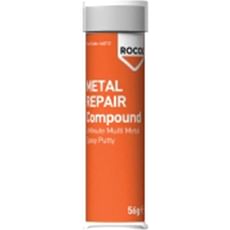
 Loading...
Rocol Fillers & Repairers at Tooled-Up.com
Rocol has established itself as a trusted name in industrial maintenance and repair solutions, bringing decades of engineering expertise to the professional trade sector. The Rocol range of fillers and repairers represents a comprehensive selection of high-performance products designed to address the demanding repair and maintenance challenges faced by tradespeople across diverse industries. From emergency repairs on industrial machinery to structural restoration work, these specialist compounds and repair systems deliver reliable, long-lasting results in the most challenging environments.
Known for their exceptional adhesion properties and chemical resistance, Rocol fillers and repair compounds are formulated to withstand extreme conditions including high temperatures, chemical exposure, and mechanical stress. Tooled-Up.com stocks Rocol's specialist repair solutions that have become essential items in the toolkits of maintenance engineers, fabricators, and industrial repair specialists throughout the UK. These products combine ease of application with professional-grade performance, making them suitable for both emergency repairs and planned maintenance programmes.
The Rocol fillers and repairers range encompasses metal repair compounds, epoxy-based systems, and specialist sealants engineered to restore damaged components to full operational capacity. Whether addressing wear damage, corrosion, or structural defects, these products provide cost-effective alternatives to expensive component replacement, minimising downtime and maximising operational efficiency.
Why Choose Rocol Fillers & Repairers?
Rocol's reputation in the industrial maintenance sector stems from over a century of experience in developing specialist lubricants and repair compounds for demanding applications. The brand's fillers and repairers are engineered using advanced polymer technology and are rigorously tested to meet the exacting standards required in heavy industry, manufacturing, and marine environments. This heritage of innovation ensures that every product delivers consistent, reliable performance when it matters most.
What distinguishes Rocol products is their versatility across multiple substrates and operating conditions. These repair compounds offer excellent adhesion to metals, concrete, and composite materials, whilst maintaining their integrity across wide temperature ranges. The chemical resistance built into Rocol formulations means repairs remain stable even when exposed to oils, solvents, and aggressive chemicals commonly encountered in industrial settings. Furthermore, many Rocol repair products cure rapidly, enabling swift return to service and minimising costly production interruptions.
Quality assurance is paramount throughout Rocol's manufacturing processes, with products conforming to relevant British and European standards. The brand's commitment to supporting UK industry is reflected in comprehensive technical support and detailed application guidance, ensuring tradespeople can achieve optimal results even in challenging repair scenarios.
Who Uses Rocol Fillers & Repairers?
- Maintenance Engineers: For emergency repairs and planned maintenance on industrial machinery and production equipment
- Marine Engineers: Addressing corrosion damage and structural repairs in harsh maritime environments
- Plant Operators: Maintaining pumps, valves, and pipework systems across manufacturing facilities
- Fabricators and Welders: Preparing surfaces and making structural repairs on metalwork projects
- Facilities Managers: Carrying out building maintenance and infrastructure repairs
- Automotive and Agricultural Engineers: Repairing worn or damaged mechanical components
- Foundry Workers: Addressing casting defects and production equipment maintenance
- General Tradespeople: Professional contractors requiring reliable repair solutions for diverse applications
Key Features of Rocol Fillers & Repairers
Rocol fillers and repair compounds incorporate several distinctive features that set them apart in the professional repair market. The advanced formulations provide exceptional bonding strength, creating repairs that often exceed the strength of the original material. This mechanical integrity ensures long-term reliability even under continuous operational stress.
Many Rocol repair systems offer machinable properties once fully cured, allowing repairs to be drilled, tapped, and finished to precise tolerances. This capability is invaluable when restoring damaged threads, bearing housings, or precision-machined surfaces. The products' excellent gap-filling properties enable effective repair of cracks, cavities, and worn areas without the need for extensive preparation.
Temperature resistance is engineered into Rocol compounds, with various products suitable for applications ranging from cryogenic conditions to sustained high-temperature operation. Chemical resistance protects repairs from degradation when exposed to hydraulic fluids, coolants, fuels, and industrial chemicals. The non-sagging consistency of many Rocol fillers allows application to vertical and overhead surfaces without slumping, whilst fast-curing formulations minimise equipment downtime.
Popular Rocol Fillers & Repairers
The Tooled-Up selection of Rocol fillers and repairers includes specialist metal repair compounds designed for rebuilding worn or damaged machinery components. These steel-reinforced epoxy systems provide exceptional compressive strength and are ideal for repairing pumps, valves, and gearbox housings. Available from Tooled-Up.com, Rocol's rapid-cure formulations enable emergency repairs with minimal production interruption.
Rocol's ceramic-filled repair compounds offer superior resistance to abrasion and erosion, making them particularly effective for repairing equipment subjected to particle impact or fluid erosion. For applications requiring electrical insulation properties, Rocol provides specialist non-conductive repair systems suitable for electrical enclosures and components.
The range also encompasses gap-filling compounds for sealing and bonding applications, along with concrete repair systems for industrial flooring and structural restoration work. Each product is supplied with comprehensive technical data sheets detailing mixing ratios, cure times, and application guidelines.
Safety and Compliance
All Rocol fillers and repair compounds are manufactured to comply with relevant UK and European safety legislation, including REACH regulations governing chemical substances. Products are supplied with Safety Data Sheets (SDS) detailing hazard information, safe handling procedures, and emergency response measures in accordance with COSHH requirements.
When using Rocol repair compounds, appropriate personal protective equipment should be worn including chemical-resistant gloves, safety glasses, and adequate ventilation should be ensured, particularly when working with epoxy-based systems. Surface preparation is critical to achieving optimal bond strength, and users should follow manufacturer guidelines regarding cleaning, degreasing, and abrading of repair surfaces.
Proper storage conditions should be maintained to preserve product shelf life, with materials kept in sealed containers away from extreme temperatures. Disposal of unused material and empty containers should comply with local environmental regulations and waste management requirements.
Frequently Asked Questions
What surfaces can Rocol fillers and repairers bond to?
Rocol repair compounds are formulated to bond effectively to various substrates including steel, cast iron, aluminium, concrete, wood, and many plastics. Surface preparation is essential for optimal adhesion, requiring surfaces to be clean, dry, and free from oil, grease, or loose material. Abrading smooth surfaces improves mechanical keying and bond strength.
How quickly do Rocol repair compounds cure?
Cure times vary depending on the specific product formulation and ambient temperature. Rapid-cure variants can achieve handling strength within 30 minutes to 2 hours, whilst standard formulations typically cure fully within 24 hours. Elevated temperatures accelerate curing, whilst cold conditions may extend cure times. Full mechanical strength and chemical resistance develop over several days following initial cure.
Can Rocol repairs be machined after curing?
Many Rocol metal repair compounds become machinable once fully cured, allowing drilling, tapping, turning, and milling operations. The cured material can be worked using standard metalworking tools and techniques, though carbide tooling is recommended for best results. This machinability enables repairs to be finished to precise tolerances and functional specifications.
What temperature ranges can Rocol fillers withstand?
Temperature resistance varies by product formulation. Standard epoxy-based compounds typically operate continuously from -30°C to +120°C, whilst specialist high-temperature variants can withstand sustained operation up to +200°C or higher. Always consult the product technical data sheet for specific temperature limitations relevant to your application.
Are Rocol repair products suitable for use with hydraulic fluids and oils?
Rocol fillers and repair compounds are engineered to resist degradation from exposure to hydraulic oils, mineral oils, coolants, and many industrial chemicals once fully cured. This chemical resistance makes them particularly suitable for repairing pumps, hydraulic cylinders, and oil-wetted machinery components. However, continuous immersion in aggressive solvents may require specialist formulations.