

Roughneck Saws
 Loading...
End of content
Error - No more pages to load
Roughneck Saws at Tooled-Up.com
Roughneck has established itself as a trusted name in hand tools, and their saw range exemplifies the brand's commitment to delivering robust, reliable cutting solutions for demanding applications. Known for their no-nonsense approach to tool design, Roughneck saws are engineered to withstand the rigours of professional site work whilst remaining accessible to serious DIY enthusiasts. The brand's philosophy centres on creating tools that combine durability with practical functionality, ensuring that every cut is delivered with precision and confidence.
The Roughneck saw collection encompasses a variety of cutting tools designed for different materials and applications, from traditional handsaws to specialised cutting solutions. Each saw in the range features hardened, heat-treated teeth that maintain their sharpness through repeated use, whilst ergonomically designed handles provide comfortable grip during extended cutting sessions. Whether tackling timber, metal, plastics, or composite materials, Tooled-Up stocks Roughneck saws that deliver consistent performance across a wide spectrum of trade applications.
Built to meet the demands of working tradespeople, Roughneck saws incorporate practical features such as aggressive tooth patterns for faster cutting, reinforced spine construction for rigidity, and bi-material handles that resist slipping even in wet or dusty conditions. The brand's attention to real-world usability means their saws are designed to perform reliably day after day, making them a sensible choice for professionals who depend on their tools to earn a living.
Why Choose Roughneck Saws?
Roughneck has built its reputation on delivering exceptional value without compromising on quality or durability. Their saws are manufactured using high-carbon steel blades that resist flexing and bending, ensuring straight, accurate cuts even when working with challenging materials. The brand's commitment to practical tool design means that every Roughneck saw incorporates features that directly address the needs of working professionals, from rapid-cut tooth geometries to impact-resistant handle construction.
The longevity of Roughneck saws sets them apart in a market often dominated by disposable tools. Heat-treated cutting edges maintain their sharpness significantly longer than standard blades, reducing the frequency of blade replacement and minimising downtime on site. This durability, combined with competitive pricing, makes Roughneck saws an economical choice for tradespeople who need reliable performance without excessive investment. The brand's straightforward approach to tool design eliminates unnecessary features, focusing instead on the fundamentals that matter most: cutting efficiency, blade longevity, and user comfort.
Who Uses Roughneck Saws?
Roughneck saws are chosen by a diverse range of users who value dependable performance and honest value:
- Carpenters and joiners who require precise cuts in timber and manufactured boards
- General builders needing versatile cutting tools for varied site applications
- Plumbers and heating engineers cutting plastic pipes and panel materials
- Electricians requiring compact saws for access panel modifications and cable tray work
- Fencing contractors working with treated timber and tough outdoor materials
- Landscapers cutting decking, trellis, and structural garden materials
- Property maintenance professionals needing reliable all-round cutting tools
- DIY enthusiasts undertaking home improvement and renovation projects
- Site supervisors and foremen maintaining toolkit essentials for unexpected tasks
Key Features of Roughneck Saws
Roughneck saws incorporate several distinctive features that enhance their performance and usability in professional environments. The hardpoint teeth found on many models are induction-hardened to provide extended cutting life, eliminating the need for frequent sharpening whilst maintaining aggressive cutting action. Triple-ground teeth on selected models deliver faster cutting speeds through various materials, reducing user fatigue during repetitive cutting tasks.
Handle design receives particular attention in the Roughneck range, with soft-grip overmoulding providing secure purchase even when hands are wet, oily, or wearing gloves. The ergonomic profiling reduces pressure points during extended use, whilst the robust construction ensures handles won't separate from blades even under demanding conditions. Many Roughneck saws feature 45-degree and 90-degree angle guides moulded into the handle, enabling quick marking and checking without additional measuring tools.
Blade rigidity is enhanced through careful tempering and, where applicable, reinforced spine construction that prevents flexing during cutting. This rigidity translates directly into straighter, more accurate cuts with less wasted material. The aggressive tooth patterns employed across the range are optimised for rapid material removal whilst maintaining reasonable cut smoothness, striking a practical balance between speed and finish quality that suits most trade applications.
Popular Roughneck Saws
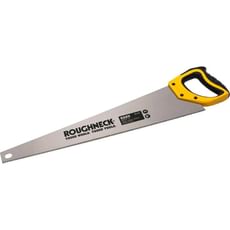
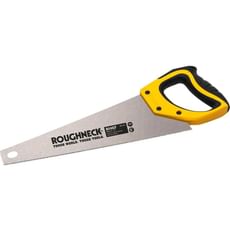
The Roughneck saw range available from Tooled-Up includes several popular categories designed for specific applications. Handpoint saws form the backbone of the collection, offering traditional handsawing capability with modern materials and tooth geometries. These general-purpose saws excel at crosscutting and ripping timber, making them essential toolkit items for carpenters and general builders alike.
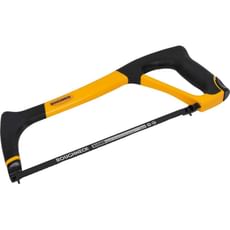
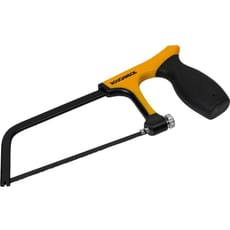
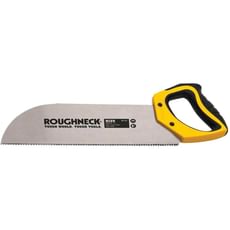
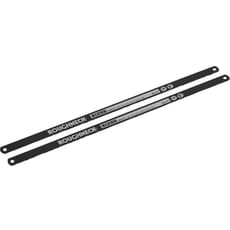
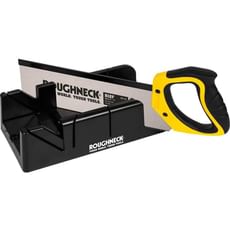
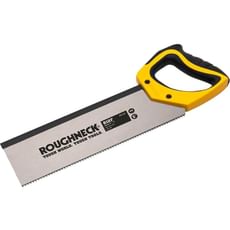
Hardpoint saws within the Roughneck range feature induction-hardened teeth that maintain their edge through thousands of cuts, making them ideal for site work where tool sharpening isn't practical. Tenon saws provide the precision required for joinery work, with reinforced spines ensuring blade stability during controlled cutting operations. For metal and plastic applications, Roughneck produces hacksaw frames and blades designed to accommodate various blade lengths whilst maintaining proper tension for efficient cutting.
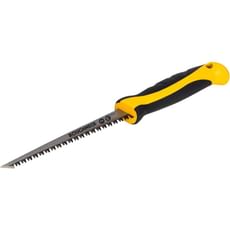
Floorboard saws with curved cutting edges enable access to confined spaces, whilst padded or folding saws offer portability for tradespeople who need compact cutting solutions. Pruning and garden saws round out the range, featuring coarse teeth optimised for green wood and outdoor applications where aggressive cutting action is prioritised over fine finish.
Safety and Compliance
When using Roughneck saws, adherence to proper safety practices is essential for preventing injury and ensuring optimal tool performance. Always ensure materials are securely clamped or supported before cutting, preventing movement that could cause blade binding or user injury. Keep hands and body parts clear of the cutting line, and maintain awareness of blade position throughout each stroke.
Wear appropriate personal protective equipment including safety glasses to protect against flying debris, and consider dust masks when cutting treated timber or manufactured boards that may release harmful particles. Ensure adequate lighting in the work area, and maintain a stable stance with secure footing when sawing. Store saws with blade guards or sheaths fitted when not in use, protecting both the cutting edge and preventing accidental contact.
Regular inspection of Roughneck saws ensures continued safe operation. Check handles for cracks or looseness that could compromise grip security, and examine blades for damage such as bent or broken teeth that could cause binding or unpredictable cutting behaviour. When blades become dull, replace hardpoint saws entirely rather than attempting to sharpen hardened teeth, which may compromise their heat treatment and structural integrity.
Frequently Asked Questions
What's the difference between hardpoint and traditional saws?
Hardpoint saws feature induction-hardened teeth that maintain sharpness significantly longer than traditional saws but cannot be resharpened once dull. Traditional saws have softer teeth that can be filed and set repeatedly but require more frequent maintenance. For most trade applications, hardpoint saws offer superior convenience and longevity, making them the preferred choice for site work.
Can Roughneck saws cut through treated timber?
Yes, Roughneck saws are well-suited to cutting treated timber commonly used in outdoor construction and fencing. The hardened teeth resist the abrasive preservatives found in treated wood, maintaining cutting performance longer than standard blades. However, always wear appropriate dust protection when cutting treated timber, as preservative chemicals may be harmful if inhaled.
How do I choose the right tooth count for my application?
Fewer teeth per inch (typically 7-9 TPI) cut faster through thick materials but leave a rougher finish, making them ideal for rough carpentry and site work. Higher tooth counts (10-12 TPI or more) cut more slowly but produce smoother finishes suitable for visible joinery and precision work. For general-purpose use, 8-10 TPI offers a practical compromise between cutting speed and finish quality.
Are Roughneck saw handles replaceable if damaged?
Most Roughneck saws feature permanently attached handles as part of their robust construction design. This integrated approach ensures maximum strength and reliability during demanding use. If a handle becomes damaged, the entire saw typically requires replacement, though the durability of Roughneck construction means handle failure is uncommon with normal use.
What length saw should I choose for general carpentry work?
For general carpentry and site work, a handsaw blade length between 500mm and 550mm provides excellent versatility, offering sufficient cutting capacity for most timber sections whilst remaining manoeuvrable in typical working environments. Shorter saws (300-400mm) suit confined spaces and precision work, whilst longer blades (600mm+) excel at cutting large sections and sheet materials but require more space to operate effectively.