

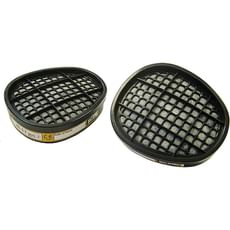
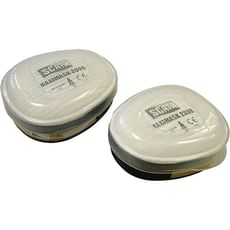
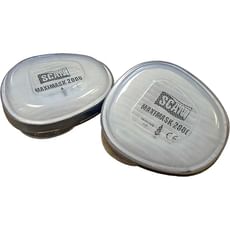
Scan Mask Replacement Filters
 Loading...
End of content
Error - No more pages to load
Scan Mask Replacement Filters at Tooled-Up.com
Scan has established itself as a trusted name in respiratory protection, offering a comprehensive range of mask replacement filters designed to maintain the effectiveness and longevity of respiratory protective equipment. As work environments continue to demand higher standards of health and safety, having access to quality replacement filters becomes essential for tradespeople, industrial workers, and DIY enthusiasts who rely on their masks for protection against hazardous dusts, fumes, vapours, and particles.
The Scan mask replacement filters available at Tooled-Up.com are engineered to provide reliable filtration across various protection classes, ensuring compliance with UK and European safety standards. From basic particulate filters for dust protection to advanced combination filters offering multi-gas defence, Scan delivers replacement components that maintain the integrity of respiratory protection systems. These filters are designed for compatibility with Scan's own mask systems whilst offering excellent value for money without compromising on safety or performance.
Regular replacement of mask filters is not just recommended—it's essential for maintaining proper respiratory protection. Scan understands this critical need and manufactures filters that are easy to identify, straightforward to fit, and readily available through Tooled-Up. Whether working in construction, automotive refinishing, agriculture, or general manufacturing environments, having the correct replacement filters on hand ensures continuous protection and compliance with workplace health and safety requirements.
Why Choose Scan Mask Replacement Filters?
Scan has built a reputation for delivering professional-grade safety equipment at accessible price points, making quality respiratory protection available to both trade professionals and home users. Their replacement filters undergo rigorous testing to meet or exceed EN standards, providing users with confidence that their respiratory protection remains effective throughout the filter's service life.
The brand's commitment to clarity and ease of use is evident in their colour-coded filter systems, which help users quickly identify the correct filter type for their specific application. This thoughtful approach reduces the risk of using inappropriate filters for given tasks—a common safety concern in busy work environments. Scan filters are manufactured with robust housing and secure fitting mechanisms that minimise the risk of bypass leakage, ensuring contaminated air doesn't circumvent the filtration media.
Value represents another compelling reason to choose Scan replacement filters. Whilst maintaining high safety standards, Scan products typically offer cost-effective solutions compared to premium brands, making them particularly attractive for small businesses, sole traders, and DIY users who need reliable protection without premium pricing. This affordability doesn't mean compromise; Scan filters meet the same stringent European safety standards as higher-priced alternatives.
Who Uses Scan Mask Replacement Filters?
Scan mask replacement filters serve a diverse range of users across multiple industries and applications:
- Construction Workers: Protection against cement dust, silica, wood dust, and general construction particulates
- Painters and Decorators: Defence against paint fumes, solvents, and spray mist in both commercial and domestic settings
- Automotive Technicians: Filtering body filler dust, paint vapours, and chemical fumes during repair and refinishing work
- Woodworkers and Carpenters: Essential protection from hardwood and softwood dusts, particularly important for fine dust particles
- Agricultural Workers: Guarding against pesticides, fertilisers, and organic dusts encountered in farming operations
- Manufacturing Operatives: Protection in industrial environments with metal dusts, chemical vapours, and process fumes
- DIY Enthusiasts: Home improvement projects involving sanding, painting, insulation work, and chemical use
- Maintenance Engineers: General site work requiring respiratory protection across varied environments
Key Features of Scan Mask Replacement Filters
Scan mask replacement filters incorporate several important features that enhance their functionality and user experience:
EN Standard Compliance: All Scan filters are manufactured to meet relevant European Norms for respiratory protective equipment, ensuring they provide the stated level of protection. This includes compliance with EN 143 for particle filters and EN 14387 for gas and combination filters, giving users confidence in their safety performance.
Colour-Coded Classification: Scan employs an intuitive colour-coding system that helps users quickly identify filter types and their intended applications. This visual system reduces selection errors and helps maintain proper protection protocols on busy worksites where multiple filter types may be in use.
Secure Bayonet Fitting: The twist-lock bayonet connection system ensures filters attach firmly to compatible mask bodies, preventing accidental detachment during use. This robust connection also helps maintain proper seal integrity around the filter housing.
Multiple Protection Classes: Scan offers filters across various protection classes—from P1 for lower-toxicity nuisance dusts through to P3 for toxic particles and fine dusts. Gas and vapour filters are available in different capacity ratings to suit exposure levels and duration of use.
Clear Marking and Dating: Each filter features clear labelling showing the filter type, protection class, and relevant standards compliance. This transparency helps users track filter age and replacement schedules, supporting proper maintenance of respiratory protection equipment.
Popular Scan Mask Replacement Filters
The Scan range at Tooled-Up encompasses several filter types suited to different workplace hazards:
Particulate Filters: Available in P1, P2, and P3 classifications, these filters protect against solid and liquid particles. P1 filters suit low-toxicity dusts, P2 offers protection against moderate-toxicity particles including wood dust and metal fume, whilst P3 provides the highest level of particulate protection for toxic dusts, fine particles, and disease-causing microorganisms.
Gas and Vapour Filters: Scan produces filters designed to protect against specific gas families, including organic vapours (Type A), acid gases (Type E), and ammonia (Type K). These filters contain activated carbon or other absorbent media to capture gaseous contaminants that particulate filters cannot stop.
Combination Filters: For environments with mixed hazards, Scan offers combination filters that integrate both particulate filtration and gas/vapour absorption in a single unit. These versatile filters suit applications like spray painting where both paint mist and solvent vapours present respiratory hazards.
Safety and Compliance
Proper use of mask replacement filters is fundamental to maintaining respiratory protection. The Health and Safety Executive (HSE) provides clear guidance under the Control of Substances Hazardous to Health (COSHH) regulations regarding respiratory protective equipment, and using appropriate, well-maintained filters forms a critical part of compliance.
Scan mask replacement filters should be changed according to manufacturer recommendations and workplace exposure assessments. Signs that filters need replacement include increased breathing resistance, breakthrough of odours or tastes (for gas filters), visible contamination, or reaching the manufacturer's specified service life. Many workplaces establish change schedules based on exposure levels rather than waiting for warning signs, ensuring protection never lapses.
It's essential to select filters appropriate to the specific hazard present. Particulate filters do not protect against gases and vapours, whilst gas filters offer no defence against particles. Understanding the contaminants in your work environment and choosing correctly rated filters ensures the respiratory protection system functions as intended. Tooled-Up stocks Scan filters across all major protection categories to support proper hazard-specific selection.
Face fit testing remains important when using any half-mask or full-face respirator system. Even with correctly specified filters, inadequate face seal allows contaminated air to bypass the filtration system entirely. UK employers have duties under the PPE at Work Regulations to ensure respiratory protective equipment fits properly and is adequately maintained.
Frequently Asked Questions
How often should I replace Scan mask filters?
Replacement frequency depends on the filter type, concentration of contaminants, and duration of use. Particulate filters should be changed when breathing becomes difficult or if they become visibly contaminated. Gas and vapour filters require replacement based on manufacturer guidelines (often after a specific number of hours use) or when breakthrough occurs (you smell or taste contaminants). Many users establish regular change schedules—such as weekly for daily use in dusty environments—to ensure protection never lapses. Always follow workplace risk assessments and manufacturer guidance for your specific application.
Are Scan replacement filters compatible with other mask brands?
Scan filters are primarily designed for use with Scan respiratory masks and may not fit other manufacturers' products due to different connection systems. Respiratory protective equipment should only be used with components specified by the manufacturer, as mixing brands can compromise the seal, reduce protection effectiveness, and potentially void safety certifications. Always check compatibility before purchasing replacement filters and use only approved combinations to maintain proper protection and standards compliance.
What's the difference between P1, P2, and P3 particulate filters?
These classifications indicate filtration efficiency and intended use level. P1 filters offer the lowest protection (at least 80% filtration efficiency) for low-toxicity nuisance dusts. P2 filters provide medium protection (at least 94% efficiency) suitable for moderate-toxicity particles including wood dust, metal fume, and many construction dusts. P3 filters deliver the highest protection (at least 99.95% efficiency) for toxic particles, fine dusts, and biological agents. For most construction and woodworking applications, P2 represents the minimum appropriate standard, whilst P3 is necessary for highly toxic materials like asbestos or materials containing lead.
Can I clean and reuse Scan mask filters?
No. Scan mask filters are designed as consumable items and should not be cleaned or reused beyond their intended service life. Attempting to clean filters—whether by blowing compressed air, washing, or other methods—can damage the filtration media, compromise protection effectiveness, and potentially release captured contaminants. The only reusable component is the mask body itself; filters must be disposed of properly and replaced with new ones according to usage and exposure conditions. This single-use approach ensures consistent protection throughout the filter's service life.
Do Scan filters protect against COVID-19 and other viruses?
P3-rated particulate filters provide high-efficiency filtration that can capture virus-sized particles when used as part of a properly fitted and sealed respiratory protection system. However, respiratory protective equipment alone doesn't guarantee complete protection against infectious diseases—proper fitting, correct donning and doffing procedures, and appropriate selection for the hazard level are all essential. For healthcare settings or confirmed infectious disease environments, follow specific HSE and PHE guidance regarding respiratory protection, which may specify particular equipment types and standards beyond general industrial respiratory protection.