

Siegen Files

 Loading...
End of content
Error - No more pages to load
Siegen Files at Tooled-Up.com
Siegen has established itself as a trusted name in hand tools, delivering professional-grade files that combine traditional craftsmanship with modern manufacturing standards. The Siegen Files range available from Tooled-Up.com encompasses everything from precision needle files for intricate work to robust engineer's files for heavy-duty metal preparation. Each file in the Siegen collection is manufactured to exacting standards, ensuring consistent cutting performance and durability that professional tradespeople and serious DIY enthusiasts demand.
Known for their excellent value without compromising on quality, Siegen files feature hardened steel construction with carefully cut teeth patterns that deliver efficient material removal across ferrous and non-ferrous metals, plastics, and wood. Whether you're deburring sharp edges, shaping metal components, or finishing precision engineering projects, the Siegen range provides reliable tools that perform consistently across demanding applications.
The comprehensive selection at Tooled-Up includes individual files in various profiles—flat, half-round, round, square, and triangular—alongside complete file sets that equip workshops with versatile filing solutions. From fine-cut finishing files to coarser bastard-cut variants for rapid stock removal, Siegen offers the breadth of choice that modern tradespeople require for diverse metalworking and fabrication tasks.
Why Choose Siegen Files?
Siegen has built its reputation on delivering professional-quality tools at accessible price points, making their files an intelligent choice for both established tradespeople and those building their tool collections. The brand focuses on functional excellence, ensuring that each file delivers consistent cutting performance throughout its working life. Unlike cheaper alternatives that quickly lose their bite or clog with swarf, Siegen files maintain their cutting efficiency across extended use.
The heat treatment processes used in manufacturing Siegen files create the optimal balance between hardness for edge retention and toughness to resist breakage under lateral stress. This metallurgical quality means the files resist premature wear whilst maintaining the flexibility needed to work curved surfaces without snapping. The ergonomically designed handles fitted to many Siegen files provide comfortable grip during extended filing sessions, reducing hand fatigue and improving control for precise work.
Value represents another compelling reason to choose Siegen. Whilst offering professional-grade performance, Siegen files are priced competitively, allowing tradespeople to maintain well-stocked toolboxes without excessive investment. This combination of quality and affordability has made Siegen particularly popular amongst mobile tradespeople who need reliable tools that won't break the budget if lost or damaged on busy job sites.
Who Uses Siegen Files?
- Automotive Technicians: For deburring brake components, fitting keys, and precision metalwork on vehicle repairs
- Engineering Fabricators: Preparing welded joints, removing excess material, and finishing machined components
- Maintenance Engineers: General workshop tasks including modifying parts and preparing surfaces for fitting
- Plumbers and Heating Engineers: Deburring cut pipe ends and filing metal components to achieve proper fits
- Electricians: Preparing conduit ends, modifying enclosures, and general metalwork on electrical installations
- Model Makers and Hobbyists: Precision shaping and finishing of small components in metal, plastic, and wood
- Agricultural Engineers: Maintaining and repairing farm equipment where precision metal finishing is required
- General Fabricators: Preparing metal edges before welding and finishing fabricated assemblies
Key Features of Siegen Files
Hardened Carbon Steel Construction: Siegen files are manufactured from high-carbon steel that undergoes proper heat treatment to achieve the hardness necessary for effective cutting whilst maintaining structural integrity during use.
Precision-Cut Teeth Patterns: The tooth geometry on Siegen files is carefully engineered to provide efficient material removal with controlled cutting action. Different cut grades—from smooth to bastard—offer appropriate aggression levels for various applications.
Comprehensive Profile Range: From flat files for general work to specialized profiles including half-round, round, square, triangular, and needle files, the Siegen range covers virtually every filing requirement encountered in professional workshops.
Comfortable Handle Design: Many Siegen files feature ergonomically shaped handles that provide secure grip and control, reducing hand fatigue during prolonged filing operations whilst improving accuracy on detailed work.
Consistent Quality Control: Each Siegen file undergoes quality checks to ensure tooth consistency, proper hardness, and accurate profile dimensions, delivering the reliability that professional users require.
Popular Siegen Files
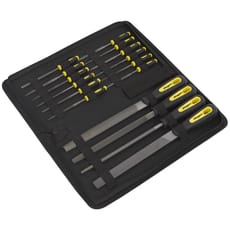
Engineer's File Sets: Complete assortments containing the most commonly used profiles in matched lengths, providing excellent value for equipping workshops or mobile toolboxes with comprehensive filing capability.
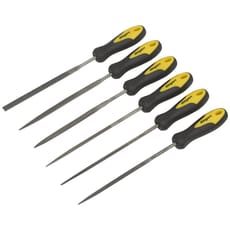
Needle File Sets: Precision files in miniature profiles, essential for detailed work on small components, jewellery making, model engineering, and accessing tight spaces where standard files cannot reach.
Individual Flat Files: Available in various lengths and cut grades, flat files represent the workhorse of any filing collection, suitable for general deburring, edge preparation, and surface levelling tasks.
Half-Round Files: Versatile tools offering both flat and curved filing surfaces, ideal for working internal curves, enlarging holes, and accessing concave surfaces whilst maintaining the utility of a flat face.
Round and Square Files: Specialized profiles for enlarging holes, working internal corners, and shaping specific geometries that flat files cannot effectively address.
Safety and Compliance
When using Siegen files, always wear appropriate eye protection to guard against metal particles and swarf that can become airborne during filing operations. The HSE recommends safety glasses as minimum protection, with full face shields advisable when working with materials that produce larger chips or fragments.
Ensure files are fitted with properly secured handles before use—never use a tang file without a handle as the pointed tang can cause serious hand injuries if the file slips or binds. Inspect handles regularly for cracks or looseness, replacing damaged handles immediately to maintain safe working conditions.
Always file away from your body and secure workpieces properly in vices or clamps. Never use files as pry bars or hammers, as this can shatter the hardened steel and create dangerous flying fragments. Store files separately to prevent the teeth from contacting other files or hard surfaces, which damages cutting edges and creates potential hazards from sharp burrs.
Clean files regularly using a file card or wire brush to remove packed swarf, as clogged teeth can cause the file to slip unexpectedly. When files become worn and lose cutting efficiency, retire them from service rather than applying excessive pressure, which increases the risk of slippage and loss of control.
Frequently Asked Questions
What's the difference between single-cut and double-cut Siegen files?
Single-cut files feature parallel rows of teeth running diagonally across the face, producing a smoother finish and finer control, making them ideal for precision work and final finishing. Double-cut files have a second set of teeth crossing the first at an angle, creating a diamond pattern that removes material more aggressively, making them better suited for rapid stock removal and general shaping work before final finishing.
How long do Siegen files typically last in professional use?
File longevity depends heavily on usage patterns and materials worked. In typical professional workshop conditions with proper care—including regular cleaning and appropriate storage—Siegen files deliver months to years of effective service. Files used on softer materials like aluminium or wood generally outlast those used predominantly on hardened steels. Once you notice reduced cutting efficiency even after thorough cleaning, it's time to replace the file.
Can Siegen files be resharpened when they become dull?
File teeth cannot be effectively resharpened once worn, as the tooth geometry is created during manufacturing through specialized cutting processes that cannot be replicated with standard sharpening equipment. Attempting to sharpen files typically damages the tooth pattern further. Given the affordable pricing of Siegen files, replacement rather than resharpening represents the practical and cost-effective approach when files lose their cutting edge.
What cut grade should I choose for general metalwork?
For versatile general-purpose metalworking, a bastard-cut (medium coarseness) file offers the best balance between material removal rate and surface finish quality. This cut grade removes material efficiently whilst leaving a reasonably smooth finish that can be improved with subsequent finer files if necessary. Keep both bastard and smooth-cut files in your workshop to handle the full range from rapid shaping to final finishing operations.
Are Siegen files suitable for filing stainless steel?
Yes, Siegen files work effectively on stainless steel, though this material is more challenging to file than mild steel due to its work-hardening characteristics. Use moderate pressure with steady, full-length strokes, and clean the file frequently as stainless steel tends to load the teeth more readily than other materials. For extensive stainless steel work, consider dedicating specific files to this material, as the abrasive nature accelerates wear compared to working softer metals.