

Siegen Precision Measuring
 Loading...
End of content
Error - No more pages to load
Siegen Precision Measuring at Tooled-Up.com
Siegen has established itself as a trusted name in precision measuring tools, offering professional-grade instruments that deliver accurate, reliable results across a wide range of applications. The Siegen Precision Measuring range combines exceptional build quality with affordability, making professional-standard measurement accessible to both experienced tradespeople and serious DIY enthusiasts. From digital callipers and micrometers to dial test indicators and engineer's squares, Siegen's comprehensive selection covers the essential measuring tools required for metalwork, engineering, automotive diagnostics, and precision manufacturing.
Tooled-Up.com stocks an extensive selection of Siegen precision measuring instruments designed to meet the exacting standards of modern trade professionals. Each tool in the range undergoes rigorous quality control to ensure accuracy and durability, with many featuring hardened stainless steel construction and precision-ground measuring faces. Whether you're checking tolerances in a machine shop, setting up equipment on a production line, or carrying out precision fabrication work, Siegen measuring tools provide the accuracy and repeatability that professional work demands.
The Siegen approach to precision measuring emphasises practical functionality without compromising on accuracy. Digital measuring instruments feature easy-to-read LCD displays with metric and imperial conversion capabilities, whilst traditional analogue tools offer the tactile feedback and reliability that many experienced engineers prefer. This blend of modern innovation and time-tested design principles makes Siegen an excellent choice for workshops that value both precision and value for money.
Why Choose Siegen Precision Measuring?
Siegen has built its reputation on delivering professional-quality measuring tools at competitive price points, making precision measurement accessible without sacrificing accuracy or build quality. The brand understands that reliable measurements are fundamental to quality workmanship, which is why their precision instruments are manufactured to strict tolerances and undergo thorough testing before reaching the market. Many Siegen measuring tools feature hardened and ground measuring surfaces that resist wear and maintain accuracy even with regular workshop use.
The practical design of Siegen precision measuring equipment reflects real-world workshop requirements. Features such as robust storage cases, depth measurement capabilities, and zero-setting functions on digital instruments demonstrate an understanding of how professionals actually use these tools. Siegen's commitment to providing complete measuring solutions means their tools often include accessories like setting standards and protective cases, ensuring instruments remain accurate and well-protected between uses. The brand's focus on durability ensures that these precision instruments can withstand the demanding conditions of busy workshops whilst maintaining their calibration over extended periods.
Who Uses Siegen Precision Measuring?
Siegen precision measuring tools are trusted by a diverse range of professionals and skilled users, including:
- Mechanical engineers requiring accurate dimensional verification in machine shops and manufacturing facilities
- Tool and die makers who demand micron-level precision for tooling and mould work
- Automotive technicians measuring brake discs, bearing clearances, and component wear
- Fabricators and welders ensuring precise alignment and dimensional accuracy in metalwork
- Model engineers and hobbyists working to exacting standards on small-scale projects
- Quality control inspectors verifying manufacturing tolerances and product specifications
- Maintenance engineers checking machinery wear and alignment in industrial settings
- Woodworkers requiring precise measurements for joinery and furniture making
- Educational institutions teaching precision measurement techniques to apprentices and students
Key Features of Siegen Precision Measuring
Siegen precision measuring instruments incorporate numerous features that enhance accuracy, usability, and longevity. Digital callipers and micrometers typically feature large, clear LCD displays with both metric and imperial readouts, allowing instant conversion between measurement systems. The zero-setting function enables differential measurements and simplified comparative work, whilst data hold buttons allow readings to be frozen for recording in awkward positions.
Construction quality is a hallmark of the range, with stainless steel bodies providing corrosion resistance and dimensional stability. Precision-ground measuring faces ensure accurate contact with workpieces, whilst smooth rack-and-pinion or spindle mechanisms deliver consistent, repeatable measurements. Many instruments feature depth measurement capabilities, extending their versatility beyond simple external or internal dimensions. Protective cases are included with most precision instruments, safeguarding delicate measuring surfaces and maintaining calibration during storage and transport.
Battery-powered digital instruments offer extended operating life with automatic shut-off features to conserve power, whilst traditional analogue instruments require no batteries and provide reliable service in any environment. The ergonomic design of Siegen measuring tools ensures comfortable handling during extended measurement sessions, with thumb-operated controls positioned for single-handed operation where appropriate.
Popular Siegen Precision Measuring
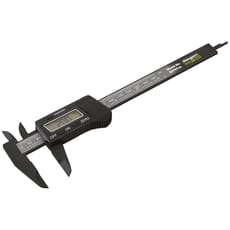
The Siegen Precision Measuring range at Tooled-Up encompasses several essential instrument types. Digital callipers remain the most versatile measuring tool, offering external, internal, depth, and step measurements in a single instrument with resolution typically to 0.01mm. Digital micrometers provide even greater precision for external measurements, with ratchet stops ensuring consistent measuring pressure for repeatable results.
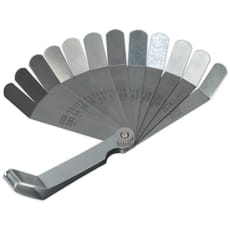
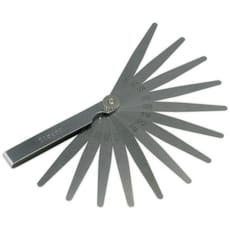
Dial test indicators and magnetic bases form essential equipment for machine setup, alignment checking, and runout measurement. Engineer's squares and straight edges provide reference surfaces for flatness and perpendicularity checks, whilst feeler gauges offer a simple solution for measuring small gaps and clearances. Depth gauges, height gauges, and radius gauges address more specialised measurement requirements across engineering and manufacturing applications.
Safety and Compliance
Whilst precision measuring instruments don't typically present significant safety hazards, proper handling and storage are essential to maintain accuracy and prevent injury. Measuring tools with sharp edges or pointed jaw ends should be handled carefully to avoid cuts or punctures. Always store precision instruments in their protective cases when not in use, and never drop or strike measuring tools as this can affect calibration and accuracy.
Regular cleaning of measuring surfaces with appropriate solvents maintains accuracy and prevents corrosion. Avoid exposing precision instruments to extreme temperatures or magnetic fields, which can affect calibration. When working with digital instruments, ensure batteries are replaced promptly to prevent leakage damage. For critical applications where dimensional accuracy is essential to safety or product conformity, periodic calibration against traceable standards is recommended to maintain measurement confidence.
Frequently Asked Questions
What accuracy can I expect from Siegen precision measuring tools?
Siegen digital callipers and micrometers typically offer accuracy of ±0.02mm to ±0.03mm, which is suitable for most workshop and manufacturing applications. Analogue instruments such as dial indicators and micrometers provide similar or better accuracy when properly calibrated. This level of precision is entirely adequate for professional engineering, automotive work, and quality control applications.
Do Siegen digital measuring instruments come with batteries?
Yes, Siegen digital measuring tools are supplied with batteries installed and ready for immediate use. The instruments typically use standard button cell batteries (commonly SR44 or similar) which are readily available and provide extended operating life, often lasting months or even years with the automatic shut-off feature engaged.
Can Siegen measuring tools be calibrated?
Whilst Siegen precision instruments are factory-calibrated before dispatch, periodic verification against known standards is good practice for critical applications. Digital callipers typically feature a zero-setting function that allows basic calibration checks. For formal calibration certification required in regulated industries, instruments can be sent to accredited calibration laboratories for traceable certification.
Are Siegen measuring tools suitable for professional engineering work?
Absolutely. Siegen precision measuring instruments meet the accuracy requirements of professional engineering, manufacturing, and quality control applications. The combination of quality construction, appropriate accuracy specifications, and reliable performance makes them suitable for workshop environments where dimensional verification is essential to producing quality work.
What's the difference between digital and analogue Siegen measuring tools?
Digital instruments offer instant readings on LCD displays with metric/imperial conversion, data hold functions, and zero-setting capabilities, making them faster and easier to read, particularly in poor lighting. Analogue instruments require no batteries, provide tactile feedback through dial or vernier scale reading, and can be more resistant to environmental conditions. Both types deliver professional accuracy, with the choice often coming down to personal preference and specific application requirements.