

Sirius Lifting Straps

 Loading...
End of content
Error - No more pages to load
Sirius Lifting Straps at Tooled-Up.com
Sirius has established itself as a trusted name in the lifting and rigging industry, delivering professional-grade lifting straps that combine exceptional strength with practical design. The Sirius Lifting Straps collection available at Tooled-Up.com represents a commitment to safety, durability, and compliance with stringent UK and European standards. Whether you're working in construction, logistics, manufacturing, or any industry requiring reliable load handling, Sirius provides lifting solutions engineered to perform in the most demanding environments.
Manufactured from high-tenacity polyester webbing, Sirius lifting straps are designed to handle substantial loads whilst maintaining flexibility and ease of use. Each strap undergoes rigorous quality control and testing to ensure it meets the exacting standards required for professional lifting operations. The range encompasses various configurations including flat webbing slings, round slings, and endless loop designs, each colour-coded according to their Safe Working Load (SWL) for instant identification on site.
From compact 1-tonne capacity straps ideal for lighter lifting tasks to heavy-duty 10-tonne industrial slings, the Sirius range at Tooled-Up caters to a comprehensive spectrum of lifting requirements. Every strap is supplied with clear labelling showing its capacity, material composition, and compliance markings, ensuring tracespeople can work confidently within safe operational parameters.
Why Choose Sirius Lifting Straps?
Sirius has built its reputation on producing lifting equipment that prioritises both operator safety and long-term reliability. Unlike cheaper alternatives that may deteriorate rapidly under UV exposure or in harsh conditions, Sirius lifting straps are constructed from premium-grade polyester that resists abrasion, maintains flexibility in varying temperatures, and provides consistent performance across thousands of lifting cycles.
The brand's commitment to compliance means every lifting strap conforms to EN 1492-1 and EN 1492-2 standards, the European regulations governing textile slings. This certification ensures each product has been independently tested and verified for its stated load capacity. Sirius also implements a distinctive colour-coding system that allows operators to quickly identify the correct strap for their lifting task, reducing the risk of overloading and enhancing workplace safety protocols.
Another distinguishing factor is the attention to edge protection and reinforcement. Sirius incorporates strengthened stitching patterns and, where appropriate, protective sleeves that extend the service life of straps when used around sharp edges or rough surfaces. This practical design consideration translates directly into better value, as straps maintain their integrity longer and require less frequent replacement.
Who Uses Sirius Lifting Straps?
Sirius lifting straps are specified by professionals across numerous sectors who require dependable load handling equipment:
- Construction and Building Contractors: For lifting structural steel, precast concrete elements, machinery, and building materials on site
- Logistics and Warehousing Operatives: Handling palletised goods, container loading, and general freight management
- Manufacturing and Engineering Facilities: Moving heavy components, machinery installation, and production line operations
- Agricultural and Farming Operations: Lifting equipment, handling large bales, and machinery maintenance
- Marine and Offshore Industries: Rigging applications where resistance to moisture and salt exposure is essential
- Plant Hire and Tool Rental Companies: Requiring durable equipment that withstands frequent use by multiple operators
- Vehicle Recovery and Breakdown Services: Safe vehicle lifting and recovery operations
- Event and Exhibition Contractors: Rigging lighting, sound equipment, and temporary structures
Key Features of Sirius Lifting Straps
Sirius lifting straps incorporate several distinctive features that enhance their performance and safety profile. The high-tenacity polyester construction provides an excellent strength-to-weight ratio, making straps easier to handle whilst maintaining impressive load capacities. This material also demonstrates superior resistance to stretching under load compared to natural fibres, ensuring more predictable and controlled lifting operations.
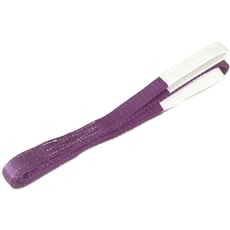
The reinforced eye loops on Sirius flat webbing slings feature multiple rows of stitching that distribute stress evenly, preventing premature failure at these critical connection points. The stitching patterns are clearly visible, allowing for easy inspection to identify wear or damage before use. Round slings benefit from a continuous loop construction that eliminates weak points and provides multi-directional lifting capability.
Colour-coding according to capacity is integrated throughout the Sirius range - violet for 1 tonne, green for 2 tonne, yellow for 3 tonne, grey for 4 tonne, red for 5 tonne, and brown for 6 tonne capacities. This industry-standard system enables rapid selection and helps prevent dangerous mistakes when working under pressure or in busy environments.
Each strap includes a durable sewn-in label displaying essential information including the manufacturer's details, CE marking, material type, Safe Working Load for different configurations (straight lift, choke hitch, basket hitch), and the relevant EN standard compliance. This transparency ensures full traceability and supports compliance with HSE lifting equipment regulations.
Popular Sirius Lifting Straps
The Sirius range encompasses several product types designed for specific lifting applications. Flat webbing slings with reinforced eyes represent the most versatile option, suitable for general-purpose lifting in straight, choke, or basket configurations. These are available in standard lengths from 1 metre to 12 metres, with custom lengths available for specialised applications.
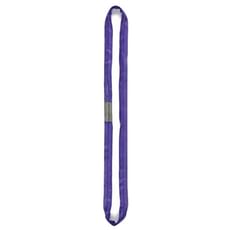
Round slings offer particular advantages when lifting delicate or highly finished surfaces, as the tubular construction distributes pressure over a wider area and reduces the risk of damage. The endless design also means there are no defined weak points, and the sling can be rotated to distribute wear evenly throughout its service life.
Endless loop straps provide maximum flexibility for rigging applications, allowing operators to create custom configurations with shackles and other lifting accessories. These are particularly popular in manufacturing environments where lifting points may vary considerably between different components.
Safety and Compliance
All Sirius lifting straps supplied through Tooled-Up.com comply with the Lifting Operations and Lifting Equipment Regulations 1998 (LOLER) and the Provision and Use of Work Equipment Regulations 1998 (PUWER). These UK regulations require that lifting equipment is suitable for purpose, appropriately marked with safe working loads, and subject to thorough examination at prescribed intervals.
Sirius straps conform to EN 1492-1 (flat woven webbing slings) and EN 1492-2 (round slings) standards, ensuring they meet European safety requirements. Each product carries CE marking as evidence of this compliance. The manufacturer applies a safety factor of 7:1, meaning the minimum breaking strength is seven times the marked Safe Working Load, providing substantial safety margin during normal operations.
Users must conduct pre-use visual inspections to check for cuts, abrasions, heat damage, chemical contamination, or damaged stitching. Straps showing any signs of deterioration should be withdrawn from service immediately. Regular thorough examinations by a competent person are required at intervals not exceeding 12 months, or more frequently for equipment in arduous use. Proper storage away from direct sunlight, chemicals, and sharp objects helps maximise service life.
Frequently Asked Questions
What is the difference between the Safe Working Load and breaking strength of Sirius lifting straps?
The Safe Working Load (SWL) marked on Sirius straps is the maximum load that should be applied during normal use. The actual breaking strength is typically seven times higher, providing a substantial safety margin. Never exceed the stated SWL as this safety factor accounts for dynamic loading, wear over time, and variations in lifting conditions.
How should I store Sirius lifting straps when not in use?
Store Sirius straps in a cool, dry location away from direct sunlight, as UV exposure can degrade polyester fibres over time. Keep them away from chemicals, oils, and sharp objects. Hanging straps on dedicated racks prevents creasing and allows air circulation. Never store wet straps - allow them to dry naturally away from direct heat sources before storage.
Can Sirius lifting straps be repaired if damaged?
No. Lifting straps should never be repaired, modified, or altered in any way. Any strap showing signs of damage including cuts, fraying, heat exposure, chemical staining, or damaged stitching must be withdrawn from service and destroyed to prevent accidental reuse. The relatively low cost of replacement straps compared to the consequences of failure makes repair both impractical and dangerous.
What do the different colours on Sirius lifting straps indicate?
The colour of Sirius lifting straps indicates their Safe Working Load capacity according to EN standards: violet (1 tonne), green (2 tonne), yellow (3 tonne), grey (4 tonne), red (5 tonne), and brown (6 tonne). This colour-coding enables quick identification of the correct capacity strap for your lifting task, reducing the risk of overloading and enhancing site safety.
How often do Sirius lifting straps need thorough examination?
Under LOLER regulations, Sirius lifting straps require thorough examination by a competent person at least every 12 months. Equipment used in harsh conditions or for critical lifts may require more frequent examination - every six months or even after each use for particularly arduous applications. Keep detailed records of all examinations including dates, findings, and the examiner's details.