

Sirius Locking Nuts
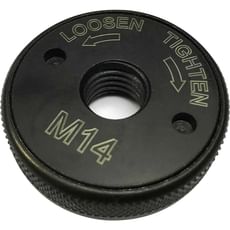
 Loading...
End of content
Error - No more pages to load
Sirius Locking Nuts at Tooled-Up.com
Sirius has established itself as a trusted name in fastening solutions, and their range of locking nuts exemplifies the brand's commitment to reliability and engineering excellence. Designed to prevent loosening under vibration, shock loads, and challenging operating conditions, Sirius locking nuts deliver the secure fastening performance that professionals demand across industrial, automotive, and construction applications. Whether you're working on critical mechanical assemblies, heavy machinery maintenance, or precision engineering projects, Sirius provides locking nut solutions engineered to maintain joint integrity over extended service life.
The Sirius locking nuts collection available from Tooled-Up.com encompasses various designs and specifications to suit different applications and installation requirements. From all-metal prevailing torque nuts to nylon insert lock nuts, each product is manufactured to exacting standards using quality materials that resist corrosion and maintain their locking characteristics through repeated assembly cycles. Sirius understands that fastener failure can lead to costly downtime and safety concerns, which is why their locking nuts are rigorously tested to meet industry standards and deliver consistent performance in demanding environments.
When you choose Sirius locking nuts, you're selecting fastening components that combine proven mechanical design with manufacturing precision. These aren't standard hardware items – they're engineered solutions that address the real-world challenges tradespeople and engineers face when securing assemblies that must withstand vibration, thermal cycling, and dynamic loading conditions without compromising joint integrity.
Why Choose Sirius Locking Nuts?
Sirius has built its reputation by focusing on the details that matter most to professionals who rely on their fasteners day in and day out. Their locking nuts feature consistent prevailing torque characteristics that provide reliable resistance to loosening whilst still allowing for controlled installation and removal when maintenance is required. This balance between security and serviceability sets Sirius apart from inferior alternatives that either fail to maintain clamping force or become virtually impossible to remove without damaging threads.
The quality control processes employed in Sirius manufacturing ensure dimensional accuracy and material consistency across production runs. This means you can trust that each locking nut will perform as expected, with predictable installation torque requirements and reliable locking performance. For professionals managing inventory across multiple job sites or maintaining critical equipment, this consistency translates to fewer callbacks, reduced warranty claims, and the peace of mind that comes from using components you can depend on.
Sirius also recognises that different applications demand different locking mechanisms. Their product development focuses on providing the right solution for each use case – whether that's nylon insert nuts for general purpose applications, all-metal designs for high-temperature environments, or specialised configurations for specific industry requirements. This application-focused approach ensures that tradespeople can source appropriate fasteners for their specific needs rather than compromising with one-size-fits-all solutions.
Who Uses Sirius Locking Nuts?
Sirius locking nuts are specified and relied upon by a diverse range of professionals and industries:
- Mechanical Engineers – designing and maintaining machinery assemblies where vibration resistance is critical
- Automotive Technicians – securing suspension components, exhaust systems, and engine assemblies
- Plant Maintenance Teams – servicing industrial equipment, conveyor systems, and production machinery
- Agricultural Engineers – maintaining farm equipment subjected to extreme vibration and shock loads
- Construction Professionals – assembling structural steelwork, scaffolding systems, and temporary works
- Marine Engineers – securing equipment in high-vibration maritime environments
- Hydraulic and Pneumatic Specialists – maintaining fluid power systems where fastener reliability is essential
- Manufacturing Assembly Operatives – building products where consistent fastening quality affects product performance
- Aerospace and Defence Contractors – applications requiring certified fastening solutions with documented traceability
Key Features of Sirius Locking Nuts
Sirius locking nuts incorporate several distinctive features that enhance their performance and usability. The precision-manufactured threads ensure proper engagement with mating fasteners, reducing the risk of cross-threading during installation and providing uniform load distribution across thread flanks. This attention to thread quality is particularly important in applications where fasteners undergo repeated installation cycles or where joint integrity must be maintained under dynamic loading conditions.
Many Sirius locking nut designs feature nylon inserts that deform around mating threads to create prevailing torque without damaging thread surfaces. This allows for controlled installation using standard tools whilst providing reliable locking action that resists vibration-induced loosening. The nylon material is carefully selected to maintain its properties across typical operating temperature ranges whilst remaining stable under exposure to common industrial fluids and environmental conditions.
For high-temperature applications where nylon inserts aren't suitable, Sirius offers all-metal locking nut designs that use mechanical deformation or thread distortion to achieve locking action. These designs maintain their locking characteristics in environments exceeding 120°C where polymer inserts would degrade, making them ideal for exhaust systems, industrial ovens, and high-temperature process equipment.
Corrosion resistance is another hallmark of Sirius locking nuts, with appropriate surface treatments and material selections that extend service life in challenging environments. Whether zinc plated for general industrial use, hot-dip galvanised for outdoor applications, or manufactured from stainless steel for marine and chemical processing environments, Sirius provides options that match environmental demands.
Popular Sirius Locking Nuts
The Sirius locking nuts range at Tooled-Up includes several popular configurations that address common fastening requirements. Nylon insert lock nuts (often called Nyloc nuts) represent the most widely used type, offering excellent all-round performance for general engineering, automotive, and construction applications where operating temperatures remain within typical ranges.
All-metal prevailing torque lock nuts provide the solution for high-temperature applications, with designs that maintain locking characteristics in environments where polymer inserts would fail. These are particularly popular with professionals working on exhaust systems, industrial heating equipment, and manufacturing processes involving elevated temperatures.
Stainless steel locking nuts from Sirius deliver corrosion resistance for marine applications, food processing equipment, chemical plants, and outdoor installations where environmental exposure would rapidly degrade standard carbon steel fasteners. The combination of locking action and corrosion resistance makes these nuts essential components in demanding service environments.
Safety and Compliance
When working with locking nuts, proper installation practices are essential to achieving reliable fastening performance. Sirius locking nuts should always be installed in accordance with manufacturer guidelines and relevant industry standards. It's important to use appropriate torque values when tightening – overtightening can damage locking elements and compromise their effectiveness, whilst insufficient torque may fail to establish proper clamping force.
Most locking nuts are designed for single use only, as repeated installation cycles can degrade the locking element and reduce prevailing torque to ineffective levels. Always inspect locking nuts before installation and replace any that show signs of damage, thread wear, or compromised locking elements. For critical applications, maintaining proper documentation of fastener specifications and replacement schedules helps ensure ongoing safety and compliance.
When working on assemblies subject to UK health and safety regulations, ensure that fastener selections meet applicable standards and that installations are carried out by competent persons following approved procedures. The HSE provides guidance on mechanical joint integrity that should be consulted for safety-critical applications in industrial and construction environments.
Frequently Asked Questions
Can Sirius locking nuts be reused?
Most locking nuts are designed for single use, as the locking element (whether nylon insert or metal deformation) degrades with each installation cycle. For critical applications, always use new locking nuts. If reuse is unavoidable in non-critical applications, inspect the locking element carefully and verify that adequate prevailing torque remains.
What's the maximum temperature for nylon insert locking nuts?
Nylon insert locking nuts typically maintain their locking properties up to approximately 120°C. Beyond this temperature, the nylon begins to soften and lose its effectiveness. For higher temperature applications, all-metal locking nut designs should be specified.
Do I need to use threadlocker with Sirius locking nuts?
No – locking nuts are designed to provide mechanical locking action without additional threadlocking compounds. Using both can actually complicate disassembly during maintenance without providing significant additional security. Choose either a locking nut or threadlocker based on your application requirements.
What's the difference between locking nuts and standard nuts?
Standard nuts rely solely on applied torque and friction to resist loosening, which can be overcome by vibration and dynamic loads. Locking nuts incorporate additional features (nylon inserts, metal distortion, or mechanical elements) that create prevailing torque, actively resisting rotation even when vibration reduces clamping force.
Are Sirius locking nuts suitable for outdoor applications?
Yes, when appropriately specified. Choose zinc-plated or hot-dip galvanised locking nuts for general outdoor use, or stainless steel versions for coastal, marine, or chemically aggressive environments. The locking mechanism itself isn't affected by outdoor conditions, but the base material and coating must be selected to resist corrosion in your specific environment.