

Trend Castors
 Loading...
End of content
Error - No more pages to load
Trend Castors at Tooled-Up.com
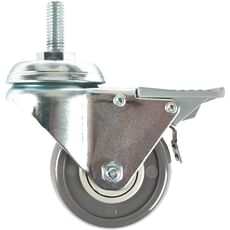
Trend has built a formidable reputation in the woodworking and workshop equipment sector, and their castor range exemplifies the same commitment to quality and innovation that professionals have come to expect. When workshop mobility matters, Trend castors deliver the reliability and load-bearing capacity that serious tradespeople demand. Designed specifically for workshop furniture, tool storage systems, and mobile workstations, these castors combine robust construction with smooth operation to keep heavy equipment moving effortlessly across workshop floors.
The Trend castor collection available from Tooled-Up.com focuses on heavy-duty applications where standard castors simply won't suffice. Whether you're building a custom router table, creating mobile storage for power tools, or constructing a workbench that needs to be repositioned regularly, Trend castors provide the foundation for safe, stable movement. Their engineering reflects decades of understanding workshop requirements, with features like positive locking mechanisms, swivel action for manoeuvrability, and wheel materials that won't damage floor surfaces.
Each Trend castor is manufactured to withstand the demanding conditions of professional workshops and construction sites. From the metalwork finishing to the wheel bearing assemblies, these components are built to handle repeated use under load whilst maintaining smooth operation year after year. This durability makes them a sound investment for anyone serious about workshop organisation and efficiency.
Why Choose Trend Castors?
Trend's reputation in the professional tool market extends naturally to their castor range, where quality control and functional design take precedence over cost-cutting. These castors feature precision-engineered swivel mechanisms that maintain smooth rotation even after thousands of directional changes, a crucial consideration for workshop equipment that's repositioned daily. The load ratings are conservative and realistic, meaning when Trend specifies a weight capacity, you can trust it under real-world conditions including uneven floors and dynamic loads.
The materials selection demonstrates Trend's understanding of workshop environments. Wheel compounds are chosen to resist workshop chemicals, metal shavings, and temperature variations whilst maintaining grip on various floor surfaces including concrete, resin, and timber. The mounting plates are manufactured from substantial gauge steel with pre-drilled fixing holes positioned for maximum load distribution. Locking mechanisms, where fitted, engage positively with clear tactile and visual confirmation—essential when workshop safety depends on equipment staying precisely where you've positioned it.
Professionals choose Trend castors because they eliminate the frustration of failed mobility solutions. There's nothing more counterproductive than a workbench that won't roll smoothly or castors that develop flat spots and noisy bearings after minimal use. Trend addresses these common failures through superior component selection and assembly quality that justifies the investment for anyone who values workshop efficiency.
Who Uses Trend Castors?
Trend castors are particularly popular among woodworkers and cabinet makers who build custom workshop furniture and need reliable mobility solutions that match their craftsmanship standards. Joiners and shopfitters specify these castors for bespoke retail fixtures and display units where appearance and smooth operation are equally important. Tool storage enthusiasts—from professional mechanics to well-equipped DIYers—incorporate Trend castors into their workshop organisation systems, knowing the quality matches their premium tool investments.
Educational workshops and training facilities favour Trend castors for institutional furniture that endures heavy use by multiple users with varying care levels. Site joiners building mobile workstations for construction projects rely on Trend's durability to withstand transportation and site conditions. Additionally, maintenance engineers and facilities managers specify these castors when refurbishing industrial equipment trolleys and mobile maintenance carts where failure simply isn't acceptable.
Key Features of Trend Castors
Trend castors incorporate robust swivel bearing assemblies that maintain smooth rotation throughout their service life, with sealed bearing systems that resist dust and debris ingress common in workshop environments. The wheel materials are specifically formulated to resist flat-spotting when equipment remains stationary under load, whilst maintaining grip characteristics that allow controlled movement even on smooth floors. Mounting plates feature generous dimensions with multiple fixing holes, allowing secure attachment to various materials and frame constructions.
Load capacity engineering includes safety margins that account for dynamic forces and uneven weight distribution—realistic ratings that reflect actual workshop conditions rather than laboratory maximums. Where locking mechanisms are incorporated, they engage both the wheel rotation and swivel action independently, providing comprehensive immobilisation when required. The metalwork receives protective finishing that resists corrosion in damp workshop conditions, maintaining both function and appearance over extended service periods.
Wheel diameter selection is optimised for workshop applications, providing sufficient clearance over floor irregularities and cable runs whilst maintaining a low overall height that keeps equipment centres of gravity manageable. The materials and construction throughout reflect Trend's philosophy that workshop equipment should enhance productivity rather than create maintenance tasks or safety concerns.
Popular Trend Castors
Trend's heavy-duty swivel castors with locking mechanisms remain consistently popular for router tables and saw stations where precise positioning and absolute stability are non-negotiable. Their fixed castors are frequently specified in pairs with swivel castors to create stable four-wheel configurations on workbenches and storage cabinets. Medium-load castors find favour in tool chest applications and mobile storage solutions where smooth operation matters but extreme weight capacity isn't required.
The larger diameter wheel options are particularly valued for uneven workshop floors or when equipment needs to traverse door thresholds and floor transitions regularly. Trend's castor sets, which include appropriate combinations of fixed and swivel castors with matching load ratings, simplify specification for DIY workshop builders. Browse the Trend selection at Tooled-Up to find castors matched precisely to your workshop mobility requirements, whether you're building a single project or outfitting an entire facility.
Safety and Compliance
When installing Trend castors, ensure mounting surfaces are sufficiently robust to handle both vertical loads and lateral forces without flexing or fastener pull-through. Use all provided mounting holes with appropriate fixings for the substrate material—undersized fixings or reduced mounting points significantly compromise load capacity and safety. Distribute equipment weight evenly across all castors and verify that individual castor load ratings aren't exceeded, remembering that uneven floors can shift weight distribution dynamically.
Locking mechanisms should engage fully before leaving equipment unattended or performing any operations that generate lateral forces. Inspect castors regularly for wheel damage, bearing wear, and mounting security, particularly on equipment subjected to heavy loads or frequent movement. Maintain clear floor surfaces free from debris that could obstruct wheel rotation or create trip hazards around mobile equipment. Replace damaged or worn castors immediately rather than continuing use with compromised mobility components.
Frequently Asked Questions
What load capacity do I need for my workshop equipment?
Calculate the total loaded weight of your equipment including maximum tool and material loads, then divide by the number of castors and add at least 25% safety margin. For equipment with uneven weight distribution, base calculations on the heaviest loaded castor position. Trend's conservative load ratings provide realistic capacities for workshop conditions rather than theoretical maximums.
Should I use all swivel castors or a combination of fixed and swivel?
For most workshop applications, two fixed castors at one end with two swivel castors at the opposite end provide optimal manoeuvrability whilst maintaining directional stability. All-swivel configurations offer maximum manoeuvrability in confined spaces but can be less stable when moving equipment in straight lines. Consider how the equipment will be used and the available manoeuvring space.
Will Trend castors damage my workshop floor?
Trend castors use wheel compounds selected to minimise floor marking whilst maintaining grip characteristics. However, any castor can potentially mark floors under certain conditions—particularly when equipment remains stationary under heavy load or when swivelling under load on smooth surfaces. Regular movement and appropriate load distribution minimise any marking potential.
How do I maintain Trend castors for maximum service life?
Keep wheel treads free from accumulated debris, swarf, and material build-up that can affect rotation and cause flat spots. Periodically clean swivel bearings and apply appropriate lubrication to maintain smooth operation. Inspect mounting fasteners regularly and retighten as necessary, particularly after initial installation when fixings may settle. Store mobile equipment on level surfaces to prevent uneven bearing loads.
Can Trend castors be fitted to any workshop furniture?
Trend castors require structurally sound mounting surfaces capable of handling concentrated loads at fixing points. Lightweight furniture or thin materials may require reinforcement plates or frame modifications to safely distribute castor loads. The Tooled-Up range includes various mounting plate sizes and configurations to suit different furniture constructions, but always verify that your specific application provides adequate mounting strength before installation.