

Carabiners
Pay in 3 interest-free payments on purchases from £30-2000 with  . Learn more.
 Loading...
End of content
Error - No more pages to load
About Carabiners
Carabiners and connecting hardware are essential safety components for tradespeople working at height, construction professionals, and anyone requiring secure attachment points for tools, lanyards, and safety equipment. The range available from Tooled-Up.com includes fire brigade snap hook carabiners, D-shackles, quick repair links, and specialist Safety Lock System (SLS) components designed to prevent dropped tools and equipment on site. Whether you need stainless steel carabiners for outdoor applications or zinc-plated options for general workshop use, professional-grade connecting hardware from trusted brands including Facom, Faithfull, Portwest, and Makita delivers reliable performance across demanding trade environments.
Modern carabiners have evolved far beyond their climbing origins to become indispensable safety equipment across multiple trades. From securing tools to work belts and harnesses to creating temporary anchor points and rigging systems, these versatile connectors play a crucial role in workplace safety. The selection includes screwgate carabiners with threaded locking sleeves, twist lock mechanisms offering one-handed operation, elasticated lanyards with integrated carabiners, and belt clip D-rings that comply with current UK safety standards. Many products form part of comprehensive tool tethering systems, helping contractors meet their obligations under HSE working at height regulations and reducing the risk of injuries from falling objects on busy construction sites.
Professional carabiners differ significantly from recreational versions, featuring higher load ratings, more robust construction, and corrosion-resistant finishes suitable for demanding trade environments. Materials range from marine-grade stainless steel for superior weather resistance to zinc-plated steel for cost-effective indoor applications. Whether assembling a complete SLS safety system or replacing worn snap hooks on existing lanyards, these reliable connecting solutions serve professional use across construction sites, maintenance facilities, and industrial installations throughout the UK.
Jargon Buster
- Safety Lock System (SLS): An integrated tool tethering system comprising lanyards, carabiners, and attachment points designed to prevent dropped tools when working at height. SLS systems help meet HSE regulations and reduce the risk of injuries from falling objects on site.
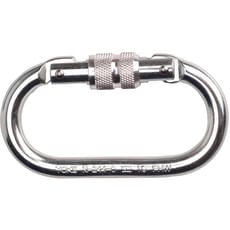
- Screwgate Carabiner: A carabiner with a threaded sleeve that screws over the gate opening to create a secure, locked connection. These provide positive locking that won't accidentally open, making them ideal for permanent or semi-permanent attachments in professional applications.
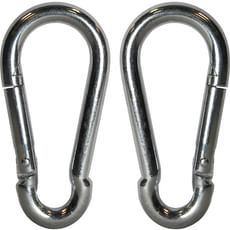
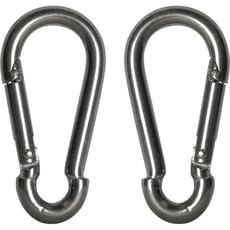
- Fire Brigade Snap Hook: A traditional style of carabiner with a spring-loaded gate and a rounded, hook-like shape. Popular in trade applications for quick attachment and detachment whilst maintaining good load-bearing capacity.
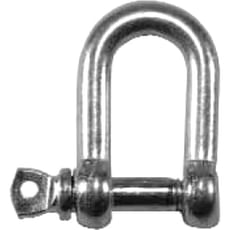
- D-Shackle: A U-shaped metal connector with a removable pin or bolt closure, providing a strong attachment point for rigging, lifting, and securing applications. Available in various load ratings and finishes for different working environments.
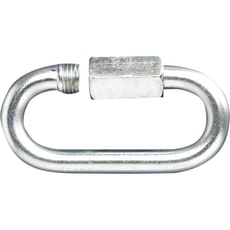
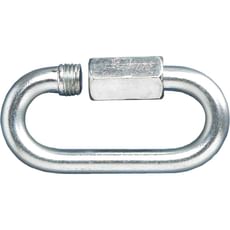
- Quick Repair Link: Also known as quick links or delta links, these are screw-together metal connectors used for joining chains, ropes, and cables. They provide a semi-permanent connection that can be opened without tools when needed.
- Load Rating/WLL (Working Load Limit): The maximum safe working load a carabiner or connector can handle, typically expressed in kilograms or kilonewtons (kN). Never exceed the stated WLL, and always check equipment ratings before use.
Who Uses Carabiners?
- Scaffolders and Steeplejacks: Securing tools and equipment when working at height to comply with tool tethering requirements
- Roofers and Cladding Installers: Tool attachment and temporary anchor point creation whilst working on elevated surfaces
- Electricians and Communications Engineers: Securing tools when working from ladders, cherry pickers, or telecommunication towers
- HVAC and Maintenance Engineers: Tool tethering when servicing equipment at height or in difficult-to-access locations
- Arborists and Tree Surgeons: Rigging systems, securing equipment, and creating climbing setups (using appropriate rated climbing hardware)
- Event Riggers and Stage Technicians: Temporary rigging, securing lighting equipment, and general stage installation work
- General Contractors and Site Managers: Ensuring compliance with HSE working at height regulations across various trades
- DIY Enthusiasts and Homeowners: Securing items in garages, workshops, sheds, and for various household rigging applications
How to Choose the Right Carabiners
Material and Finish: Consider your working environment when selecting carabiners. Stainless steel offers excellent corrosion resistance for outdoor work, marine environments, or damp conditions. Zinc-plated steel provides adequate protection for indoor workshops and construction sites at a lower cost. For harsh industrial or coastal environments, marine-grade stainless steel is the professional choice that ensures longevity and reliable performance.
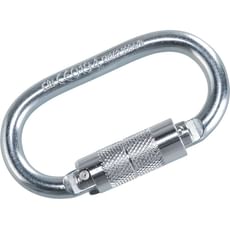
Gate Type and Locking Mechanism: Screwgate carabiners provide secure locking for permanent attachments and are ideal for anchor points. Twist lock carabiners offer quick one-handed operation whilst maintaining security against accidental opening. Standard spring-loaded snap hooks are perfect for frequent attachment and detachment throughout the working day. Choose your mechanism based on how often you'll connect and disconnect the carabiner and the security level required for your specific application.
Load Rating and Compliance: Always verify that carabiners meet or exceed the load requirements for your application. Check for compliance with relevant British and European standards (BS/EN ratings). For working at height applications, ensure all components in your tool tethering system have compatible load ratings. Never use damaged or unmarked carabiners for safety-critical applications, and maintain detailed inspection records for all equipment.
Size and Gate Opening: Ensure the carabiner's gate opening is large enough to fit around your belt loops, D-rings, anchor points, or tool attachment holes. Larger carabiners offer more versatility but add weight to your tool belt. Consider how many items you'll need to attach to a single carabiner when selecting sizes, and balance convenience with practicality for your specific working requirements.
System Compatibility: If building a complete Safety Lock System, choose carabiners, lanyards, and belt attachments from the same manufacturer to ensure proper compatibility. Brands like Facom offer comprehensive SLS systems with matched components designed to work together effectively, simplifying compliance and improving overall safety performance on site.
Popular Accessories
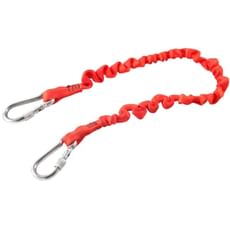
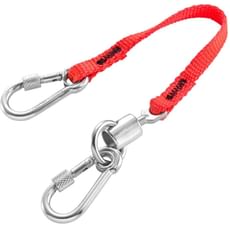
- Tool Lanyards: Elasticated and fixed-length lanyards for creating complete tool tethering systems
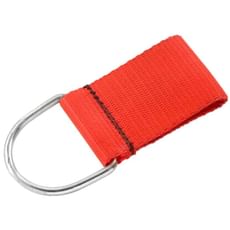
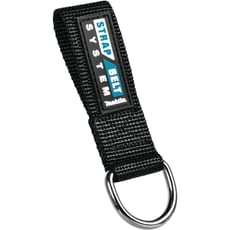
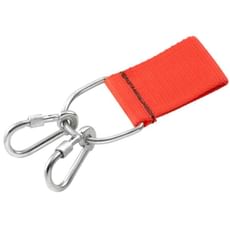
- Belt Clips and D-Rings: Attachment points for securing carabiners to work belts and harnesses
- Tool Belts and Pouches: Professional work belts with integrated attachment points for SLS systems
- Safety Harnesses: Full-body harnesses for working at height with multiple carabiner attachment points
- Anchor Slings and Straps: Textile anchor points for creating temporary attachment locations
- Chain and Rope: Various grades for rigging applications requiring carabiner connections
- Tool Tethering Kits: Complete starter systems including multiple carabiners, lanyards, and attachments
- Inspection Tags: For recording regular safety inspections of carabiners and connecting hardware
Safety Information
Carabiners used for working at height or load-bearing applications must be regularly inspected for wear, deformation, corrosion, and damage. Any carabiner showing signs of cracking, excessive wear, bent gates, or damaged locking mechanisms should be immediately removed from service. Never modify carabiners or use them beyond their stated working load limit (WLL). Always ensure locking mechanisms are fully engaged before trusting the connection with load, and verify proper engagement before each use.
When working at height, all tool tethering systems must comply with the Work at Height Regulations 2005 and HSE guidance. Employers have a duty to prevent dropped objects that could cause injury to workers below. Ensure all team members are trained in the correct use of carabiners and SLS systems, and that they understand the importance of proper attachment and regular inspection. Regular competent person inspections should be conducted, and detailed records maintained for all safety-critical equipment to demonstrate compliance and track equipment condition over time.
Do not use carabiners across sharp edges or in situations where they could be loaded across the gate (side loading) rather than along the major axis, as this dramatically reduces their strength. When connecting multiple items to a single carabiner, ensure the total load doesn't exceed the rating and that items can't shift to create dangerous loading angles. Store carabiners in a clean, dry environment and protect them from chemicals, excessive heat, and mechanical damage when not in use. Replace any equipment that has been subjected to shock loading or falls, even if no visible damage is apparent.
Frequently Asked Questions
What's the difference between climbing carabiners and industrial carabiners?
Whilst both serve similar functions, industrial trade carabiners are typically built to different standards than climbing-specific equipment. Trade carabiners often feature more robust construction for tool tethering and general rigging applications, whilst climbing carabiners are specifically certified to mountaineering standards. For working at height on construction sites, use carabiners marked with appropriate BS/EN ratings for industrial use rather than recreational climbing hardware, as these are designed for the specific demands of professional trade environments.
How often should I inspect my carabiners?
Carabiners used for safety-critical applications should be visually inspected before each use for obvious damage, corrosion, or wear. A more thorough inspection by a competent person should be conducted at regular intervals based on frequency of use and working conditions – typically every three to six months for equipment in regular professional use. Keep inspection records and immediately retire any questionable equipment from service. Document all inspections and maintain a register of equipment condition to ensure compliance with HSE requirements.
Can I use stainless steel and zinc-plated carabiners together in the same system?
Yes, mixing materials is generally acceptable provided all components meet the required load ratings for your application. However, be aware that mixing dissimilar metals can accelerate corrosion through galvanic action in wet or marine environments. For outdoor applications or harsh conditions, it's best practice to use stainless steel throughout the system. Always ensure all components in a safety system are compatible and appropriately rated for the maximum loads they may encounter.
Do I need special carabiners for tool tethering?
Whilst you can use various carabiner types for tool tethering, purpose-designed Safety Lock System (SLS) components offer significant advantages. Tooled-Up stocks integrated systems from manufacturers like Facom that combine carabiners with matched lanyards, belt clips, and tool attachments designed specifically for preventing dropped tools. These systems typically feature appropriate load ratings, secure locking mechanisms, and ergonomic designs that make compliance with HSE regulations straightforward on busy construction sites whilst improving productivity.
What load rating do I need for tool tethering applications?
The load rating must exceed the weight of the heaviest tool or item you'll attach, with an appropriate safety factor. Most professional tool tethering carabiners are rated for loads well above typical hand tool weights – often 20kg to 50kg or more. Remember that dynamic loads (such as a dropped tool jerking against the lanyard) create forces significantly higher than the static weight. Always follow manufacturer guidelines and HSE recommendations for your specific working environment and applications, and never exceed stated working load limits.