
Carpenters Pencils

Pay in 3 interest-free payments on purchases from £20-£3000 with  . Learn more.

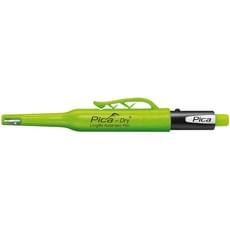
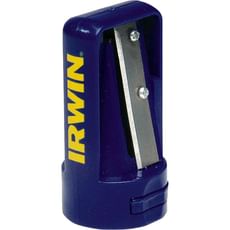
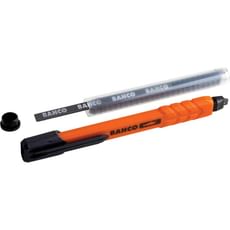
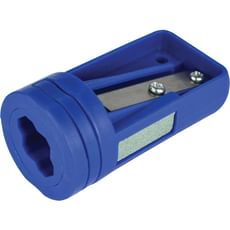
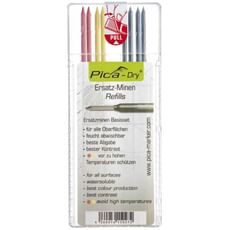
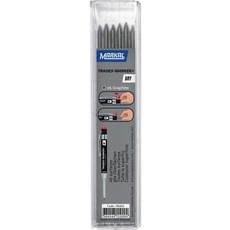
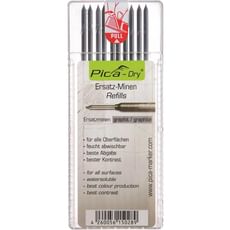
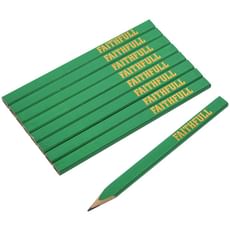
Loading...
End of content
Error - No more pages to load
About Carpenters Pencils
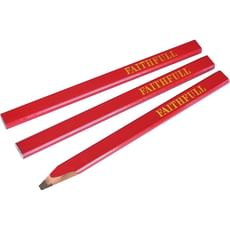
Carpenters pencils are an indispensable marking tool for anyone working with timber, construction materials, and building projects. Distinguished by their flat, rectangular profile, these pencils prevent rolling on sloped surfaces—a crucial feature when working on angled workbenches, roof pitches, or scaffolding. The wide, flat lead produces bold, highly visible marking lines on rough surfaces including timber, concrete, plasterboard, masonry, and metalwork, making them essential for accurate measuring and cutting operations across diverse trades.
The selection at Tooled-Up.com encompasses traditional wooden carpenters pencils in various lead grades from trusted manufacturers including Faithfull, Bahco, Draper, Blackedge, and Festool, alongside innovative mechanical carpenters pencils from Bahco and Pica that eliminate the need for constant sharpening. Whether you require hard leads for fine joinery detail work, medium HB leads for general purpose marking, or soft leads for rough concrete and brickwork, the range includes over 40 different options to suit every application and material type.
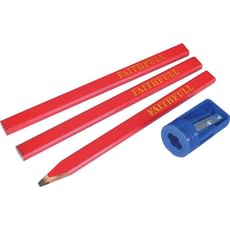
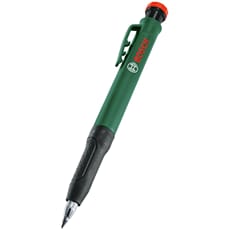
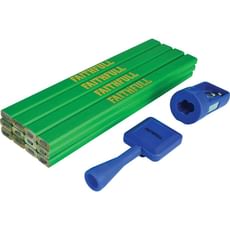
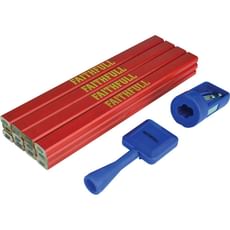
From simple individual pencils and economical multi-packs to comprehensive 13-piece marking sets from Faithfull complete with dedicated sharpeners, this category caters to professional tradespeople who depend on reliable marking tools daily and DIY enthusiasts tackling home improvement projects. Specialist options include deep hole marker pencils from Bosch for precise marking in confined spaces, mechanical pencils with replaceable leads for long-term economy, and assorted multi-packs providing different lead grades for varying materials and site conditions.
Jargon Buster
- Lead Grade: Indicates the hardness of the pencil core. Hard leads suit fine marking on smooth, planed timber and detailed joinery. Medium (HB) leads offer versatility for general carpentry across most surfaces. Soft leads work best on rough-sawn timber, concrete blocks, brickwork, and porous materials where harder leads might not leave visible marks.
- Flat Profile: The distinctive rectangular cross-section of carpenters pencils that prevents rolling on angled surfaces and provides superior durability against breakage when dropped or subjected to demanding site conditions. This shape also allows for greater structural strength compared to round pencils.
- Mechanical Carpenters Pencil: A refillable marking tool with replaceable leads that eliminates the need for sharpening, featuring a push-button or twist mechanism to advance the lead as it wears down. Popular with professional tradespeople for time savings and consistent line width.
- Oval Lead: The wide, flat lead core that creates bold, easily visible marking lines on rough surfaces. Can be sharpened to different profiles—either a chisel point for fine lines or a broader edge for wider marking—depending on application requirements.
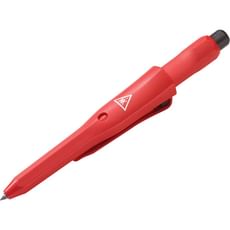
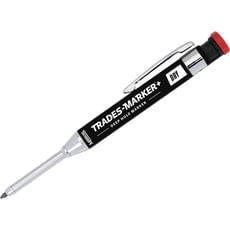
- Deep Hole Marker: A specialised elongated pencil designed for marking in confined spaces, recesses, deep holes, and areas where standard pencils cannot reach. Particularly useful in plumbing, electrical installation, and furniture assembly work.
Who Uses Carpenters Pencils?
- Carpenters and joiners - marking cutting lines, measurements, and joint positions on timber
- General builders - marking measurements across various building materials on construction sites
- Roofers - marking slate, tiles, and timber battens at height where pencils must not roll
- Shopfitters and kitchen fitters - accurate marking for cabinet installation and worktop cutting
- Electricians - marking cable routes and socket positions on walls and timber studwork
- Maintenance engineers - marking components and materials during repairs and installations
- Landscapers - marking timber for decking, fencing, pergolas, and outdoor structures
- Plumbers - marking pipe cutting positions and fixture locations
- DIY enthusiasts - home improvement projects requiring accurate marking on various materials
- Set builders and prop makers - theatrical and film construction work
- Formwork carpenters - marking concrete formwork and shuttering
How to Choose the Right Carpenters Pencils
Lead Grade Selection: Consider the materials you work with most frequently. Hard leads from brands like Faithfull and Bahco are ideal for smooth, planed timber and fine detail work where precision is critical. Medium (HB) leads offer versatility for general carpentry tasks across most surfaces and represent the most popular choice for all-round use. Soft leads excel on rough-sawn timber, concrete blocks, brickwork, and porous materials where harder leads might not leave sufficiently visible marks in dusty site conditions.
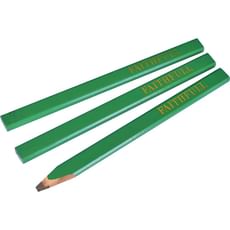
Traditional vs Mechanical: Traditional wooden carpenters pencils from Draper, Faithfull, and Blackedge are economical, widely available, and familiar to most tradespeople. They require sharpening but are inexpensive to replace. Mechanical options from Bahco and Pica eliminate sharpening time, maintain consistent line width throughout the lead's life, and prove more economical long-term through replaceable leads, though they require a higher initial investment. For busy professional sites, the time savings often justify the additional cost.
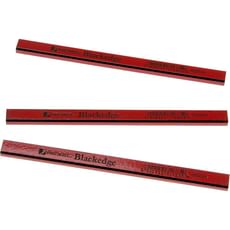
Bulk Purchasing: Professional tradespeople frequently lose or misplace pencils on busy construction sites. Multi-packs and sets from suppliers like Blackedge, Faithfull, and Tracer Marking Tools provide better value and ensure you always have spares available in your tool belt or van. Complete sets including dedicated sharpeners offer comprehensive marking solutions without requiring separate purchases.
Specialist Requirements: For work in confined spaces, recesses, or deep electrical back boxes, consider deep hole markers from Bosch. If you work across diverse materials—from softwood framing to concrete blockwork—assorted packs with different lead grades provide flexibility without carrying multiple individual pencils. Premium brands like Festool and Hultafors offer enhanced durability and superior lead quality for demanding professional use.
Sharpener Compatibility: Ensure you have an appropriate sharpener for your chosen pencils. Standard stationery sharpeners don't accommodate the flat profile—dedicated carpenters pencil sharpeners from Draper or included in Faithfull sets are essential for maintaining the correct lead profile and achieving your preferred point shape.
Popular Accessories
- Carpenters pencil sharpeners - specialist sharpeners designed specifically for flat profile pencils
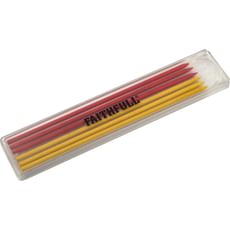
- Replacement leads - refill packs for mechanical carpenters pencils in various grades from Bahco and Pica
- Marking knives - Stanley and Faithfull marking knives for extremely precise marking alongside pencils
- Chalk lines - Strait Line and Tracer marking tools for long straight lines on formwork and flooring
- Combination squares and try squares - marking and measuring tools from Bahco and Stanley
- Marking gauges - for parallel line marking in joinery and furniture making
- Pencil clips and holders - keeping pencils accessible on tool belts and work clothing
- Tape measures - essential companions from Stanley, Komelon, and other trusted manufacturers
- Utility knives - for sharpening traditional wooden pencils and general site work
- Complete marking sets - comprehensive kits from Faithfull with pencils, sharpeners, and other marking tools
Frequently Asked Questions
Why are carpenters pencils flat rather than round?
The flat, rectangular profile serves multiple practical purposes on building sites. It prevents the pencil from rolling away on sloped surfaces like roof pitches, angled workbenches, and scaffolding—crucial when working at height or on uneven ground. The flat shape also provides greater structural strength, making them significantly less likely to break when dropped or subjected to the rough conditions typical of construction work. Additionally, the wide lead allows for bold, visible marking lines on rough surfaces that would barely show with standard pencils.
How do I sharpen a carpenters pencil correctly?
Use a dedicated carpenters pencil sharpener from brands like Draper or a sharp utility knife rather than standard pencil sharpeners, which cannot accommodate the flat profile. When using a knife, shave away the wood casing to expose approximately 10-15mm of lead, then shape the lead to your preferred profile—either a chisel point for fine lines or a broader edge for wider marking. Always cut away from yourself for safety. Mechanical carpenters pencils from Bahco and Pica eliminate this requirement entirely through their push-button lead advancement mechanism.
What's the difference between hard, medium, and soft lead grades?
Hard leads create finer, lighter lines and wear down more slowly, making them ideal for precise marking on smooth, planed timber and detailed joinery work. Medium (HB) leads offer the best all-round performance for general carpentry across most materials and represent the most popular choice. Soft leads produce darker, bolder marks and work best on rough-sawn timber, concrete, brickwork, and other porous surfaces where harder leads might not leave sufficiently visible marks, particularly in dusty site conditions.
Are mechanical carpenters pencils worth the extra cost?
For professional tradespeople, mechanical carpenters pencils from Bahco typically prove more economical long-term despite higher initial cost. They eliminate time spent sharpening throughout the working day, maintain consistent line width regardless of wear, and refillable leads work out considerably cheaper than repeatedly purchasing wooden pencils. The time savings on busy sites—where sharpening interrupts workflow—often justify the investment within weeks. Replacement leads are readily available from Tooled-Up and economical when purchased in multi-packs.
Can I use carpenters pencils on materials other than wood?
Absolutely. Carpenters pencils work effectively on numerous building materials including plasterboard, concrete blocks, brickwork, stone, metal framework, plastic pipes, breeze blocks, and even rough masonry surfaces. Soft lead grades are particularly effective on porous and rough materials where standard pencils would barely leave a mark. The bold, wide marks remain visible even in dusty site conditions and after handling, making them versatile marking tools for general construction work well beyond just carpentry applications.