

Cash Boxes, Lockers, Key Cabinets & Safes

Pay in 3 interest-free payments on purchases from £20-£3000 with  . Learn more.
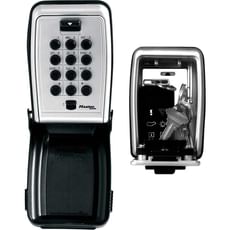
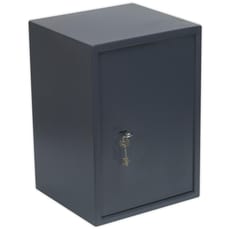
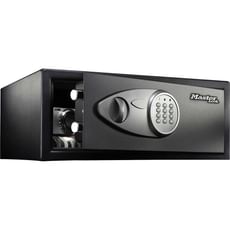
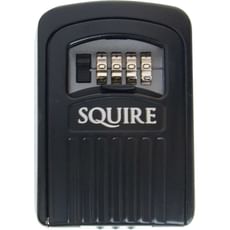
 Loading...
End of content
Error - No more pages to load
About Cash Boxes, Lockers, Key Cabinets & Safes
Securing cash, valuables, keys and important documents is essential for businesses, tradespeople and homeowners alike. The comprehensive range at Tooled-Up.com provides professional-grade security solutions for every requirement, from portable cash boxes perfect for market traders through to heavy-duty safes designed to protect valuable tools and equipment. Whether you're a contractor managing multiple site keys, a retail business handling daily takings, or a facilities manager responsible for building security, having reliable secure storage is fundamental to protecting your assets and maintaining proper control procedures.
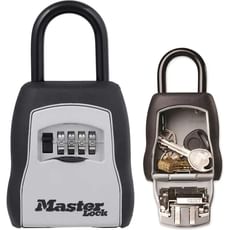
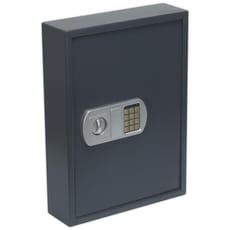
This category encompasses everything from lightweight cash boxes for mobile businesses to floor-standing safes with certified security ratings that meet stringent insurance requirements. Key management solutions including key cabinets and outdoor key safes help organisations maintain proper key control systems across multiple properties or sites. Mail boxes provide secure delivery points for parcels and correspondence when premises are unattended. Each product type is designed with specific security ratings, locking mechanisms and features to match different threat levels, from basic theft deterrent through to comprehensive fire and forced-entry protection.
Modern security storage solutions combine robust physical protection with user-friendly features such as digital keypads, electronic audit trails and master key override systems. From the self-employed tradesperson securing their tools overnight to large organisations managing complex key systems across multiple sites, selecting the right security storage solution provides peace of mind whilst helping to meet insurance policy requirements and regulatory obligations for proper asset control.
Jargon Buster
- Cash Rating: The maximum amount of cash a safe or cash box is certified to protect, as determined by insurance industry standards according to EN 1143-1 or equivalent British Standards. Safes with higher cash ratings offer greater security and allow higher insurance cover limits, typically ranging from £1,000 to £100,000+ for commercial applications.
- Fire Rating: Indicates how long a safe can protect its contents during a fire, typically measured in minutes (30, 60, 120 or 240 minutes). Fire-rated safes are independently tested to ensure internal temperatures remain below critical thresholds—approximately 175°C for paper documents or 50°C for digital media and magnetic storage devices.
- Anchor Points: Pre-drilled holes or mounting plates that allow safes and key cabinets to be securely fixed to walls or floors using expanding anchor bolts, preventing theft of the entire unit. Most insurance policies require safes under 150kg to be properly anchored into solid masonry or concrete substrate.
- British Standard (BS) Rating: Security certification from the British Standards Institution indicating tested levels of resistance to forced entry. Common ratings include BS 2881 for key cabinets, EN 14450 (S1/S2) for secure storage units, and EN 1143-1 (Grades 0-VI) for high-security safes, with higher grades offering greater attack resistance.
- Key Capacity: The number of keys or key bunches a key cabinet or key safe can accommodate, typically indicated by the number of hooks or numbered slots provided. Standard hooks can hold 2-3 keys on a single ring, whilst deeper cabinets accommodate bulky electronic fobs or access cards.
- Override Key: A master key that provides emergency access to digital or combination-locked safes when codes are forgotten or electronic systems fail. Override keys should be stored securely in a separate location and their existence documented in your security procedures.
Who Uses Cash Boxes, Lockers, Key Cabinets & Safes?
- Retail businesses: Shop owners, market traders, café and restaurant operators managing daily cash takings and till floats
- Tradespeople: Builders, electricians, plumbers and other contractors securing valuable power tools, equipment and managing site keys
- Property managers: Landlords, letting agents, estate agents and facilities managers controlling access to multiple properties and tenant keys
- Office administrators: Business managers protecting petty cash, confidential documents and controlling key distribution to staff
- Schools and colleges: Educational facilities managing extensive key systems for multiple buildings and securing valuable equipment
- Healthcare facilities: GP surgeries, care homes, dental practices and hospitals securing medications, patient records and controlled access keys
- Hotels and hospitality: Accommodation providers managing guest keys, securing cash floats and protecting guest valuables
- Construction site managers: Site supervisors controlling access to welfare facilities, tool stores, plant equipment and securing valuable materials
- Vehicle fleet operators: Companies managing multiple vehicle keys, security access fobs and protecting vehicle documentation
- Homeowners: DIY enthusiasts and homeowners protecting valuables, important documents, spare keys and irreplaceable items
- Community facilities: Village halls, sports clubs and community centres managing keys for multiple volunteer keyholders
- Maintenance contractors: Cleaning companies, maintenance firms and utility workers requiring secure key access to client premises
How to Choose the Right Cash Boxes, Lockers, Key Cabinets & Safes
Assess Your Security Requirements
Begin by identifying what you need to protect and the level of security required. Consider the value of contents, insurance policy requirements and potential threats. Cash and high-value items require safes with appropriate cash ratings certified to EN or British Standards, whilst basic key management may only need a lockable cabinet. Check your insurance policy documentation for specific requirements regarding minimum security ratings, anchor fixing methods and whether fire protection is mandated. Different security products offer varying levels of protection—from basic deterrent through to certified attack-resistant construction.
Consider Size and Capacity
Measure what you need to store and allow for future growth. Key cabinets are sized by hook capacity—calculate the number of keys you manage currently and add 25-30% for expansion. For safes, consider not just current needs but potential future requirements for storing additional valuables, tools or documents. Remember that external dimensions don't reflect useable internal space once locking mechanisms, fire-resistant cladding and door construction are accommodated. For tool storage, measure your most valuable power tools including any cases or batteries to ensure adequate internal dimensions.
Choose the Right Locking System
Key locks offer simplicity and reliability but require secure key management. Digital keypads provide keyless access with the ability to change codes easily and track access times through electronic audit trails. Biometric locks offer high security with fingerprint recognition, eliminating code-sharing risks. Consider who needs access and how often codes might need changing—retail environments with staff turnover benefit from easily-reprogrammable systems. For multiple users, systems with individual user codes (typically 4-8 digit PINs) and audit trail functionality provide better accountability and security control.
Installation Location and Fixing
Determine where your security storage will be located and what fixing options are available. Safes under 150kg typically require fixing to walls or floors using expanding anchor bolts to meet insurance requirements. Wall-mounting saves floor space but requires solid brick or blockwork—never fix into plasterboard or hollow walls. Floor-standing safes need solid concrete bases capable of supporting the weight. Key cabinets near entry points provide convenient access but may be more vulnerable to opportunistic theft. Consider weatherproofing requirements for outdoor installations, particularly for key safes used by contractors, care workers or emergency services.
Fire Protection Needs
If protecting important documents, computer backup media or irreplaceable items, consider fire-rated safes independently tested to recognised standards. Standard security safes offer excellent theft protection but may not withstand fire temperatures. Fire-rated models are tested to protect contents for specific durations (30, 60, 120 or 240 minutes), with different certifications for paper documents versus electronic media which requires lower internal temperatures. Paper survives to approximately 175°C, whilst CDs, USB drives and hard drives require temperatures below 50°C.
Portability versus Fixed Installation
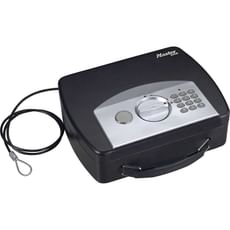
Cash boxes offer portability for mobile businesses, market traders or moving money between locations such as banking daily takings. However, their portability also makes them easier to steal if left unattended. Fixed installation safes and key cabinets provide significantly better security for permanent locations but lack flexibility. Tooled-Up stocks both portable security solutions with carry handles and cable attachment points, plus permanent installation safes with pre-drilled anchor points and fixing bolt kits for maximum security.
Popular Accessories
- Fixing bolts and anchor kits: Professional mounting hardware including expanding anchor bolts, coach screws and security fixings for securing safes and cabinets to walls and concrete floors
- Key tags and labels: Identification systems including numbered tags, colour-coded labels and key fob organisers for tracking and managing keys within cabinets
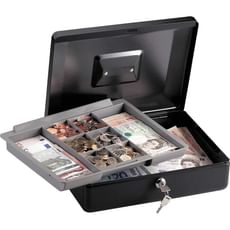
- Cash trays and coin organisers: Internal compartments and removable trays for sorting and counting money within cash boxes and safes
- Additional shelving: Extra internal shelves and adjustable shelf systems for safes to maximise storage organisation and separate different items
- Fireproof document bags: Additional fire protection for particularly important papers, passports or certificates stored within standard safes
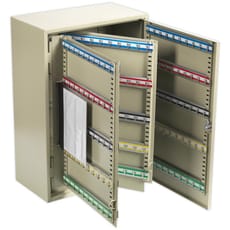
- Key hooks and racks: Replacement or additional numbered hooks, key rings and hanging systems for key cabinets
- Dehumidifier sachets: Silica gel moisture control products for safes storing documents or preventing condensation damage to tools and equipment
- Security cables: Additional securing options including coiled steel cables for temporarily securing portable cash boxes to fixed points
- Replacement batteries: 9V and AA batteries for digital keypad systems and electronic locking mechanisms
- Key safe covers: Weatherproof protective covers for outdoor key safes to extend lifespan and improve weather resistance
Safety Information
Installation Safety
Safes and secure storage units can be extremely heavy, with even small safes weighing 25-50kg and larger floor-standing models exceeding 200kg. Always check the product weight before attempting to move it and use appropriate lifting equipment such as sack trucks, pallet jacks or sufficient personnel when moving and installing these products. Follow manual handling guidelines from the HSE and never attempt to lift heavy safes without proper equipment or assistance. Follow manufacturer guidelines for proper installation and ensure wall or floor fixings are suitable for the weight and installed into solid substrate—never fix into plasterboard, hollow walls or weak masonry. Consider professional installation services for larger safes, particularly floor-standing models requiring positioning and levelling.
Emergency Access Procedures
Always maintain secure emergency access methods such as override keys or master codes stored separately from the main location. Ensure trusted personnel know where to access emergency keys or codes in genuine emergencies. Document your emergency access procedures and review them annually. Never store override keys in obvious locations near the safe or share access codes insecurely via unencrypted email or written notes. For business premises, ensure at least two responsible persons have emergency access information stored securely off-site.
Regular Maintenance
Check locking mechanisms regularly—quarterly for frequently-used safes—and lubricate moving parts according to manufacturer recommendations, typically using light graphite powder for locks rather than oil which attracts dust. Test digital keypads monthly and replace batteries before they fail completely, as low battery warnings may only provide limited advance notice. Verify that wall and floor fixings remain secure, particularly after any building work, renovations or vibrations that might affect them. Inspect weather seals on outdoor key safes annually and replace deteriorated seals to maintain weather resistance.
Frequently Asked Questions
What cash rating do I need for my safe?
The cash rating determines the maximum cash value your insurance will typically cover when stored in the safe. For most small businesses, a £1,000-£2,000 cash rating is sufficient for overnight storage of daily takings. Retail businesses with higher turnover may require £5,000-£10,000 ratings. Always check with your insurance provider for their specific requirements as policies vary significantly. Remember that the cash rating is typically 10 times higher than the valuables rating—a safe rated for £2,000 cash would generally cover only £200 in valuables such as jewellery or watches.
Do I need to bolt my safe down?
Yes, in almost all cases. Insurance policies typically require safes under 150kg to be fixed securely to a solid floor or wall using appropriate expanding anchor bolts. Even heavier safes benefit from fixing as it prevents removal by multiple thieves or mechanical aids. Always use the manufacturer's recommended anchor points and fixing bolts supplied or specified, ensuring they're installed into solid masonry, concrete or brick—never plasterboard, timber floors or hollow walls. Floor fixing is generally preferred over wall mounting for safes over 50kg as it provides better stability and security.
How many keys can a typical key cabinet hold?
Key cabinets are rated by hook capacity, typically ranging from 10 hooks for small domestic use through to 300+ hooks for large commercial installations. A standard hook can comfortably hold 2-3 individual keys on a single key ring. For accurate sizing, count your current keys, group them logically by property or function, and add 25-30% capacity for future growth. Consider deeper cabinets (100mm+ depth) if you need to store bulky electronic key fobs, proximity access cards or keys with large identification tags attached.
What's the difference between a key cabinet and a key safe?
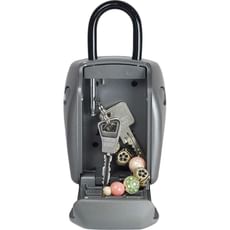
Key cabinets are typically mounted indoors in secure areas and designed to organise and control access to multiple keys for numerous properties or areas, often with a simple key lock or basic digital lock. They focus on organisation and access control rather than high security. Key safes are weatherproof units mounted externally to provide secure outdoor key access for authorised visitors such as carers, contractors, cleaners or emergency services, usually with combination or digital locks. Key safes prioritise weather resistance and preventing unauthorised access whilst allowing legitimate keyholders to retrieve keys without entering the building.
Can I keep important documents in a regular safe?
Standard security safes protect excellently against theft but offer no fire protection whatsoever. Paper documents begin to char and become damaged at relatively low temperatures (around 175°C), which can be reached within minutes in a typical house fire even if the safe's exterior steel remains intact. For important documents such as property deeds, birth certificates, marriage certificates, passports or digital media including USB drives and external hard drives, invest in a safe with a certified fire rating appropriate for your needs—minimum 30 minutes for basic document protection, 60+ minutes for comprehensive protection. Fire-rated safes contain special insulating materials that keep internal temperatures low during fires.