

Cash Boxes

Pay in 3 interest-free payments on purchases from £20-£3000 with  . Learn more.
 Loading...
End of content
Error - No more pages to load
About Cash Boxes
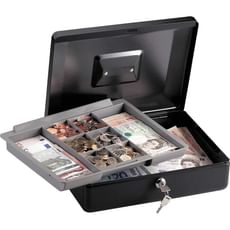
Cash boxes are essential portable security containers designed to safely store and organise cash, coins, cheques, and small valuables. Constructed from robust steel with durable powder-coated finishes, these practical security solutions are indispensable for anyone who handles cash regularly, whether operating a market stall, managing petty cash on construction sites, running a small retail business, or simply needing secure money storage at home. Featuring reliable key lock mechanisms and thoughtfully designed interiors with removable coin trays, cash boxes provide an effective first line of defence against theft whilst keeping different denominations neatly organised and readily accessible.
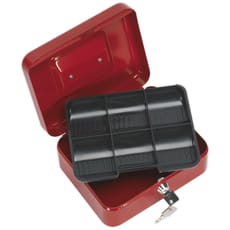
The cash boxes available from Tooled-Up.com typically feature heavy-gauge steel construction for enhanced security, carry handles for easy transportation, and compartmentalised trays with spring-loaded clips to separate coins by denomination. Sizes range from compact small models ideal for limited cash handling and occasional use, through to larger medium boxes capable of accommodating substantial cash floats and daily takings. These versatile containers are purpose-built to balance portability with security, making them suitable for both static locations and mobile trading environments where cash needs to be transported safely.
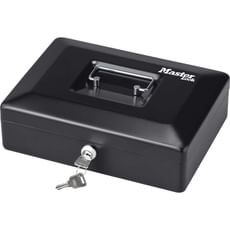
Trusted brands including Master Lock and Sealey manufacture the cash boxes stocked by Tooled-Up, bringing decades of security expertise and quality engineering to these everyday business essentials. Whether you need a basic lockable box for home use, a compact model for weekend market trading, or a robust medium-sized unit for daily retail operations, these reliable products offer practical cash security at accessible price points, helping tradespeople and business owners protect their hard-earned takings.
Jargon Buster
- Key Lock: A traditional mechanical locking mechanism operated by a physical key, providing straightforward secure access control. Most cash boxes include two keys as standard to prevent lockouts if one key is misplaced or kept separately for security purposes.
- Coin Tray: A removable compartmentalised insert that sits inside the cash box to organise coins by denomination. Often features spring-loaded clips to hold the tray securely in position during transport and keep coins separated from notes, receipts, and other items.
- Powder-Coated Steel: Steel that has been treated with a durable, electrostatically-applied coating that is then cured under heat. This finish provides superior resistance to scratches, chips, rust, and corrosion compared to standard painted finishes, extending the working life of the cash box.
- Cash Float: The initial amount of money (typically coins and small denomination notes) kept in a cash box at the start of trading to provide change for customers. A well-organised float ensures smooth transactions throughout the day.
- Petty Cash: A small reserve of cash kept on hand for minor business expenses such as emergency supplies, site refreshments, or small purchases. Usually stored securely in a cash box with a record book documenting all transactions for accounting purposes.
- Carry Handle: An integrated or fold-down handle fitted to the top of the cash box for convenient transportation. Particularly valuable for market traders, mobile businesses, and tradespeople who need to move cash between locations securely.
Who Uses Cash Boxes?
Cash boxes serve a diverse range of users across numerous industries and situations:
- Small business owners, independent retailers, and shopkeepers managing daily takings and till floats
- Market traders, car boot sale vendors, and craft fair stallholders requiring portable cash security
- Construction site managers, foremen, and site supervisors handling petty cash for materials and expenses
- Tradespeople including electricians, plumbers, joiners, and decorators receiving cash payments on jobs
- School administrators, teachers, and PTA volunteers managing trip money, fundraising proceeds, and club funds
- Charity volunteers and community groups collecting donations and managing event receipts
- Publicans, café owners, and hospitality managers securing till contents and conducting cash reconciliation
- Event organisers, festival operators, and venue managers handling admission fees and vendor payments
- Office managers and administrators responsible for petty cash systems and expense reimbursements
- Caravan and motorhome owners storing holiday spending money securely whilst travelling
- Landlords collecting rent payments and managing property maintenance funds
- DIY enthusiasts and homeowners storing spare cash, coin collections, and valuable small items
How to Choose the Right Cash Boxes
Size and Capacity: Consider your typical cash handling volume carefully. Small cash boxes (approximately 150-200mm wide) suit occasional use, weekend trading, or limited transactions with modest floats. Medium boxes (200-300mm wide) accommodate higher volumes of notes and coins, making them ideal for busy retail environments, daily market trading, or construction sites where multiple workers need petty cash access throughout the day.
Security Features: All quality cash boxes feature key lock mechanisms as standard, but examine the steel gauge used in construction—heavier-gauge steel provides significantly better resistance to forced entry attempts. Verify that at least two keys are supplied, and plan where spare keys will be stored securely (never in the same location as the cash box itself). Consider the overall build quality, including hinge strength and lid closure security.
Interior Organisation: Prioritise models with removable coin trays featuring multiple compartments to separate different denominations efficiently. Spring-loaded clips help keep trays secure during transport, preventing coins from mixing. Some models include additional features such as note clips, receipt compartments, or separate sections for organising paper money and documentation.
Portability Requirements: If you transport your cash box regularly between locations—such as from vehicle to market stall or between job sites—prioritise models with comfortable, sturdy carry handles that won't dig into your hand when the box is fully loaded. Check the empty weight, as larger steel constructions can become surprisingly heavy once filled with coins, particularly if you carry a substantial float.
Brand Reputation: Established security brands like Master Lock and Sealey have proven track records for quality construction, reliable locking mechanisms, and durable finishes. These manufacturers specialise in security products and understand the practical demands placed on cash boxes in real-world trading environments, ensuring your investment provides dependable long-term protection.
Popular Accessories
Enhance the functionality and security of your cash handling system with these complementary products:
- Padlocks and security chains for securing cash boxes to fixed objects when temporarily unattended at stalls or in vehicles
- Coin counters and sorting trays to speed up cash reconciliation and banking preparation at end of trading
- Banking bags and security pouches for safe transportation of takings to banks or secure storage
- Duplicate receipt books and invoice pads for maintaining transaction records
- Security safes and locking cabinets for overnight storage of cash boxes containing significant amounts
- Petty cash record books providing audit trails for expense tracking and accounting purposes
- Counterfeit detection pens to verify note authenticity during busy trading periods
- Key cabinets and key safes for secure storage of spare cash box keys away from the primary location
- Lockable toolboxes and storage boxes for additional security options when transporting cash alongside tools
- Money counting scales for quickly verifying coin quantities during banking preparation
Frequently Asked Questions
What size cash box do I need for a market stall or car boot sale?
A medium-sized cash box typically proves ideal for market trading and car boot sales, offering sufficient capacity for a reasonable cash float (usually £50-100 in mixed denominations) plus accumulated takings throughout a trading day, whilst remaining comfortably portable. Look for models around 200-250mm wide with a well-designed coin tray system featuring multiple compartments. This size accommodates busy trading periods without becoming unwieldy to transport between your vehicle and stall.
Are cash boxes fireproof or waterproof?
Standard cash boxes are designed primarily for security against theft and unauthorised access rather than fire or water protection. They are not fireproof and offer only minimal water resistance from their close-fitting lids. If fire protection is a genuine concern for your situation—such as storing irreplaceable documents alongside cash—you'll need to invest in specifically rated fire-resistant safes or document boxes with certified fire protection ratings and proper sealing systems.
What should I do if I lose the keys to my cash box?
Replacement keys are generally not available from manufacturers for security reasons, as unique key codes prevent unauthorised duplication. If you lose both keys, you'll likely need to force the lock open (destroying its security function) or contact a qualified locksmith who may be able to pick or drill the lock. This is precisely why storing the spare key in a secure but separate location from the cash box itself—such as a key cabinet at home if the cash box travels to work—is absolutely crucial.
How can I secure my cash box when working at temporary locations?
When using a cash box at temporary locations like market stalls, outdoor events, or job sites, consider using a chain and padlock to secure it to a fixed point such as a table leg, stall frame, or vehicle fixture, preventing opportunistic grab-and-run theft. When transporting cash boxes in vehicles, always keep them out of sight in a locked boot rather than on visible seats. For overnight security, transfer the cash box to a proper safe or locked premises rather than leaving it in vehicles.
What's the difference between a cash box and a proper safe?
Cash boxes are portable, relatively lightweight security containers designed for convenient access, active cash handling, and regular transport, typically secured with straightforward key locks. Safes are substantially heavier, often floor or wall-mounted permanent installations, offering superior security against forced entry, fire protection in many cases, and usually featuring more sophisticated locking mechanisms including combination locks or digital keypads. Cash boxes suit active daily cash handling and mobile trading, whilst safes are better suited for long-term secure storage of larger amounts and valuable items overnight or between trading periods.