

Central Heating Chemicals
Pay in 3 interest-free payments on purchases from £30-2000 with  . Learn more.
 Loading...
End of content
Error - No more pages to load
About Central Heating Chemicals
Central heating chemicals are specialist maintenance products formulated to keep domestic and commercial heating systems operating efficiently, reliably and economically. This essential category encompasses two primary product types: system cleansers that remove accumulated sludge, limescale and corrosion deposits, and system inhibitors that provide ongoing protection against future deterioration. Whether commissioning a new installation, performing routine maintenance, or resolving performance issues such as cold spots on radiators or noisy boilers, the correct chemical treatment can significantly extend equipment lifespan whilst reducing energy consumption and preventing expensive breakdowns.
Over time, all central heating systems accumulate iron oxide sludge (magnetite), limescale deposits from hard water, and general corrosion products that restrict water flow, reduce heat transfer efficiency, and cause premature component failure. Research demonstrates that properly maintained systems with appropriate chemical treatment can operate up to 15% more efficiently than untreated systems. System cleansers work by breaking down and suspending these deposits so they can be flushed out during servicing, whilst inhibitors form a protective layer on internal surfaces to prevent further corrosion and scale formation.
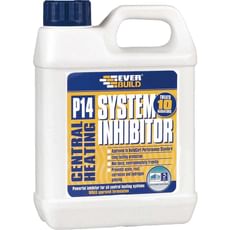
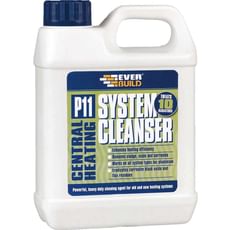
Tooled-Up.com stocks professional-grade central heating chemicals from Everbuild, a trusted manufacturer whose products are widely specified by heating engineers and plumbers throughout the UK. The range includes powerful system cleansers like the P11 formula that prepares systems for optimal performance by removing commissioning residues and restoring circulation, alongside long-lasting inhibitors such as the P14 treatment that protects against corrosion and limescale in both new installations and existing systems. These products are compatible with modern mixed-metal systems including aluminium heat exchangers, plastic tanks and microbore pipework.
Jargon Buster
- System Cleanser: A chemical formulation designed to remove existing sludge, rust, limescale and other debris from central heating systems. Typically circulated through the system for several hours before being flushed out completely prior to refilling with fresh water and inhibitor.
- System Inhibitor: A protective chemical added to central heating water to prevent internal corrosion, limescale formation and bacterial growth. Remains in the system long-term, typically requiring renewal every 5-10 years or when the system is drained for repairs or modifications.
- Magnetite: Black iron oxide sludge that forms through corrosion of steel radiators and pipework. Accumulates in low-flow areas and can cause blocked pipes, noisy pumps, cold spots on radiators (particularly at the bottom) and boiler failure if left untreated.
- Limescale: Calcium carbonate deposits that precipitate from hard water when heated. Can coat heat exchangers in boilers, reducing efficiency and potentially causing overheating and failure. Particularly problematic in hard water areas across South East England, East Anglia and parts of the Midlands.
- Power Flushing: A thorough cleaning process using specialist equipment to force cleaning chemicals and water through the system at high velocity, removing stubborn deposits that regular flushing cannot shift. Often performed before applying fresh inhibitor to ensure maximum protection.
- Dosing: The process of adding the correct quantity of chemical to a heating system, typically via a radiator, filling loop, or dedicated dosing point. Correct dosing rates based on system volume are critical for effective protection and to avoid under or over-treatment.
Who Uses Central Heating Chemicals?
Central heating chemicals are essential products for various professionals and situations:
- Heating Engineers and Gas Safe Registered Technicians: Using cleansers during system commissioning, annual boiler services and repair work to maintain optimal performance and meet warranty requirements
- Plumbers and Plumbing & Heating Installers: Adding inhibitors to new installations and during system modifications or extensions to protect components from day one
- Maintenance Contractors: Carrying out preventative maintenance programmes on commercial and residential heating systems to prevent costly emergency callouts
- Landlords and Property Managers: Maintaining heating systems in rental properties to meet legal obligations, ensure tenant comfort and prevent complaints about inadequate heating
- Facilities Managers: Responsible for heating system performance and reliability in commercial buildings, schools, hospitals and public facilities
- Competent DIY Enthusiasts: Maintaining their own domestic heating systems to improve efficiency, reduce energy bills and prevent expensive repairs
- Boiler Service Companies: Treating systems to comply with manufacturer warranty conditions, which often stipulate annual inhibitor checks and proof of treatment
How to Choose the Right Central Heating Chemicals
System Condition: For older systems displaying signs of poor circulation, cold spots on radiators, or discoloured water when bled, start with a thorough system cleanser like the Everbuild P11. New or recently cleaned systems require only an inhibitor for ongoing protection. Checking the colour of water from radiator bleed valves provides a good indication—dark, murky or rust-coloured water suggests cleaning is urgently needed, whilst clear or slightly tinted water indicates the system is relatively clean.
Water Hardness: Properties in hard water areas (particularly South East England, East Anglia and parts of the Midlands) require inhibitors with enhanced limescale protection to prevent calcium carbonate buildup on heat exchangers. Check your local water authority's hardness rating online or look for visible scale deposits on kettles, taps and shower screens as an indicator. Hard water areas benefit from more frequent inhibitor checks.
System Type and Materials: Ensure compatibility with your system components. Modern combination and system boilers may contain aluminium heat exchangers, whilst older conventional systems typically feature all-steel construction. Quality multi-metal inhibitors like the Everbuild P14 are specifically formulated to protect mixed-metal systems safely without causing galvanic corrosion between dissimilar metals. Also verify compatibility with plastic tanks and microbore pipework if present.
System Volume: Calculate your system's capacity to determine the correct quantity of chemical required. As a rough guide, a typical three-bedroom semi-detached house has a system volume of 80-120 litres. Count radiators (approximately 8-12 litres each depending on size), plus pipework and boiler volume. Product packaging provides clear dosing instructions based on system volume—accurate dosing is critical for effective protection.
Boiler Warranty Requirements: Many boiler manufacturers stipulate annual inhibitor checks and renewal as a warranty condition. Some require specific inhibitor types or concentrations. Always check your boiler documentation and use products meeting relevant British Standards (BS 7593) to maintain warranty validity. Keep records of treatment dates and products used as proof of compliance.
Popular Accessories
- Magnetic System Filters: Capture magnetite particles before they circulate through the system, working alongside chemical treatment for maximum protection and easier maintenance
- Dosing Bottles and Measuring Jugs: Ensure accurate chemical dosing for optimal protection without waste—particularly important for concentrate formulations
- Radiator Keys: Essential for bleeding radiators before and after chemical treatment to remove air locks and check water colour
- TDS Meters: Test instruments for checking inhibitor concentration levels during maintenance visits to determine when retreatment is necessary
- Flushing Pumps: Professional equipment for power flushing when using system cleansers to achieve thorough debris removal
- Water Test Kits: Check pH levels and inhibitor concentration to determine when the system requires retreatment or if dosing was adequate
- Filling Loop Connectors: Facilitate easier dosing of chemicals into sealed heating systems without disturbing connections
- Buckets and Hoses: Essential for draining down and flushing procedures when treating systems with cleanser
- Chemical-Resistant Gloves: Protect hands when handling concentrated products during dosing and system treatment
Safety Information
Personal Protection: Always wear appropriate PPE including chemical-resistant gloves and eye protection when handling concentrated products. Splashes can cause skin and eye irritation. Ensure adequate ventilation when working with these chemicals, particularly in confined spaces such as airing cupboards or plant rooms. Wash hands thoroughly after handling and before eating or drinking.
COSHH Compliance: Professional users must conduct COSHH (Control of Substances Hazardous to Health) assessments before using these products. Familiarise yourself with the product safety data sheet (SDS) available from Tooled-Up or the manufacturer, which details hazards, safe handling procedures and emergency measures. Keep SDS readily accessible on site during treatment work.
Storage: Store chemicals in original containers with labels intact, away from children, pets and foodstuffs. Keep in a cool, dry place away from direct sunlight and frost. Never decant into unlabelled containers or drinks bottles as this creates a serious poisoning risk. Check containers regularly for damage or leakage.
Disposal: Spent cleaning chemicals and contaminated flush water must be disposed of responsibly according to local authority regulations and environmental legislation. Never discharge directly into watercourses, surface drains or soakaways without appropriate neutralisation. Contact your local water authority for guidance on disposal of larger quantities from commercial systems. Small domestic quantities can usually be disposed of via foul sewer drains with adequate dilution.
System Safety: Ensure heating systems are switched off and cooled before draining or adding chemicals. Be aware of pressure release when opening filling loops or radiator valves—hot water can cause scalding. After treatment, check all connections for leaks before leaving the system unattended. Re-pressurise sealed systems to the manufacturer's recommended level (typically 1.0-1.5 bar when cold).
Frequently Asked Questions
How often should I add inhibitor to my central heating system?
System inhibitor should be checked annually during boiler servicing and topped up if concentration has fallen below effective levels. A complete system drain and fresh inhibitor dose is typically required every 5-10 years, or whenever significant work is carried out that involves draining the system. Many modern boiler warranties require annual verification that adequate inhibitor is present—your heating engineer can test this during service visits. If you've had a new boiler fitted to an existing system, ensure inhibitor is added immediately to protect the new equipment.
Can I add central heating chemicals myself or do I need a professional?
Competent DIYers can add inhibitor to their own systems following manufacturer instructions carefully, provided they understand how to calculate system volume and access filling points safely. However, system cleansing often requires professional equipment (particularly power flushing machines) and expertise to achieve thorough results and proper flushing of spent cleanser. Any work involving gas boilers or sealed system pressure adjustments must be carried out by Gas Safe registered engineers. If you're unsure about system volume calculations or dosing procedures, consult a heating professional to avoid under or over-treatment.
What's the difference between a cleanser and an inhibitor?
A system cleanser is a temporary treatment that actively removes existing deposits, sludge and scale during a limited circulation period. It's circulated through the system for several hours (typically 1-4 hours depending on contamination level) then completely flushed out before refilling. An inhibitor is a long-term protective treatment that remains in the system water to prevent future corrosion and scale formation. Think of cleansing as a deep clean to remove what's already there, whilst inhibitor is ongoing protection to prevent future problems—most systems benefit from both treatments, with cleansing followed by inhibitor dosing.
Will central heating chemicals fix noisy radiators and boilers?
Noise caused by sludge buildup, scale deposits or trapped air can often be significantly reduced or eliminated with appropriate chemical treatment. System cleanser removes deposits that cause kettling sounds in boilers and gurgling in radiators and pipework. However, mechanical issues like faulty pumps, incorrectly sized pipework, or system design problems require physical repairs rather than chemical treatment. If noise persists after chemical treatment and thoroughly bleeding all radiators, consult a heating engineer to diagnose potential mechanical faults.
How do I know if my heating system needs cleaning?
Common signs include cold spots on radiators (particularly at the bottom where sludge settles), some radiators heating poorly whilst others work fine, excessive noise from the boiler or radiators, frequent boiler shutdowns or lockouts, slow heating response times, increased energy bills without explanation, or black, brown or rust-coloured water when bleeding radiators. Systems over 5 years old without previous treatment almost certainly benefit from cleaning and fresh inhibitor. If radiators need bleeding frequently, this often indicates corrosion is producing hydrogen gas—a sign that inhibitor levels are inadequate.