

Centre Punches

Pay in 3 interest-free payments on purchases from £20-£3000 with  . Learn more.
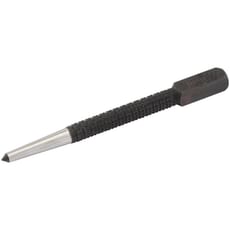


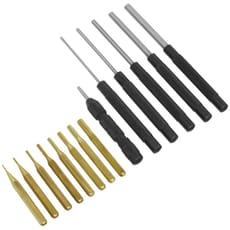

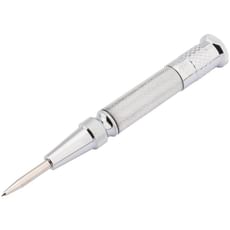
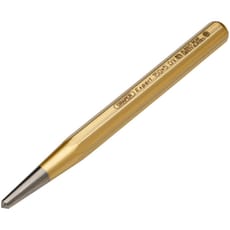
 Loading...
End of content
Error - No more pages to load
About Centre Punches
Centre punches are precision marking tools essential for anyone working with metal, hard plastics, and other materials that require accurate drilling. These hand tools create a small, controlled indentation at the exact point where a hole needs to be drilled, preventing drill bits from wandering or skating across smooth surfaces. This simple yet crucial step ensures professional results, reduces material waste, and minimises the risk of broken drill bits or damaged workpieces. Whether you're a professional fabricator working with steel sheet or a DIY enthusiast tackling home improvement projects, a quality centre punch is an indispensable addition to your toolkit.
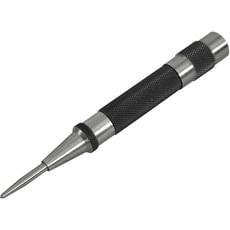
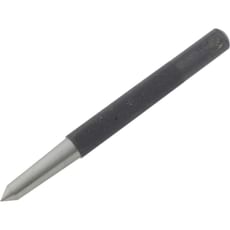
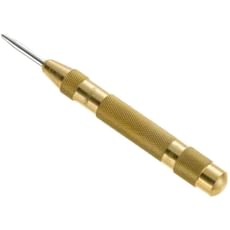
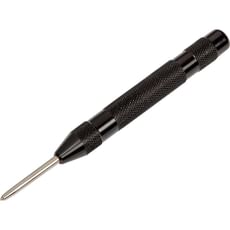
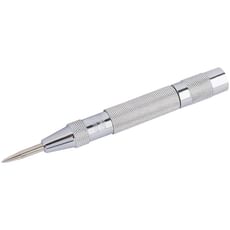
The range at Tooled-Up.com encompasses both traditional manual centre punches and modern automatic versions to suit different working styles and applications. Manual centre punches require a hammer strike to create the indentation, offering excellent control and economy for occasional use. Automatic centre punches feature built-in spring mechanisms that deliver consistent striking force with simple downward pressure, eliminating the need for a separate hammer and making them ideal for repetitive marking tasks and site work. Many automatic models now include adjustable striking mechanisms, allowing users to vary the force depending on material hardness.
Available from trusted brands including Draper, Bahco, Facom, Faithfull, Sealey, and Stanley, centre punches come in various lengths and tip configurations to accommodate different workshop and site requirements. From compact pocket-sized models perfect for mobile tradespeople to heavy-duty workshop versions designed for demanding metalworking applications, Tooled-Up stocks centre punches in both metric and imperial sizes. Multi-piece sets offer excellent value for those requiring multiple sizes, whilst individual tools allow professionals to select specific configurations for specialised tasks.
Jargon Buster
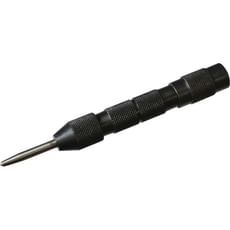
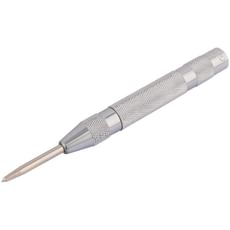
- Automatic Centre Punch: A spring-loaded tool that creates an indentation when downward pressure is applied, eliminating the need for a hammer. The internal spring mechanism stores and releases energy automatically, making it faster and more convenient for repetitive marking tasks, particularly when working in confined spaces or on site.
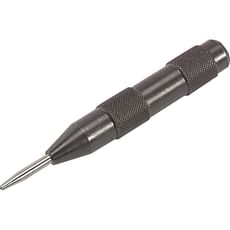
- Adjustable Centre Punch: An automatic centre punch featuring a rotating end cap or collar that varies the spring tension, allowing you to control the striking force. This adjustability enables deeper indentations in harder materials like mild steel or shallower marks in softer materials such as aluminium.
- Point Angle: The angle ground into the punch tip, typically 90 degrees for general-purpose applications. This angle determines how effectively the punch grips the material and guides the drill bit into position. A sharper angle suits precision work, whilst blunter angles work better for heavy-duty applications.
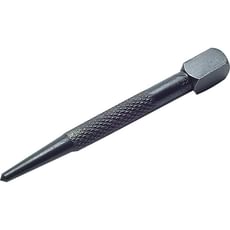
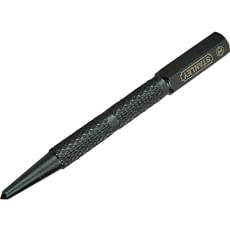
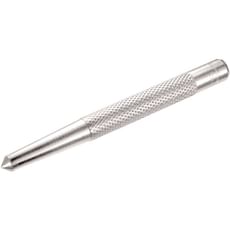
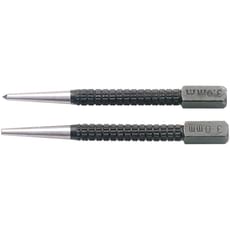
- Knurled Grip: A diamond-pattern texture machined into the body of the punch that provides secure handling even when hands are oily or when wearing work gloves. This feature is particularly important for site work and workshop environments where grip security is essential for accuracy and safety.
- Hardened Steel Tip: The working end of the centre punch, heat-treated to increase hardness and wear resistance. Quality hardened tips maintain their point geometry over thousands of uses without deforming, mushrooming, or losing effectiveness when marking tough materials.
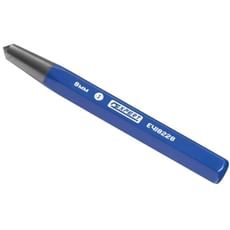
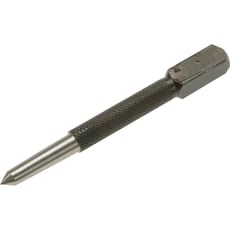
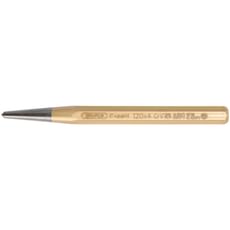
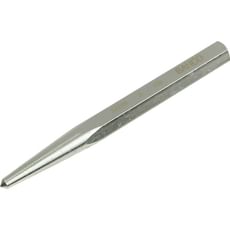
- Hexagonal Shank: A six-sided body profile that prevents the punch from rolling off work benches and provides additional grip surfaces. This design feature is common on professional-grade centre punches and adds practical convenience during busy workshop sessions.
Who Uses Centre Punches?
- General Engineers and Fabricators - marking hole positions on steel, aluminium, and other metals before drilling or machining operations
- Automotive Mechanics and Vehicle Technicians - creating drilling guides on bodywork, chassis components, and metal panels during vehicle repair and modification
- Sheet Metal Workers - precisely locating holes in ductwork, cladding, and thin gauge materials for HVAC installations and architectural metalwork
- Maintenance Engineers - marking fixing points and drilling positions during plant maintenance, equipment installation, and repair work
- Plumbers and Heating Engineers - creating starter points on pipework brackets, metal fixtures, and radiator mountings before drilling
- Joiners and Carpenters - marking metal hardware, hinges, door furniture, and fixing brackets that require accurate drilling
- Electricians - marking metal back boxes, cable trays, mounting plates, and fixing points for electrical installations
- Agricultural Engineers - marking drilling positions on machinery panels, trailer frames, and metal implements during repair and modification work
- Model Makers and Hobbyists - precision marking for detailed metalwork, plastic model construction, and craft projects
- DIY Enthusiasts - home improvement projects requiring accurate drilling in various materials including metal door frames, garden furniture, and household fixtures
How to Choose the Right Centre Punches
Manual or Automatic Operation: Traditional manual centre punches offer excellent control over striking force and represent economical choices for occasional use, but require a separate hammer. Automatic centre punches are faster, more convenient for repetitive tasks, and ideal for site work where carrying multiple tools is impractical. Consider how frequently you'll use the tool and whether you typically have a hammer readily available.
Adjustability Requirements: If you work across various materials with different hardnesses, an adjustable automatic centre punch allows you to dial in appropriate striking force. Softer materials like aluminium and brass require gentler impacts to prevent over-penetration, whilst mild steel and stainless steel need more force for adequate indentation depth. Brands like Faithfull offer adjustable models with easy-to-use adjustment mechanisms.
Size and Length Considerations: Compact centre punches typically measuring 100-125mm fit easily in tool belts and pockets, making them excellent for mobile tradespeople and site work. Longer versions around 150mm or more provide better reach into recessed areas and offer improved visibility of the marking point. Consider both portability needs and the typical accessibility of your work.
Build Quality and Materials: Professional-grade centre punches from manufacturers like Bahco, Facom, and Draper Expert use hardened carbon steel or vanadium steel construction with proper heat treatment for extended tool life. Look for hardened tips that resist mushrooming and maintain their point geometry through thousands of uses. Knurled or textured grips ensure secure handling in oily workshop conditions and when wearing gloves.
Point Geometry: Most general-purpose centre punches feature a 90-degree point angle, suitable for guiding standard jobber drill bits. The tip diameter affects indentation size – smaller tips suit precise work with pilot holes and small drill bits, whilst larger tips work better for heavy-duty applications and bigger bits. Some specialist applications may require different angles.
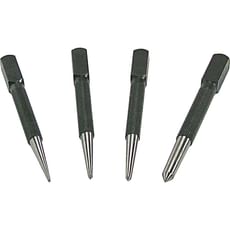
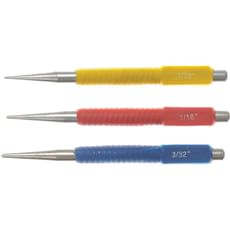
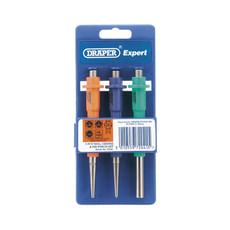
Sets Versus Individual Tools: Multi-piece sets from brands like Blue Spot and Draper offer excellent value and provide multiple sizes for different applications, typically including 1/32", 1/16", and 3/32" imperial sizes or metric equivalents. However, if you have specific requirements or predominantly use one size, purchasing individual centre punches in your most-used configurations may prove more economical.
Popular Accessories
- Engineers Hammers - ball pein hammers in 8oz to 16oz weights for controlled striking of manual centre punches
- Scriber Sets - precision marking tools for laying out accurate drilling positions and reference lines before punching
- Metal Rules and Tape Measures - accurate measurement tools for locating punch points to specified dimensions
- Combination Squares and Engineers Squares - ensuring perpendicular and parallel marking positions for accurate hole placement
- Engineers Blue or Marking Fluid - coating materials to make punch indentations and scribed lines more visible on shiny metal surfaces
- HSS Drill Bit Sets - high-speed steel bits designed to work effectively with centre punch indentations in metal
- Pin Punches and Drift Punches - complementary marking and alignment tools for comprehensive workshop capability
- Tool Rolls and Punch Storage Cases - protecting centre punches and related marking tools during transport and storage
- Safety Glasses and Goggles - essential PPE when striking manual centre punches to protect against metal fragments
- Engineers Vices and Clamps - securing workpieces firmly whilst marking and punching for safety and accuracy
- Cutting Fluid and Lubricants - reducing friction and heat during drilling operations that follow centre punching
Safety Information
Personal Protective Equipment: Always wear safety glasses or goggles when using centre punches, particularly manual types struck with a hammer. Small metal fragments and chips can be ejected during the punching process, posing serious eye injury risks. If working extensively with metal, consider wearing safety gloves to protect hands from sharp edges, though ensure gloves don't compromise grip security on the tool itself.
Securing Workpieces: Never attempt to centre punch material held in your hand or inadequately secured. Always clamp or vice workpieces firmly to prevent movement during punching. Unsecured items can slip unexpectedly, causing the punch to strike your hand, fingers, or other body parts. Use appropriate work-holding equipment suited to the size and shape of your workpiece.
Tool Condition and Maintenance: Regularly inspect centre punches for mushrooming on manual punch heads where the hammer strikes. Deformed heads can splinter under impact, creating dangerous metal shards that pose injury risks. Grind or file mushroomed heads back to a safe profile using appropriate metalworking tools. Check automatic centre punches for proper spring function and ensure adjustment mechanisms work smoothly without sticking.
Proper Technique: Position centre punches perpendicular to the work surface for optimal results and to prevent the tool from slipping off target. When using manual centre punches, employ controlled hammer strikes rather than excessive force – accuracy matters more than power. For automatic versions, apply steady downward pressure rather than jabbing movements, and ensure the tool is fully compressed before the mechanism fires.
HSE Guidance: Whilst centre punches are relatively low-risk hand tools, they should be used in accordance with general HSE guidance for hand tool safety. Ensure adequate lighting when marking out work to maintain accuracy and prevent eye strain. Maintain a clean, organised workspace free from clutter to prevent slips and mishaps. Store centre punches properly when not in use, preferably in tool rolls or cases that protect the hardened tips from damage.
Frequently Asked Questions
What's the difference between a centre punch and a pin punch?
A centre punch has a tapered point, typically ground to 90 degrees, specifically designed to create an indentation for starting drill holes accurately. A pin punch has a straight cylindrical shaft with a flat end, used for driving out pins, rivets, dowels, and similar fasteners. They serve completely different purposes and aren't interchangeable – using a centre punch for drift work will damage the point, whilst a pin punch won't create the conical depression needed to guide drill bits.
Can I use a centre punch on stainless steel or hardened materials?
Quality centre punches work well on standard stainless steel grades commonly used in fabrication and plumbing. However, they struggle with fully hardened steel, as this material often exceeds the hardness of the punch tip itself. For hardened materials, you may need carbide-tipped scribers or should consider annealing the area first. Centre punches deliver best results on mild steel, aluminium, brass, copper, and standard stainless steel grades.
How deep should a centre punch mark be?
The indentation should be deep enough to positively locate the drill bit tip but not so deep that it weakens the material or affects the finished appearance. Generally, a depression of 0.5-1mm proves sufficient for most applications. For thin sheet metal, err on the shallow side to avoid distortion. Adjustable automatic centre punches allow you to fine-tune depth based on material thickness, drill bit size, and application requirements.
Why does my drill bit still wander even after using a centre punch?
Several factors can cause this frustrating problem. The punch mark may be too shallow to adequately grip the drill bit point – ensure you create a definite, visible indentation. Start drilling at slow speed with light pressure, allowing the bit to establish itself in the punch mark before increasing speed. Dull or incorrectly ground drill bits also wander regardless of punch quality. For very smooth or hard materials, consider using a smaller pilot drill bit first to establish the hole before drilling to final size.
Do automatic centre punches work as well as manual ones?
Quality automatic centre punches from brands like Draper Expert, Facom, and Faithfull deliver consistent, professional results and are ideal for repetitive marking tasks. Whilst manual centre punches offer more intuitive control over striking force by varying hammer blow strength, adjustable automatic models bridge this gap effectively. For professional tradespeople, automatic punches save considerable time and eliminate the need to carry a separate hammer, making them highly practical for site work and mobile applications. The choice often comes down to personal preference and working environment rather than performance differences.