

Chain Accessories

Pay in 3 interest-free payments on purchases from £20-£3000 with  . Learn more.





 Loading...
End of content
Error - No more pages to load
About Chain Accessories
Chain accessories are the essential components that transform basic chain into versatile, functional systems for securing, hanging, and cordoning applications across professional and domestic environments. This comprehensive range includes joining links, S-hooks, wall-mounted fixtures, straining screws, quick repair links, and specialist attachment hardware that enable you to create secure barrier systems, load-bearing hanging configurations, and temporary exclusion zones. Whether you're establishing safety perimeters on construction sites, installing warehouse storage solutions, or creating decorative boundaries in landscaped areas, the right accessories ensure your chain installation is secure, adjustable, and fit for purpose.
The selection at Tooled-Up.com encompasses components manufactured in various finishes to suit different environments and applications. Galvanised steel accessories provide robust corrosion resistance for outdoor installations exposed to weathering, whilst black japanned finishes offer attractive indoor solutions with rust protection for decorative applications. Plastic chain accessories serve lightweight, non-load-bearing purposes where visual demarcation rather than physical security is the primary requirement. Available in dimensions to match standard chain gauges from 4mm through to 10mm, these components ensure compatibility across residential, commercial, and industrial installations.
Quality chain accessories from trusted brands including Faithfull, Sealey, and Timco are engineered to withstand the demands of professional trade use, featuring durable construction and reliable load-bearing performance. From simple wall hooks and rings for basic hanging requirements to sophisticated straining mechanisms that maintain proper tension in extended barrier runs, these components provide the versatility and dependability required for safety-critical applications. The range includes both individual components for bespoke installations and convenient multi-piece sets that provide complete solutions for common barrier and hanging projects.
Jargon Buster
- Galvanised Finish
- A protective zinc coating applied to steel components through hot-dip galvanising that prevents rust and corrosion. This treatment makes accessories suitable for outdoor use, damp environments, and marine locations where untreated steel would rapidly deteriorate through oxidation.
- Black Japanned
- A traditional oil-based black finish that provides rust resistance for indoor applications whilst offering an attractive, decorative appearance. Commonly applied to hooks, rings, and wall-mounted fittings where aesthetic presentation matters alongside functional performance.
- S-Hook
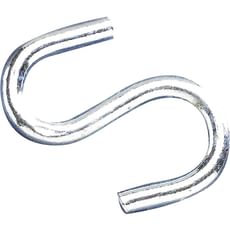
- An S-shaped metal hook featuring two opposing curves that provides a simple, effective method for connecting chain sections or attaching chain to fixed anchor points. Available in various sizes and load ratings to match different chain gauges and application requirements.
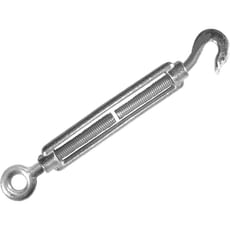
- Straining Screw (Hook and Eye)
- An adjustable tensioning device consisting of a threaded barrel with hook and eye fittings at opposite ends. By rotating the central barrel, you can progressively tighten chain spans, removing slack and maintaining proper tension in barrier systems or suspended installations.
- Quick Repair Link
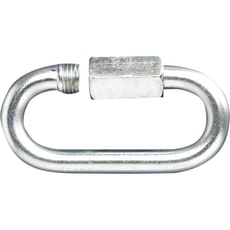
- A split link featuring threaded closure that enables rapid chain repairs or modifications without specialist equipment. This component allows you to extend, shorten, or join chain sections on site, providing flexibility for evolving installation requirements.
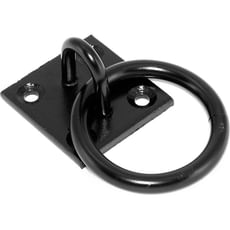
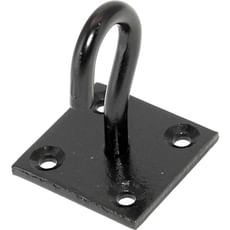
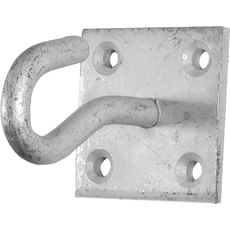
- Wall Ring/Staple
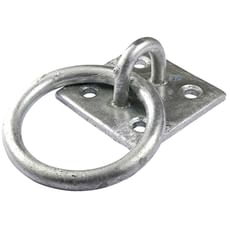
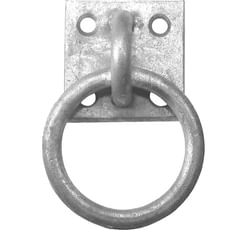
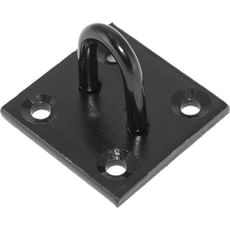
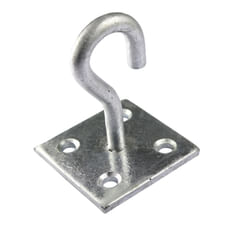
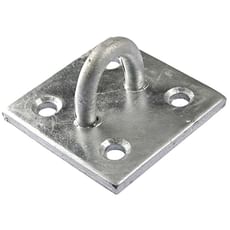
- Fixed anchor points designed for permanent mounting to walls, posts, or structural surfaces that provide secure attachment locations for chain systems. Available as basic fixings or mounted on backing plates that distribute loads across larger surface areas for enhanced security.
Who Uses Chain Accessories?
Chain accessories serve a diverse range of professionals and applications across numerous sectors:
- Site Managers and Construction Workers: Creating temporary safety barriers, securing exclusion zones around excavations and hazardous areas, and establishing perimeter controls on building sites and civil engineering projects
- Warehouse and Logistics Personnel: Installing overhead hanging systems for equipment storage, creating designated loading zones, and establishing access control measures within distribution facilities
- Landscapers and Groundskeepers: Installing decorative post-and-chain boundaries in parks and estates, creating pathway barriers, and establishing perimeter markers for designated areas in commercial properties
- Facilities Managers: Maintaining building security systems, creating queue management barriers in retail and public spaces, and installing access control measures in commercial buildings
- Farmers and Agricultural Workers: Setting up field gates, creating temporary livestock barriers, and rigging lifting systems in barns and agricultural buildings
- Event Managers and Venue Staff: Establishing crowd control barriers, creating VIP areas, and managing pedestrian flow at exhibitions, festivals, and public gatherings
- DIY Enthusiasts and Homeowners: Installing garage storage systems, creating garden boundaries, and setting up workshop hanging solutions for equipment organisation
- Car Park Operators: Installing parking bay demarcation, creating reserved spaces, and establishing pedestrian exclusion zones in commercial and public car parks
How to Choose the Right Chain Accessories
Application Environment: Determine whether your installation will be located indoors or outdoors, and whether it's permanent or temporary. Outdoor applications exposed to weather require galvanised or stainless steel components that resist corrosion, whilst indoor decorative installations may suit black japanned finishes. Marine environments or areas with chemical exposure demand upgraded corrosion protection beyond standard galvanising.
Chain Compatibility: Match accessory dimensions precisely to your chain gauge, typically measured in millimetres. S-hooks, joining links, and quick repair links must accommodate the chain wire diameter whilst maintaining adequate material thickness for your required load capacity. Mixing incompatible sizes compromises both security and safety, particularly in load-bearing applications.
Load Requirements: Assess the working load limits required for your application. Safety-critical installations such as overhead hanging systems or crowd barriers demand components with appropriate load ratings and adequate safety factors. Never exceed manufacturer-specified working load limits – these ratings include built-in safety margins that must be respected. Products available from Tooled-Up include clear load specifications to assist with proper selection.
Mounting Surface: Consider the substrate where you'll install wall-mounted accessories. Solid masonry, timber framing, and composite materials each require different fixing approaches. Backing plates distribute loads across larger surface areas, proving essential for installations into softer materials or where higher loads are anticipated. Always use appropriate fixings from quality brands like Fischer or Rawlplug that match your wall type.
Adjustment and Maintenance: If your chain system requires regular tensioning adjustments or length modifications, incorporate straining screws and quick repair links that enable easy alterations without dismantling entire sections. This proves particularly valuable for temporary barrier systems that need frequent reconfiguration or for installations where settling may occur over time.
Finish and Aesthetics: Where appearance matters alongside function, select finishes that complement your environment. Black japanned components suit traditional or decorative indoor settings, whilst galvanised finishes provide industrial-grade durability. Plastic accessories offer colour-coded options for lightweight visual barriers where load-bearing isn't required.
Quantity and Consistency: Purchase accessories in complete sets where multiple identical components are needed, ensuring consistency across your installation. The Faithfull and Sealey ranges include convenient multi-piece packs that provide cost-effective solutions for larger projects. Verify that all components – chain, hooks, links, and fixings – are compatible in terms of size, finish, and load capacity throughout your system.
Popular Accessories
Enhance your chain installation with these complementary products:
- Link Chain: Available in various gauges, finishes, and materials including galvanised steel, plastic, and decorative options to suit your specific application and aesthetic requirements
- Padlocks and Security Devices: Weather-resistant padlocks from brands like Faithfull for securing chain barriers and access points in outdoor environments
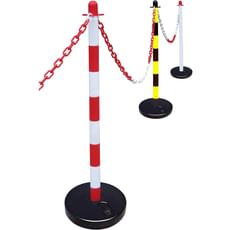
- Plastic Post Systems: Lightweight, portable posts designed specifically for use with plastic chain in temporary barrier applications, including base plates and weighted options
- Wall Plugs and Fixings: High-quality Fischer and Rawlplug fixings ensuring secure mounting of wall rings, hooks, and staples into masonry, timber, and composite substrates
- Spanners and Adjustment Tools: Essential hand tools for tightening straining screws and installing threaded components correctly, available from Bahco and Stanley
- Rope and Cordage: Alternative barrier materials that complement chain systems or provide hybrid solutions for specific applications requiring flexibility
- Carabiners and Snap Hooks: Quick-release connecting hardware for applications requiring frequent disconnection and reconfiguration
- Paint and Protective Coatings: Touch-up paints and protective treatments for maintaining finish integrity on outdoor installations exposed to weathering
Safety Information
Load Limits and Ratings: Never exceed manufacturer-specified working load limits under any circumstances. These ratings incorporate safety factors – whilst breaking strength is considerably higher, normal use should never approach these limits. Regular inspections are essential for detecting wear, deformation, corrosion, or damage that may compromise load capacity. Safety-critical applications such as overhead installations or crowd barriers require documented inspection schedules and immediate replacement of compromised components.
Installation Security: Ensure all wall-mounted components are fixed into structurally sound substrates using fixings appropriate to the material and load. Masonry fixings must penetrate to adequate depth as specified by manufacturers like Fischer or Rawlplug. Timber installations should locate solid framing members rather than sheet materials. For safety-critical applications, consult HSE guidance on anchor points and load-bearing installations, and consider engaging qualified structural professionals for high-risk scenarios.
Correct Assembly: Ensure S-hooks are properly closed with minimal gap between hook ends, quick repair links are fully threaded until secure, and all connections are tight before applying load. Incomplete assembly represents a common cause of failure in chain systems. Straining screws should be tightened gradually and evenly to avoid overloading individual anchor points, and retensioning may be required after initial settling.
Regular Inspection: Establish inspection schedules proportionate to your application's risk level and usage intensity. High-traffic barrier systems, load-bearing installations, and outdoor fixtures exposed to weathering require more frequent examination for signs of wear, corrosion, or fatigue. Weekly visual inspections supplemented by detailed monthly examinations suit most professional applications. Document all inspections and maintain records for safety-critical installations, particularly those subject to public liability considerations.
Environmental Factors: Consider dynamic loading from wind, vibration, or impact when specifying components. Outdoor installations experience weathering, thermal expansion, and UV degradation that reduce effective working life. Marine environments introduce accelerated corrosion, whilst chemical exposure in industrial settings may compromise material integrity. Select components with appropriate environmental resistance and increase inspection frequency in demanding conditions.
Frequently Asked Questions
What's the difference between galvanised and black japanned finishes?
Galvanised components feature a zinc coating applied through hot-dip galvanising that provides excellent corrosion resistance for outdoor use, damp environments, and extended exposure to weathering, giving a characteristic silvery-grey appearance. Black japanned finishes offer an attractive black appearance with rust resistance suitable for indoor applications where aesthetics matter, but won't withstand prolonged outdoor exposure as effectively as proper galvanising. For outdoor installations, always select galvanised components to ensure longevity.
Can I use plastic chain accessories for load-bearing applications?
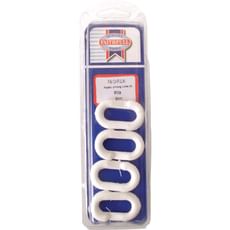
Plastic chain accessories are designed exclusively for lightweight, non-load-bearing applications where visual demarcation rather than physical security is the primary requirement. They have significantly lower load capacities than metal alternatives and different thermal expansion characteristics. For any load-bearing, overhead, or safety-critical application, always specify galvanised steel or stainless steel components with appropriate working load limits. Mixing plastic and metal components in the same system is inadvisable except for purely decorative installations.
How do I calculate the correct size S-hook or joining link for my chain?
Measure both the wire gauge (diameter of the metal forming the chain links) and the internal dimensions of the chain links themselves. Your S-hook or joining link must comfortably accommodate the chain link whilst maintaining adequate material thickness for your required load capacity. Most manufacturers including Faithfull provide compatibility charts matching chain gauge to appropriate accessory sizes. When in doubt, select the next size up rather than forcing undersized components, which compromises both fit and load capacity.
What fixings should I use for mounting wall rings and hooks?
Fixing selection depends entirely on your wall substrate and load requirements. For solid masonry, use appropriate wall plugs from quality brands like Fischer or Rawlplug with matching screws, ensuring adequate penetration depth – typically 50mm minimum for moderate loads. Timber installations should locate joists or substantial framing members rather than sheet materials. For high-load applications or safety-critical installations, consider through-bolting with backing plates or specialist resin anchors, and always consult relevant HSE guidance. Hollow substrates may require specialist cavity fixings or alternative mounting approaches.
How often should I inspect chain accessories in professional applications?
Inspection frequency depends on usage intensity, environmental exposure, and risk assessment. Safety-critical applications like crowd barriers or load-bearing systems warrant weekly visual inspections supplemented by detailed monthly examinations checking for wear, corrosion, deformation, and fixing security. Outdoor installations exposed to weathering require more frequent monitoring than protected indoor setups. Temporary installations for events should be inspected before each deployment. Establish a documented inspection schedule appropriate to your specific risk assessment, and maintain records for insurance and liability purposes. Replace any components showing signs of damage, excessive wear, or corrosion immediately.