

Chainsaw Files

Pay in 3 interest-free payments on purchases from £20-£3000 with  . Learn more.
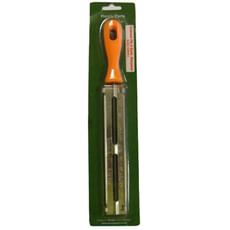
Loading...
End of content
Error - No more pages to load
About Chainsaw Files
Chainsaw files are precision-engineered hand tools designed specifically for sharpening and maintaining the cutting teeth of chainsaw chains. A properly sharpened chain is fundamental to safe, efficient cutting performance, reducing kickback risk, minimising operator fatigue, and significantly extending the working life of both the chain and the chainsaw itself. Regular filing ensures your chainsaw cuts cleanly and quickly through timber with minimal effort, making these tools absolutely essential for anyone who depends on a chainsaw for professional work, woodland management, or firewood preparation.
The selection available from Tooled-Up.com includes round files in various diameters to match different chain pitches, complete file and guide sets for maintaining precise sharpening angles, and professional-grade diamond files for superior durability. Leading brands such as Bahco, DMT, Draper, and Handy offer solutions suitable for both occasional users and professional arborists, with file sizes typically ranging from 3/16" (4.8mm) to 7/32" (5.5mm) to accommodate the most common chain specifications used throughout the UK.
Whether you're touching up chains on-site between cuts or maintaining multiple chainsaws for commercial forestry operations, selecting the correct file size and type is absolutely crucial. Many professional users keep several files in their toolkit, as chainsaw files naturally wear down with regular use and must be replaced periodically to maintain optimal sharpening performance and ensure consistent cutting results.
Jargon Buster
- Chain Pitch: The distance between three consecutive rivets divided by two, typically measured in inches (such as 3/8", .325"). This measurement determines the correct file diameter required for effective sharpening.
- Filing Angle: The angle at which the file is positioned against the cutting tooth, usually between 25-35 degrees depending on chain type and manufacturer specifications. Maintaining the correct angle is essential for efficient cutting performance and chain longevity.
- Depth Gauge (Raker): The curved protrusion positioned in front of each cutting tooth that controls how deeply the tooth penetrates into the wood. These require periodic maintenance with a flat file to ensure proper cutting action.
- File Guide: A plastic or metal guide that attaches to the chainsaw bar and helps maintain the correct filing angle and depth consistently, particularly valuable for less experienced users or when working in challenging conditions.
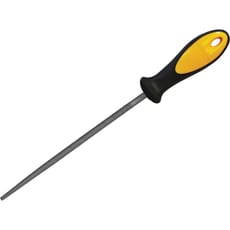
- Round File: The cylindrical file used to sharpen the curved cutting edge of chainsaw teeth. Different chain types and pitches require specific file diameters for optimal results.
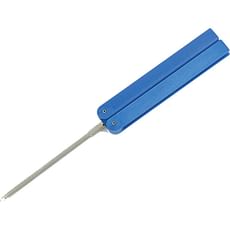
- Diamond File: A file featuring a diamond-coated cutting surface offering superior durability and faster material removal compared to traditional steel files, ideal for professional use and hardened chain types.
Who Uses Chainsaw Files?
- Arborists and tree surgeons who require razor-sharp chains for precision cutting and safety when working at height
- Forestry workers and loggers managing commercial timber operations requiring frequent chain maintenance throughout the working day
- Groundskeepers and estate managers maintaining woodland areas, parks, and large country properties
- Landscapers and garden maintenance contractors who use chainsaws regularly for tree work, hedge management, and site clearance
- Farmers and agricultural workers managing hedgerows, felling trees, and processing timber on-site
- DIY enthusiasts and homeowners with wood-burning stoves who process their own firewood and value self-sufficiency
- Conservation volunteers involved in woodland management, habitat maintenance, and ecological projects
- Groundwork contractors undertaking site clearance and vegetation management
- Tree nursery staff maintaining equipment for regular pruning and maintenance operations
How to Choose the Right Chainsaw Files
Match the File Diameter to Your Chain: Check your chainsaw manual or examine the markings stamped on your chain to determine the correct pitch. Common sizes include 5/32" (4.0mm) for certain .325" pitch chains, 3/16" (4.8mm) for .325" pitch chains (depending on manufacturer), and 7/32" (5.5mm) for 3/8" pitch chains. Using an incorrect size will damage your chain and severely compromise cutting performance.
Consider a Complete File and Guide Set: If you're new to chainsaw maintenance or want consistently professional results, invest in a file and guide set like those from Handy. These comprehensive sets include the appropriately sized round file plus a guide that ensures you maintain the correct filing angle every time, eliminating guesswork and delivering uniform sharpening across all teeth.
Professional vs. Occasional Use: For professional arborists and forestry contractors who sharpen chains daily, diamond files from brands like DMT offer exceptional durability and longevity, maintaining their cutting ability considerably longer than standard files. For occasional users, traditional steel files from Bahco or Draper represent excellent value whilst delivering reliable, professional-quality results.
Don't Overlook Depth Gauge Maintenance: Sharpening the cutting teeth represents only part of comprehensive chain maintenance. You'll also need a flat file and depth gauge tool to maintain the rakers at the correct height relative to the cutting teeth, ensuring optimal chip removal and preventing dangerous kickback incidents.
Keep Spare Files On-Site: Files gradually wear down with use and lose their cutting effectiveness. Professional users should keep spare files readily available in their toolkit or vehicle, especially when working in remote locations where a dull chain can completely halt productivity and cost valuable time.
Popular Accessories
- Chainsaw sharpening kits containing multiple file sizes, depth gauge tools, handles, and protective carrying cases
- File handles providing improved grip and control during the sharpening process
- Stump vices and bar-mounted vices to secure the chainsaw firmly during filing operations
- Flat files and depth gauge tools for maintaining correct raker height
- Replacement chainsaw bars and chains as backup components
- Bar and chain oil for proper lubrication during cutting operations
- Chain gauge tools to check chain wear, stretch, and overall condition
- Work gloves to protect hands during maintenance and chain handling
- Tool rolls and storage pouches to keep files organised, protected, and ready for use
- Wire brushes for cleaning metal filings from file teeth
- Chainsaw maintenance tool sets for comprehensive servicing
Safety Information
Always disconnect the spark plug lead or remove the battery before performing any chainsaw maintenance work to prevent accidental starting. Wear appropriate personal protective equipment including work gloves to protect against sharp chain teeth and potential injuries. Ensure the chainsaw is securely mounted in a vice or positioned on a stable surface before filing to prevent unwanted movement during the sharpening process.
File away from your body and keep fingers clear of the sharp chain teeth at all times. When the file becomes clogged with metal filings, clean it thoroughly with a wire brush – a clogged file is ineffective and can slip unpredictably, potentially causing injury. Always maintain even pressure and consistent stroke length when filing to achieve uniform sharpening across all teeth, which ensures balanced cutting performance.
In accordance with HSE guidelines for chainsaw operation and maintenance, ensure you have received appropriate training in chainsaw use and maintenance if using these tools professionally or commercially. A properly sharpened chain is a critical safety feature, significantly reducing the risk of kickback incidents and operator fatigue during extended cutting operations. Replace worn files promptly, as attempting to sharpen with worn files requires excessive pressure and can lead to poor results and unsafe working practices.
Frequently Asked Questions
How often should I sharpen my chainsaw chain?
This depends on usage frequency and cutting conditions encountered. As a general rule, sharpen your chain whenever you notice it producing fine sawdust instead of proper wood chips, when the chainsaw pulls to one side during cutting, or when you need to apply excessive downward pressure to make cuts. Professional users often touch up their chains several times throughout the day, whilst occasional users might sharpen after every few hours of accumulated cutting time. Hitting dirt, stones, or embedded metal will dull a chain immediately and require prompt sharpening.
What size file do I need for my chainsaw?
The correct file size depends entirely on your chain's pitch specification. Check your chainsaw manual or look for markings stamped on the chain itself. Common UK chainsaw chains use 5/32" (4.0mm), 3/16" (4.8mm), or 7/32" (5.5mm) files. Using the wrong size will damage your chain's cutting geometry and produce poor, potentially dangerous cutting results. When in doubt, consult the manufacturer's specifications or browse the range at Tooled-Up.com with your chain details to hand.
Can I sharpen a chainsaw chain too many times?
Yes, eventually the teeth become too short to sharpen effectively and safely. Most chains can be sharpened 5-10 times before replacement becomes necessary, depending on how much material is removed during each sharpening session. When teeth become very short, if you've hit rocks or metal and severely damaged multiple teeth, or if the chain no longer holds sharpness properly, it's time for a replacement chain.
Should I sharpen every tooth with the same number of strokes?
Absolutely yes – consistency is crucial for balanced cutting performance and operator safety. Count your strokes carefully and apply the same number to each tooth, typically 3-5 strokes per tooth depending on condition and how dull the chain has become. Uneven sharpening causes the chainsaw to cut in a curve rather than straight, making the saw harder to control, tiring to use, and potentially dangerous in operation.
What's the difference between a standard file and a diamond file?
Diamond files feature a diamond-coated cutting surface that cuts faster, removes material more efficiently, and lasts significantly longer than traditional steel files. They're ideal for professional users who sharpen chains frequently and need consistent performance throughout the file's working life. Standard steel files are more economical for occasional use and still deliver excellent results when used correctly and replaced regularly as they wear.