

Chalk Lines & Refills

Pay in 3 interest-free payments on purchases from £20-£3000 with  . Learn more.

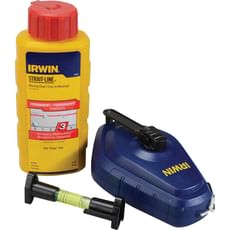
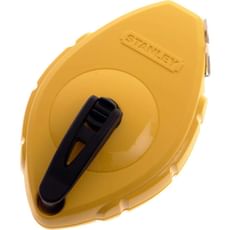
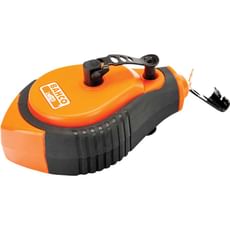
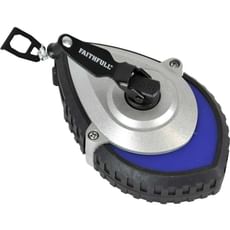
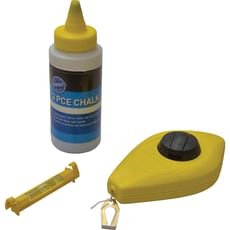
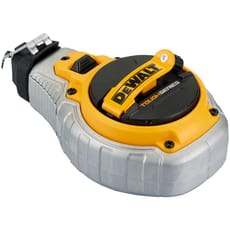
 Loading...
End of content
Error - No more pages to load
About Chalk Lines & Refills
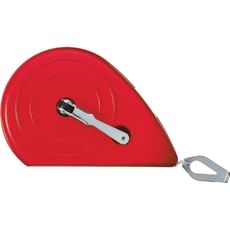
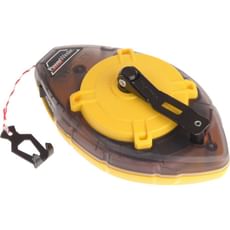
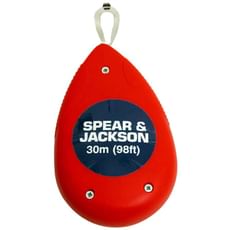
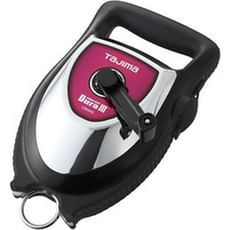
Chalk lines are fundamental marking tools used throughout the construction and building trades to create long, straight reference lines on virtually any surface. Whether you're a carpenter marking out timber frames, a bricklayer establishing level courses, or a decorator planning wall features, a quality chalk line enables you to transfer accurate measurements over distances that rulers and pencils simply cannot manage. The tool consists of a case filled with coloured chalk powder and a retractable line that, when snapped against a surface, leaves a precise chalk mark.
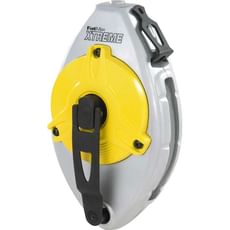
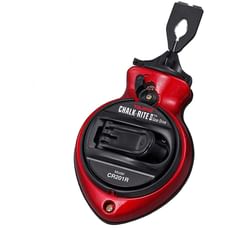
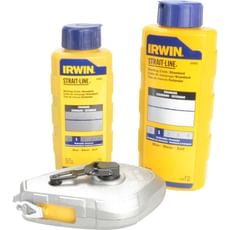
The Tooled-Up range encompasses everything needed for professional marking and layout work, from traditional manual chalk lines to modern automatic rewind models that speed up workflow on site. This category includes both individual chalk line tools from trusted brands like Stanley and Tajima, alongside essential chalk refills in various colours, allowing you to maintain visibility on different surface types and materials. From lightweight compact units for occasional use to robust site-grade models built for daily professional application, you'll find chalk line solutions suitable for every trade and budget.
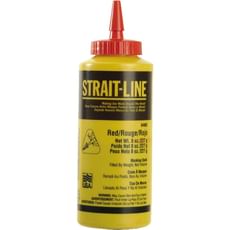
The importance of keeping spare chalk refills cannot be overstated for busy tradespeople. Running out of chalk mid-job can cause frustrating delays, which is why maintaining a stock of refill bottles in multiple colours—including traditional blue, highly visible red, and fluorescent options for low-light conditions—ensures your layout work remains accurate and efficient. Whether you're working on new builds, renovations, or precision carpentry projects, having the right chalk line equipment keeps your marking visible throughout the working day.
Jargon Buster
- Strike Line: The action of pulling the chalk-coated string tight against a surface and releasing it to create a straight chalk mark. Also known as "snapping" a line.
- Automatic Rewind: A mechanism that automatically retracts the chalk line back into the case after use, eliminating the need for manual winding and significantly speeding up workflow on site.
- Chalk Capacity: The volume of chalk powder the line case can hold, typically measured in grams. Higher capacity means fewer refills during extended marking tasks.
- Line Length: The maximum distance the chalk line can extend, usually ranging from 15 to 30 metres for professional models, determining the longest uninterrupted line you can mark.
- Permanent vs. Washable Chalk: Permanent chalk creates weather-resistant marks for external applications, whilst washable chalk is designed for temporary indoor marking that can be easily cleaned off surfaces.
- Gear Ratio: On manual rewind models, this determines how quickly the line returns to the case relative to how many times you turn the handle, affecting retrieval speed and ease of use.
Who Uses Chalk Lines & Refills?
Chalk lines are essential tools across numerous construction and building trades, including:
- Carpenters and Joiners: For marking out timber frames, joist positions, and cutting lines on sheet materials
- Bricklayers and Stonemasons: Establishing straight level courses, marking bond patterns, and layout work on foundations
- Roofers: Setting out slate and tile courses, marking valley lines, and establishing straight rows on pitched roofs
- Plasterers and Drylining Specialists: Marking stud wall positions, ceiling grid lines, and establishing level datums
- Groundworkers and Landscapers: Setting out paving patterns, marking excavation lines, and establishing drainage falls
- Electricians and Plumbers: Planning cable and pipe runs, marking fixing positions, and layout work for first fix installations
- Shopfitters and Decorators: Creating guide lines for wall coverings, tile patterns, and feature wall installations
- DIY Enthusiasts: Home improvement projects requiring accurate straight lines for tiling, decking, fencing, and garden landscaping
How to Choose the Right Chalk Lines & Refills
Line Length Requirements: Consider the typical distances you'll be marking. Most professional chalk lines offer 18-30 metre lengths, sufficient for most building applications. Shorter 15-metre models suit compact spaces and detailed carpentry work, whilst 30-metre professional lines are essential for large-scale groundwork and roofing projects.
Rewind Mechanism: Manual rewind chalk lines are economical and reliable with simple mechanics, ideal for occasional use. Automatic rewind models dramatically speed up repetitive marking tasks and are worth the investment for professional tradespeople who use chalk lines daily. Look for smooth, tangle-free retrieval mechanisms from brands like Stanley and Tajima.
Case Durability: Site conditions demand robust construction. ABS plastic cases offer decent protection for light to medium use, whilst impact-resistant reinforced models withstand the knocks and drops common on busy building sites. Check for sealed cases that prevent chalk leakage in your tool bag.
Chalk Type and Colour: Standard blue chalk suits general indoor applications and is easily visible on most surfaces. Red and fluorescent colours provide enhanced visibility on darker materials or in low-light conditions. For external marking on foundations and groundwork, permanent chalk resists weathering, whilst washable formulas are preferred for temporary internal layout work that needs removal after installation.
Line Thickness: Heavier braided lines produce bolder, more visible marks and resist breakage better than thin cords, particularly important for rough surfaces and extended outdoor use. Thinner lines create finer, more precise marks suited to detailed carpentry and joinery work.
Chalk Capacity: Larger reservoir capacity means fewer interruptions for refilling during extended marking sessions. Professional models holding 100g or more suit full-day site use, whilst compact units with smaller capacity are perfectly adequate for occasional DIY applications.
Popular Accessories
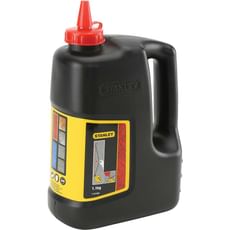
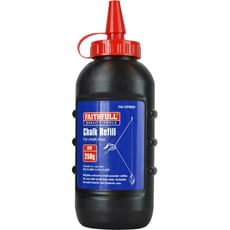
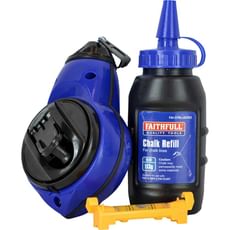
- Replacement Chalk Refill Bottles: Available in multiple colours and formulations (permanent and washable) to suit different applications and surface types
- Line Pins and Anchors: Steel pins and hooks for securing one end of the chalk line when working alone or on difficult surfaces
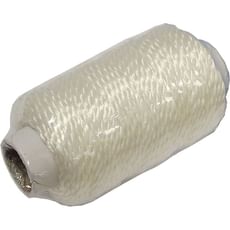
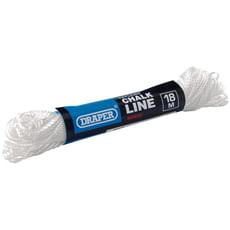
- Replacement Line Cord: Braided nylon or cotton replacement lines when the original cord becomes worn or damaged
- Spirit Levels: Essential complementary tools for establishing level and plumb reference points before snapping chalk lines
- Measuring Tapes: Long measuring tapes for accurately establishing distances before marking with your chalk line
- Layout Squares and Speed Squares: For establishing accurate right angles and setting out perpendicular chalk lines
- Marking Pencils and Crayons: For making reference marks and annotations alongside your chalk lines
- Tool Belts and Pouches: Convenient storage solutions keeping your chalk line accessible whilst working at height or across large areas
Safety Information
Whilst chalk lines are generally safe hand tools, certain precautions ensure proper use and prevent accidents on site:
Eye Protection: When snapping chalk lines, particularly overhead, fine chalk dust can disperse into the air. Wear safety glasses to prevent irritation, especially when working in confined spaces or windy outdoor conditions.
Chalk Dust Inhalation: Prolonged exposure to airborne chalk dust may irritate respiratory passages. When refilling chalk lines or working in poorly ventilated spaces, consider wearing a dust mask in accordance with HSE guidance on workplace exposure to nuisance dusts.
Line Snap Injuries: Never place any body part in the path of a tensioned chalk line before releasing it. The snapping action, particularly with heavy-duty braided lines, can cause skin welts or eye injury. Always ensure the area is clear and maintain proper hand positioning away from the release point.
Working at Height: When using chalk lines on roofing, scaffolding, or elevated platforms, ensure you're properly secured with appropriate fall protection equipment. Leaning to snap long lines can compromise your balance, so maintain three points of contact and use line pins to anchor one end when working alone.
Permanent Chalk Considerations: Permanent chalk formulations may stain porous surfaces like natural stone and unsealed timber. Always test on an inconspicuous area first, and use washable chalk for finished surfaces where marks need removal after installation. Keep permanent chalk away from skin and clothing as stains can be difficult to remove.
Frequently Asked Questions
How do I fill a chalk line with refill powder?
Open the chalk line case according to the manufacturer's instructions, typically by unscrewing the fill cap or opening a hinged door. Pour the chalk refill powder directly into the reservoir, filling to approximately 80% capacity to allow proper line coating. Tap the case gently to settle the powder, then close securely. Before first use after refilling, pull the line out fully several times to ensure even chalk coating along its entire length.
Why won't my chalk line make a clear mark?
Several factors can affect mark quality. Insufficient chalk in the reservoir means the line isn't coating properly—check levels and refill if necessary. If the line is damp or wet, allow it to dry completely before use, as moisture prevents chalk adhesion. Old, compacted chalk can also reduce marking effectiveness; replace with fresh powder. Finally, ensure you're creating adequate tension in the line before snapping—slack lines produce poor, inconsistent marks.
What's the difference between permanent and washable chalk?
Washable chalk is designed for temporary marking on internal projects where lines need removal after installation, such as tiling, wallpapering, or stud wall layout. It cleans off most surfaces with water and a cloth. Permanent chalk contains weatherproof pigments designed for external applications like groundwork, brickwork, and roofing, where marks must withstand rain and moisture. However, permanent chalk can stain porous surfaces, so it should not be used on finished materials where marks will remain visible.
How long should a chalk line last?
With proper care, a quality chalk line available from Tooled-Up.com should provide many years of reliable service. The line cord itself is a consumable component that will eventually wear, fray, or break depending on usage intensity and surface types. Professional tradespeople using chalk lines daily might replace the cord annually, whilst occasional DIY users may get 5-10 years or more. The case and mechanism, if kept clean and dry, typically outlast several line replacements. Regular maintenance—emptying old chalk, cleaning the case, and ensuring smooth rewind operation—significantly extends tool life.
Can I use any chalk refill in my chalk line?
Most chalk lines accept standard chalk refill powders, but always check the manufacturer's recommendations. Some professional models work best with specific formulations that flow freely and coat evenly. Avoid using ultra-fine or ultra-coarse chalks not designed for marking tools, as these may clog the mechanism or fail to adhere properly to the line. Stick with reputable brands specifically marketed as chalk line refills, and ensure the colour and permanence level suit your application—using permanent chalk when you need washable marks, or vice versa, can cause problems on your workpiece.