

Chucks

Pay in 3 interest-free payments on purchases from £20-£3000 with  . Learn more.

 Loading...
End of content
Error - No more pages to load
About Chucks
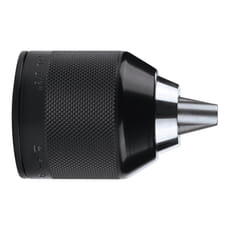
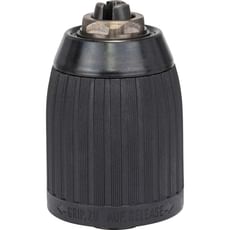
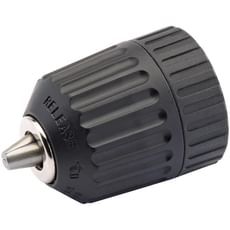
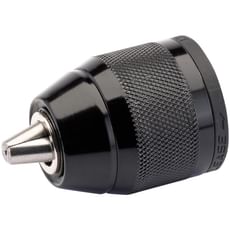
Drill chucks are the critical interface between your power tool and the drill bit, driver bit, or accessory you're using. These precision-engineered components grip and hold bits securely in place, transmitting rotational power whilst maintaining perfect concentricity for accurate drilling. Available in capacities ranging from compact 10mm models for delicate work through to robust 16mm heavy-duty chucks, these essential components determine which accessories you can use and how reliably your tool will perform. The chuck market has evolved significantly, with modern keyless designs now dominating professional jobsites thanks to their speed and convenience, whilst traditional keyed chucks remain valued for applications demanding maximum gripping force.
Tooled-Up.com stocks an extensive selection from industry-leading manufacturers including Bosch Professional, Makita, DeWalt, Festool, and Rohm. The range encompasses replacement chucks for worn or damaged originals, specialist SDS adaptors that convert hammer drills to accept standard round-shank bits, and innovative systems like Bosch's FlexiClick modular attachments. Understanding the differences between keyed and keyless designs, thread specifications, and capacity requirements helps tradespeople select the optimal chuck for their specific applications. Whether you're drilling timber, masonry, metal, or composite materials, the right chuck ensures secure bit retention, reduces tool slip, and improves drilling accuracy.
Most professional-grade chucks feature all-metal construction with precision-machined jaws and hardened components for durability on demanding sites. Chrome finishes provide enhanced corrosion resistance, particularly valuable in wet environments or outdoor applications. Thread compatibility follows industry standards, with 1/2" 20 UNF being the most common specification across cordless drills, corded models, and hammer drills. However, specialist applications may require different mounting systems, and hammer drills specifically need chucks engineered to withstand repetitive impact forces without premature wear or failure.
Jargon Buster
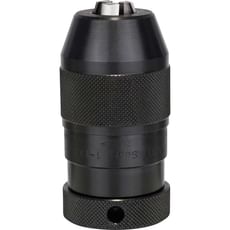
- Keyless Chuck: A chuck design that can be tightened and loosened by hand without requiring a separate key tool. These enable quick bit changes and often feature one-handed operation, making them ideal for tradespeople who frequently swap accessories throughout the working day.
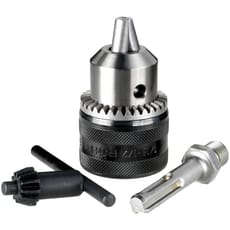
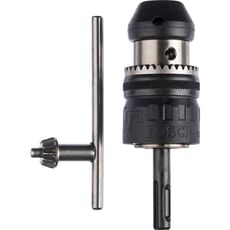
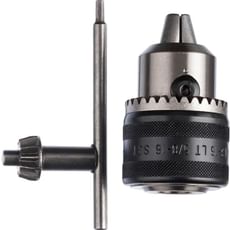
- Keyed Chuck: A traditional chuck design using a toothed key to tighten and loosen the jaws. Keyed chucks generally provide superior gripping force compared to keyless alternatives and are preferred for heavy-duty drilling operations where bit slip could compromise work quality or safety.
- Chuck Capacity: The range of bit shank diameters the chuck can accommodate, typically expressed as minimum and maximum dimensions (such as 1-13mm or 2-13mm). This specification determines which drill bits and accessories are compatible with your chuck.
- 1/2" 20 UNF Thread: The standard thread specification found on most professional drill chucks, where 1/2" indicates the diameter and 20 UNF (Unified National Fine) describes the thread pitch. This standardisation ensures compatibility across different tool brands and models.
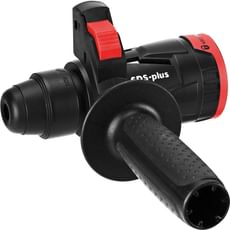
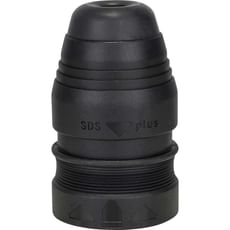
- SDS Adaptor: A specialist attachment converting an SDS-plus hammer drill to accept standard round-shank drill bits by adding a chuck interface. This versatility proves particularly useful for occasional drilling tasks without requiring a separate tool.
- FlexiClick System: Bosch's modular attachment system allowing rapid changes between different chuck types and accessories, including offset adaptors, metal chucks, and standard drill chucks, maximising tool versatility on site.
Who Uses Chucks?
Drill chucks are essential equipment for numerous trades and applications:
- General Builders - requiring versatile drilling solutions across multiple materials
- Joiners and Carpenters - needing precise drilling in timber and manufactured boards
- Electricians - drilling access holes and fixing points throughout installations
- Plumbers and Heating Engineers - creating pipe runs and mounting brackets
- Maintenance Engineers - keeping machinery and equipment operational with reliable tools
- Shop Fitters - installing fixtures and fittings in commercial spaces
- Kitchen and Bathroom Fitters - precise drilling for units and appliances
- Metalworkers and Fabricators - drilling steel, aluminium, and other metals
- DIY Enthusiasts - maintaining and upgrading their power tool collection
- Property Maintenance Professionals - completing repairs and renovations
- Scaffolders - drilling fixing points for brackets and supports
- Roofing Contractors - installing battens and fixing materials
How to Choose the Right Chucks
Chuck Capacity: Consider the bit sizes you regularly use. A 10mm chuck suits light-duty precision work and smaller bits, whilst 13mm chucks offer the most versatility for general trade applications. For heavy-duty work with larger bits or hole saws, 16mm capacity provides the necessary range without compromising grip.
Keyed vs Keyless: Keyless chucks dominate modern professional use thanks to their convenience and speed, enabling quick bit changes without searching for a separate key. However, keyed chucks deliver maximum gripping force and remain the preferred choice for demanding applications where bit slip could be problematic, such as using large-diameter hole saws or drilling particularly tough materials like stainless steel.
Thread Compatibility: Verify the chuck thread matches your drill's spindle before purchasing. The 1/2" 20 UNF thread is standard on most professional drills, but some specialist tools require different specifications. Check your drill's manual or existing chuck markings to ensure compatibility.
Tool Type and Application: Standard drill chucks work perfectly on regular drills, but hammer drills specifically require chucks engineered to withstand impact forces. Using a standard chuck on a hammer drill leads to premature wear, potential failure, and safety risks. The selection at Tooled-Up includes dedicated hammer drill chucks from manufacturers like Bosch Professional and Makita.
Build Quality and Materials: Professional-grade chucks feature all-metal construction with precision-machined jaws for reliable bit retention. Chrome finishes offer enhanced durability and corrosion resistance, particularly valuable in wet environments or outdoor sites. Budget chucks may use inferior materials that wear rapidly under professional use.
Brand Systems: Whilst most chucks follow industry standards, some manufacturers offer proprietary systems providing additional functionality. Bosch's FlexiClick system, for example, enables rapid switching between different chuck types and angle adaptors, potentially eliminating the need to carry multiple tools to site.
Popular Accessories
- SDS Plus Adaptors - convert SDS hammer drills to accept standard round-shank bits
- Replacement Chuck Keys - spare keys for keyed chucks, frequently lost on busy jobsites
- HSS Drill Bit Sets - high-speed steel bits for drilling metal and other materials
- Masonry Drill Bit Sets - carbide-tipped bits for brick, block, and concrete
- Wood Drill Bit Sets - brad point and flat bits for timber work
- Driver Bit Sets - screwdriver bits for use with chuck-equipped impact drivers
- Offset Adaptors - angle attachments for accessing confined spaces
- Right-Angle Drives - chuck attachments for drilling in tight areas
- Hole Saws - large-diameter cutting tools requiring secure chuck retention
- FlexiClick Attachments - modular accessories for compatible Bosch systems
- Chuck Cleaning Brushes - maintain optimal performance by removing debris and swarf
- Thread-Locking Compound - secures chucks to spindles on high-torque applications
Safety Information
Disconnect Power: Always disconnect your drill from the 240v mains supply or remove the battery before changing or installing a chuck. Accidental activation during installation can cause serious injury. This is fundamental workshop practice and HSE guidance for power tool maintenance.
Proper Installation: Ensure chucks are fully tightened onto the drill spindle according to manufacturer specifications. A loose chuck can detach during operation, creating a dangerous projectile hazard. Use thread-locking compound if recommended by the manufacturer, particularly for high-torque applications.
Bit Security: Always ensure drill bits are properly centred and fully tightened within the chuck jaws before commencing work. Loose bits can slip, damage the workpiece, or cause injury. For keyless chucks, hand-tighten firmly; for keyed chucks, tighten sequentially in all three holes to distribute clamping force evenly.
Regular Inspection: Check chuck jaws regularly for wear, damage, or debris buildup. Worn or damaged jaws cannot grip bits securely and must be replaced immediately. Clean chuck threads and jaws periodically to maintain proper function and prevent premature wear. Metal filings and dust accumulation can prevent jaws from closing fully.
Personal Protective Equipment: Always wear appropriate safety glasses when drilling, as chuck rotation can cause bits or swarf to fly off unexpectedly. Follow HSE guidelines for power tool operation on construction sites, including hearing protection for extended drilling operations and dust extraction where required.
Frequently Asked Questions
What's the difference between a keyless and keyed chuck?
Keyless chucks can be tightened and loosened by hand without tools, offering rapid bit changes ideal for frequent accessory swaps throughout the working day. Keyed chucks require a toothed key to operate but generally provide superior gripping force for heavy-duty applications. Most tradespeople now prefer keyless designs for their convenience, but keyed chucks remain popular for demanding professional use where maximum grip is essential, such as operating large hole saws or drilling stainless steel.
Can I fit any chuck to my drill?
No, not all chucks are universally compatible. You must match the thread size and type to your drill's spindle - most professional drills use 1/2" 20 UNF threading, but always verify before purchasing. Additionally, hammer drills require chucks specifically designed to withstand impact forces. Using a standard chuck on a hammer drill causes premature wear or failure. Check your drill's specifications or examine markings on your existing chuck before ordering a replacement.
Why won't my chuck hold bits securely anymore?
Loss of grip typically indicates worn chuck jaws, debris buildup within the mechanism, or damage to the jaw threads. Try cleaning the chuck thoroughly first - metal filings, wood dust, and other debris can prevent proper jaw closure. If cleaning doesn't resolve the issue, the chuck jaws may be worn beyond tolerance and replacement becomes necessary. Using oversized or undersized bits outside the chuck's specified capacity accelerates wear and should be avoided.
How do I remove a stuck chuck from my drill?
Most chucks have a left-hand thread retaining screw inside the chuck body (marked "L" or with reverse threads). Remove this first by turning clockwise. Then, secure the chuck in a vice or use a strap wrench and turn the entire chuck body anticlockwise to unscrew it from the spindle. For stubborn chucks, penetrating oil left overnight can help. Some drills feature a spindle lock button to hold the shaft whilst loosening the chuck.
Are expensive branded chucks worth the investment?
Professional-grade chucks from manufacturers like Bosch Professional, Makita, and Rohm offer superior build quality, precision machining, and durability compared to budget alternatives. For tradespeople using tools daily, a quality chuck provides reliable bit retention, smoother operation, and longer service life, ultimately reducing downtime and replacement costs. For occasional DIY use, mid-range options offer good value, but avoid very cheap chucks which may fail prematurely or provide inadequate grip, potentially compromising work quality and safety.