

Compression Testers

Pay in 3 interest-free payments on purchases from £20-£3000 with  . Learn more.

 Loading...
End of content
Error - No more pages to load
About Compression Testers
Compression testers are indispensable diagnostic instruments that enable mechanics, mobile engineers, and vehicle technicians to evaluate the condition and performance of internal combustion engines. By measuring the compression pressure generated within each cylinder during the engine's compression stroke, these precision tools help identify a range of mechanical issues including worn piston rings, damaged valves, blown head gaskets, and cylinder wear that can compromise engine efficiency and power output. Whether diagnosing a rough idle, investigating loss of power, or assessing excessive oil consumption, a quality compression tester delivers the critical pressure readings needed to pinpoint engine problems accurately and swiftly.
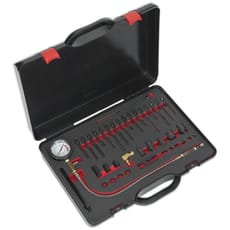
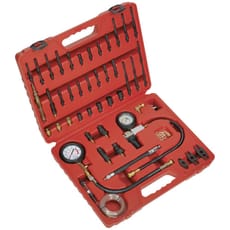
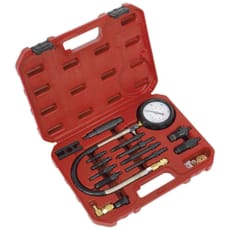
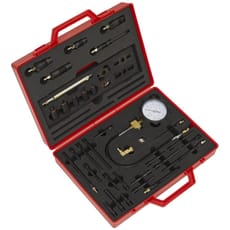
The compression testing equipment available from Tooled-Up.com encompasses specialist kits designed for both petrol and diesel engines, ranging from compact 6-piece starter sets perfect for mobile mechanics to comprehensive 37-piece master kits that accommodate virtually every vehicle type encountered in professional workshops. The range includes professional-grade compression testing tools from established brands such as Sealey and Draper, providing solutions for standard passenger cars through to commercial vehicles, plant machinery, and agricultural equipment. Most kits feature multiple adaptors to suit different spark plug thread sizes and glow plug apertures, alongside extended flexible hoses for accessing cylinders in modern engine bays where space is increasingly restricted.
Contemporary compression test kits have advanced considerably to include digital gauges offering precise readings and peak hold functions, leakage detection capabilities for pinpointing exactly where compression loss occurs, and Top Dead Centre (TDC) location tools essential for timing belt replacement and engine rebuilding procedures. Whether operating an independent garage, working as a mobile mechanic, or maintaining a commercial vehicle fleet, investing in professional compression testing equipment proves invaluable for accurate diagnostics and reducing costly comeback jobs.
Jargon Buster
- Compression Ratio: The ratio between cylinder volume when the piston is at bottom dead centre compared to top dead centre. Higher compression ratios generally produce more power but demand greater mechanical precision and engine condition.
- PSI (Pounds per Square Inch): The pressure measurement unit displayed on compression gauges. Typical petrol engines produce readings between 120-180 PSI, whilst diesel engines generate significantly higher figures of 275-400 PSI due to their compression ignition design requiring greater cylinder pressure.
- TDC (Top Dead Centre): The point at which the piston reaches its uppermost position in the cylinder bore. Accurate TDC identification is crucial for timing belt installation, valve timing procedures, and piston ring positioning during engine assembly.
- Leakage Testing: An advanced diagnostic technique that introduces compressed air into a cylinder at TDC to identify precisely where compression is escaping—whether through inlet or exhaust valves, piston rings, or head gaskets. This method provides more specific diagnostic information than compression testing alone.
- Schrader Valve: A one-way valve mechanism (similar to tyre valves) incorporated into compression gauges that retains the maximum pressure reading, allowing technicians to record the compression figure after cranking the engine without maintaining constant observation of the gauge.
- Glow Plug Adaptor: A threaded connector that screws into the glow plug aperture on diesel engines, enabling the compression gauge to measure cylinder pressure. Different thread sizes and pitch specifications are required for various vehicle manufacturers and engine types.
Who Uses Compression Testers?
- Independent Garage Mechanics: Essential for comprehensive vehicle servicing and diagnostic work across all makes and models
- Mobile Mechanics: Compact kits provide portable diagnostic capability for on-site vehicle assessment and roadside diagnosis
- Fleet Maintenance Technicians: Regular compression testing helps prevent unexpected breakdowns and schedule preventative maintenance efficiently
- MOT Testing Stations: Valuable for investigating emissions test failures and power-related performance issues
- Plant and Agricultural Engineers: Maintaining diesel engines in construction equipment, tractors, and agricultural machinery
- Marine Engineers: Testing compression in boat engines, covering both petrol and diesel marine applications
- Classic Car Restorers: Assessing engine condition before vehicle purchase and monitoring progress during rebuilds
- Motorcycle Mechanics: Diagnosing performance issues in motorcycle engines and conducting pre-purchase inspections
- HGV and Commercial Vehicle Technicians: Specialist kits designed for larger diesel engines in trucks, coaches, and commercial vehicles
- Advanced DIY Enthusiasts: Home mechanics maintaining their own vehicles and undertaking engine repair work
How to Choose the Right Compression Tester
Engine Type: The fundamental consideration is whether you're working predominantly on petrol engines, diesel engines, or both. Diesel engines generate substantially higher compression pressures and require gauges rated to at least 600 PSI, along with specific glow plug adaptors. Petrol engine testers typically measure up to 300 PSI and utilise spark plug thread adaptors. Master kits covering both engine types offer optimal versatility for general automotive workshop applications.
Gauge Type: Traditional analogue gauges remain popular for their reliability and battery-independent operation, whilst digital compression testers offer easier reading in poor lighting conditions, peak hold functions, and occasionally data logging capabilities. Digital gauges prove particularly useful when recording multiple readings across a bank of cylinders or working in dimly-lit engine bays.
Adaptor Selection: Verify that your chosen kit includes the correct thread sizes for the vehicles you service most frequently. Common petrol engine threads include 10mm, 12mm, 14mm, and 18mm spark plug sizes, whilst diesel kits should encompass M8, M10, M12 threads and larger commercial vehicle glow plug specifications. Extended adaptors are invaluable for accessing recessed spark plugs in modern engines with deep plug wells.
Hose Length and Flexibility: A longer flexible hose (typically 300-500mm) simplifies testing on transverse-mounted engines and hard-to-reach cylinders common in modern vehicles. Professional kits from brands available at Tooled-Up often include extension hoses for particularly challenging applications.
Build Quality and Calibration: Professional-grade testers from established manufacturers like Sealey and Draper offer superior accuracy, durability, and calibration stability. Quality gauges maintain measurement precision over thousands of tests, whilst budget alternatives may drift and provide unreliable readings that compromise diagnostic accuracy.
Additional Features: Consider whether you require leakage testing capability, which helps identify exactly where compression is being lost. TDC location tools are essential if you undertake timing belt work regularly. Quick-release couplings accelerate testing procedures when working on multi-cylinder engines in busy workshop environments.
Popular Accessories
- Additional Thread Adaptors: Supplementary spark plug and glow plug adaptors for specialist or unusual vehicle applications not covered in standard kits
- Extension Hoses: Longer flexible hoses for deep-recessed or awkwardly-positioned cylinders in modern compact engine bays
- Remote Starter Switches: Enable solo operation by cranking the engine whilst simultaneously observing the compression gauge
- Compressed Air Adaptors: Convert compression testers for leakage testing procedures and cylinder leak-down diagnosis
- Protective Carrying Cases: Keep your compression testing kit organised, protected, and ready for mobile work between jobs
- Thread Sealant Tape: PTFE tape ensures air-tight connections at adaptor threads for accurate pressure readings
- Battery Chargers: Maintain battery voltage during extended cranking sequences for consistent test results
- Work Lights: Rechargeable LED inspection lamps for identifying cylinder numbers and working in confined engine bays
- Feeler Gauges: Useful for checking valve clearances when compression testing reveals valve-related issues
Safety Information
When performing compression tests, always ensure the vehicle is in neutral (manual transmission) or park (automatic) with the handbrake firmly applied and wheels chocked to prevent movement. Disconnect the ignition system on petrol engines by removing coil pack connections or withdrawing the relevant ECU fuse to prevent sparking during cranking. On diesel engines, disable the fuel supply using the engine stop control or by disconnecting the fuel solenoid to prevent starting.
Wear appropriate personal protective equipment including safety glasses to protect against fuel spray or debris expelled from spark plug holes during testing. Be aware that diesel injection systems operate at extremely high pressures—never work on diesel fuel systems with the engine running. Ensure adequate ventilation when running engines in workshops to prevent carbon monoxide accumulation, following HSE guidance on workplace exposure limits and respiratory hazards.
Verify that batteries are in good condition before extended cranking sessions, and allow the starter motor to cool between test cycles to prevent thermal damage. Never lean over the engine during cranking, and keep hands, tools, and loose clothing clear of moving belts, pulleys, and cooling fans. If working alone, consider using a remote starter switch rather than having an assistant operate the ignition key, reducing communication errors and improving safety.
Frequently Asked Questions
What compression reading should I expect from a healthy engine?
Typical petrol engines should produce between 120-180 PSI, whilst diesel engines generate 275-400 PSI due to their higher compression ratios required for compression ignition. More important than the absolute figure is that all cylinders read within 10% of each other—significant variation between cylinders indicates mechanical wear or damage requiring investigation. Always consult the manufacturer's specifications for your specific engine, as turbocharged and high-performance engines may have different normal ranges.
Can I use a petrol compression tester on a diesel engine?
No, petrol engine compression testers typically have maximum ranges of 250-300 PSI, which is insufficient for diesel engines that commonly produce 300-400 PSI or considerably higher in modern common-rail engines. Using an under-rated gauge on a diesel engine risks damaging the instrument and provides no useful reading. Always use a dedicated diesel compression tester with appropriate glow plug adaptors and a gauge rated to at least 600 PSI for accurate results.
How do I determine if low compression is caused by piston rings or valves?
Perform a "wet test" by introducing approximately one tablespoon of engine oil into the suspect cylinder through the spark plug hole, then repeat the compression test. If the reading increases significantly (20% or more), the problem is likely worn piston rings, as the oil temporarily seals the ring-to-cylinder gap. If the reading remains similar, the issue is more likely valve or head gasket related, as oil cannot effectively seal these areas.
Do I need to remove all spark plugs when testing compression?
Yes, removing all spark plugs is essential for accurate compression testing. This eliminates the resistance created by compressing air in the other cylinders, allowing the starter motor to crank the engine at a consistent speed across all cylinders. Testing with only one plug removed produces artificially low readings and places unnecessary strain on the starter motor and battery, potentially affecting diagnostic accuracy.
How often should compression testing be performed?
Compression testing isn't a routine maintenance item but rather a diagnostic procedure performed when engine problems manifest. Common indicators include rough idling, loss of power, poor fuel economy, excessive oil consumption, blue exhaust smoke, or failed emissions tests. For high-mileage vehicles or those used in demanding applications such as commercial or fleet work, annual compression testing can help identify developing issues before they result in costly breakdowns or catastrophic engine failure.