

Concrete Breakers

Pay in 3 interest-free payments on purchases from £20-£3000 with  . Learn more.
 Loading...
End of content
Error - No more pages to load
About Concrete Breakers
Concrete breakers, sometimes called demolition hammers or breakers, are heavy-duty power tools engineered to demolish concrete, masonry, brick, and stone with impressive force. These robust machines deliver powerful impact energy through hardened steel chisels, making light work of tasks that would be backbreaking or impossible with manual tools. Whether you're breaking up a concrete slab, removing foundations, creating doorway openings, or demolishing old structures, a quality concrete breaker is essential equipment for serious demolition and renovation work.
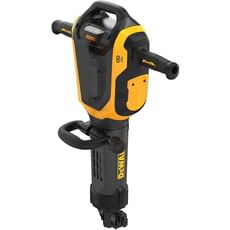
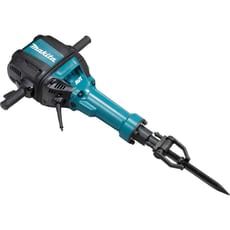
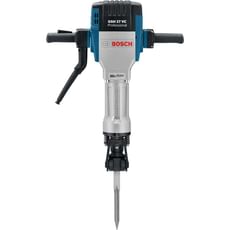
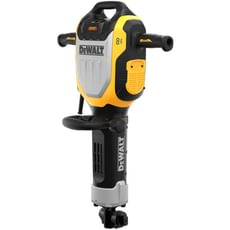
The selection at Tooled-Up.com includes both corded electric models operating on 240v mains power and innovative cordless breakers powered by advanced battery systems like Makita's 40v XGT and DeWalt's 54v FlexVolt technology. Corded models ranging from 1500W to 2100W typically deliver the highest impact energy—measured in joules (J)—for sustained heavy-duty applications, whilst cordless variants offer exceptional portability for sites without mains access or where trailing cables pose hazards. Professional manufacturers including Bosch Professional, Makita, DeWalt, Draper, Einhell, and Sealey produce breakers with impact forces ranging from around 40J for general demolition through to 70J+ for industrial-grade concrete breaking.
Modern concrete breakers incorporate advanced features to improve operator comfort and productivity. Anti-Vibration Technology (AVT) reduces the transmission of harmful vibrations that can lead to Hand-Arm Vibration Syndrome (HAVS), whilst brushless motors in premium models deliver superior efficiency, longer runtime, and extended service life. Most breakers accept chisels via SDS-Hex fittings, with heavier-duty models using robust 28mm hex systems for maximum strength under extreme loads. Built to withstand the demanding conditions of construction sites, these machines feature durable housings, powerful motors, and ergonomic designs that enable tradespeople to tackle hours of continuous breaking and chiselling work.
Jargon Buster
- Impact Energy (Joules): The force delivered with each blow, measured in joules (J). Higher ratings indicate greater breaking power—typical concrete breakers range from 40J for general work up to 70J+ for heavy industrial demolition of reinforced concrete and thick masonry.
- SDS-Hex: A standardised fitting system featuring a hexagonal shaft with retention grooves that allows tool-free chisel changes and secure fixing under high-impact loads. The most common fitting on demolition breakers.
- AVT (Anti-Vibration Technology): Sophisticated engineering that significantly reduces vibration transmitted to the operator's hands and arms, helping prevent HAVS whilst reducing fatigue during prolonged use. Essential for professional users working within HSE exposure limits.
- Blow Rate (BPM): Blows per minute—indicates how many impacts the breaker delivers. Professional models typically operate between 1,000-2,000 BPM, with the combination of impact energy and blow rate determining overall demolition performance.
- 28mm Hex: A heavy-duty fitting system used on larger concrete breakers, offering superior strength and stability compared to standard SDS-Hex for the most demanding breaking applications and thicker chisels.
- Brushless Motor: Modern motor technology that eliminates carbon brushes, resulting in longer lifespan, improved efficiency, reduced maintenance requirements, and better power delivery—particularly beneficial in cordless models.
Who Uses Concrete Breakers?
Concrete breakers are essential tools for a wide range of construction and renovation professionals:
- Demolition Contractors: Specialists who rely on breakers daily for structural demolition, concrete removal, and site clearance projects.
- Groundworkers and Civil Engineers: Breaking up concrete foundations, removing old pathways, and preparing sites for new construction work.
- General Builders: Essential for renovation projects requiring removal of concrete floors, breaking through walls, or creating openings for doors and windows.
- Highway Maintenance Teams: Breaking up damaged road surfaces, pavements, and concrete structures as part of infrastructure repair work.
- Landscaping Contractors: Removing unwanted concrete patios, paths, and hardstanding to prepare sites for new landscaping projects.
- Utility Companies: Creating access points through concrete and masonry for pipe and cable installation work.
- Serious DIY Enthusiasts: Homeowners tackling major renovation projects, garden transformations, or extensions requiring concrete removal.
- Stonemasons: For controlled breaking and shaping of stone and masonry materials.
How to Choose the Right Concrete Breakers
Power Source: Corded electric breakers offer unlimited runtime and consistent power for all-day use, with 240v models ranging from 1500W to 2100W. They're ideal for site-based work with mains power available. Cordless models using advanced battery technology provide excellent portability and impressive power, perfect for locations without electricity or where cables would be hazardous.
Impact Energy: Match the tool's impact rating to your typical workload. For occasional DIY work and lighter demolition, 40-45J models will suffice. Professional tradespeople regularly breaking thick concrete should look at 50-60J machines, whilst heavy industrial work demands 65J+ breakers that can power through reinforced concrete and substantial masonry.
Vibration Control: If you'll be using the breaker regularly, Anti-Vibration Technology is essential rather than optional. HSE regulations require employers to control vibration exposure, and AVT systems can reduce vibration levels substantially, protecting against HAVS whilst improving comfort and control during extended operation.
Weight and Handling: Concrete breakers typically weigh between 10-20kg depending on power rating. Consider whether you'll be working at ground level or need to manoeuvre the tool at height or in confined spaces. A lighter model might be less powerful but more practical for overhead work or prolonged use.
Build Quality and Brand: Professional brands like Bosch Professional, Makita, and DeWalt command premium prices but deliver superior reliability, better after-sales support, and longer service life. For occasional use, quality mid-range options from Draper, Einhell, or Sealey offer excellent value whilst still providing adequate performance and durability.
Chisel Compatibility: Check the fitting type—most modern breakers use SDS-Hex, but larger models may use 28mm hex. Ensure compatible chisels and accessories are readily available for your chosen model.
Popular Accessories
- Demolition Chisels: Various chisel types for different applications including pointed chisels for breaking concrete, flat chisels for removing tiles and screed, and moil points for precision breaking work.
- Clay Spades: Wide blade attachments perfect for removing floor tiles, screed, and breaking up compacted ground.
- Carrying Cases: Heavy-duty cases designed specifically for breakers and their accessories, providing protection during transport and organised storage.
- Extra Batteries and Chargers: Essential for cordless models to maintain productivity throughout the working day without downtime waiting for batteries to charge.
- Anti-Vibration Gloves: Specialist gloves that provide additional vibration dampening and protect hands during prolonged use.
- Lubricating Grease: Maintenance grease for SDS-Hex shanks to ensure smooth operation and prevent seizing, particularly important in dusty demolition environments.
- Dust Extraction Equipment: Vacuum systems and dust shrouds to control hazardous silica dust generated during concrete breaking, helping meet HSE requirements.
Safety Information
Personal Protective Equipment: Always wear appropriate PPE when operating concrete breakers. This includes safety goggles or a full-face visor to protect against flying debris, hearing protection (breakers typically exceed 100dB), steel toe-cap boots, heavy-duty work gloves, and a dust mask or respirator rated for concrete dust containing crystalline silica.
Vibration Management: Be aware of HSE regulations regarding Hand-Arm Vibration Syndrome (HAVS). The daily exposure action value is 2.5 m/s² A(8), with an exposure limit value of 5 m/s² A(8). Check your tool's vibration rating and limit exposure time accordingly, taking regular breaks and using tools with AVT systems to minimise risk.
Dust Control: Concrete dust contains crystalline silica, a substance hazardous to health that can cause silicosis and lung cancer. Follow COSHH regulations by using dust suppression methods, working in well-ventilated areas, and wearing appropriate respiratory protection. Consider water suppression or dust extraction systems for extended work.
Electrical Safety: When using 240v mains-powered breakers, always use an RCD (Residual Current Device) to protect against electric shock. Inspect cables and plugs before each use, and never use damaged equipment. On construction sites, 110v transformers offer an additional safety margin.
Safe Operation: Ensure you have a firm footing and secure grip before starting work. Never operate the breaker above shoulder height for extended periods, and be aware of hidden services including gas pipes, water mains, and electrical cables before breaking through floors or walls. Always check drawings and use a cable detector where appropriate.
Frequently Asked Questions
What's the difference between an SDS drill and a concrete breaker?
Whilst both tools can break masonry, concrete breakers are purpose-built demolition tools delivering much higher impact energy (40-70J versus 3-10J for SDS drills). Breakers use a dedicated hammering action without rotation and accept larger chisels via SDS-Hex or 28mm hex fittings. They're designed for heavy-duty demolition work rather than drilling holes.
Can I use a concrete breaker on reinforced concrete?
Yes, but you'll need a powerful model with high impact energy (60J+) and appropriate chisels. Be aware that hitting steel reinforcement bars directly can damage chisels and the tool. Work around the rebar where possible, using the breaker to remove concrete from around the steel before cutting the reinforcement with appropriate cutting tools.
How long can I use a concrete breaker before needing a break?
This depends on the tool's vibration rating and HSE exposure limits. Most professional breakers with AVT allow 2-4 hours of continuous use per day when staying within the 5 m/s² exposure limit. Always check your specific tool's vibration level and calculate safe exposure times. Even with low-vibration tools, take regular breaks to prevent fatigue and maintain control.
Are cordless concrete breakers powerful enough for professional use?
Modern cordless breakers from Tooled-Up using high-voltage battery systems (40v XGT, 54v FlexVolt) now deliver impressive performance suitable for many professional applications. Whilst they may not match the sustained power of heavy-duty corded models for all-day demolition work, they excel in situations requiring portability, working at height, or where trailing cables would be hazardous or impractical.
Do I need to service my concrete breaker regularly?
Yes, regular maintenance is essential for reliability and safety. This includes cleaning dust from vents after each use, greasing chisel shanks regularly, checking carbon brushes (on brushed motors), inspecting power cables for damage, and having the tool professionally serviced according to the manufacturer's schedule. Professional users should maintain service records to demonstrate compliance with safety regulations.