

Concrete Screws
Pay in 3 interest-free payments on purchases from £30-2000 with  . Learn more.
 Loading...
End of content
Error - No more pages to load
About Concrete Screws
Concrete screws are specialised fasteners engineered to provide quick, reliable fixings directly into concrete, brick, stone, and other masonry materials without requiring separate wall plugs or anchors. Unlike traditional two-part fixing systems, these innovative screws cut their own thread as they're driven into a pre-drilled pilot hole, creating a strong, vibration-resistant connection that's both faster to install and often stronger than conventional plug-and-screw combinations. This makes them indispensable for professional tradespeople and serious DIY enthusiasts who need dependable masonry fixings that can be installed quickly and efficiently.
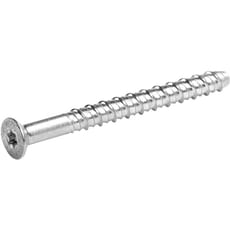
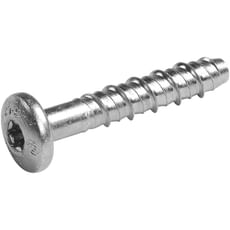
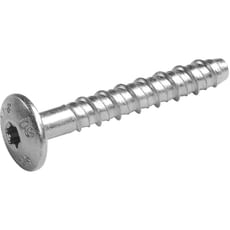
The range available from Tooled-Up.com features premium concrete screws from Rawlplug, a manufacturer renowned throughout the construction industry for producing professional-grade fixing solutions. These screws are manufactured from hardened steel with corrosion-resistant finishes such as zinc plating and advanced zinc flake coatings, ensuring long-lasting performance even in demanding environments. Available in multiple head configurations including countersunk, pan head, and large pan head designs, these fasteners offer versatility for both visible and concealed fixing applications across construction, renovation, and installation projects.
Whether you're securing metal framework to concrete floors, fixing timber battens to masonry walls, or installing electrical equipment on brick surfaces, concrete screws deliver consistent holding strength with minimal installation time. Their self-tapping design eliminates common problems associated with traditional plugs such as plug spin, expansion failure, or inadequate grip in harder substrates, making them particularly valuable for overhead installations and situations where maximum pull-out resistance is critical. The countersunk options provide a flush finish for applications where aesthetics matter, whilst pan head variants offer excellent load distribution for general-purpose fixing work.
Jargon Buster
- Self-Tapping: A feature that allows the screw to cut its own internal thread in the masonry material as it's driven in, eliminating the need for separate wall plugs or rawl plugs.
- Pilot Hole: The precisely sized pre-drilled hole required before installing a concrete screw. The pilot hole diameter is critical—typically 1-2mm smaller than the screw diameter—to ensure proper thread engagement and optimal holding strength.
- Zinc Flake Coating: An advanced corrosion-resistant finish that provides superior protection against rust compared to standard zinc plating, particularly suitable for harsh environments and external applications where durability is paramount.
- Countersunk Head: A conical screw head designed to sit flush with or below the surface of the material being fixed, providing a neat, professional finish ideal for applications where protruding fixings would be unacceptable.
- Pull-Out Resistance: The maximum force a fastener can withstand before being pulled from the base material. Concrete screws typically offer superior pull-out resistance compared to traditional plug-and-screw combinations.
- Thread Engagement: The length of screw thread that actually bites into the masonry material, which directly affects the strength of the fixing. Proper pilot hole depth ensures adequate thread engagement for maximum holding power.
Who Uses Concrete Screws?
Concrete screws are essential fixings across the construction and installation trades, including:
- General Builders – for fixing timber frames, door linings, window installations, and structural elements to masonry substrates
- Electricians (Sparkies) – securing cable trays, conduit brackets, consumer units, and mounting boxes to concrete and brick walls
- Plumbers – mounting pipe clips, manifolds, heating equipment, and sanitaryware to solid walls
- Shopfitters – installing shelving systems, display units, fixtures, and point-of-sale equipment in retail environments
- Carpenters (Chippies) – fixing skirting boards, architraves, timber battens, and stud work to masonry surfaces
- HVAC Engineers – securing air conditioning units, ducting brackets, ventilation equipment, and mechanical plant to concrete bases
- Steel Erectors – fastening metal framework, structural steelwork, and support brackets to concrete foundations
- Kitchen and Bathroom Fitters – mounting wall units, worktops, sanitaryware, and heavy fixtures to masonry walls
- Maintenance Engineers – undertaking repair and refurbishment work where reliable fixings are essential
- Serious DIY Enthusiasts – tackling home improvement projects requiring secure, professional-quality masonry fixings
How to Choose the Right Concrete Screws
Base Material: Identify whether you're fixing into concrete, brick, block, or stone. Harder materials like engineering brick or dense concrete may require premium screws with enhanced hardness ratings. Ensure the screw is compatible with your specific substrate—the Rawlplug range at Tooled-Up is suitable for all common masonry materials.
Head Style: Countersunk screws provide a flush finish ideal for applications where aesthetics matter or where protruding fixings could present a hazard. Pan head screws offer excellent load distribution and are suitable for most general-purpose applications. Large pan head variants provide even greater bearing surface area for applications involving softer materials or oversize clearance holes in the fixture being attached.
Length and Diameter: The screw must be long enough to penetrate through your fixture material and achieve adequate thread engagement in the masonry—typically a minimum of 25-30mm into the base material. Common diameters range from 6mm to 10mm for general applications, with larger diameters offering greater load-bearing capacity for heavy-duty installations.
Load Requirements: Calculate the weight and stress the fixing will need to support. For heavy-duty applications such as structural brackets, equipment mounting, or load-bearing installations, opt for larger diameter screws with greater thread engagement depth to ensure adequate safety margins.
Corrosion Resistance: For internal applications in dry conditions, zinc-plated screws provide good protection. For external applications, damp environments, or areas with moisture exposure, zinc flake coated screws offer superior corrosion resistance. For highly corrosive environments such as coastal locations, swimming pools, or chemical facilities, consider stainless steel variants.
Installation Method: Consider whether you'll be using an impact driver, cordless drill-driver, or SDS drill. Some concrete screws are optimised for impact installation, offering faster installation times on larger projects where multiple fixings are required.
Popular Accessories
- Masonry Drill Bits – carbide-tipped or SDS bits in the correct pilot hole diameter for your chosen screws, essential for accurate hole preparation
- Impact Drivers – from brands like Makita, DeWalt, and Milwaukee for efficient screw installation and reduced user fatigue
- SDS Hammer Drills – essential for drilling pilot holes in concrete and hard masonry materials quickly and accurately
- Magnetic Bit Holders – for secure retention of drive bits during overhead installation and improved productivity
- Vacuum Attachments – for dust extraction during pilot hole drilling, particularly useful for HSE compliance and cleaner working
- Depth Stops – ensuring consistent pilot hole depth across multiple fixings for professional results
- Torx or Hex Drive Bits – matching the drive system of your concrete screws for optimal torque transfer
- Cable and Pipe Detectors – essential for identifying hidden services before drilling into walls
- Safety Goggles and Dust Masks – essential PPE when drilling masonry materials to protect against dust and debris
Safety Information
When working with concrete screws and masonry fixings, observe the following safety guidelines in accordance with HSE recommendations:
Dust Control: Drilling into concrete, brick, and stone generates silica dust (Respirable Crystalline Silica or RCS), which presents a serious respiratory hazard and is linked to silicosis and other lung diseases. Always use appropriate dust extraction equipment or on-tool dust collection systems. Where extraction isn't possible, wear appropriate RPE (Respiratory Protective Equipment) rated FFP3 for fine dust particles. Comply with Control of Substances Hazardous to Health (COSHH) regulations.
Eye Protection: Wear safety goggles or a face shield conforming to EN166 when drilling pilot holes to protect against flying debris and dust particles. Standard prescription glasses do not provide adequate protection against impact or dust ingress.
Check for Services: Before drilling, always use a cable and pipe detector to identify hidden electrical cables, water pipes, and gas lines. Striking services can result in serious injury, electrocution, flooding, or fire. Mark service routes clearly and maintain safe clearance distances.
Secure Workpiece: Ensure the material being fixed is properly supported and won't shift during installation. Unstable fixtures can cause injury or result in failed fixings. Use clamps or temporary supports where necessary.
Correct Pilot Hole Size: Using an incorrectly sized pilot hole can cause the screw to jam, break, or cause the base material to crack or spall. Always follow the manufacturer's specifications for pilot hole diameter and depth, which are clearly marked on Rawlplug packaging.
Torque Settings: Avoid over-tightening, which can strip the thread, break the screw, or crack the masonry. Use torque-controlled tools where appropriate, particularly for critical structural fixings.
Frequently Asked Questions
Do I need to use wall plugs with concrete screws?
No, concrete screws are designed to be used without wall plugs or rawl plugs. They create their own thread directly in the masonry material, which is what makes them faster to install and often stronger than traditional plug-and-screw systems. This self-tapping action is what differentiates them from standard woodscrews or machine screws.
What size pilot hole do I need for concrete screws?
The pilot hole size is critical for proper performance. Generally, the pilot hole should be 1-2mm smaller than the screw's nominal diameter. For example, a 7.5mm concrete screw typically requires a 6mm pilot hole. Always check the manufacturer's specifications, which are clearly marked on the packaging of products available at Tooled-Up.com. Using the wrong size can result in poor performance or material failure.
Can I remove and reuse concrete screws?
While concrete screws can be removed, they should not typically be reused in the same hole, as the threads may have been damaged during installation or removal, and the masonry thread may have been enlarged. If you need to refix in the same location, it's best to use a fresh screw or move to a new fixing position at least 50mm away from the original hole.
How deep should I drill the pilot hole?
The pilot hole should be approximately 5-10mm deeper than the depth of thread engagement you require. This extra depth allows space for dust and debris, ensuring the screw can be driven to its full depth and the fixture can sit flush against the masonry surface. Insufficient hole depth will prevent proper seating and may break the screw.
Will concrete screws work in old, crumbly brick?
Concrete screws require a solid base material to develop their full holding strength. In soft, deteriorated, or poor-quality masonry, consider using resin anchors, chemical fixings, or through-bolts instead, as these distribute load more effectively in weaker materials. For moderately soft substrates, longer screws with greater thread engagement can improve performance, but always test fixings in inconspicuous areas first.