

Convector Heaters

Pay in 3 interest-free payments on purchases from £20-£3000 with  . Learn more.
 Loading...
End of content
Error - No more pages to load
About Convector Heaters
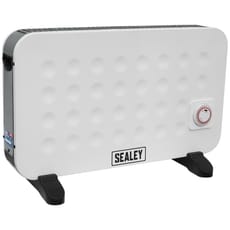
Convector heaters are a dependable and efficient heating solution designed to quickly warm workshops, garages, site offices, and commercial spaces. Unlike radiant heaters that warm objects directly, convector heaters operate by drawing cool air in from below, heating it through an internal element, and then allowing the warm air to rise naturally through convection currents. This creates an even distribution of heat throughout the room, making them ideal for maintaining comfortable working temperatures in medium to large areas where consistent warmth is essential.
The range available at Tooled-Up.com features models with various heat settings, from basic fixed-output units to advanced turbo fan-assisted models that accelerate air circulation for faster warm-up times. Many units include thermostatic controls for maintaining consistent temperatures and timer functions for programming heating schedules, helping to reduce energy costs on busy sites or in commercial environments. With robust construction suitable for professional use, these heaters are built by trusted manufacturers like Sealey to withstand the demands of workshop and construction site conditions.
Available in both standard and slimline profiles, modern convector heaters offer flexible installation options including wall-mounting brackets and freestanding configurations. The slimline variants are particularly popular where floor space is at a premium, whilst turbo fan models are favoured for rapid heating of cold spaces at the start of a working day. All units operate from standard UK 240v mains supply, making them straightforward to deploy wherever power is available.
Jargon Buster
- Convection Heating – The process of heating air through natural circulation, where warm air rises and cool air falls, creating a continuous heating cycle throughout the room without the need for forced air movement.
- Turbo Fan Function – An integrated fan that accelerates air circulation through the heating element, significantly reducing warm-up times and distributing heat more quickly across larger spaces.
- Thermostatic Control – An automatic temperature regulation system that cycles the heating element on and off to maintain a consistent room temperature, improving energy efficiency and user comfort.
- Heat Output (Watts/kW) – The measure of heating power delivered by the unit. As a general rule, you need approximately 100 watts per square metre for a well-insulated space, or 150 watts per square metre for poorly insulated areas.
- IP Rating – Ingress Protection rating that indicates the heater's resistance to dust and moisture. Higher ratings (such as IP24) offer splash protection, making them suitable for garages and workshop environments.
- Overheat Protection – A built-in safety feature that automatically shuts off the heating element if internal temperatures exceed safe operating limits, preventing fire hazards and equipment damage.
Who Uses Convector Heaters?
Convector heaters are essential equipment for a wide range of trades and professional users:
- Motor Vehicle Technicians – maintaining comfortable temperatures in garage workshops and MOT bays throughout winter months
- Joiners and Carpenters – heating workshop spaces and ensuring optimal conditions for timber work and adhesive curing
- Site Managers and Contractors – providing temporary heating in site offices, Portakabins, and welfare facilities
- Warehouse and Logistics Staff – supplementary heating in loading areas, packing stations, and storage facilities
- Retail and Commercial Premises – heating shop floors, stockrooms, and customer-facing areas during cold weather
- Agricultural Workers – warming workshops, equipment storage buildings, and covered work areas on farms
- Maintenance Engineers – portable heating solutions for plant rooms, service areas, and technical spaces
- DIY Enthusiasts and Hobbyists – keeping home workshops, garages, and sheds comfortable for winter projects
How to Choose the Right Convector Heaters
Selecting the appropriate convector heater depends on several key factors:
Calculate Your Heating Requirements: Measure your space in square metres and multiply by 100-150 watts depending on insulation quality. A 2kW heater suits rooms up to 20m², whilst 3kW units handle spaces up to 30m². For poorly insulated workshops or garages, err towards higher wattage to compensate for heat loss.
Consider Turbo Fan Models: If you need rapid heating at the start of the working day or operate in particularly cold environments, turbo fan convector heaters significantly reduce warm-up times. Standard convection models are quieter and more suitable where constant background heating is required without fan noise.
Evaluate Control Features: Thermostatic controls prevent energy waste by maintaining set temperatures automatically. Timer functions are invaluable for programming heating schedules, allowing spaces to warm before arrival and switch off when unoccupied, reducing running costs considerably on busy sites.
Space Considerations: Slimline models are ideal where floor space is limited or wall-mounting is preferred. Standard profile units typically offer higher outputs and are better suited to freestanding applications in larger workshops where floor space isn't at a premium.
Portability vs Fixed Installation: Determine whether you need a portable unit that moves between locations or a wall-mounted permanent solution. Many convector heaters available from Tooled-Up offer both options with included mounting brackets and castors or feet for freestanding use.
Safety Features: Look for overheat protection, tip-over switches (if portable), and thermal cut-outs. These features are particularly important in busy workshop environments where equipment may be accidentally knocked or covered during site work.
Popular Accessories
- Wall Mounting Brackets – secure fixing kits for permanent installation and improved floor space utilisation
- Castors and Feet Sets – mobility solutions for moving heaters between work areas
- Timer Switches and Programmers – external timer controls for basic models without integrated timing functions
- Extension Leads and Cable Reels – heavy-duty electrical extensions rated for heating appliance loads
- Thermostatic Plug Adapters – add temperature control to basic convector models
- Protective Guards and Covers – safety barriers for high-traffic areas or environments with children present
Safety Information
When operating convector heaters in professional environments, always follow HSE guidance for electrical heating appliances:
Electrical Safety: Ensure all heaters are connected to properly earthed 240v UK mains sockets. Never use damaged cables or plugs, and avoid overloading circuits by running multiple high-wattage appliances from the same socket. Check that your electrical installation can handle the heater's current draw (typically 8-13A for 2-3kW models).
Clearance and Ventilation: Maintain minimum clearances around the heater as specified in the manufacturer's instructions – typically 500mm from combustible materials and 300mm from walls or furniture. Never cover convector heaters or obstruct air intake vents, as this can cause overheating and potential fire hazards.
Positioning: Place heaters on stable, level surfaces away from high-traffic areas where they might be knocked over. Avoid positioning near flammable materials, aerosols, paints, or solvents commonly found in workshops. Never use convector heaters in wet conditions unless specifically rated for bathroom or outdoor use.
Regular Maintenance: Disconnect from the mains and allow to cool before cleaning. Remove dust build-up from heating elements and vents regularly, as accumulated debris reduces efficiency and poses fire risks. Inspect cables and plugs for damage before each heating season.
Unattended Operation: Whilst many modern convector heaters include safety cut-outs, avoid leaving heaters running unattended for extended periods. Always switch off and unplug when leaving the premises overnight or for weekends.
Frequently Asked Questions
What's the difference between a standard convector heater and a turbo fan model?
Standard convector heaters rely on natural convection currents to circulate warm air, providing quiet, gradual heating. Turbo fan models incorporate an electric fan that forces air through the heating element, significantly speeding up room warm-up times – ideal for cold workshops at the start of the day. The fan does create additional noise but delivers heat much more quickly across larger spaces.
How much does it cost to run a 2kW convector heater?
Based on average UK electricity prices of approximately 30p per kWh, a 2kW convector heater costs around 60p per hour to run at full power. However, models with thermostatic controls cycle on and off to maintain temperature, typically reducing actual running costs by 30-50%. Using timer functions to heat spaces only when occupied can further reduce energy consumption significantly.
Can I leave a convector heater on overnight?
Whilst convector heaters with overheat protection and thermostatic controls are designed for extended operation, it's generally not recommended to leave any heating appliance running unattended overnight in commercial or workshop settings. If overnight heating is essential, ensure the heater is positioned safely, has adequate clearances, and is connected to a properly rated circuit with RCD protection.
Are convector heaters suitable for damp garages or outdoor covered areas?
Standard convector heaters are designed for indoor use in dry environments. For damp locations such as garages or covered outdoor workspaces, check the IP rating – you'll need at least IP24 for splash protection. Never use standard convector heaters in areas where they may be exposed to water spray or high humidity without appropriate protection rating.
What size convector heater do I need for my workshop?
As a general guide, allow 100 watts per square metre for well-insulated spaces or 150 watts per square metre for poorly insulated areas like garages or metal sheds. For example, a 20m² workshop with reasonable insulation requires approximately 2kW of heating power. For concrete floors, metal roofs, or frequent door opening, consider oversizing by 20-30% to maintain comfortable temperatures.