
Cooling System Tools

Pay in 3 interest-free payments on purchases from £20-£3000 with  . Learn more.




Loading...
End of content
Error - No more pages to load
About Cooling System Tools
Cooling system tools are specialist diagnostic and maintenance instruments designed for testing, servicing and repairing vehicle cooling and air conditioning systems. This essential category encompasses pressure test kits, vacuum purge and refill sets, refractometers, fuel line disconnection tools, and comprehensive diagnostic equipment that help automotive professionals identify leaks, test system integrity, and safely service modern cooling circuits. Whether diagnosing a persistent coolant leak, pressure testing a radiator, or servicing complex air conditioning systems, having the right cooling system tools ensures accurate diagnosis and efficient repairs whilst protecting technicians from the hazards of working with pressurised hot fluids.
Modern vehicles feature increasingly sophisticated cooling systems with multiple sensors, expansion tanks, and sealed circuits that require specialist equipment to service properly. The range available from Tooled-Up.com includes universal pressure test kits with adaptors to suit various vehicle makes and models, vacuum refill systems that eliminate troublesome air locks, and precision refractometers for testing coolant concentration and condition. From compact 5-piece kits ideal for mobile mechanics to comprehensive 27-piece professional sets, these tools enable technicians to work safely with pressurised cooling systems whilst maintaining manufacturer specifications and preventing costly comebacks.
Tooled-Up stocks cooling system tools from trusted automotive brands including Sealey, Draper Expert, and Facom, ensuring access to professional-grade equipment that meets the demands of busy workshops and mobile mechanics alike. These tools help deliver thorough system testing before and after repairs, whilst also protecting technicians from the risks associated with working on pressurised hot cooling systems. With 38 products available across multiple kit configurations and specialist applications, there's suitable equipment for everything from basic pressure testing to advanced vacuum refilling and air conditioning system work.
Jargon Buster
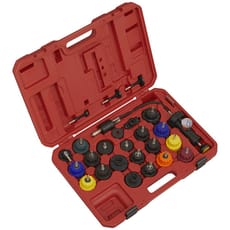
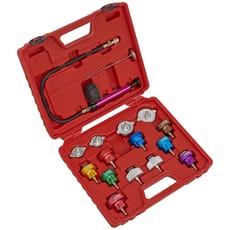
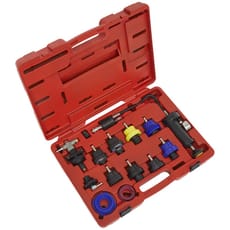
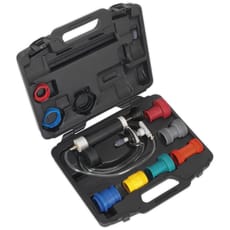
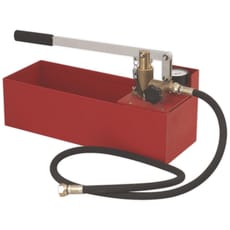
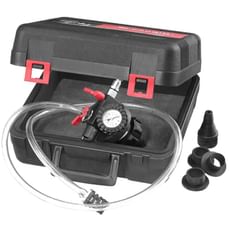
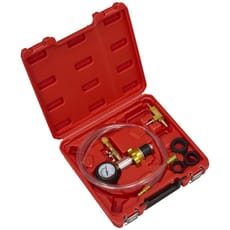
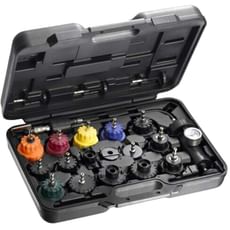
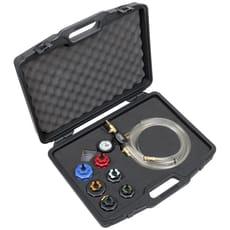
- Pressure Test Kit: A diagnostic tool that pressurises a vehicle's cooling system to identify leaks in radiators, hoses, gaskets and other components. Typically includes a hand pump, pressure gauge, and various adaptors to fit different vehicle makes and models.
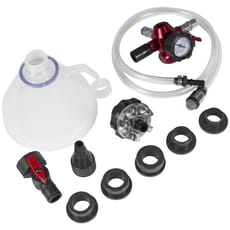
- Vacuum Purge and Refill: A method of filling cooling systems using vacuum pressure to remove all air from the circuit before refilling, preventing air locks that can cause overheating and poor heater performance. Essential for modern vehicles with complex cooling circuits.
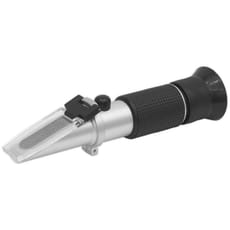
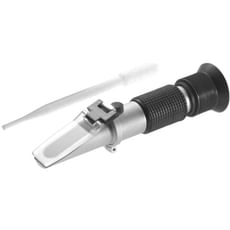
- Refractometer: An optical instrument that measures the concentration of coolant (antifreeze) in a cooling system by analysing how light passes through a sample. Significantly more accurate than traditional floating hydrometers for determining freezing point protection.
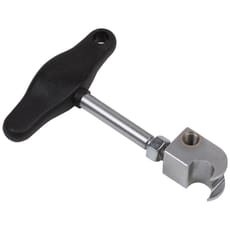
- Spring Lock Coupling: A quick-disconnect fitting used in air conditioning and fuel lines that requires specialist tools to release without damaging the connection or causing refrigerant loss. Common on modern vehicles for ease of servicing.
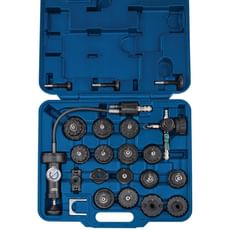
- Pressure Cap Adaptor: A fitting that replaces the cooling system pressure cap during testing, allowing the system to be pressurised safely using a hand pump whilst monitoring for pressure drop that indicates leaks.
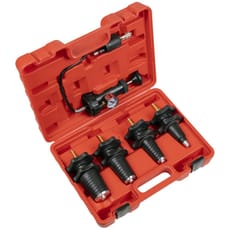
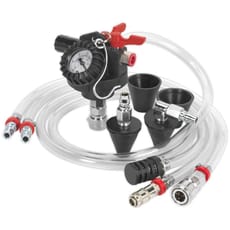
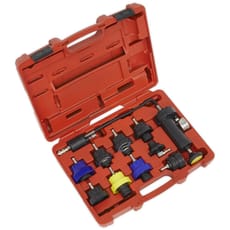
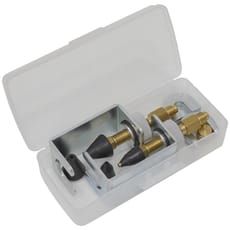
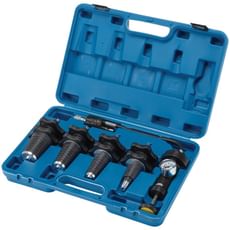
- Capless Tester: A cooling system test kit that uses cone adaptors to seal and pressurise systems via the radiator or expansion tank opening, eliminating the need for vehicle-specific cap adaptors on many modern vehicles.
Who Uses Cooling System Tools?
- Motor mechanics and automotive technicians diagnosing cooling system faults and performing routine maintenance
- Mobile mechanics requiring portable diagnostic equipment for on-site vehicle repairs
- MOT testing stations checking cooling system integrity as part of vehicle inspections
- Fleet maintenance workshops servicing commercial vehicles, vans and HGVs
- Agricultural and plant engineers maintaining cooling systems on tractors and heavy machinery
- Classic car restorers testing and recommissioning cooling systems on renovation projects
- Air conditioning specialists working on automotive climate control systems
- Serious DIY enthusiasts performing their own vehicle maintenance and repairs
- Garage owners and workshop managers equipping their facilities with essential diagnostic tools
- Vehicle preparation centres conducting pre-delivery inspections
How to Choose the Right Cooling System Tools
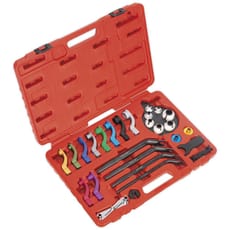
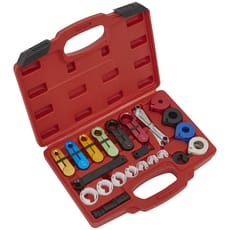
Kit Size and Comprehensiveness: Consider the range of vehicles you typically work on. Universal kits with 15-25 pieces offer adaptors for most European, Japanese and Asian vehicles, whilst smaller 5-piece sets suit those working on a limited range of models. Professional workshops benefit from comprehensive kits that cover cooling systems, air conditioning, and fuel line work in one package, such as Sealey's 27-piece disconnection sets.
Pressure Range and Gauge Quality: Look for test kits with gauges reading up to at least 2.5 bar (35 psi), which covers most automotive cooling systems. Quality gauges with clear markings and protective rubber boots ensure accurate readings and longevity in workshop environments. Consider whether you need dual-scale gauges showing both bar and psi for working on imported vehicles.
Build Quality and Durability: Brands like Sealey, Draper Expert and Facom manufacture tools designed for professional use with robust pump assemblies, reinforced hoses, and corrosion-resistant adaptors. Check that caps and fittings are manufactured from durable materials that won't perish when exposed to coolant, oil and workshop chemicals over time.
Storage and Organisation: Most quality kits come in blow-moulded cases with custom foam inserts that keep components organised and protected. This is essential for mobile mechanics and ensures small adaptors don't get lost in busy workshops. Look for cases with clear labelling or component identification to speed up adaptor selection.
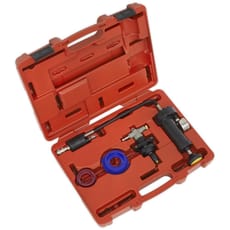
Vacuum Fill Capability: If you frequently work on modern vehicles with complex cooling circuits, consider investing in a vacuum purge and refill system such as the Facom 935A or Draper Expert vacuum refill set. These tools eliminate air locks that traditional fill methods can miss, particularly important on vehicles with heater matrices positioned above engine level or those with multiple bleed points.
Specialist Requirements: Air conditioning work requires specific disconnection tools for spring lock couplings and quick-release fittings. If you service air con systems, look for combination kits that include both cooling system pressure testing and air con line disconnection tools to maximise versatility and workshop efficiency.
Popular Accessories
- Additional pressure cap adaptors for specific vehicle makes not included in universal kits
- Replacement hoses, seals and O-rings for pressure test equipment maintenance
- Coolant hydrometers and test strips for checking antifreeze concentration and pH levels
- Radiator pressure caps in various pressure ratings for testing and replacement purposes
- Coolant additives and stop-leak sealers for minor leak repairs and system protection
- Drain pans and fluid extractors for safe coolant removal and disposal
- UV leak detection dyes and ultraviolet lamps for identifying difficult-to-spot leaks
- Thermostat testing equipment for diagnosing temperature regulation issues
- Workshop creepers and inspection lighting for comfortable access to cooling system components
- Protective gloves and safety glasses for handling hot or toxic coolant
Safety Information
Working with vehicle cooling systems presents several serious hazards that require proper precautions. Never remove a pressure cap or open a cooling system when the engine is hot – coolant can be under significant pressure and temperatures exceeding 100°C can cause severe scalding injuries. Always allow engines to cool completely before commencing work, and wear appropriate PPE including safety glasses and chemical-resistant gloves when handling coolant, which is highly toxic if ingested and harmful to skin.
When pressure testing cooling systems, always follow the tool manufacturer's instructions and never exceed the system's maximum rated pressure shown on the pressure cap, as this can cause component damage or catastrophic failure. Ensure the vehicle is on level ground with the handbrake applied, and never run engines in enclosed spaces without adequate ventilation due to carbon monoxide risks. Dispose of used coolant responsibly in accordance with environmental regulations and HSE guidelines – never pour it down drains as ethylene glycol is extremely harmful to wildlife and water courses.
Be aware that modern coolants can contain corrosive additives, and mixing incompatible coolant types can cause system damage through precipitation or reduced protection. When using vacuum refill systems, ensure all connections are secure before creating vacuum pressure, and follow HSE guidelines for working with pressurised systems. Air conditioning work may involve refrigerants regulated under F-Gas legislation, requiring appropriate certification for handling, recovery and recharging procedures. Always maintain tools in good condition with intact seals and hoses to prevent leaks and ensure accurate testing results.
Frequently Asked Questions
How do I know if my cooling system has a leak?
Signs include falling coolant levels requiring regular top-ups, engine overheating, visible puddles under the vehicle, sweet smell from the engine bay, or white steam from the exhaust indicating internal leaks. A pressure test kit allows you to pressurise the system when cold to safely identify the exact location of leaks in hoses, radiators, water pumps, head gaskets or core plugs before they cause serious engine damage.
What pressure should I test a cooling system at?
Always test at the pressure rating shown on the vehicle's cooling system pressure cap, typically between 0.9 and 1.4 bar (13-20 psi) for most cars. Never exceed this pressure as it may damage components designed to operate within specific pressure ranges. The system should hold pressure for at least 10 minutes – any drop indicates a leak requiring investigation, with faster drops suggesting more significant problems.
Do I need a vacuum refill tool or can I fill cooling systems normally?
Whilst traditional filling methods work for many older vehicles, modern cars with complex cooling circuits often develop air locks that cause overheating and poor cabin heating despite appearing full. Vacuum refill tools eliminate this problem by removing all air before filling under controlled conditions, making them essential for professional workshops and worthwhile for anyone regularly servicing newer vehicles with multiple bleed points or awkward cooling system layouts.
Are universal cooling system test kits compatible with all vehicles?
Most universal kits include adaptors covering the majority of European, Japanese and Asian vehicles manufactured in recent decades, but some specialist, older or unusual vehicles may require additional adaptors purchased separately. Check the kit contents against your typical workload – comprehensive 20-25 piece kits from brands like Sealey and Draper Expert offer the widest compatibility, whilst capless testers with cone adaptors provide versatile sealing for many modern expansion tank designs.
How often should I check my vehicle's coolant concentration?
Coolant should be tested annually, particularly before winter, to ensure adequate antifreeze protection and corrosion inhibition properties remain effective. A refractometer like the Facom 780B provides accurate readings of coolant concentration and freezing point protection, helping prevent frost damage and maintaining optimal engine protection. Most manufacturers recommend complete coolant replacement every 3-5 years depending on the coolant type used, as corrosion inhibitors degrade over time even if antifreeze protection remains adequate.