

Core Drill Adaptors

Pay in 3 interest-free payments on purchases from £20-£3000 with  . Learn more.
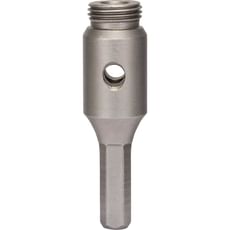
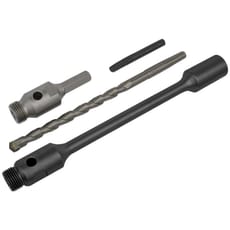
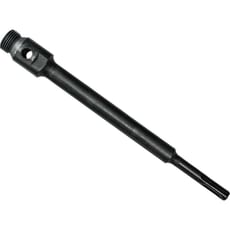
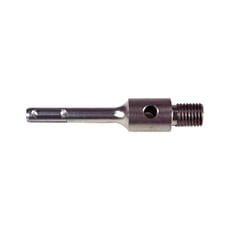
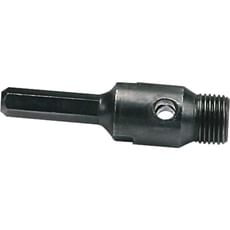
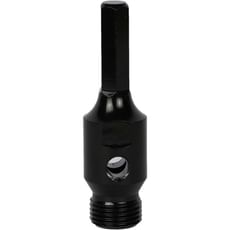
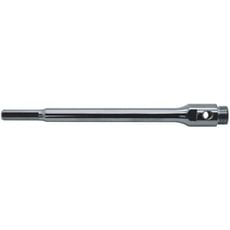
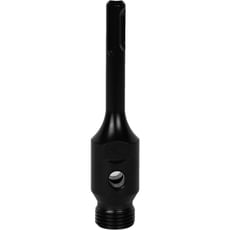
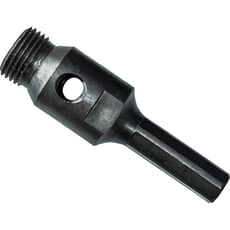
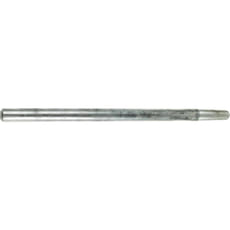
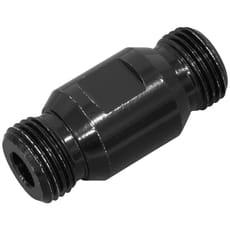
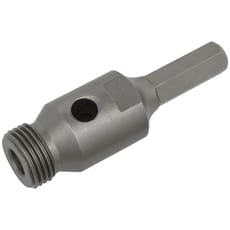
 Loading...
End of content
Error - No more pages to load
About Core Drill Adaptors
Core drill adaptors are indispensable connector components that enable tradespeople to achieve compatibility between diamond core drill bits and various power tool systems. These precision-engineered adaptors bridge the gap between different thread standards, shank configurations, and chuck systems, ensuring that professional drilling equipment works seamlessly together regardless of manufacturer. Whether connecting a diamond core bit to an SDS hammer drill, standard chuck drill, or dedicated core drilling machine, the correct adaptor transforms incompatible components into a fully functional drilling system for demanding applications in concrete, brick, stone, and reinforced masonry.
The selection available from Tooled-Up.com includes adaptors from industry-leading manufacturers such as Bosch Professional, Makita, Sealey, Faithfull, Marcrist, Starrett, and Sirius. These adaptors are available in numerous configurations including SDS-Plus shank adaptors, hex shank adaptors, BSP threaded connections, UNC thread conversions, and guide rod systems. Professional tradespeople typically maintain a collection of adaptors in their toolkit to maximise equipment versatility and avoid costly delays on site when faced with incompatible threading or shank systems.
Beyond basic thread conversion, core drill adaptors provide additional functionality that enhances drilling operations. Extension adaptors allow drilling through particularly thick walls and floors, whilst guide rod adaptors ensure accurate hole positioning and prevent bit wander during the critical initial penetration phase. Hex shank adaptors enable standard 240v power drills to accommodate professional diamond core bits, making these systems accessible to smaller contractors and DIY enthusiasts who may not require dedicated core drilling machinery. This flexibility proves invaluable for plumbers, electricians, heating engineers, and general builders who regularly create precise apertures for pipes, cables, conduit, and ductwork across construction and renovation projects.
Jargon Buster
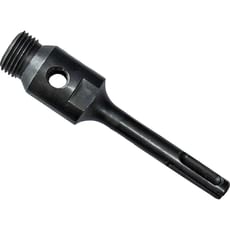
- SDS-Plus Shank: A quick-release tool holder system featuring a 10mm diameter shank with groove configurations that allow rapid bit changes without chuck keys. SDS (Special Direct System) provides superior power transmission and is standard on most rotary hammer drills up to 4kg weight, making it ideal for core drilling adaptors used with medium-duty equipment.
- BSP Thread (British Standard Pipe): A thread standard widely adopted throughout the UK and Commonwealth countries for pipe fittings and core drill connections. BSP threads are measured in imperial sizes, with 1/2" BSP being particularly common for core drilling adaptors and providing a secure, leak-resistant connection for wet drilling applications.
- UNC Thread (Unified National Coarse): An American thread standard frequently found on diamond core drill bits due to the prevalence of US manufacturers in the professional coring equipment market. The 1 1/4" UNC thread is standard for larger diameter core bits, necessitating conversion adaptors for use with British equipment featuring BSP connections.
- Hex Shank: A six-sided (hexagonal) shaft profile that prevents rotational slippage in drill chucks, ensuring efficient torque transfer during demanding drilling operations. Hex shank adaptors allow standard power drills to accommodate core drilling equipment whilst maintaining positive drive engagement under load.
- Guide Rod System: A centring shaft that locates into the adaptor and drill bit assembly, maintaining accuracy during initial penetration and preventing the core bit from wandering across smooth surfaces. Guide rods prove essential when drilling vertical walls, overhead applications, or polished materials like tiles where initial bit purchase is challenging.
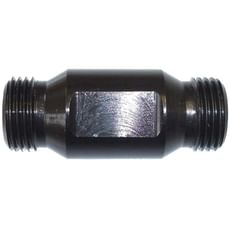
- Male-to-Male Adaptor: A threaded connector featuring external (male) threads on both ends, allowing the connection of two female-threaded components. These adaptors commonly join core bits to extension bars or connect drilling equipment with matching female thread configurations.
Who Uses Core Drill Adaptors?
- Plumbers and Heating Engineers: Regularly drill holes through structural elements for pipe runs, radiator installations, underfloor heating systems, and boiler flue penetrations
- Electricians: Create precise apertures for electrical conduit, trunking, cable entry points, and distribution box installations in masonry and concrete structures
- Builders and General Contractors: Undertake varied core drilling requirements including drainage holes, ventilation penetrations, and service entries across residential and commercial construction projects
- HVAC Specialists: Install air conditioning units, mechanical ventilation systems, extractor fans, and ductwork requiring clean, accurately positioned holes through external walls
- Kitchen and Bathroom Fitters: Drill outlet holes for extractor fans, waste pipes, water supply penetrations, and utility connections in refurbishment and new-build properties
- Fire and Security Installers: Create neat penetrations for alarm cabling, CCTV systems, fire suppression pipework, and access control wiring whilst maintaining building integrity
- Maintenance Engineers: Retrofit services in existing buildings, industrial premises, and heritage structures where precision drilling minimises disruption and structural impact
- Renewable Energy Installers: Drill penetrations for heat pump pipework, solar panel cabling, and ground source heating systems
- DIY Enthusiasts: Tackle home improvement projects requiring professional-quality core drilling capabilities without investing in dedicated commercial machinery
How to Choose the Right Core Drill Adaptors
Selecting the appropriate core drill adaptor begins with identifying your power tool's chuck or shank system. Determine whether your equipment features an SDS-Plus chuck, SDS-Max chuck, standard keyed chuck, or keyless chuck, as this dictates which adaptor shank type you require. Manufacturers like Bosch Professional and Makita offer dedicated adaptors engineered specifically for their power tool systems, ensuring optimal fit, alignment, and performance. If working with equipment from multiple manufacturers, investing in a comprehensive adaptor set from brands like Sealey or Faithfull provides excellent value and eliminates compatibility concerns on site.
Thread specification represents the second critical consideration. Professional diamond core bits typically feature either BSP (British Standard Pipe) or UNC (Unified National Coarse) threads, and your adaptor must match these specifications precisely. Common configurations include 1/2" BSP male-to-male connections for extending drilling systems and 1/2" BSP to 1 1/4" UNC conversions for connecting British equipment to American-threaded core bits. Tooled-Up stocks adaptors from specialists like Marcrist that bridge these international threading standards, ensuring British tradespeople can utilise globally-sourced core bits without compatibility issues.
Consider whether your applications require additional functionality beyond basic thread conversion. Extension adaptors prove invaluable when drilling through thick cavity walls, solid stone structures, or deep concrete sections where standard bit length proves insufficient. Guide rod adaptors enhance accuracy on vertical surfaces, polished tiles, and overhead applications where maintaining precise positioning during initial penetration presents challenges. Brands like Makita offer dedicated guide rod systems that integrate seamlessly with their adaptor ranges, providing professional-grade accuracy for demanding installation work.
Quality and durability merit serious consideration, particularly for professional tradespeople undertaking regular core drilling operations. Premium adaptors from manufacturers like Bosch Professional and Marcrist feature precision machining, hardened steel construction, and corrosion-resistant finishes that withstand substantial torque, vibration, and environmental exposure over thousands of drilling cycles. These professional-grade components maintain accurate thread engagement, resist wear, and prevent the frustrating failures that budget adaptors may experience under site conditions. Whilst initial investment proves higher, the longevity and reliability of quality adaptors delivers superior value for professional applications.
Popular Accessories
- Diamond Core Drill Bits: Available in diameters from 6mm to over 150mm for applications ranging from cable holes to large-diameter pipe penetrations in concrete, brick, and stone
- Guide Rods and Centring Pins: Precision-ground steel rods that locate into adaptor systems to ensure accurate hole positioning and prevent bit wander during initial penetration
- Extension Bars: Threaded extensions providing additional reach for drilling through deep walls, thick floors, and cavity construction where standard bit length proves insufficient
- Core Drilling Stands and Rigs: Professional mounting systems that secure power drills for precision vertical, horizontal, and angled drilling operations with enhanced safety and accuracy
- Water Suppression Systems: Dust control equipment including water bottles, feed systems, and vacuum attachments for managing silica dust during dry drilling operations
- Thread Lubricants and Anti-Seize Compounds: Specialist lubricants maintaining smooth thread operation, preventing corrosion, and avoiding seized connections after wet drilling applications
- Chuck Keys and Spanners: Essential tools for tightening threaded connections securely and adjusting adaptor assemblies to manufacturer specifications
- Tool Storage Solutions: Organised carrying cases from systems like Milwaukee PACKOUT, DeWalt TSTAK, and Makita MakPac protecting adaptors and core bits during transport and site storage
- Detection Equipment: Cable and pipe detectors for locating hidden services before drilling, preventing costly and dangerous strikes on electrical cables and water pipes
Safety Information
When using core drill adaptors and diamond drilling equipment, always wear appropriate personal protective equipment including safety goggles or full face shield, hearing protection rated to appropriate decibel levels, dust mask or respirator (minimum FFP3 for silica dust), and protective gloves. The HSE requires dust suppression measures when drilling masonry materials due to harmful respirable crystalline silica (RCS) exposure, which falls under COSHH regulations. Wet drilling or on-tool extraction systems significantly reduce airborne silica concentrations and protect respiratory health during prolonged drilling operations.
Ensure all threaded connections between adaptors, core bits, and power tools are tightened securely before commencing drilling operations. Loose adaptors can detach under rotational forces, causing serious injury from spinning components or bit ejection. Verify that your power tool possesses sufficient capacity for core drilling applications – standard DIY drills may lack adequate torque or may suffer damage from sustained high loads. Professional rotary hammer drills or dedicated core drilling machines provide appropriate power delivery and side handles essential for maintaining control. Always use 240v RCD protection rated to 30mA when working on site, particularly in damp conditions or when employing water-fed core drilling systems where electrical shock risk increases.
Before drilling any hole, always check for hidden cables, pipes, and structural reinforcement using appropriate electronic detection equipment. Creating large diameter penetrations through load-bearing walls carries risk of structural compromise if steel reinforcement, lintels, or critical masonry courses are damaged. When drilling overhead or at height, ensure the work area is properly secured with appropriate platforms or access equipment, and consider whether additional tool support or drilling stands are necessary to manage equipment weight safely. Never force a core bit through material – excessive pressure causes premature diamond segment wear, increases breakage risk, and can lead to sudden adaptor or bit failure resulting in injury.
Frequently Asked Questions
Can I use a standard power drill with core drill adaptors?
Yes, hex shank and chuck adaptors from brands like Sealey and Faithfull enable standard drills to accommodate diamond core bits for smaller diameter holes, typically up to 50mm. However, ensure your drill delivers sufficient power – minimum 1000W is recommended – and features a side handle for adequate control under the rotational forces generated during core drilling. For holes exceeding 50mm diameter, frequent professional use, or drilling reinforced concrete, a dedicated SDS rotary hammer drill or core drilling machine provides superior performance, longevity, and safety.
What's the difference between BSP and UNC thread adaptors?
BSP (British Standard Pipe) threads represent the standard used throughout UK and European equipment, measured in imperial sizes like 1/2" BSP. UNC (Unified National Coarse) threads are an American standard commonly found on diamond core bits due to US manufacturing prevalence, with 1 1/4" UNC being typical for larger diameter bits. Conversion adaptors available at Tooled-Up bridge these different standards, allowing British tradespeople to use internationally-sourced core bits with domestic drilling equipment. Marcrist and other manufacturers offer specific BSP-to-UNC conversion adaptors addressing this compatibility requirement.
Do I need different adaptors for wet and dry core drilling?
The same adaptors function for both wet and dry drilling applications – the distinction relates to whether water is used for cooling and dust suppression during drilling, not the adaptor specification. However, if you regularly undertake wet drilling, select adaptors manufactured from corrosion-resistant materials or featuring protective coatings, as moisture exposure can cause thread corrosion and seizing over time. Applying thread lubricant and thoroughly cleaning adaptors after wet use significantly extends component lifespan and maintains smooth thread operation.
How do I prevent adaptors from seizing or becoming stuck?
Apply a small quantity of thread lubricant or anti-seize compound when connecting adaptors to core bits and extension bars, avoiding over-application which attracts dust and debris. Hand-tighten connections firmly using appropriate spanners to manufacturer specifications – avoid over-torque which damages threads or causes galling. After use, thoroughly clean threads to remove concrete dust, mortar residue, and moisture, then store adaptors in a dry environment. Regular maintenance following these practices significantly extends adaptor lifespan and prevents frustrating seizures that waste valuable time on site.
Can SDS-Plus adaptors be used in SDS-Max drills?
No, SDS-Plus and SDS-Max represent incompatible systems with different shank diameters and groove configurations. SDS-Plus features a 10mm shank and suits rotary hammer drills up to approximately 4kg, whilst SDS-Max uses an 18mm shank for larger breakers and drilling machines exceeding 5kg. Always match your adaptor shank type precisely to your tool's chuck system. Manufacturers like Bosch Professional and Makita clearly specify which SDS system their adaptors suit, preventing compatibility errors that could damage equipment or compromise safety.